

Habitats

Presentation
•
Science
•
1st Grade
•
Practice Problem
•
Hard
+5
Standards-aligned

Wayground Resources
Used 1+ times
FREE Resource
17 Slides • 17 Questions
1

2
3
Multiple Choice
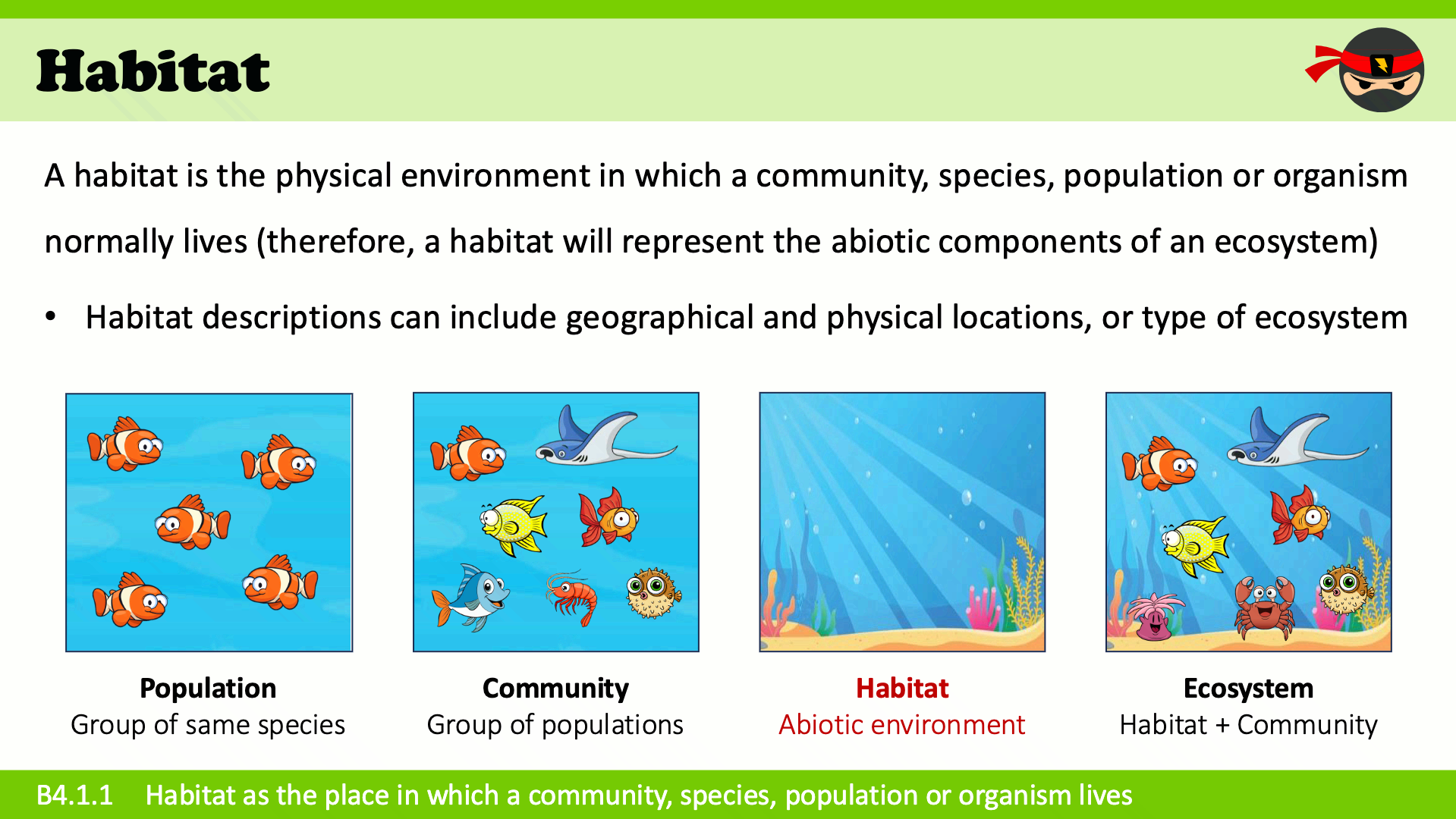
Which of the following best describes a habitat?
A group of the same species living together
A group of populations living together
The physical environment where a community, species, population, or organism lives
A combination of habitat and community
4
5
Multiple Choice
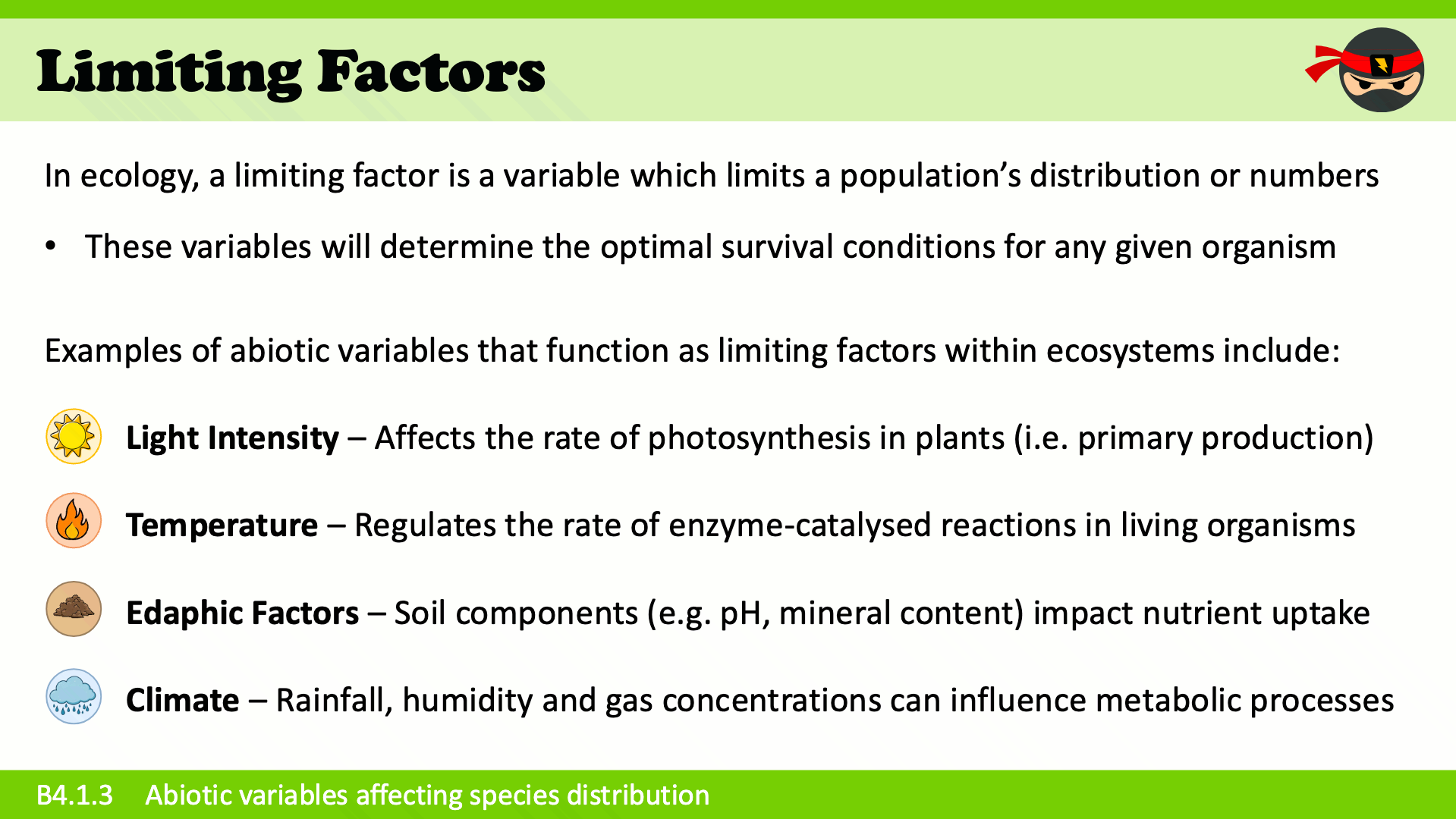
Which of the following is NOT an example of an abiotic limiting factor in an ecosystem?
Light intensity
Temperature
Predation
Climate
6
7
Open Ended
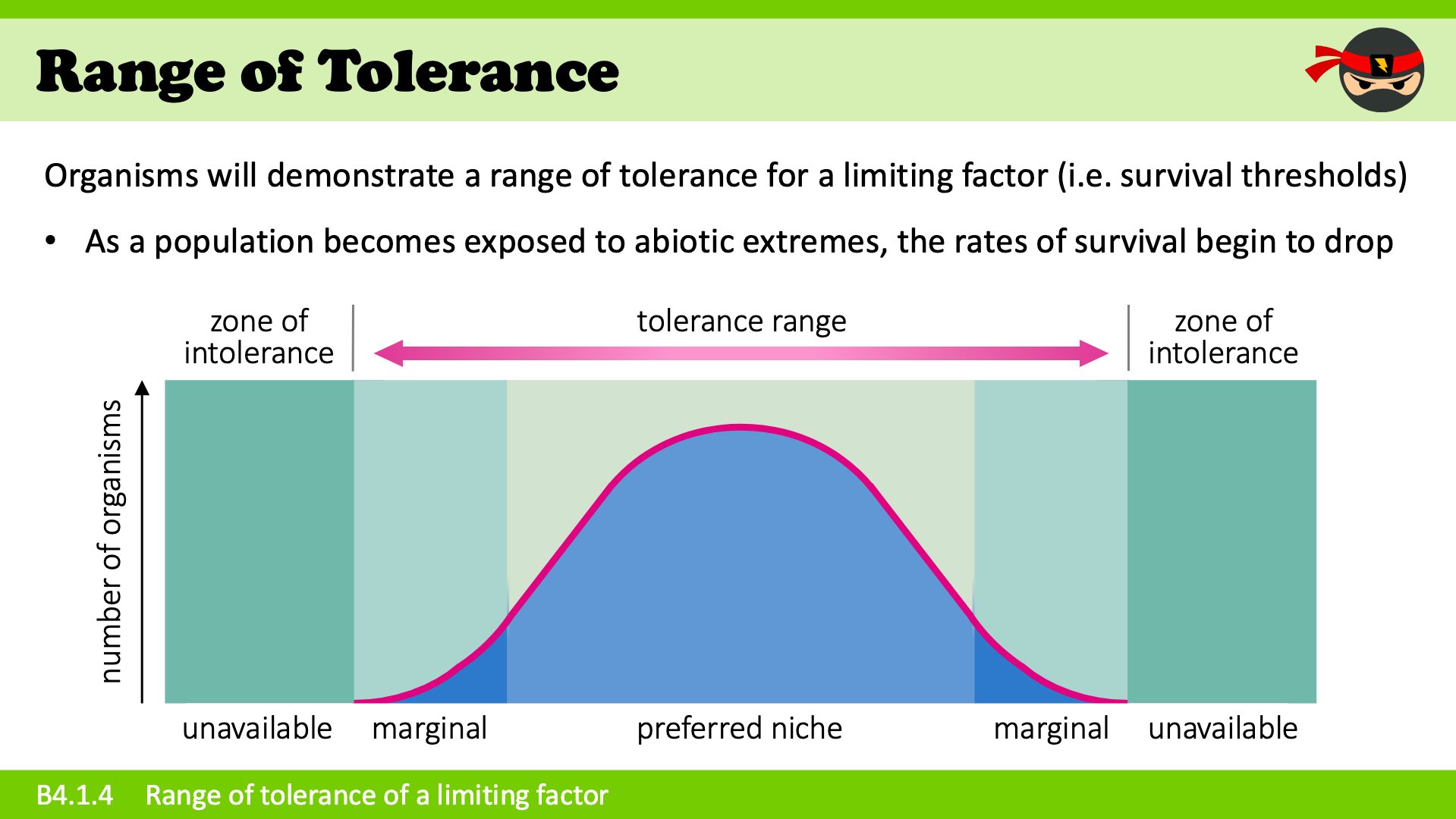
Explain how the range of tolerance for a limiting factor can affect the distribution of a species within an ecosystem.
8
9
Multiple Select
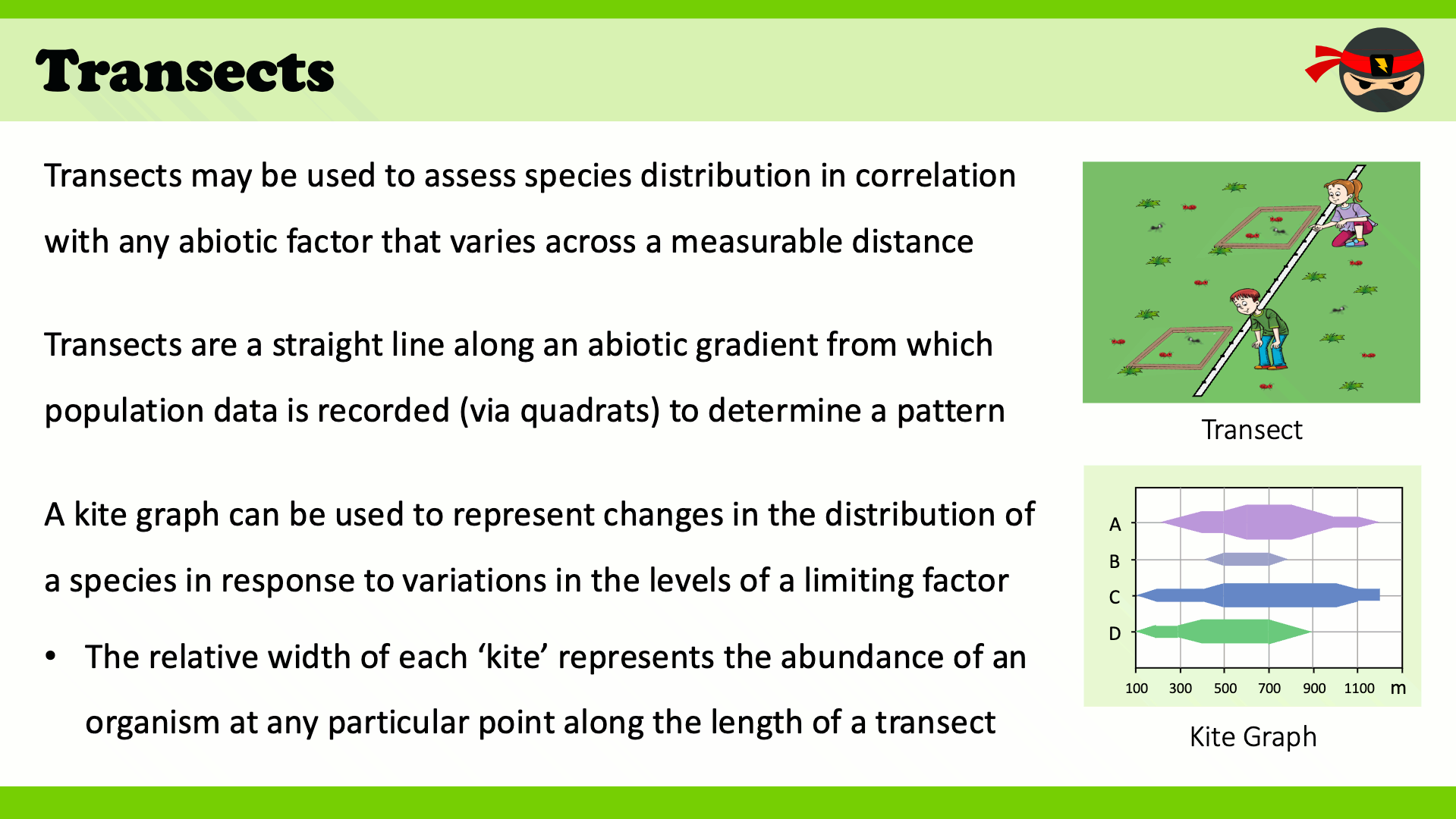
Which of the following statements about transects is/are correct?
Transects are used to assess species distribution along an abiotic gradient.
Transects always use kite graphs to represent data.
Transects involve recording population data at intervals along a straight line.
Transects can help determine patterns related to limiting factors.
10
11
Fill in the Blanks
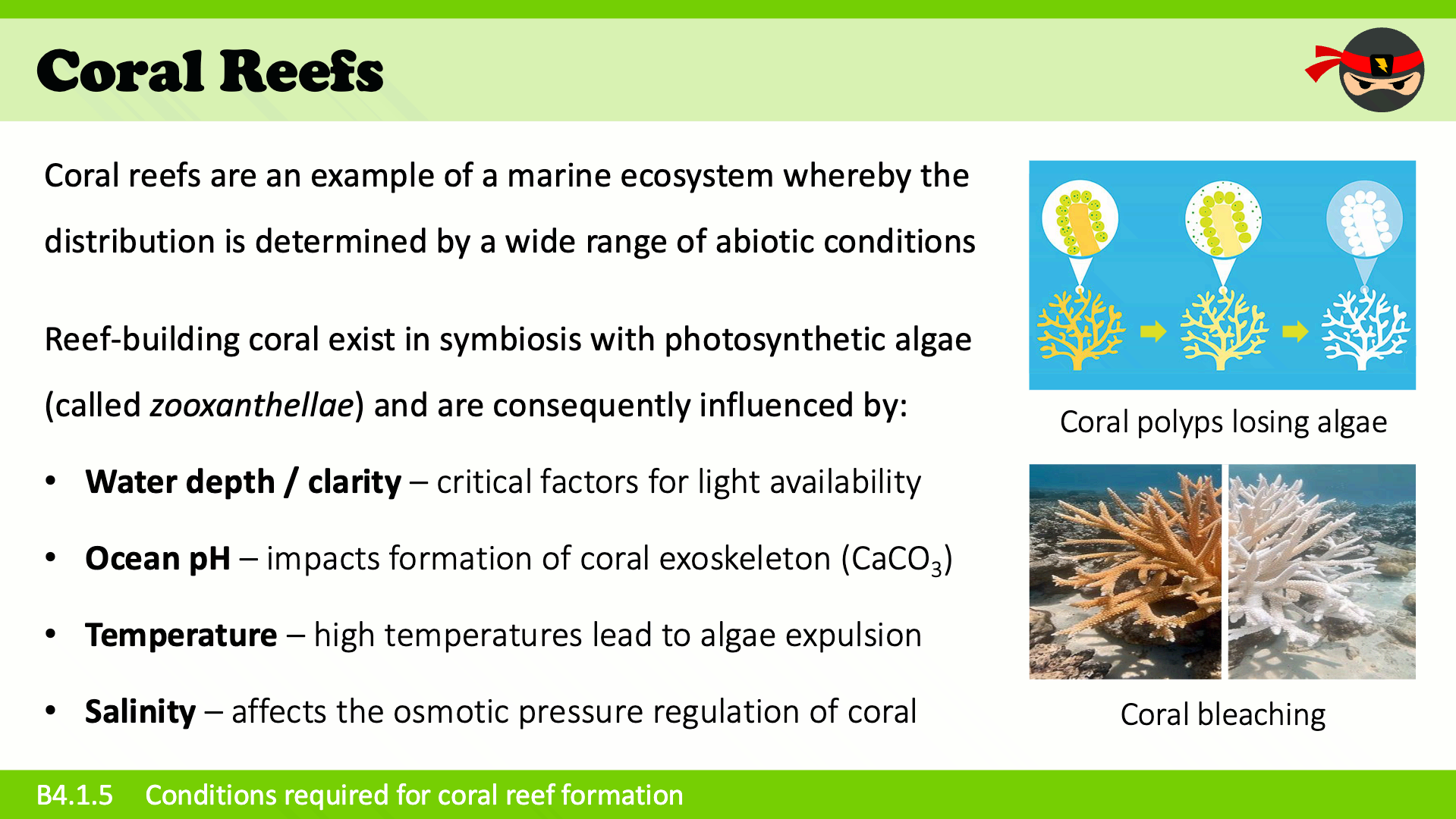
Fill in the blank: Reef-building coral exist in symbiosis with photosynthetic algae called
Type answer...
12
13
Multiple Choice
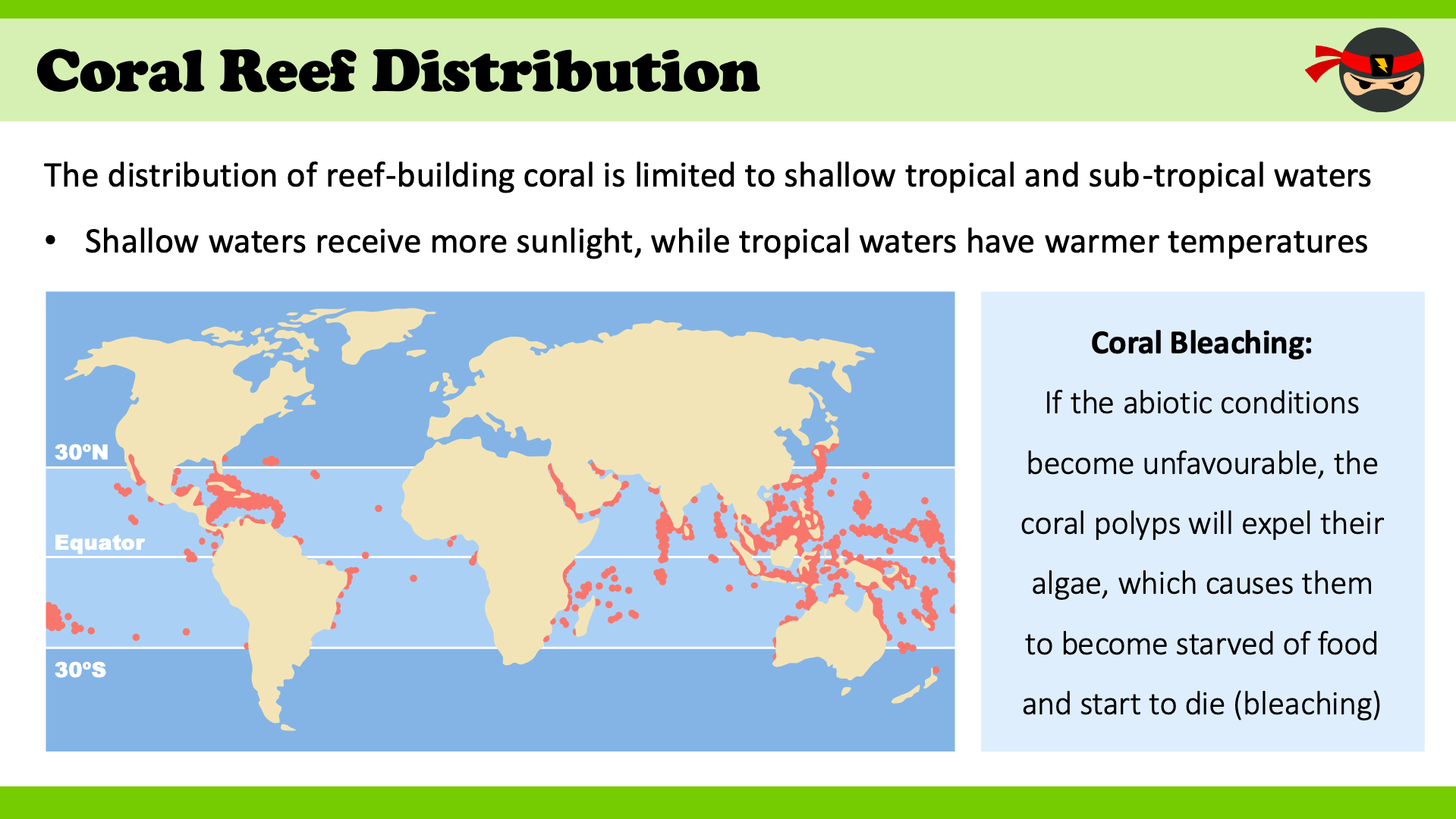
Based on the information from the coral reef slides, what abiotic factors are most likely to cause coral bleaching?
High temperature and low ocean pH
Low light intensity and high salinity
High nutrient levels and low temperature
Low salinity and high light intensity
14
15
Open Ended
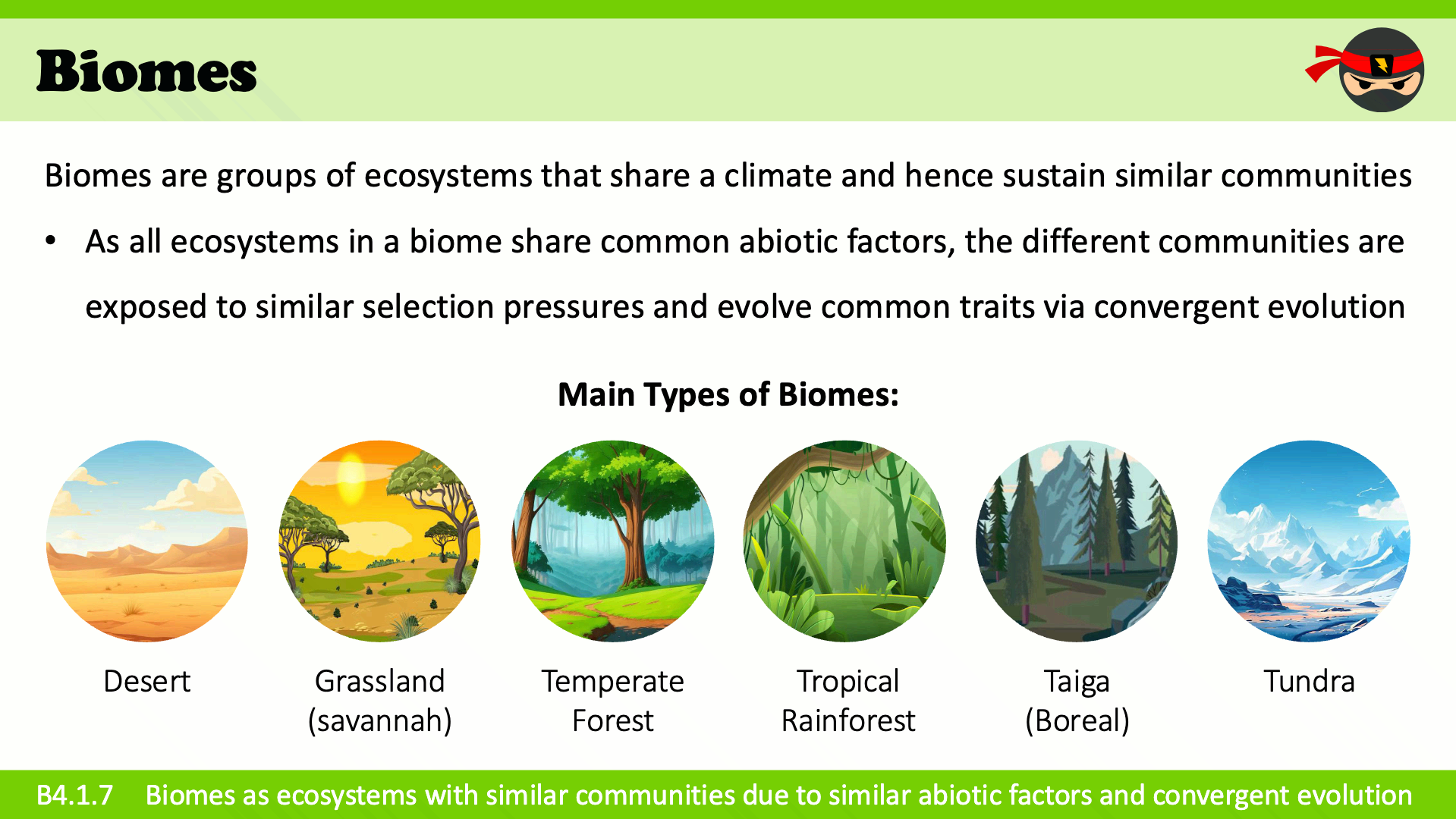
Describe how biomes are classified and give an example of how similar abiotic factors can lead to similar communities in different parts of the world.
16
17
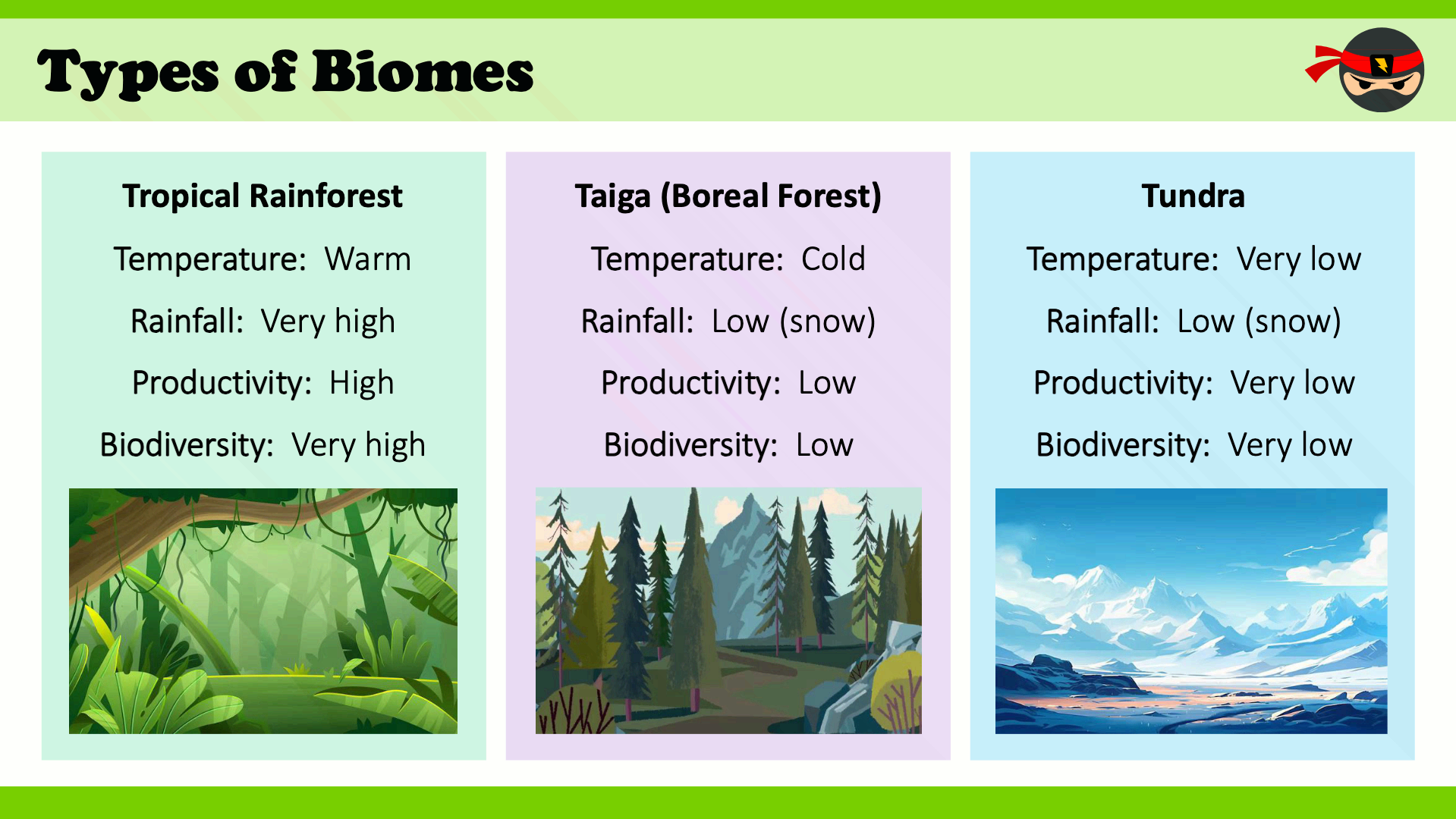
18
Multiple Choice
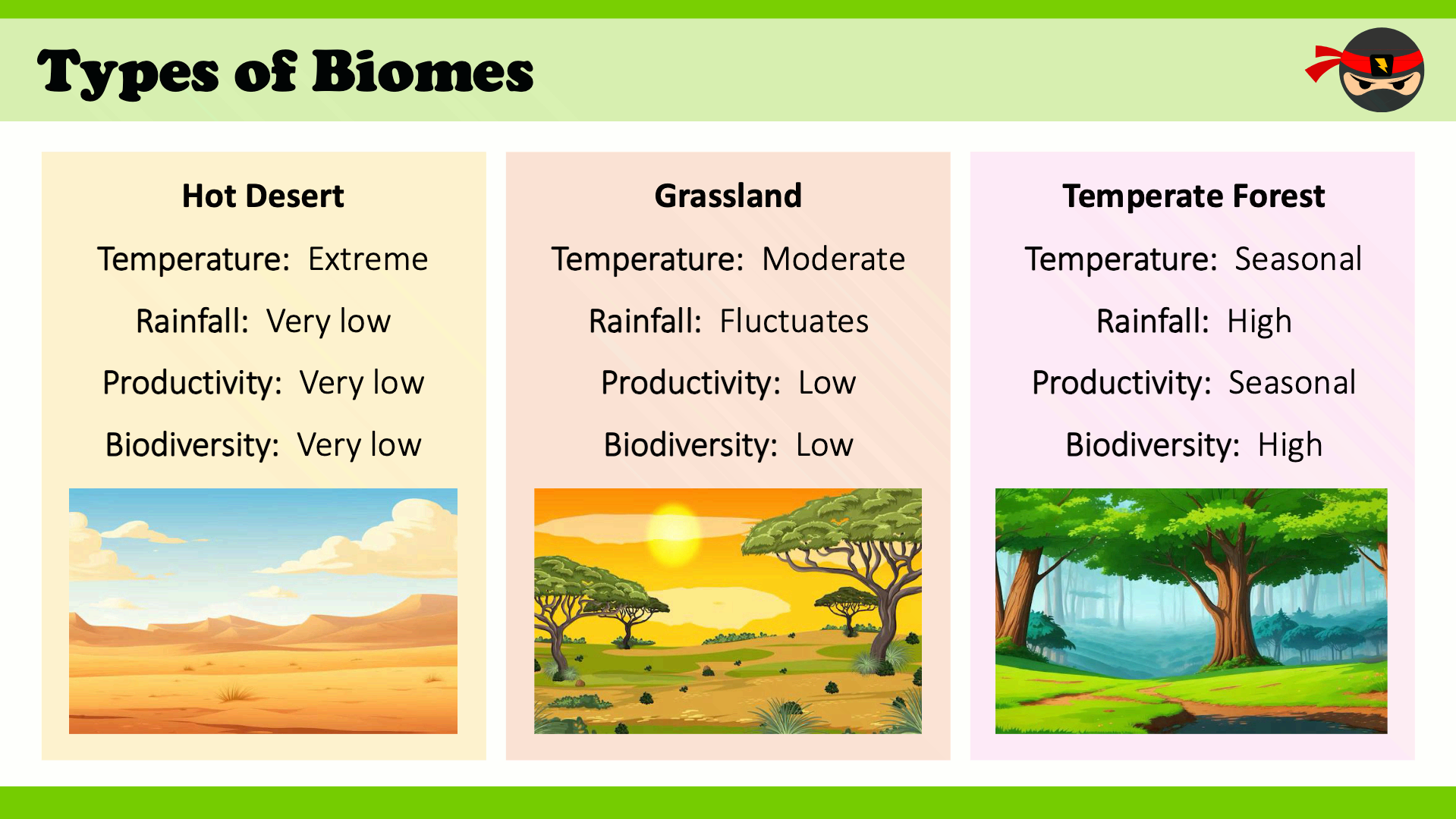
Which biome is characterized by very high biodiversity and very high rainfall?
Tundra
Tropical Rainforest
Grassland
Desert
19
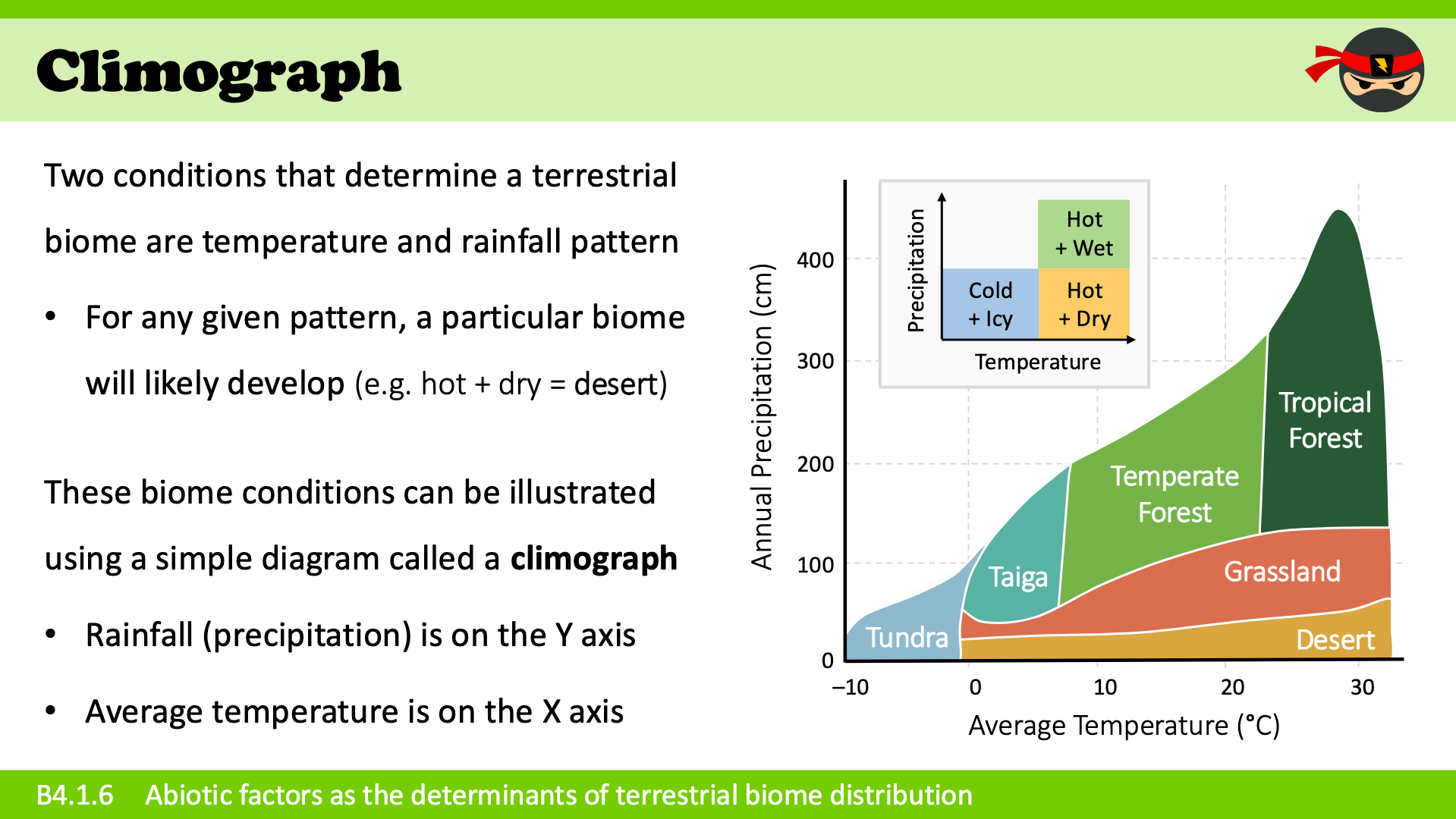
20
Open Ended
Explain how temperature and rainfall patterns influence the distribution of terrestrial biomes, using examples from the climograph.
21
Multiple Choice
What are the two main abiotic factors that determine the type of terrestrial biome?
Sunlight and wind
Temperature and rainfall
Soil type and altitude
Humidity and latitude
22
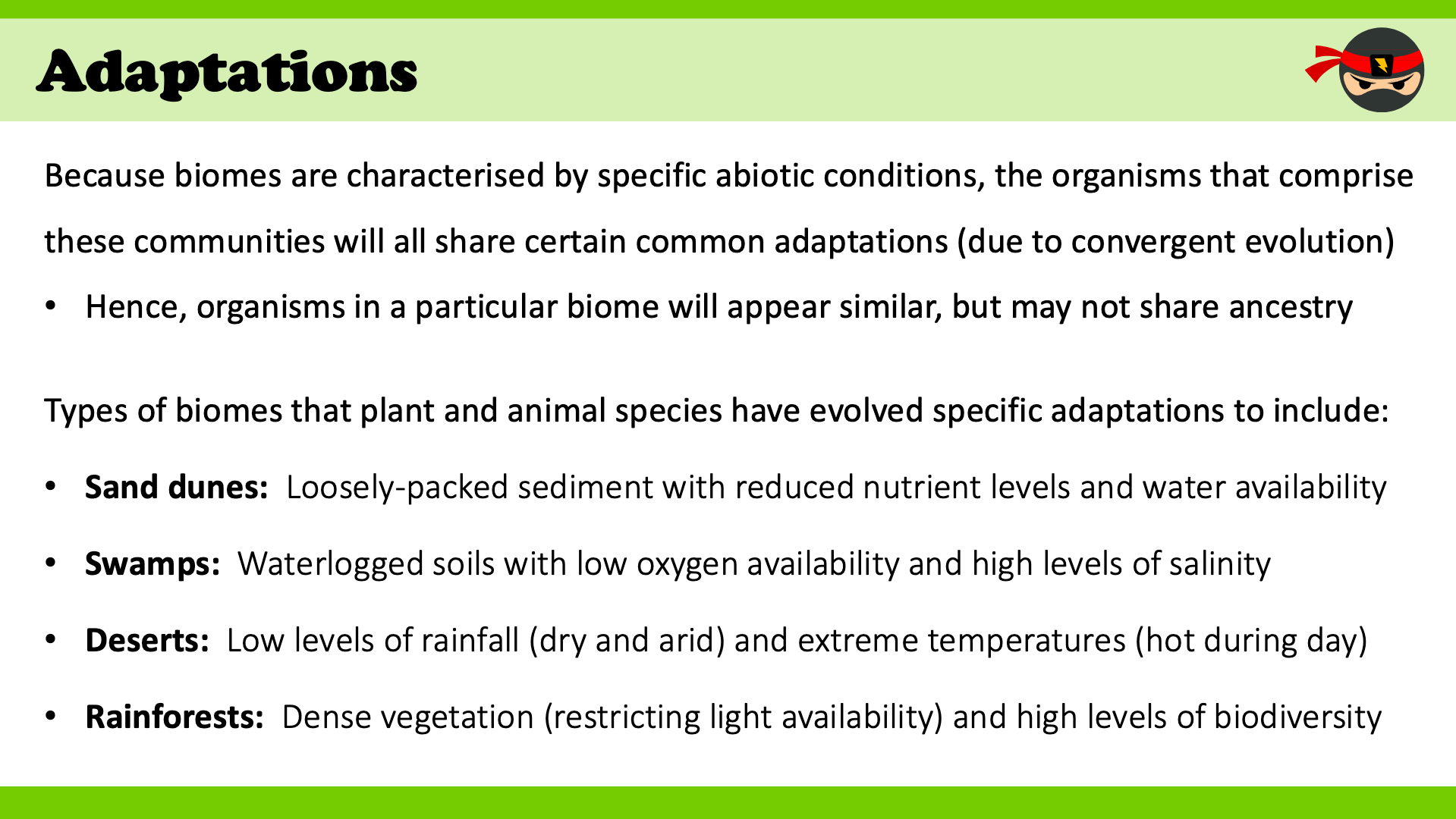
23
Open Ended
Describe how organisms in deserts and rainforests have evolved different adaptations to cope with their respective abiotic conditions.
24
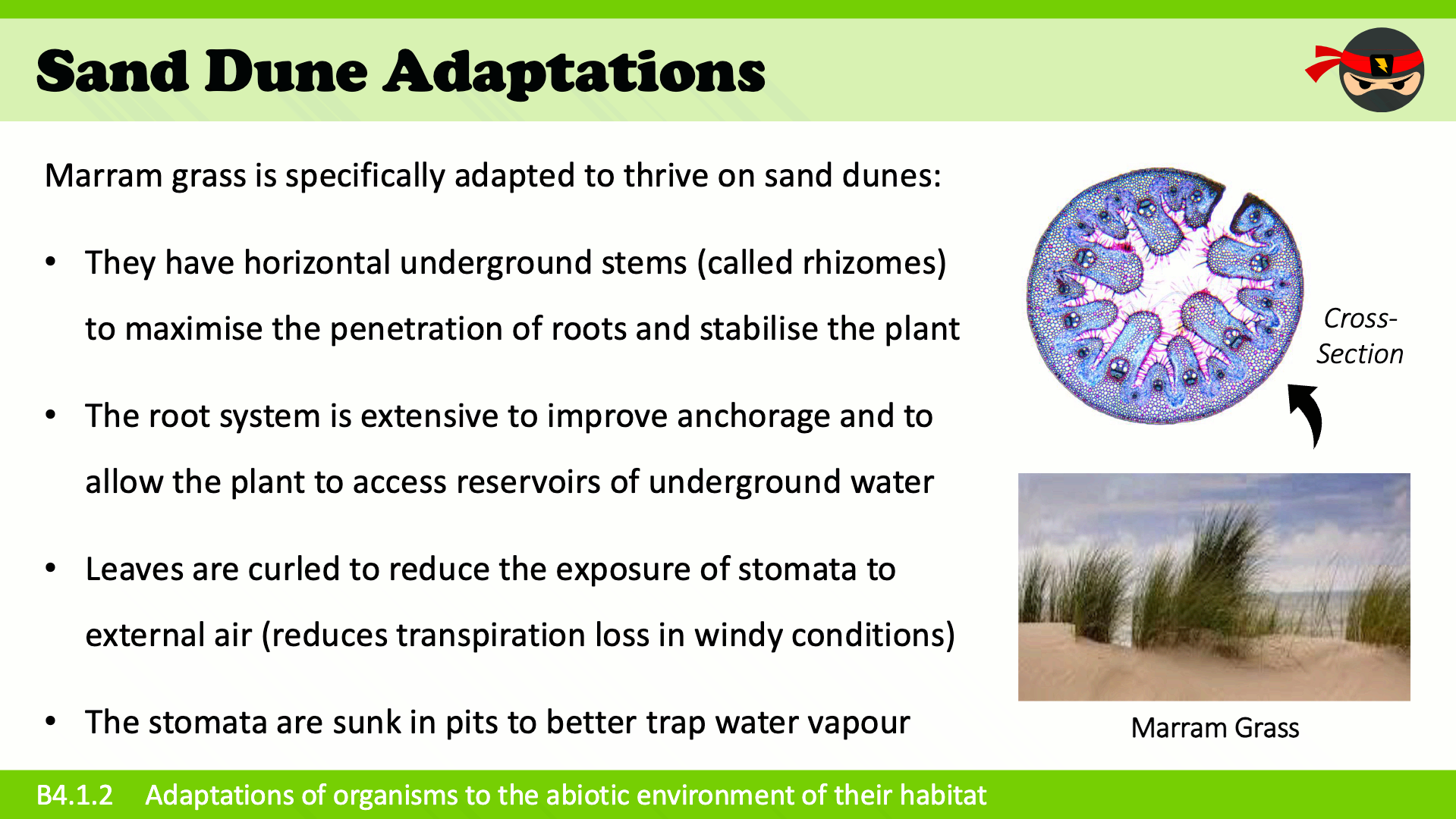
25
Multiple Select
Which of the following are adaptations of Marram grass that help it survive on sand dunes?
Horizontal underground stems (rhizomes)
Extensive root system
Leaves with large surface area
Stomata sunk in pits
26
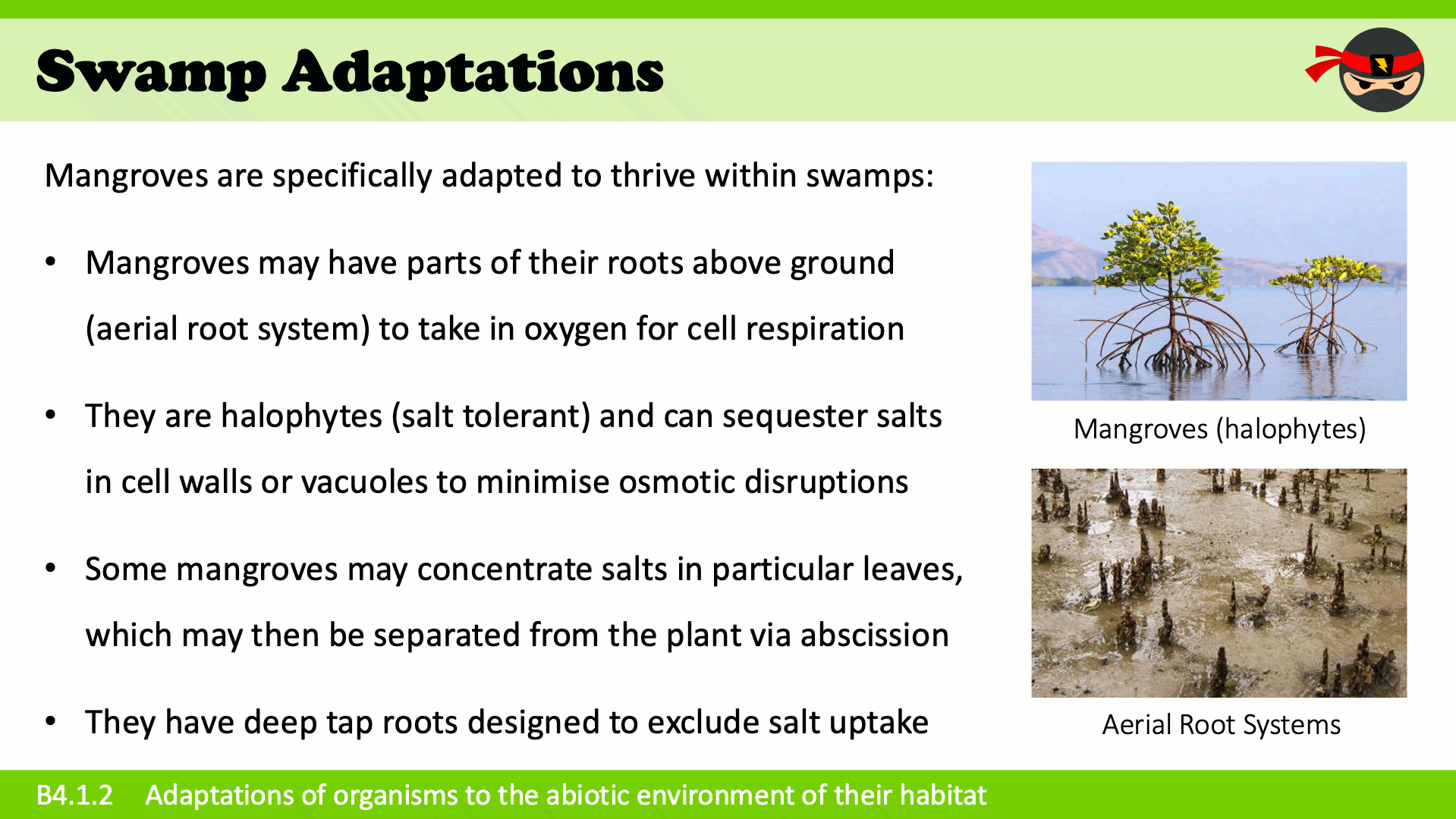
27
Fill in the Blanks
Mangroves are able to survive in swamps because they are
Type answer...
28
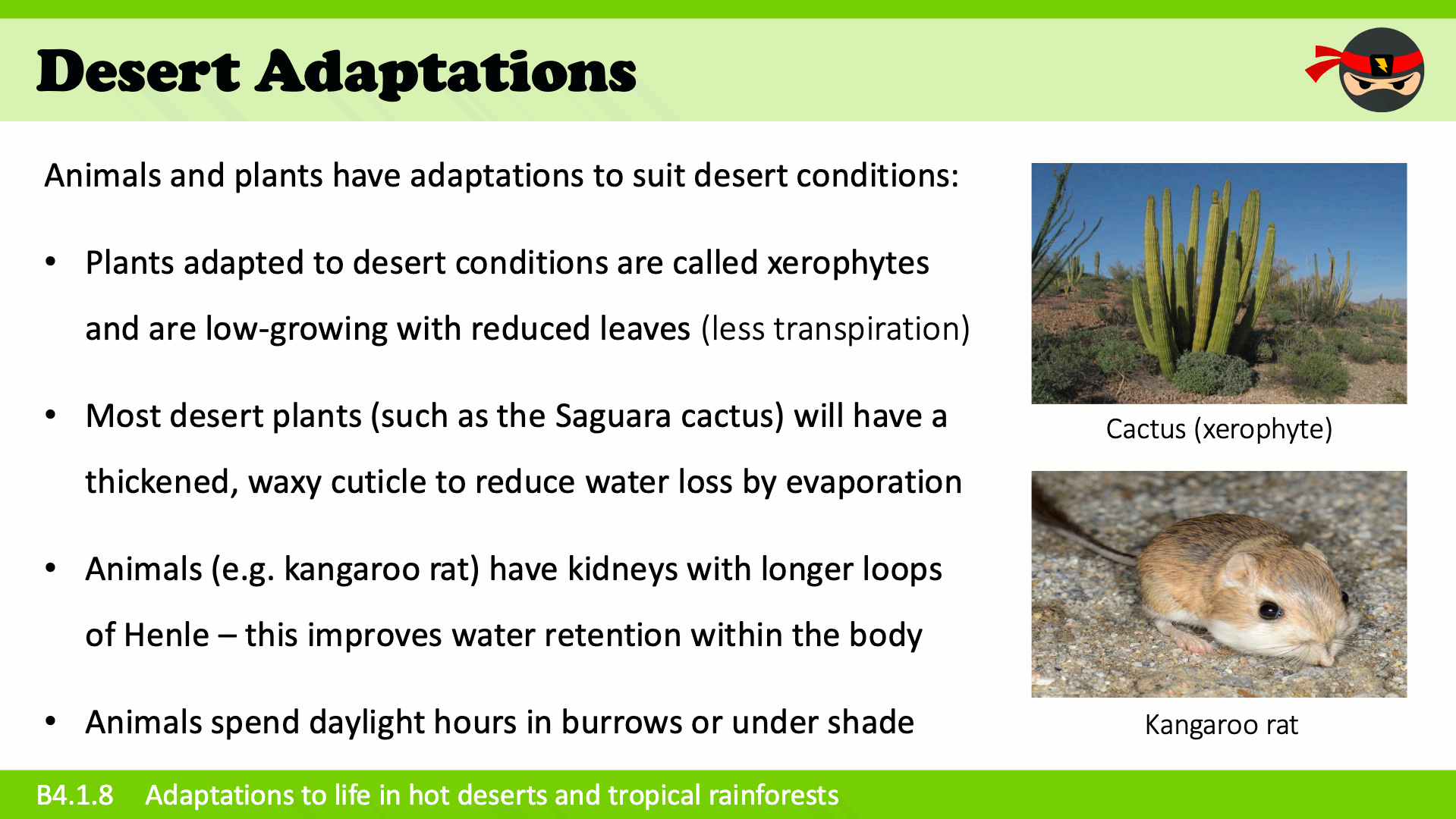
29
Multiple Choice
Which of the following is an adaptation that helps desert animals conserve water?
Having kidneys with longer loops of Henle
Growing above the canopy
Using mimicry to avoid predation
Being nocturnal to thrive in low light
30
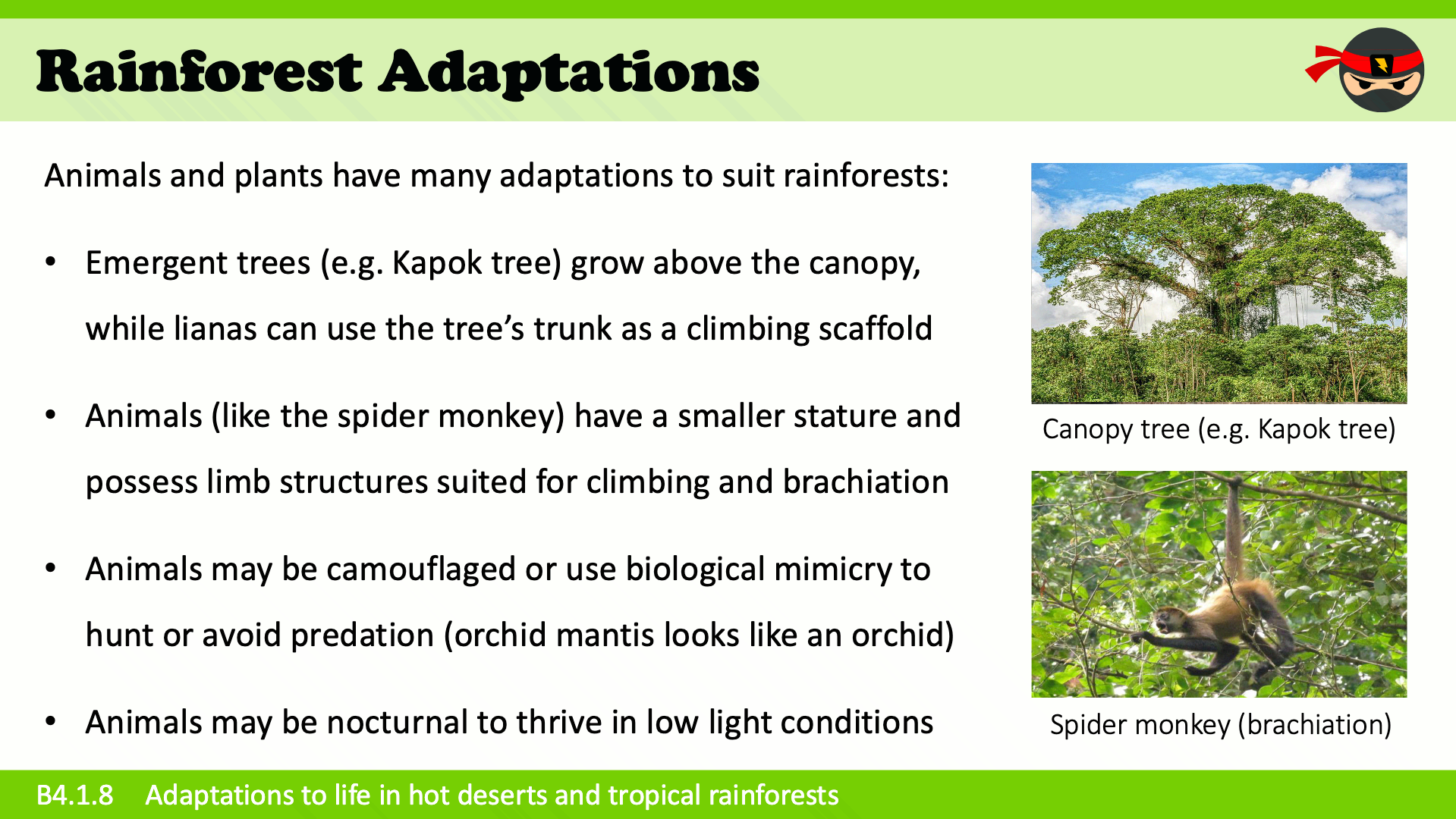
31
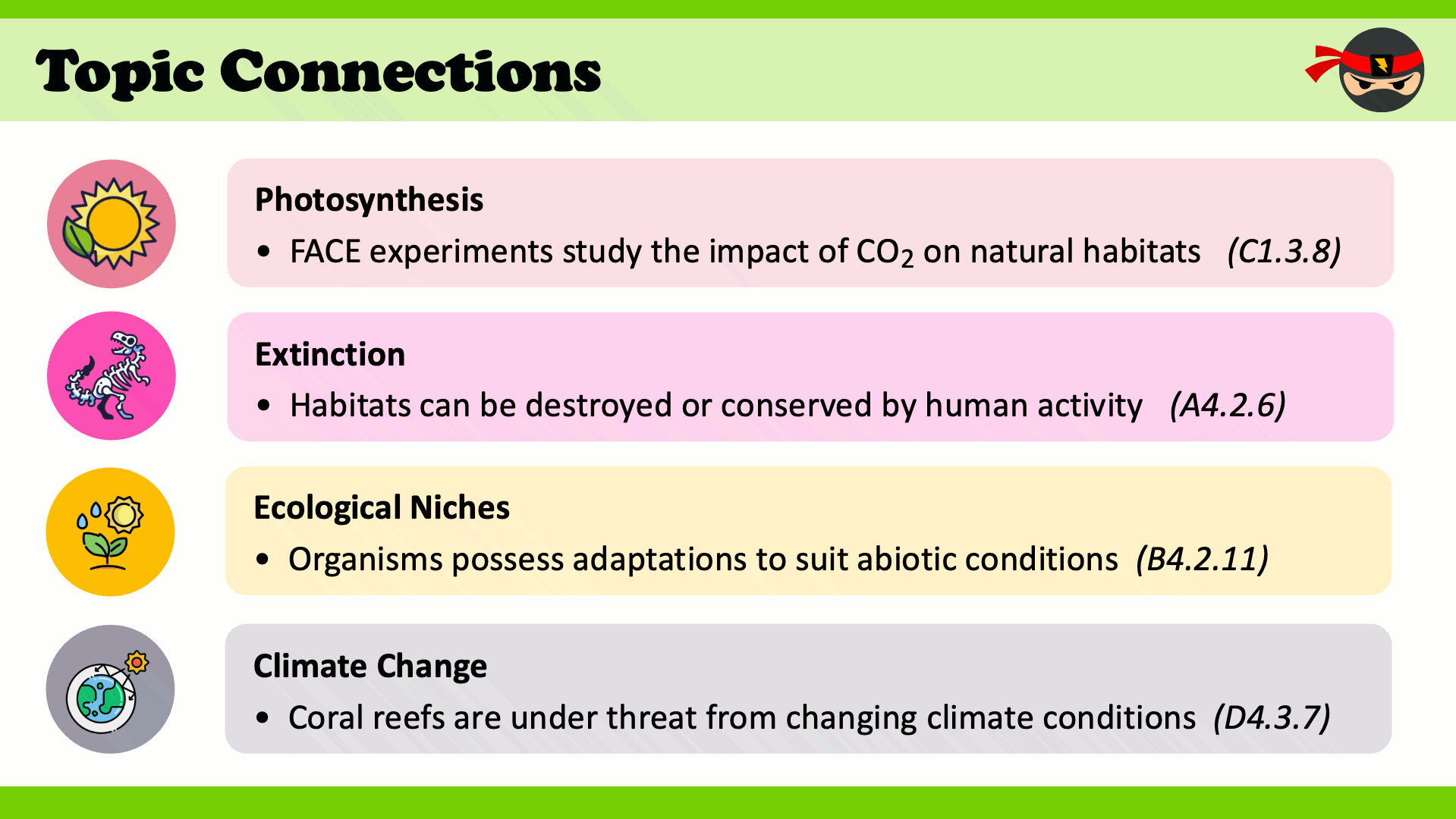
32
Open Ended
How would you describe the relationship between a habitat and an ecosystem based on what you learned today?
33
Multiple Choice
What is the main difference between a population and a community in an ecological context?
A population is a group of the same species, while a community is a group of different populations.
A population includes abiotic factors, while a community does not.
A community is smaller than a population.
A population is made up of different species, while a community is made up of the same species.
34
Fill in the Blanks
Organisms possess adaptations to suit
Type answer...
Show answer
Auto Play
Slide 1 / 34
SLIDE
Similar Resources on Wayground

26 questions
Scales
Presentation
•
1st Grade
28 questions
Untitled Lesson
Presentation
•
KG
24 questions
2nd How to take care of the planet
Presentation
•
1st Grade
31 questions
T2W7-Religion Exam
Presentation
•
1st Grade
24 questions
Into to Perimeter
Presentation
•
KG
24 questions
KHTN6-TUẦN 11 - ÔN TẬP CĐ 5
Presentation
•
KG
23 questions
Spanish - Parts of the Body
Presentation
•
1st Grade
33 questions
Past Simple
Presentation
•
1st Grade
Popular Resources on Wayground
10 questions
Safety Day 2026 – Student Review

Quiz
•
9th Grade
21 questions
Continents and Oceans
Quiz
•
6th Grade
20 questions
Parts of Speech
Quiz
•
5th Grade
16 questions
Subject & Predicate
Quiz
•
5th Grade
25 questions
Multiplication Facts
Quiz
•
5th Grade
12 questions
Map Skills
Quiz
•
3rd Grade
22 questions
Continents and Oceans
Quiz
•
5th Grade
15 questions
Rounding Decimals
Quiz
•
5th Grade
Discover more resources for Science
4 questions
K-2 Force and Motion Lesson
Presentation
•
KG - 2nd Grade
10 questions
Identifying Physical and Chemical Changes

Interactive video
•
1st - 5th Grade
7 questions
Human Body Pausing Point Quiz
Quiz
•
1st Grade
5 questions
All About Maps
Presentation
•
1st - 5th Grade
10 questions
Exploring the Conservation of Mass in Everyday Life
Interactive video
•
1st - 5th Grade
8 questions
Water Cycle
Presentation
•
1st - 5th Grade
6 questions
Gravity
Quiz
•
1st Grade
12 questions
Energy Quiz 1 (Forms/Transformations)
Quiz
•
1st - 5th Grade