

Force and Motion Full Unit All

Presentation
•
Physics
•
7th Grade
•
Practice Problem
•
Easy

Sanidhya Singh
Used 1+ times
FREE Resource
24 Slides • 25 Questions
1

2
Learn to describe motion using speed and forces.
Use Newton's laws: inertia and F=ma.
Explain action-reaction pairs using Newton's Third Law.
Investigate gravity, mass, weight, and energy of motion!
3

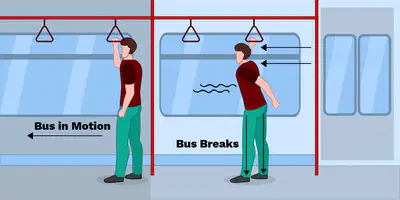
Motion happens when an object changes position over time.
To see motion, we use a fixed "reference point" or frame.
A tree or building can be a steady reference frame.
Is it moving? It's relative to your chosen reference frame!
Motion and Reference Frames
4
Multiple Choice
What is a reference frame?
The speed of an object
A place or object used for comparison to determine if something is in motion
The path an object follows
A type of force
5

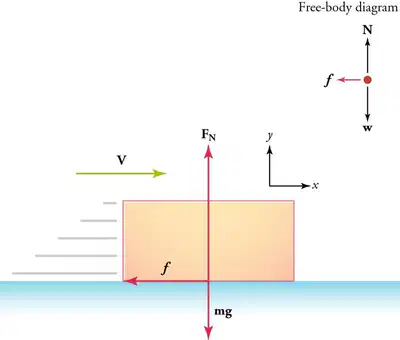
Ever pushed a swing? That's a force – a push or a pull!
Forces make things move, stop, speed up, slow down, or turn.
Forces have power (strength in Newtons, N) and a direction.
Cool diagrams use arrows to show a force's power and path!
What is Force?
6
Multiple Choice
A force is best described as:
The speed of an object
The mass of an object
A push or a pull on an object
The direction an object is moving
7


Contact Forces
Can act even if objects don't touch.
Like gravity pulling you down.
Or magnets attracting or repelling.
Noncontact Forces
Need objects to touch to act.
Like pushing a shopping cart.
Or friction when a book slides.
8
Multiple Choice
Which of the following is an example of a noncontact force?
Pushing a shopping cart
Friction between tires and the road
The Earth's gravitational pull on the Moon
Kicking a soccer ball
9


Balanced Forces: Keeping it Steady!
Forces are unequal or not directly opposite.
Net force isn't zero – there's a winner!
The object's motion changes (it accelerates!).
Unbalanced Forces: Making Moves!
Equal forces push or pull opposite ways.
Net force is zero – they cancel out!
The object's motion stays the same.
10
Multiple Choice
What happens to an object's motion when unbalanced forces act upon it?
The object remains at rest.
The object's motion does not change.
The object's motion changes (it accelerates).
The net force on the object becomes zero.
11
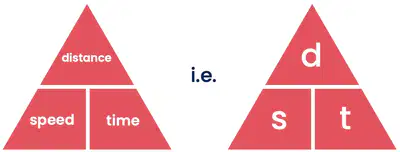
Speed shows how fast an object moves.
It is the distance covered per unit of time.
Formula: Speed = Distance / Time (e.g., 100m / 5s = 20 m/s).
SI unit: m/s. Others: km/h, mph. Constant speed is a steady pace.
Zoom! How We Calculate Speed
12
Multiple Choice
A car travels a distance of 150 kilometers in 3 hours. What is its speed?
50 km/h
450 km/h
0.02 km/h
153 km/h
13
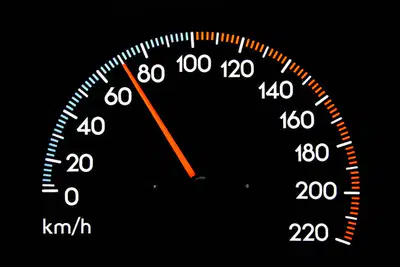

Flash Speed!
Overall speed for the entire journey.
Calculated: Total Distance / Total Time.
Example: 120km in 2 hrs is 60km/h.
Journey Speed!
Your speed at one exact moment.
Like a car's speedometer reading.
It can change very quickly!
14
Multiple Choice
A cyclist travels 10 km in the first hour and 15 km in the second hour. What is their average speed over the two hours?
10 km/h
12.5 km/h
15 km/h
25 km/h
15

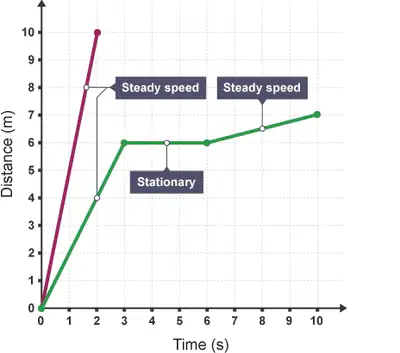
Graphs plot distance (y-axis) against time (x-axis).
Slope shows speed! Slope = Rise / Run (change in distance / change in time).
Steeper slope? Faster speed! Horizontal line? Object is stationary (zero speed).
A straight, positive slope means the object moves at a constant speed.
Interpreting Distance-Versus-Time Graphs

16
Multiple Choice
On a distance-versus-time graph, what does the slope of the line represent?
Acceleration
Distance traveled
Time taken
Speed
17

Velocity is speed that also has a direction!
It tells you how fast and which way something is going.
Speed is '30 m/s'. Velocity is '30 m/s East' (it adds direction).
Change speed or direction? Then the velocity changes too!
Velocity: It's Speed with Direction!

18
Multiple Choice
What information is needed to describe an object's velocity completely?
Speed only
Direction only
Speed and direction
Distance and time
19

Acceleration: how quickly an object's velocity changes.
Speeding up is a common form of acceleration.
Slowing down (deceleration) is also acceleration.
Changing direction, even at constant speed, is acceleration.
What is Acceleration?

20
Multiple Choice
Which of the following situations describes an object that is accelerating?
A car moving at a constant speed of 50 km/h in a straight line.
A runner jogging at a constant speed around a circular track.
A book resting on a table.
A train stopped at a station.
21

When objects collide, they exert forces on one another.
Moving things have a special power: energy of motion (kinetic energy)!
These forces can make things speed up, slow down, or change direction.
In a collision, energy transfers, making objects move or stop.
Collisions: Force and Energy Transfer

22
Multiple Choice
When a moving bowling ball hits a stationary pin, causing the pin to fly backward, this demonstrates:
the creation of new energy in the pin
a transfer of energy from the ball to the pin and the exertion of a force
that forces were perfectly balanced, so no motion occurred
only a change in the mass of the pin
23

Objects at rest stay at rest.
Objects in motion keep moving at constant velocity.
This continues unless a net force acts on them.
Objects resist changes in their state of motion.
Newton's First Law: The Law of Inertia

24
Multiple Choice
According to Newton's first law, an object in motion will remain in motion with a constant velocity if:
a constant force is applied in the direction of motion
a constant force is applied opposite to the direction of motion
the net force acting on it is zero
its inertia is very small
25

Inertia: an object's tendency to resist motion changes.
Objects at rest stay resting; objects in motion stay moving.
This property is described by Newton's first law of motion.
More mass means more inertia, so harder to move or stop.
Inertia: The Stubbornness of Objects!

26
Multiple Choice
How does an object's mass relate to its inertia?
Mass and inertia are unrelated.
The less mass an object has, the greater its inertia.
The more mass an object has, the greater its inertia.
Mass is a type of force, while inertia is a type of motion.
27
Acceleration (same direction as force) depends on net force and object's mass.
The law's formula is: Force (F) = Mass (m) × Acceleration (a).
More force = more acceleration. More mass = less acceleration (if force is same).
Units: N (force), kg (mass), m/s² (accel). Also: a = F/m or m = F/a.
Newton's Second Law: Force, Mass, Acceleration

28
Multiple Choice
According to Newton's second law (F=ma), if the net force acting on an object doubles, and its mass remains constant, what happens to its acceleration?
It is halved.
It remains the same.
It doubles.
It quadruples.
29

Newton's third law: Every action has an equal, opposite reaction.
If object A pushes B, object B pushes A back equally hard.
These paired forces act on *different* objects, not the same one.
So, these forces don't cancel out and can cause movement.
Newton's Third Law: Action-Reaction!

30
Multiple Choice
A student pushes against a wall. The wall pushes back on the student with an equal and opposite force. Why don't these forces cancel each other out, preventing the student from feeling the push?
The forces are not actually equal in strength.
The forces act in the same direction.
The forces act on different objects (the student and the wall).
One of the forces is frictional and doesn't count.
31
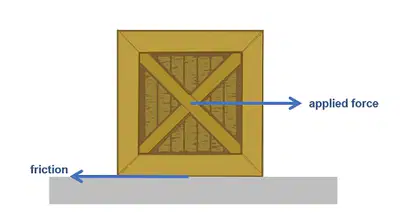
Friction: a contact force opposing motion between rubbing surfaces.
It always acts opposite to intended or actual movement.
Factor 1: Surface type. Rougher surfaces cause more friction than smooth ones.
Factor 2: Pressing force. More force (like a heavier box) creates more friction.
Understanding Friction - Factors Affecting It

32
Multiple Choice
What are the two main factors that affect the amount of friction between two surfaces?
The speed of the object and its mass
The types of surfaces involved and how hard they are pushed together
The color of the surfaces and the air temperature
The direction of motion and the object's shape
33

Static friction: Keeps things still. You beat it to move heavy furniture.
Sliding friction: When surfaces rub! Like a book sliding across a table.
Rolling friction: For wheels and balls. It's weaker than sliding friction.
Fluid friction: In liquids or gases. Think air resistance for a skydiver.
Friction Fun: Stick, Slip, Roll, and Flow!

34
Multiple Choice
What type of friction occurs when a solid object moves through a fluid like air or water?
Static friction
Sliding friction
Rolling friction
Fluid friction
35
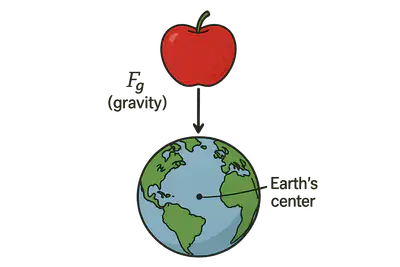
Gravity is an invisible force pulling objects with mass together.
On Earth, it pulls things down towards the planet's center.
Newton showed it keeps planets and moons orbiting larger bodies.
Free fall is when only gravity acts on a falling object.
Gravity - The Universal Force of Attraction

36
Multiple Choice
What does the Law of Universal Gravitation state?
Only very large objects like planets have gravity.
Gravity only acts on objects that are on or near Earth.
The force of gravity acts between all objects in the universe that have mass.
Gravity is a type of contact force that requires objects to touch.
37
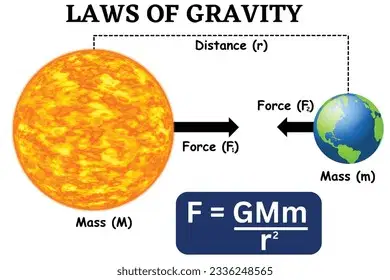
Two main things decide how strong gravity is!
More mass (like more stuff) means stronger gravity.
The Sun is super massive, so its gravity pull is huge!
The farther apart objects are, the weaker their gravity.
Gravity's Power: It's All About Mass & Distance!

38
Multiple Choice
If the distance between two objects increases, while their masses remain the same, what happens to the gravitational force between them?
It increases.
It decreases.
It remains the same.
It becomes zero immediately.
39
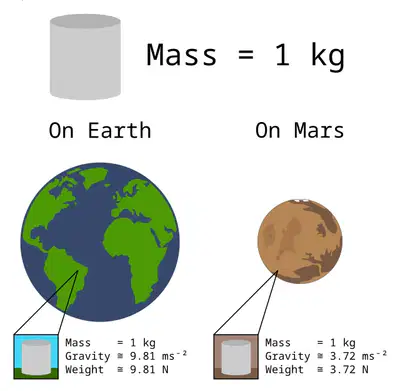

Mass: The 'Stuff' Inside
Measures the force of gravity on an object.
Its SI unit is the newton (N).
It changes based on the strength of gravity.
Weight: Gravity's Pull
Measures the amount of "stuff" in an object.
Its SI unit is the kilogram (kg).
It stays the same, no matter your location!
40
Multiple Choice
What is the primary difference between mass and weight?
Mass is a force, while weight is the amount of matter.
Mass is measured in Newtons (N), while weight is measured in kilograms (kg).
Mass is the amount of matter in an object and is constant, while weight is the force of gravity on an object and can change with location.
There is no real difference; mass and weight are the same thing.
41

Kinetic energy is energy of motion. Moving things have it!
It depends on two things: its mass and its speed.
More mass means more kinetic energy if speed stays the same.
More speed means MUCH more energy! KE = 1/2 mv².
Concept 20: Kinetic Energy - The Energy of Motion

42
Multiple Choice
What are the two primary factors that determine an object's kinetic energy?
Its weight and height above the ground
Its mass and speed
Its volume and temperature
Its direction of motion and acceleration
43
Correction
Constant motion needs no net force (Newton's 1st Law).
Without air resistance, all objects fall at the same rate.
Inertia is not a force; it resists motion changes.
They act on different objects, so they don't cancel.
Misconception
Motion always needs a force in its direction.
Heavier objects always fall faster than lighter ones.
Inertia is a force keeping objects moving/at rest.
Action-reaction forces cancel, so no motion occurs.
44
Motion is a position change relative to a reference frame.
A force (push/pull) is needed to change motion (acceleration).
Newton's 1st Law: Objects resist changes in their motion (inertia).
Newton's 2nd Law: Net Force = Mass × Acceleration (F=ma).
45
Open Ended
What are the two main factors that affect the strength of gravitational force between two objects?
46
Poll
If a car is traveling at a constant speed of 60 mph but turns a corner, is it accelerating? Select the best explanation.
Yes, because its speed changed when turning.
Yes, because its direction of motion changed.
No, because its speed remained constant at 60 mph.
No, because turning does not involve acceleration.
47
Open Ended
Briefly state Newton's First Law of Motion in your own words.
48
Poll
On a scale of 1-4, how confident do you feel about applying Newton's Laws to explain everyday motion? (1=Not confident, 4=Very confident)
1
2
3
4
49
Open Ended
What concept from today's review of Force and Motion was most challenging or confusing for you?
Show answer
Auto Play
Slide 1 / 49
SLIDE
Similar Resources on Wayground

43 questions
Earth's Biomes
Presentation
•
7th Grade
45 questions
Lewis Dot Structures
Presentation
•
7th - 8th Grade
45 questions
Subject-Verb Agreement
Presentation
•
7th - 8th Grade
46 questions
Motion & Forces Cont.
Presentation
•
7th Grade
46 questions
Text Structures
Presentation
•
7th Grade
43 questions
Cotton Cattle Railroads
Presentation
•
7th Grade
45 questions
Classification Review
Presentation
•
7th Grade
46 questions
APT Test Review
Presentation
•
6th - 8th Grade
Popular Resources on Wayground
10 questions
Safety Day 2026 – Student Review

Quiz
•
9th Grade
21 questions
Continents and Oceans
Quiz
•
6th Grade
20 questions
Parts of Speech
Quiz
•
5th Grade
16 questions
Subject & Predicate
Quiz
•
5th Grade
25 questions
Multiplication Facts
Quiz
•
5th Grade
12 questions
Map Skills
Quiz
•
3rd Grade
22 questions
Continents and Oceans
Quiz
•
5th Grade
15 questions
Rounding Decimals
Quiz
•
5th Grade