

Force and Motion Full Unit Standards Aligned

Presentation
•
Physics
•
7th Grade
•
Practice Problem
•
Hard

Sanidhya Singh
FREE Resource
23 Slides • 24 Questions
1

Force and Motion
2
Learning Objectives
Describe motion with reference frames; how unbalanced forces change it.
Apply Newton's Laws: inertia (1st), F=ma (2nd), action-reaction (3rd).
Explain gravity is attractive and depends on objects' masses.
Describe kinetic energy: energy of motion, depends on mass/speed.
3

Motion occurs when an object's position changes.
We compare its position to a reference frame.
A reference frame is a fixed spot, like a tree.
Always state your reference frame to describe motion clearly.
Concept 1: Reference Frames and Motion

4
Multiple Choice
What is a reference frame?
The speed of an object
A place or object used for comparison to determine if something is in motion
The path an object follows
A type of force
5

How we see motion depends on our "reference frame." (Viewpoint)
An object can seem still, yet be moving to another observer!
Example: On a train, you're still to your seat, moving past the platform.
Always say your reference frame when describing motion.
Relative Motion

6
Multiple Choice
If you are sitting on a moving train, which of the following is true regarding your motion?
You are only in motion relative to the train.
You are in motion relative to the ground and stationary relative to the train.
You are only stationary relative to the ground.
You are not in motion according to any reference frame.
7

Imagine a super push or a mighty pull – that’s a force!
Forces have strength (how strong!) and a specific direction they go.
We measure force strength in Newtons (N) – cool unit, right?
Forces make things move: speed up, slow down, or even turn!
Force: The Push and Pull Power!

8
Multiple Choice
How is the strength of a force represented by an arrow in a diagram?
By the color of the arrow
By the thickness of the arrow
By the length of the arrow
By the position of the arrow
9


Contact Forces
Applied even if objects don't touch.
Example: An apple falling to Earth.
Gravity pulls objects due to their mass.
Noncontact Forces
Types of Forces: Contact vs. Noncontact
Applied only when objects touch.
Example: Pushing a box across a floor.
Friction opposes motion when surfaces rub.
10
Multiple Choice
Which of the following is an example of a noncontact force?
Pushing a shopping cart
Friction between tires and the road
The Earth's gravitational pull on the Moon
Kicking a soccer ball
11


Balanced Forces
Forces are unequal or not directly opposite.
Causes a change in the object's motion (acceleration).
Net force is greater than zero, changing speed/direction.
Unbalanced Forces
Concept 5: Balanced and Unbalanced Forces, and Net Force
Forces are equal and act in opposite directions.
No change in the object's motion occurs.
Net force is zero; object stays still or moves constantly.
12
Multiple Choice
What happens to an object when unbalanced forces act upon it?
The object remains at rest.
The object's motion does not change.
The object's motion changes (it accelerates).
The net force on the object becomes zero.
13

Speed is how fast something moves—its distance traveled per unit of time.
The formula is simple: Speed = Distance / Time.
The SI unit for speed is m/s. Others are km/h or mph.
Greater speed means more distance in same time, or same distance in less time!
Calculating Speed

14
Multiple Choice
A car travels a distance of 200 kilometers in 4 hours. What is its speed?
50 km/h
800 km/h
0.02 km/h
204 km/h
15
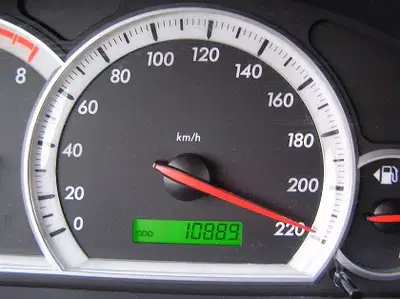
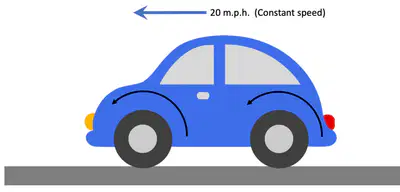
Snapshot Speed: Instantaneous!
Total distance divided by total time.
Formula: Total Distance / Total Time.
Overall speed for the entire journey.
The Big Picture: Average Speed!
Speed Showdown: Instantaneous vs. Average!
Speed at a specific moment in time.
Like a car's speedometer reading.
Shows quick, moment-to-moment changes.
16
Multiple Choice
A cyclist travels 10 km in the first hour and 15 km in the second hour. What is their average speed over the two hours?
10 km/h
12.5 km/h
15 km/h
25 km/h
17
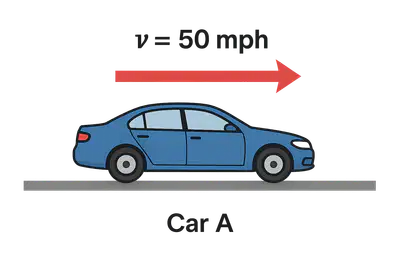
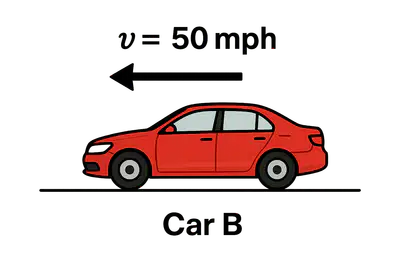
Velocity is speed plus the object's direction.
It's a vector quantity: has magnitude (speed) and direction.
Change speed or direction? Velocity changes too!
Same speed, different ways? Different velocities!
Velocity: Speed and Direction Together!
18
Multiple Choice
What information is needed to describe an object's velocity?
Speed only
Direction only
Speed and direction
Distance and time
19
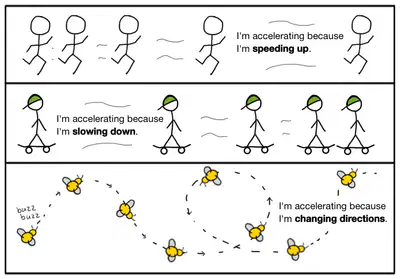
Acceleration is when an object's velocity changes over time.
Speeding up is positive acceleration; slowing down is negative.
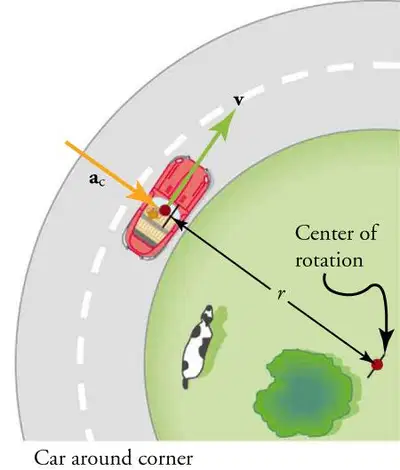
Changing direction, even at constant speed, is acceleration.
Any change in velocity (speed or direction) means acceleration.
What is Acceleration?
20
Multiple Choice
Which of the following situations describes an object that is accelerating?
A car moving at a constant speed of 50 km/h in a straight line.
A runner jogging at a constant speed around a circular track.
A book resting on a table.
All of the above.
21
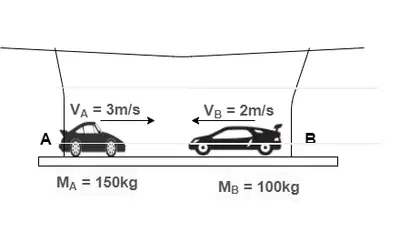
Moving things have "kinetic energy" – energy of motion!
When objects collide, they push or pull with forces.
These forces can change an object's motion or speed.
Collisions transfer kinetic energy, making other things move!
Crash Course: Forces and Energy in Collisions!
22
Multiple Choice
When a moving bumper car hits a stationary bumper car, causing it to move, what is one way to describe what happens?
The stationary car creates energy.
The moving car transfers some of its energy of motion to the stationary car.
No forces are involved in the collision.
The moving car gains energy from the stationary car.
23
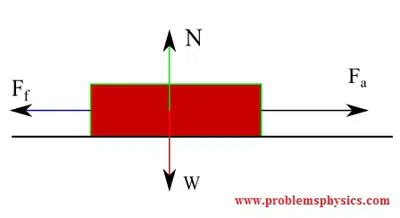
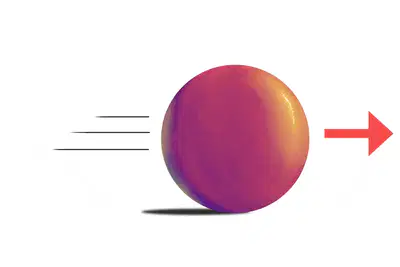
An object at rest will stay at rest.
An object in motion stays in motion with constant velocity.
This happens unless acted on by a nonzero net force.
Objects naturally resist changes in their state of motion.
Newton's First Law: The Law of Inertia
24
Multiple Choice
According to Newton's first law of motion, what will happen to an object moving at a constant velocity if no net force acts on it?
It will gradually slow down and stop.
It will speed up.
It will continue moving at that constant velocity.
It will change direction.
25
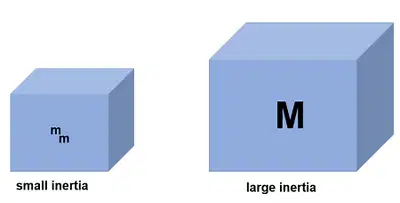
Inertia is an object's resistance to changing its motion.
Newton's first law is often called the law of inertia.
An object's inertia depends directly on its mass.
More mass means more inertia, harder to start, stop, or turn!
Inertia and Mass
26
Multiple Choice
How does an object's mass relate to its inertia?
Mass and inertia are unrelated.
The less mass an object has, the greater its inertia.
The more mass an object has, the greater its inertia.
Mass is a type of force, while inertia is a type of motion.
27
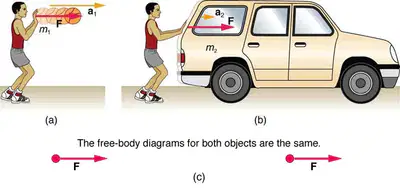
It links net force, an object's mass, and its acceleration.
Formula: Net Force (F) = Mass (m) × Acceleration (a).
More net force = more acceleration. More mass = less acceleration.
Acceleration is in the same direction as the net force.
Newton's Second Law of Motion
28
Multiple Choice
According to Newton's second law (F=ma), if the net force acting on an object doubles, and its mass remains constant, what happens to its acceleration?
It is halved.
It remains the same.
It doubles.
It quadruples.
29
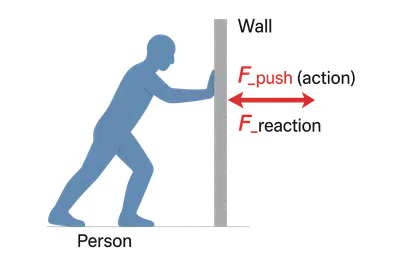
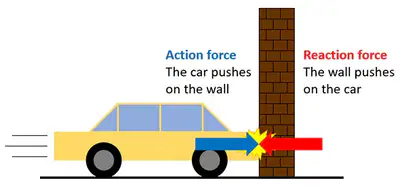
Every action has an equal, opposite reaction.
If object A pushes B, B pushes A back equally.
These forces are pairs, acting on different objects.
Example: Push a wall; the wall pushes you back.
Newton's Third Law: Action & Reaction
30
Multiple Choice
A student pushes against a wall. The wall pushes back on the student with an equal and opposite force. Why don't these forces cancel each other out?
The forces are not equal in strength.
The forces act in the same direction.
The forces act on different objects (the student and the wall).
One of the forces is not a real force.
31
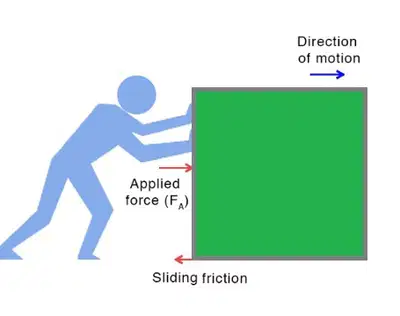
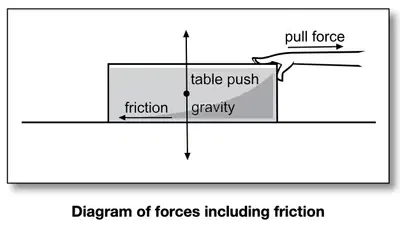
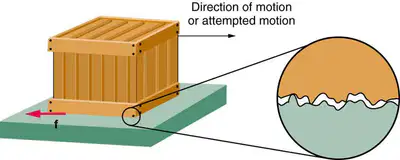
Friction is a force stopping motion between rubbing surfaces.
Its direction is always opposite to how something moves.
Rougher surfaces and more pressure mean more friction.
Heavy box on rough floor? Harder to slide due to friction!
Friction: The Motion Resister!
32
Multiple Choice
What are the two main factors that affect the amount of friction between two surfaces?
The speed of the object and its mass
The types of surfaces involved and how hard they are pushed together
The color of the surfaces and the air temperature
The direction of motion and the object's shape
33
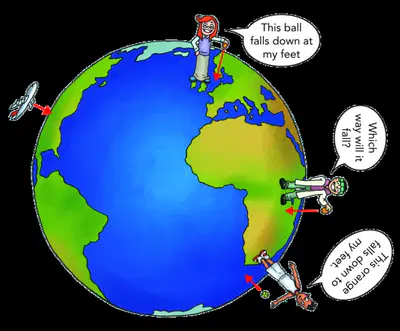
Gravity is a noncontact, attractive force between any two objects having mass.
This force is universal. It acts between all objects in the universe.
It's strong when objects have large mass, like planets, moons, or stars.
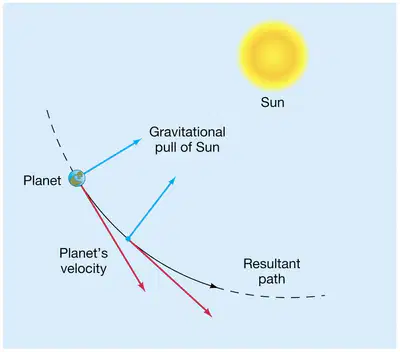
Earth's gravity pulls objects down. The Sun's gravity holds planets in orbit.
Concept 16: Gravitational Interactions
34
Multiple Choice
What does the concept of universal gravitation imply?
Only planets have gravity.
Gravity only acts on objects on Earth.
A gravitational force acts between all objects in the universe that have mass.
Gravity is a contact force.
35

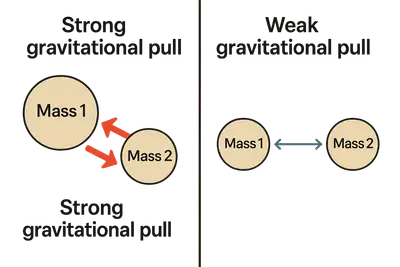
Gravitational force depends on two things: mass and distance.
More mass means a stronger gravitational pull between objects.
More distance means a weaker gravitational pull between objects.
So, gravity is strongest for massive objects that are close.
Concept 17: Factors Affecting Gravitational Force
36
Multiple Choice
If the distance between two objects increases, what happens to the gravitational force between them?
It increases.
It decreases.
It remains the same.
It becomes zero immediately.
37
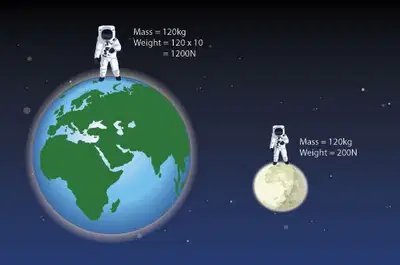
All About Mass
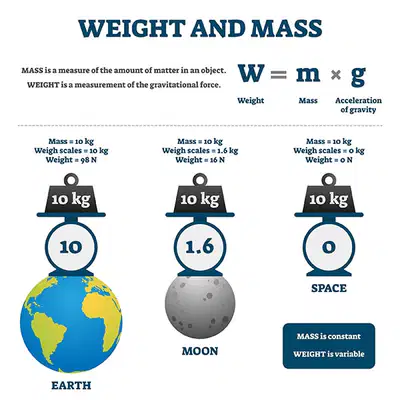
Weight is gravity's pulling force on an object.
Measured in Newtons (N), weight depends on gravity.
An astronaut weighs much less on the Moon!
Understanding Weight
Concept 18: Unpacking Mass and Weight
Mass is the amount of "stuff" in an object.
Measured in kilograms (kg), mass is always constant.
An astronaut's mass is the same on Earth or Moon.
38
Multiple Choice
What is the difference between mass and weight?
Mass is a force, weight is the amount of matter.
Mass is measured in Newtons, weight in kilograms.
Mass is the amount of matter and is constant; weight is the force of gravity and can change with location.
There is no difference; they are the same.
39
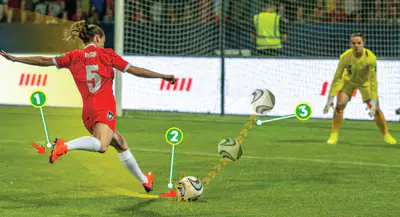
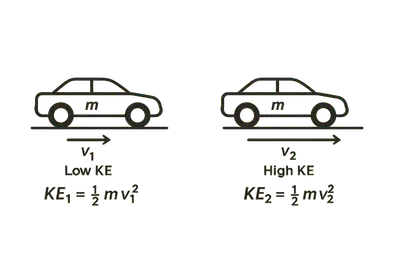
Kinetic energy is energy of motion.
It depends on an object's mass and its speed.
More mass means more kinetic energy at the same speed.
More speed means much more kinetic energy (KE = 1/2 mv²).
Kinetic Energy
40
Multiple Choice
What are the two factors that determine an object's kinetic energy?
Its weight and height
Its mass and speed
Its volume and temperature
Its direction and acceleration
41
Correction
Constant motion needs no net force. Net force changes motion.
Without air resistance, all objects fall at the same rate.
Inertia isn't a force; it's resistance to motion change.
Action-reaction forces act on different objects, so don't cancel.
Misconception
Common Misconceptions
Motion means a force always acts in its direction.
Heavier objects always fall faster than lighter objects.
Inertia is a force keeping objects moving or at rest.
Action-reaction forces cancel, so no motion can happen.
42
Summary
Motion is position change, described by a reference frame.
Forces (pushes/pulls) cause changes in motion, called acceleration.
Net force changes motion; balanced forces mean no motion change.
Newton's Laws: Inertia (1st), F=ma (2nd), Action-Reaction (3rd).
43
Open Ended
What are the two main factors that affect the strength of gravitational force between two objects?
44
Poll
If a car is traveling at a constant speed of 60 mph but turns a corner, is it accelerating? Explain why or why not.
Yes, because its speed changed
Yes, because its direction changed
No, because its speed is constant
No, because it didn't slow down
45
Open Ended
Briefly state Newton's First Law of Motion in your own words.
46
Poll
On a scale of 1-4, how confident do you feel about applying Newton's Laws to solve problems? (1=Not confident, 4=Very confident)
1
2
3
4
47
Open Ended
What concept from today's lesson on Force and Motion was most challenging for you to understand?
Force and Motion
Show answer
Auto Play
Slide 1 / 47
SLIDE
Similar Resources on Wayground

39 questions
Food web and food chains
Presentation
•
7th Grade
40 questions
Area and Circumference of Circles
Presentation
•
7th - 8th Grade
41 questions
V-ed V-ing
Presentation
•
7th Grade
42 questions
Spheres of the Earth
Presentation
•
6th - 8th Grade
40 questions
OE BA LA- OLYMPIA- LỚP 6,7
Presentation
•
7th Grade
42 questions
The Outer Planets
Presentation
•
6th Grade
44 questions
Maya, Aztec, Inca
Presentation
•
6th - 8th Grade
44 questions
Ecological Relationship
Presentation
•
8th Grade
Popular Resources on Wayground
24 questions
PBIS-HGMS Day 10

Quiz
•
6th - 8th Grade
10 questions
HCS SCI 03 Summer School Review 3
Quiz
•
3rd Grade
11 questions
Home Scope
Quiz
•
7th - 8th Grade
15 questions
HCS SCI 05 Summer School Assessment 3 Review
Quiz
•
5th Grade
35 questions
Lufkin Road Middle School Student Handbook & Policies Assessment
Quiz
•
7th Grade
18 questions
Geo 11.3 Area of Circles and Sectors
Quiz
•
9th - 11th Grade