

Y11 iGCSE Revision slides with KO

Presentation
•
Physics
•
Professional Development
•
Practice Problem
•
Hard

Christine Cameron-Francis
FREE Resource
41 Slides • 28 Questions
1

2
Open Ended
Why is it important to understand how energy is conserved and dissipated in physical systems?
3
4
Multiple Choice
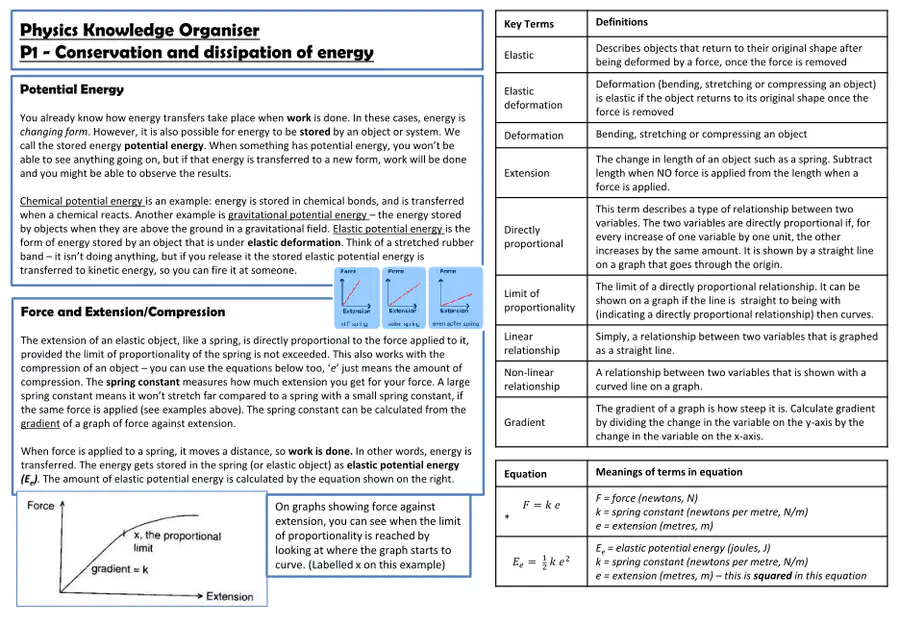
Which of the following best describes elastic potential energy?
Energy stored in chemical bonds and released during a reaction
Energy stored in an object due to its position in a gravitational field
Energy stored in an object when it is stretched or compressed
Energy transferred as heat from one object to another
5
6
Multiple Choice
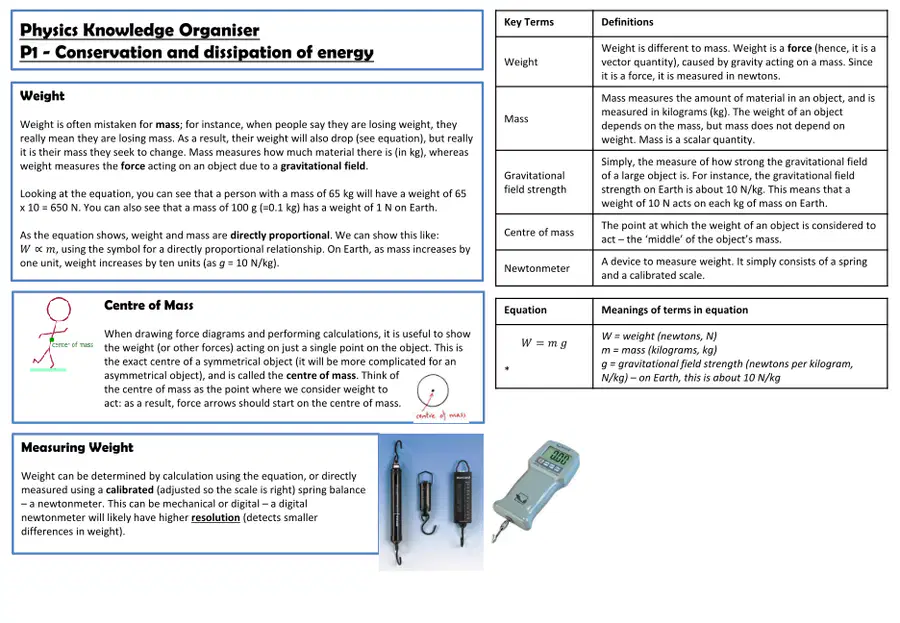
Which of the following best describes the difference between mass and weight?
Mass is the amount of matter in an object, while weight is the force acting on that mass due to gravity.
Mass is measured in newtons, while weight is measured in kilograms.
Weight is always constant, but mass changes with location.
Weight is a scalar quantity, while mass is a vector quantity.
7
8
Multiple Select
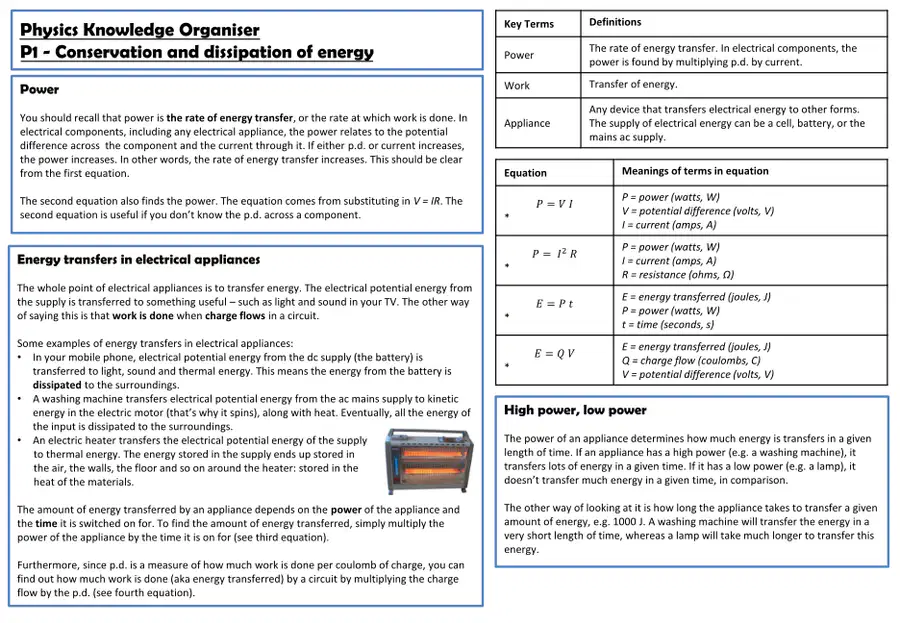
Which of the following are examples of energy transfers in electrical appliances?
A mobile phone transferring electrical energy to sound and thermal energy.
A washing machine transferring electrical energy to kinetic and thermal energy.
An electric heater transferring electrical energy to thermal energy.
A solar panel transferring chemical energy to electrical energy.
9
10
Fill in the Blanks
Type answer...
11
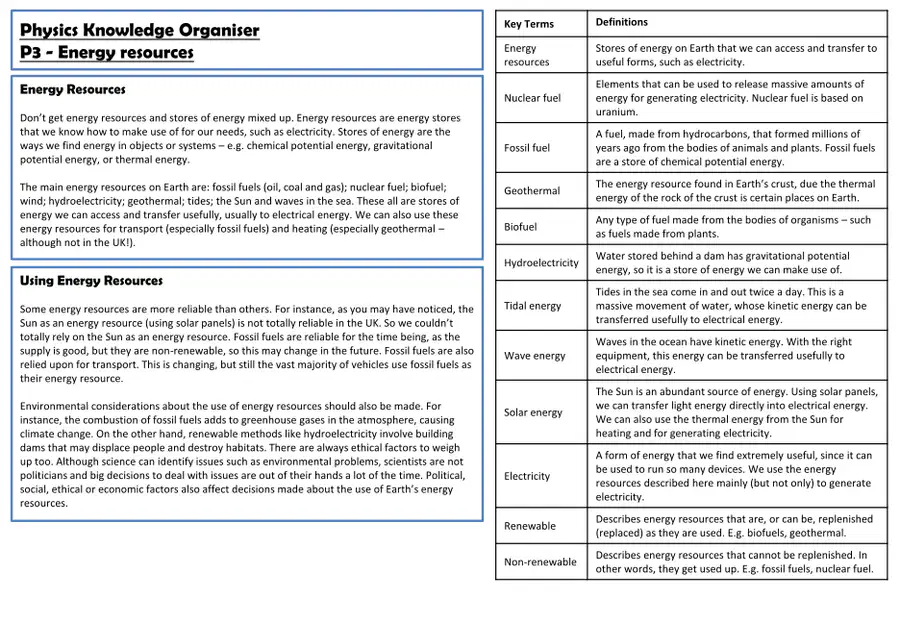
12
Open Ended
Explain how renewable and non-renewable energy resources differ, and give an example of each.
13
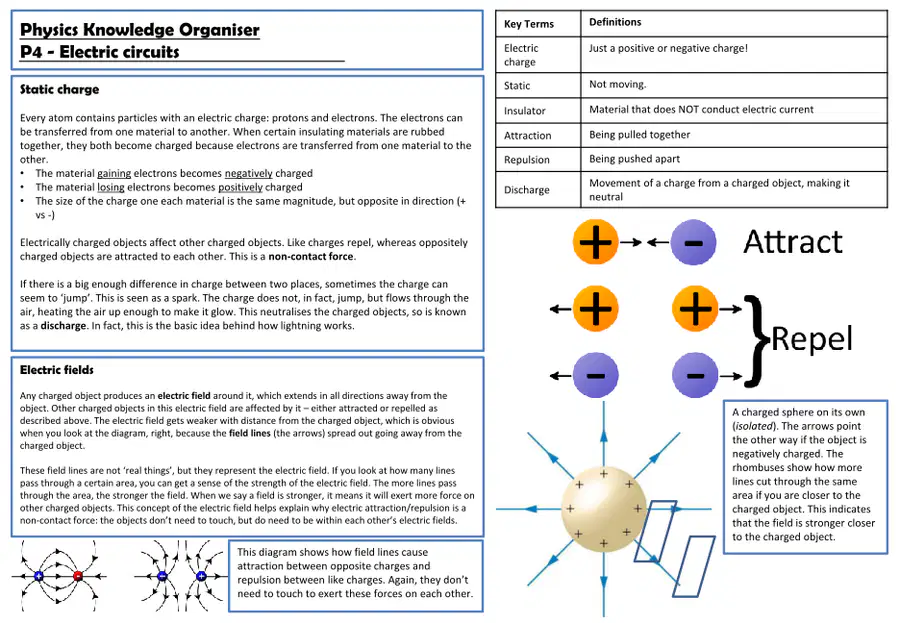
14
Multiple Choice
What happens when a material gains electrons during static charging?
It becomes negatively charged.
It becomes positively charged.
It becomes neutral.
It starts conducting electricity.
15
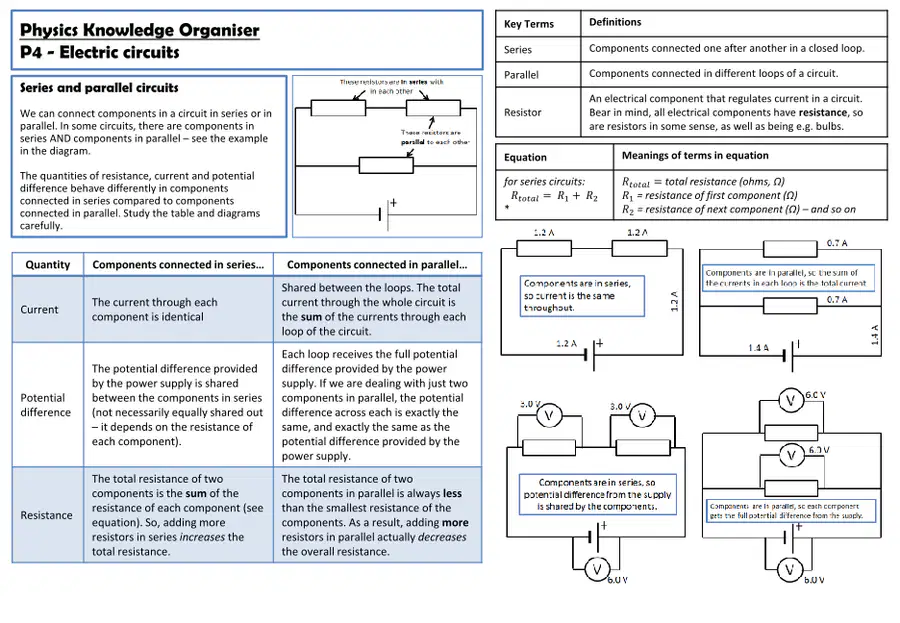
16
Multiple Choice
In a parallel circuit, how does the total resistance compare to the resistance of individual components?
It is always less than the smallest resistance of the components.
It is equal to the sum of all resistances.
It is always greater than the largest resistance of the components.
It is the same as the resistance of one component.
17
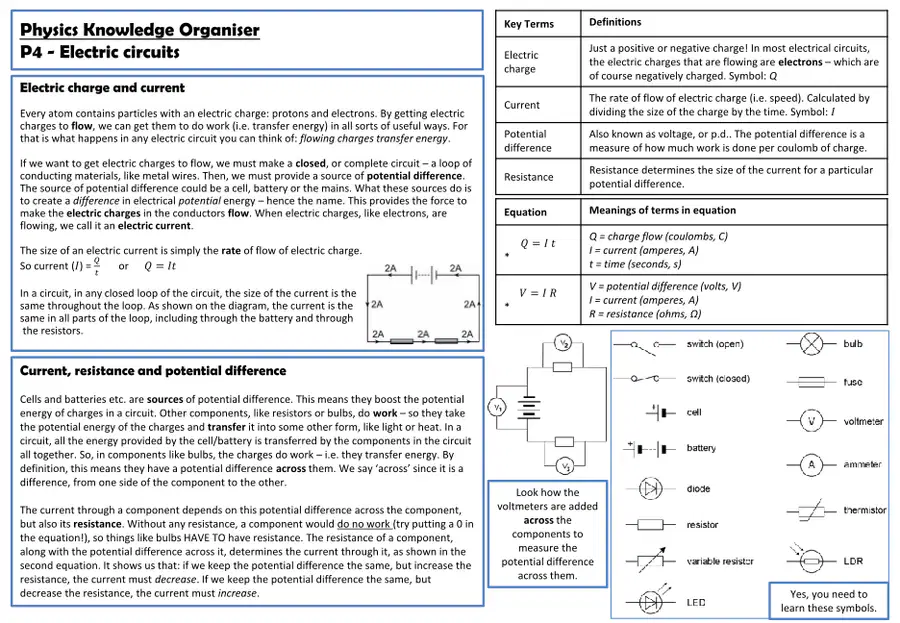
18
Multiple Choice
Which of the following best describes the role of resistance in an electric circuit?
It determines how much current flows for a given potential difference.
It increases the potential difference across the circuit.
It provides energy to the circuit.
It measures the rate of flow of charge.
19
20
Fill in the Blanks
Type answer...
21
Multiple Select
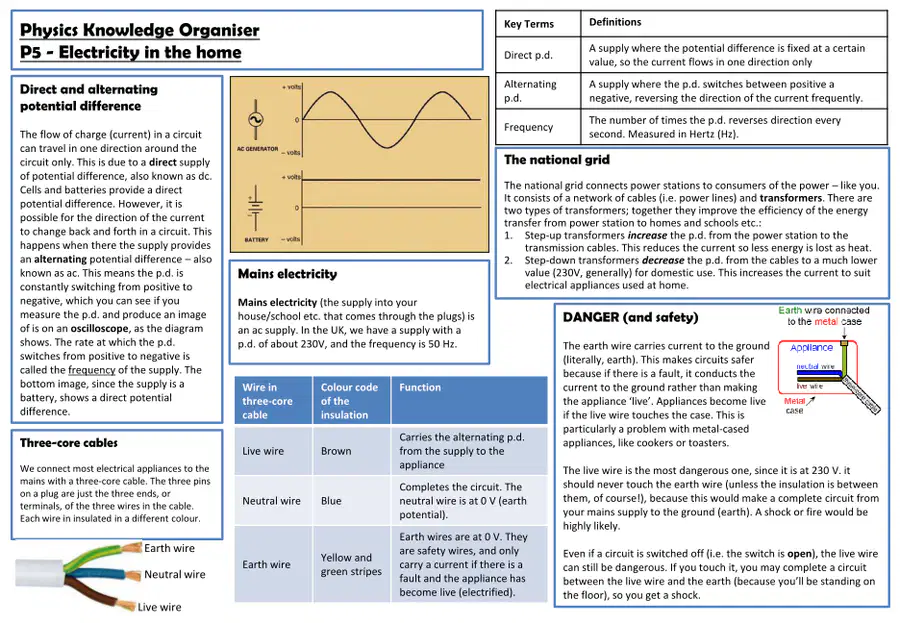
Which of the following statements about alternating and direct potential difference are correct?
Alternating p.d. switches between positive and negative.
Direct p.d. flows in only one direction.
Alternating p.d. is provided by batteries.
Direct p.d. is provided by cells.
22
23
Open Ended
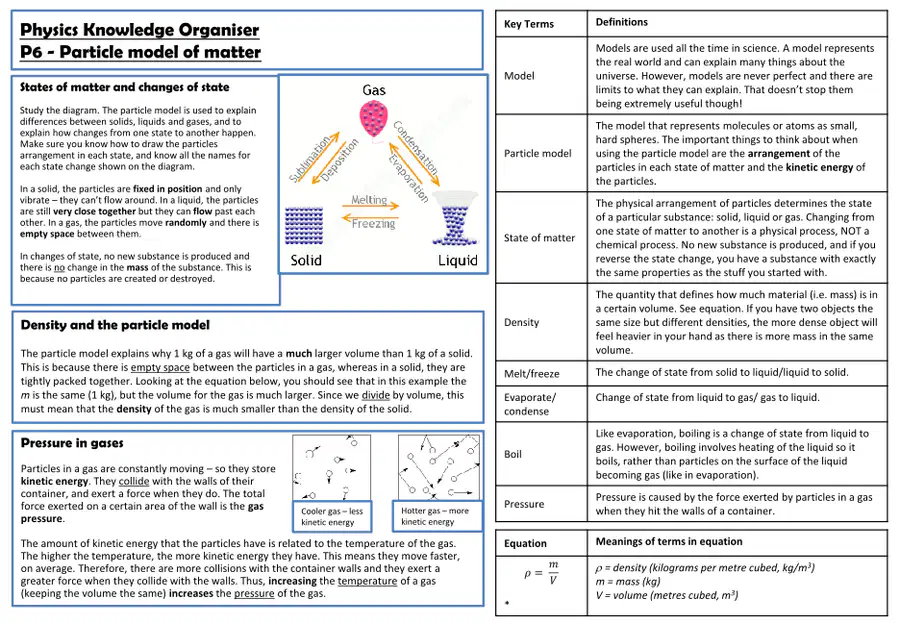
Explain how the particle model accounts for the differences in density between solids, liquids, and gases.
24
25
Multiple Choice
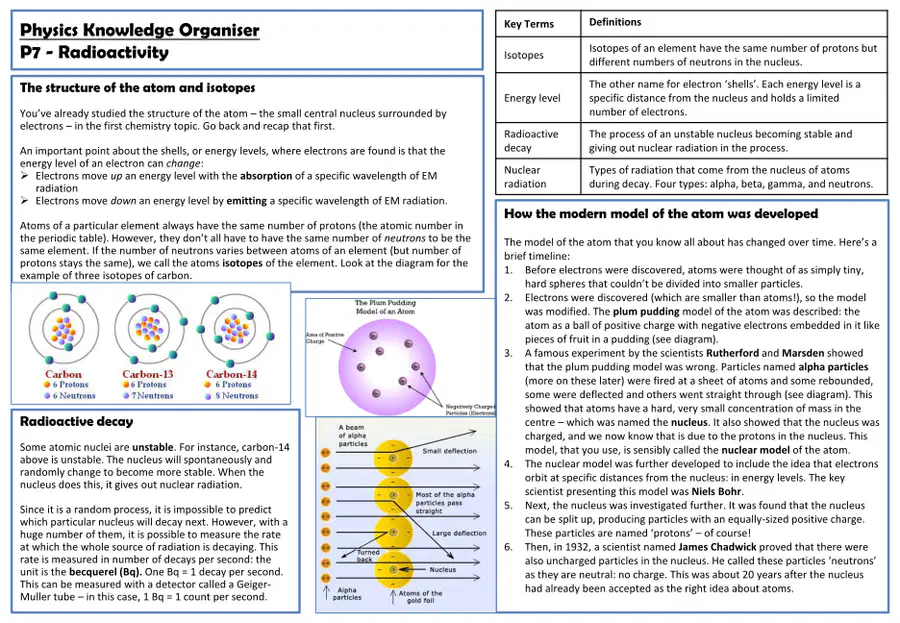
Which scientist's experiment led to the discovery of the nucleus in the atom?
Rutherford and Marsden
Bohr
Chadwick
Thomson
26
27
Multiple Choice
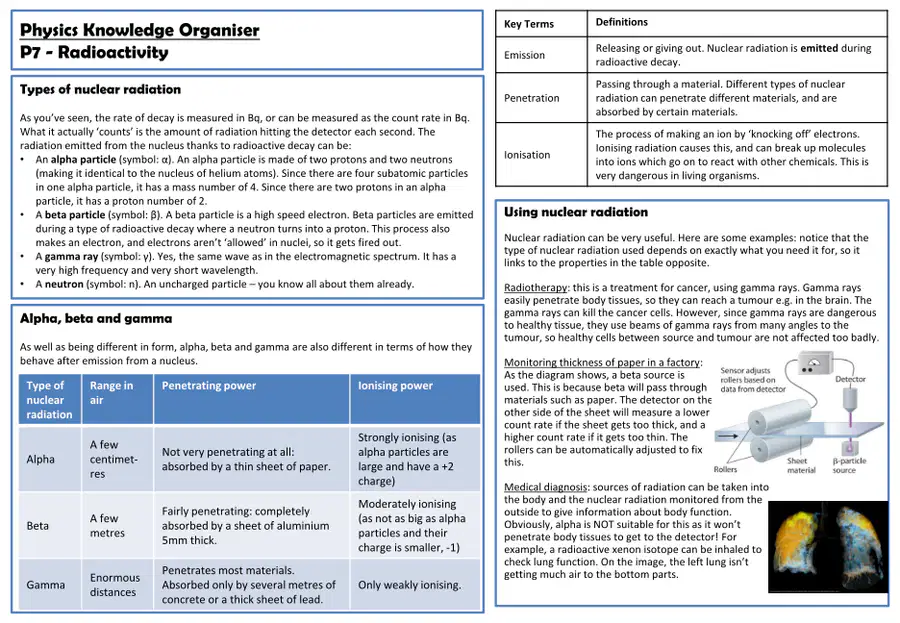
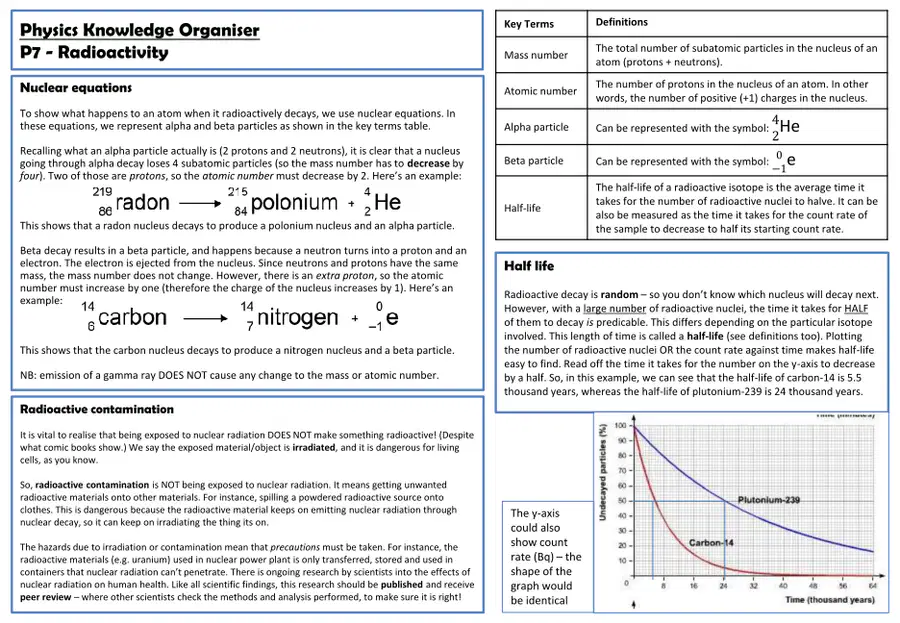
Which type of nuclear radiation has the greatest penetrating power?
Alpha
Beta
Gamma
Neutron
28
29
30
Fill in the Blanks
Type answer...
31
Multiple Select
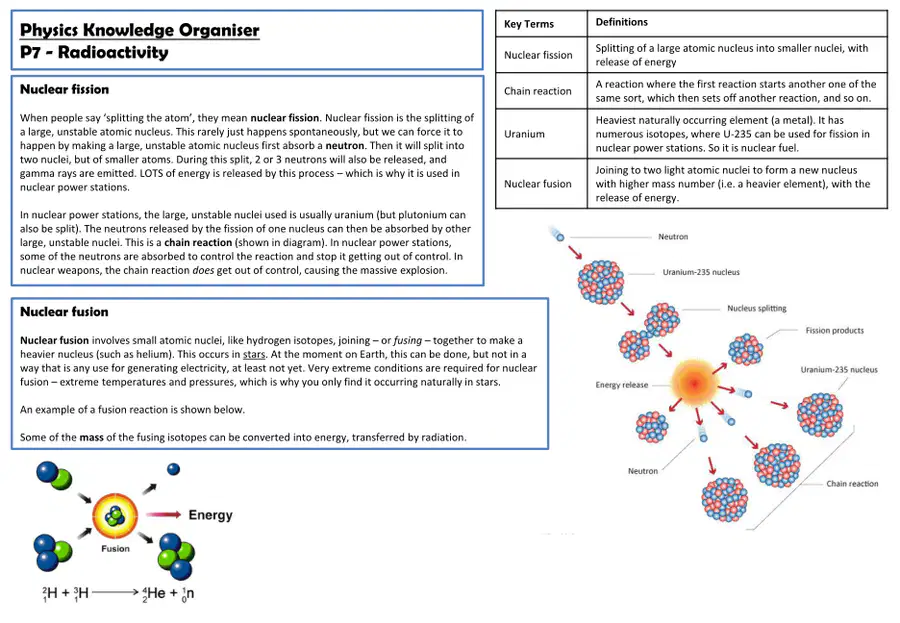
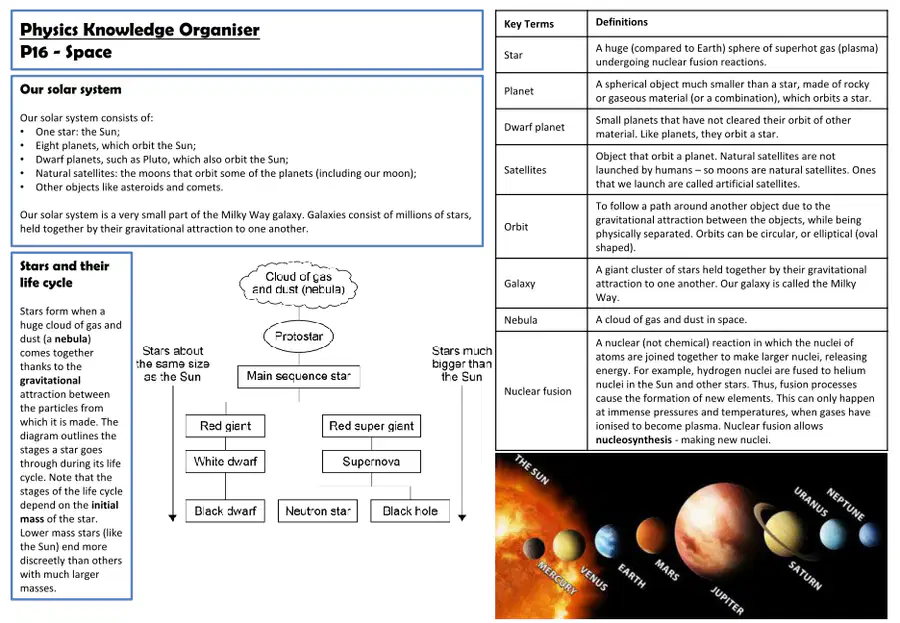
Which of the following statements about nuclear fusion are correct?
It involves joining small atomic nuclei together.
It occurs naturally in stars.
It is used in nuclear power stations on Earth.
It requires extremely high temperatures and pressures.
32
Multiple Choice
Which process involves splitting a large atomic nucleus into smaller nuclei with the release of energy?
Nuclear fusion
Nuclear fission
Chain reaction
Radioactive decay
33
34
Multiple Choice
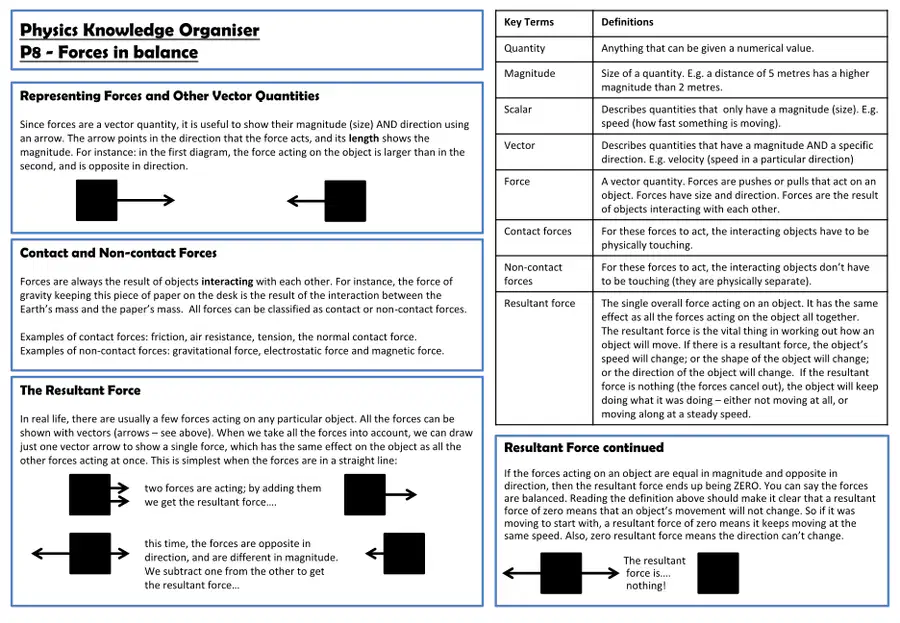
What is the resultant force if two forces acting on an object are equal in magnitude and opposite in direction?
Double the force
Zero
Half the force
The larger force
35
36
Open Ended
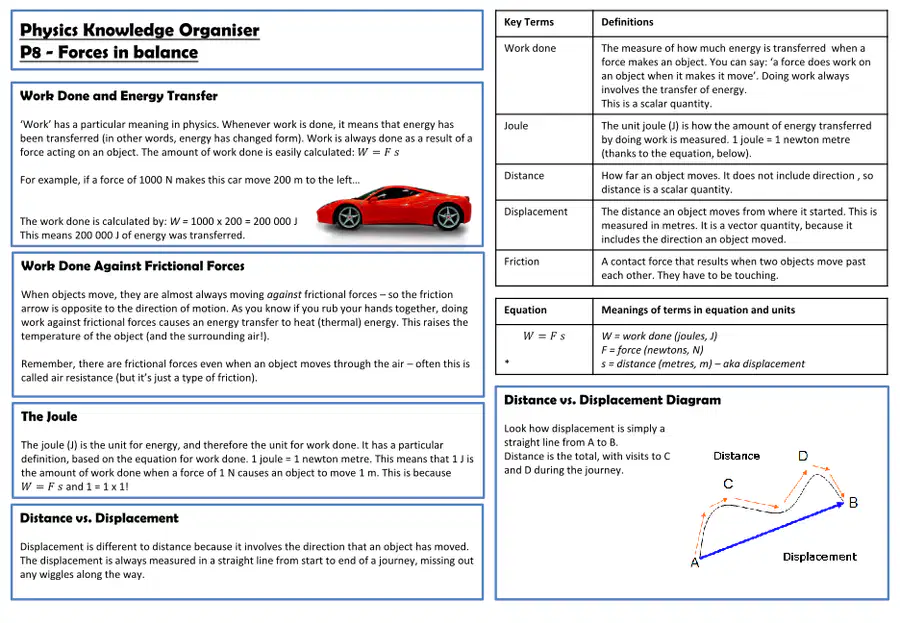
Explain the difference between distance and displacement, and describe a scenario where the two would have very different values.
37
38
Multiple Choice
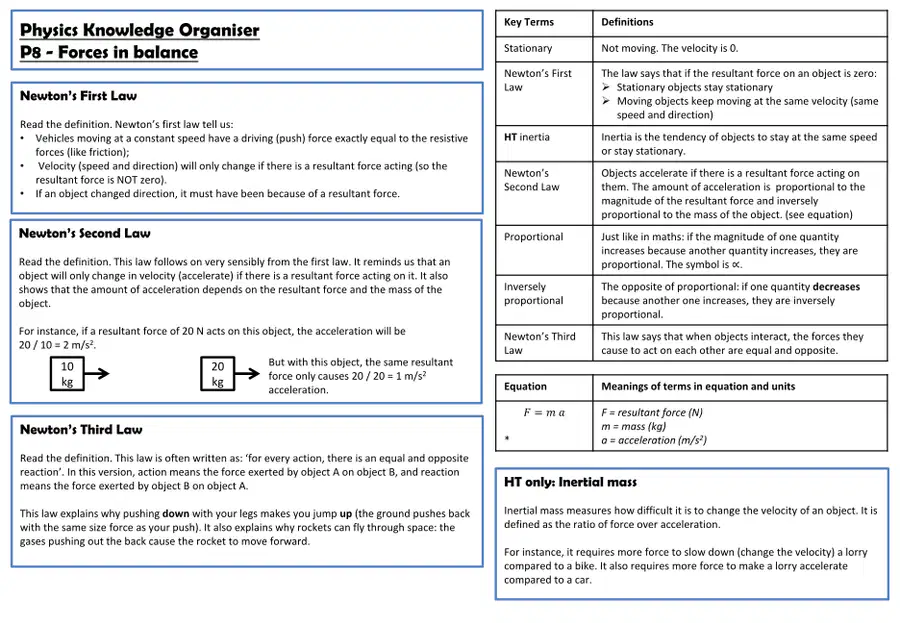
According to Newton’s Second Law, what happens to the acceleration of an object if the resultant force remains the same but the mass of the object increases?
Acceleration increases
Acceleration decreases
Acceleration stays the same
Acceleration becomes zero
39
40
41
42
Multiple Choice
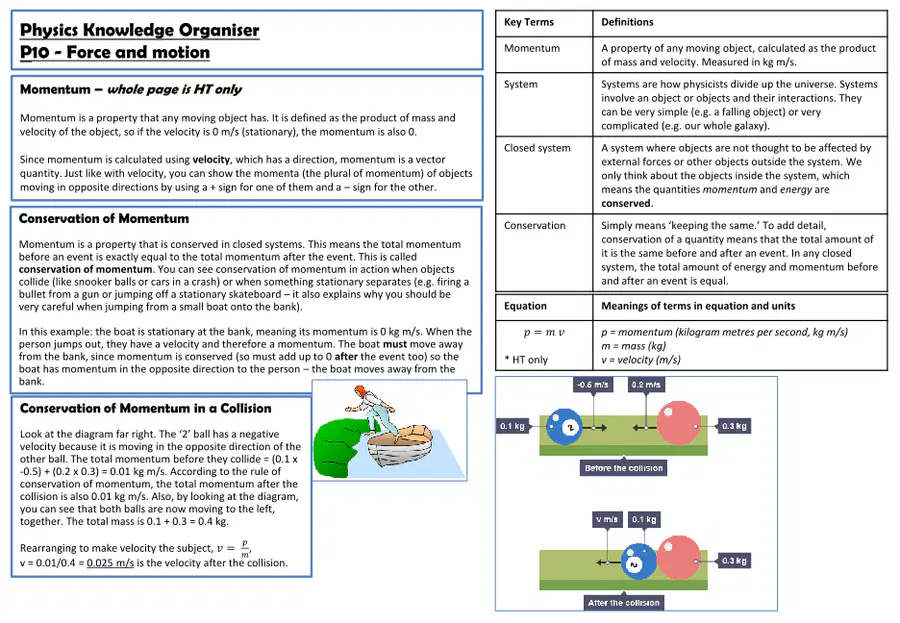
Which of the following best describes the law of conservation of momentum in a closed system?
The total momentum before an event is equal to the total momentum after the event.
Momentum is always zero in a closed system.
Momentum increases after every collision.
Momentum is only conserved in open systems.
43
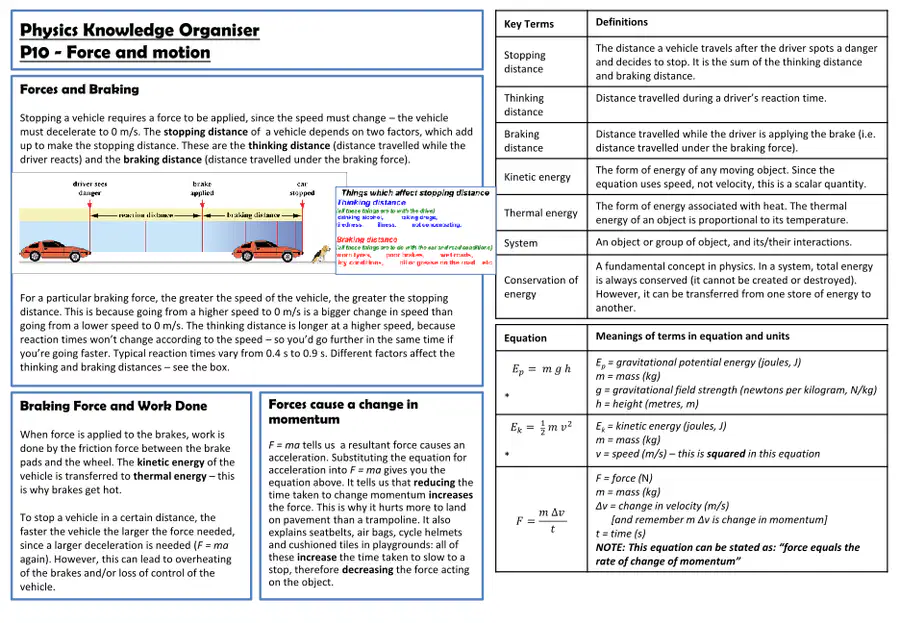
44
Open Ended
Explain how the stopping distance of a vehicle is affected by both thinking distance and braking distance. Use examples from the diagram to support your answer.
45
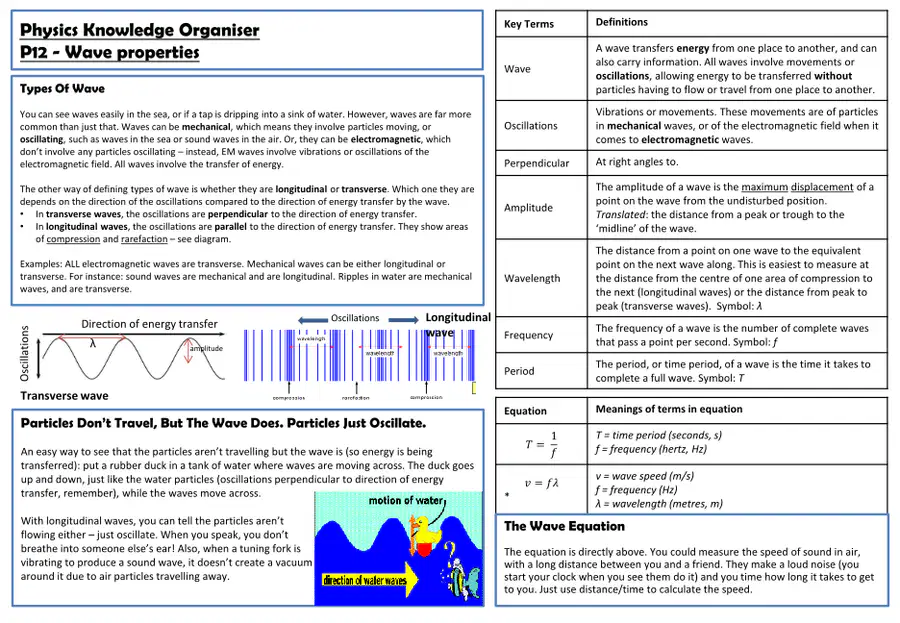
46
Multiple Select
Which of the following are examples of transverse waves?
Sound waves in air
Light waves
Water ripples
Seismic P-waves
47
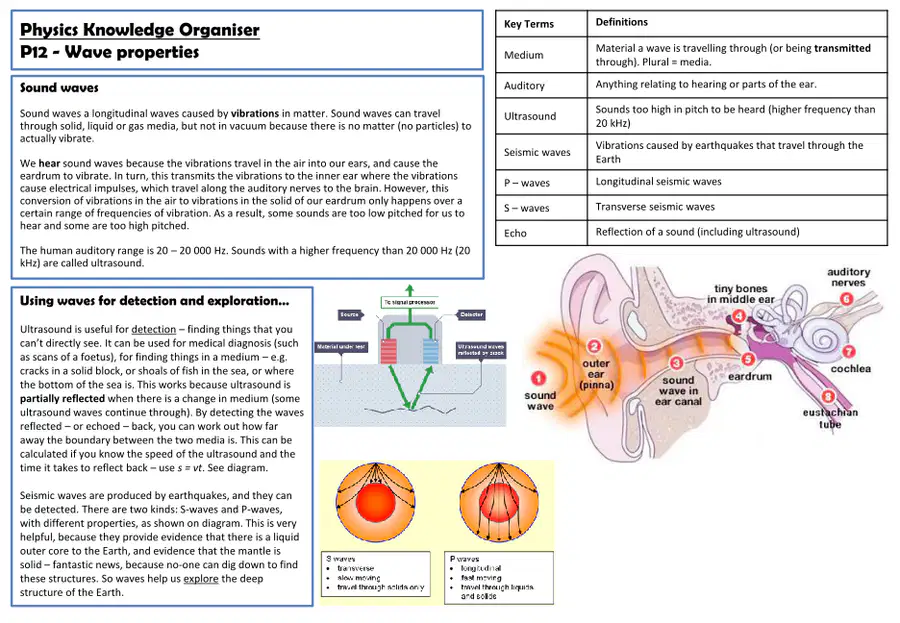
48
Fill in the Blanks
Type answer...
49
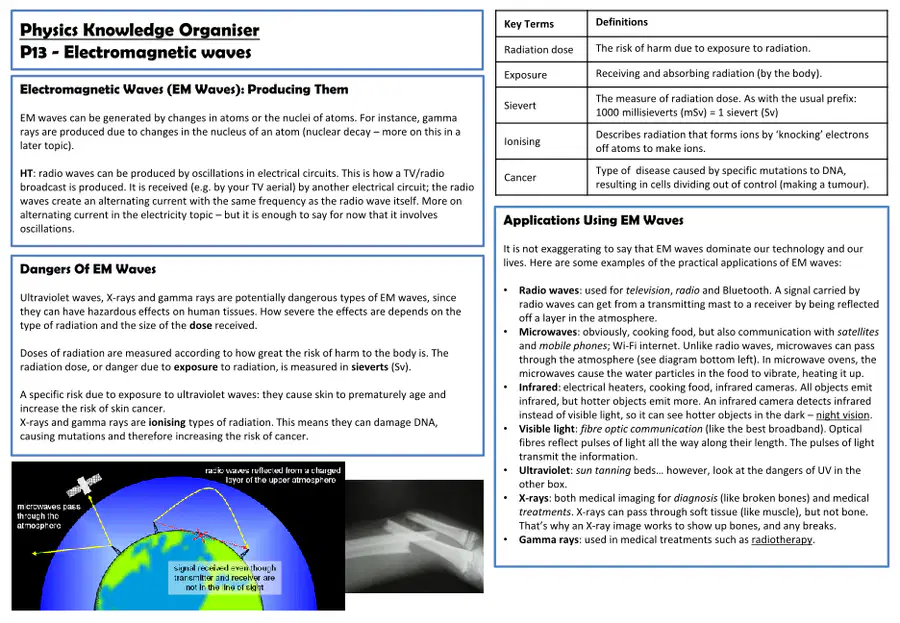
50
Open Ended
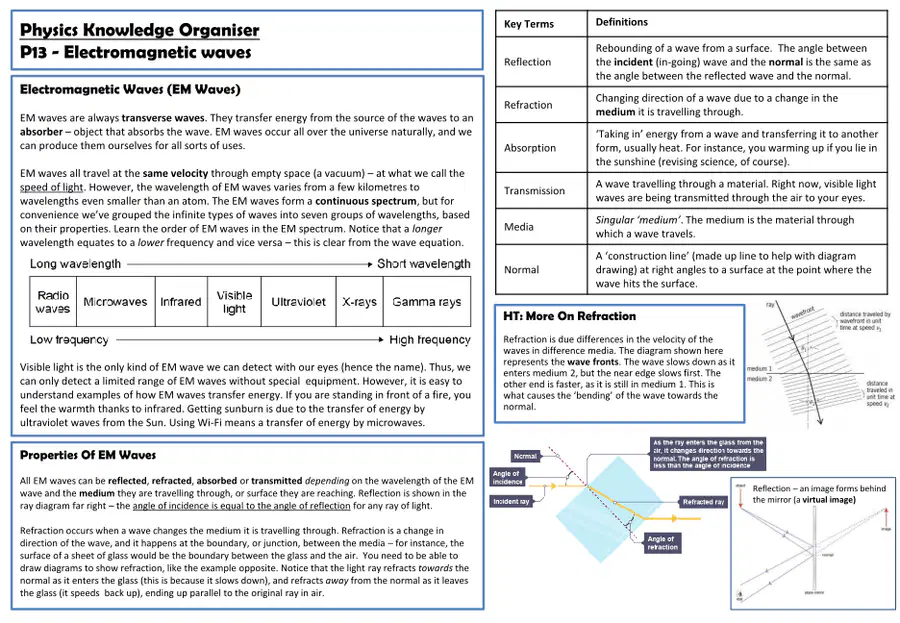
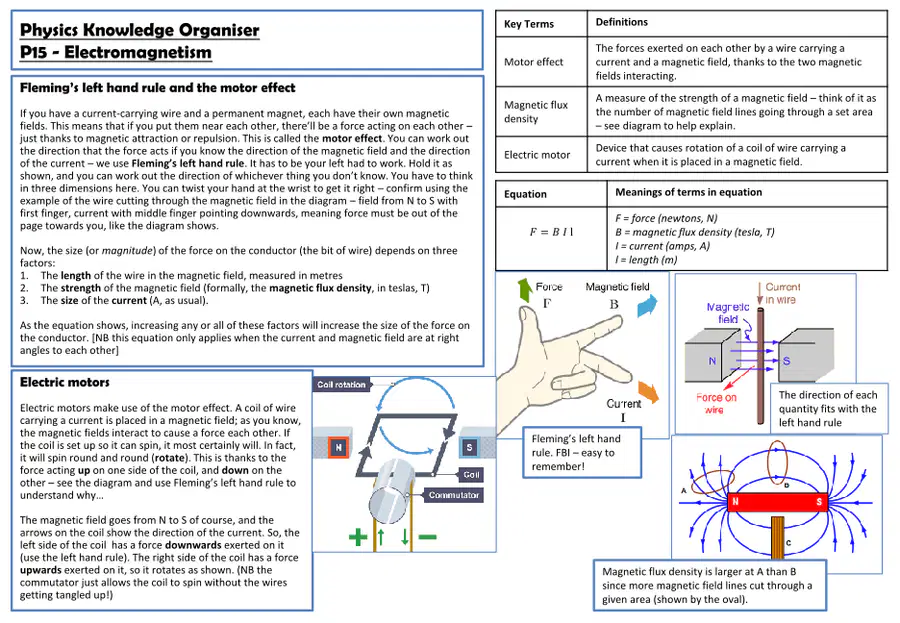
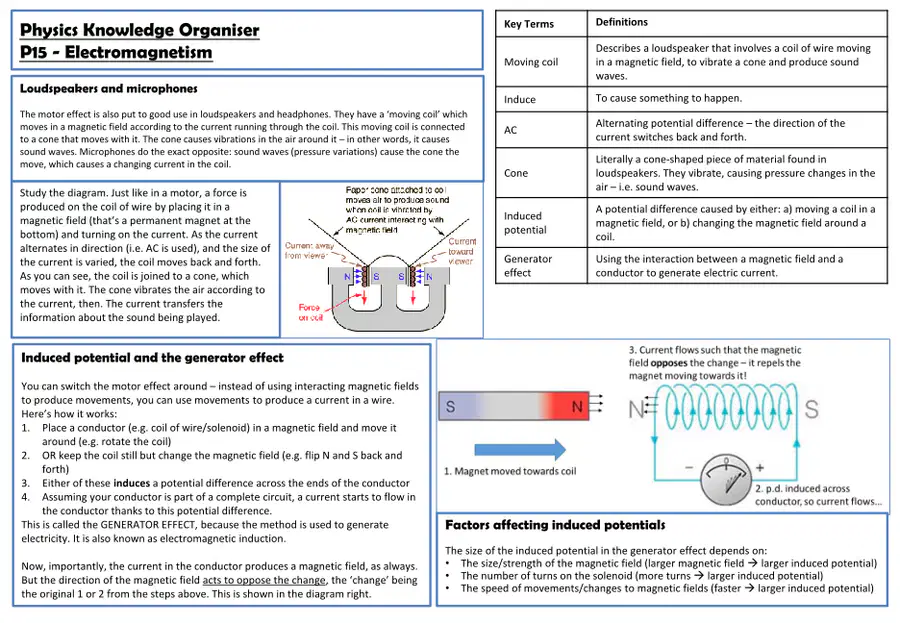
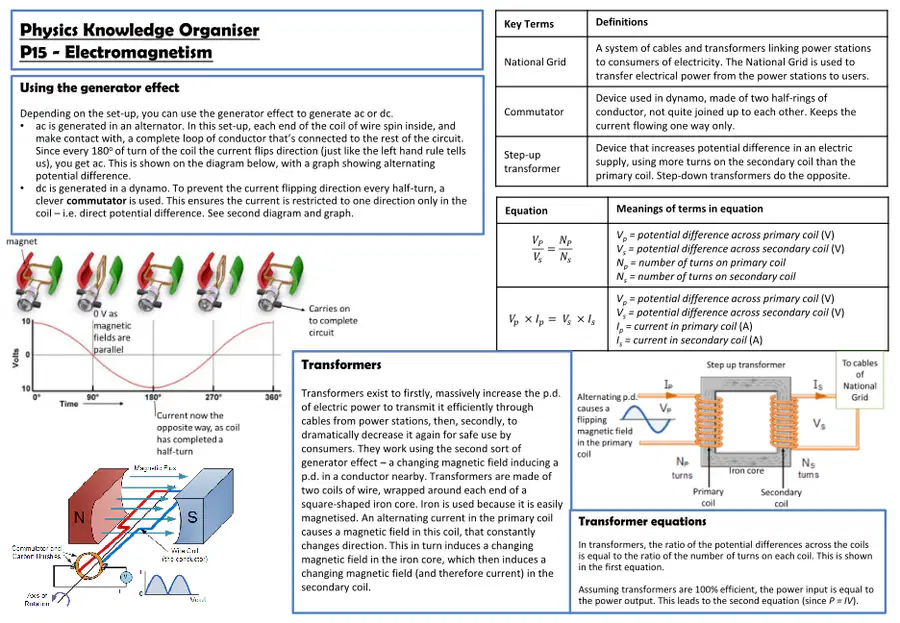
Describe two practical applications of electromagnetic waves in everyday life, based on the information provided.
51
52
Multiple Choice
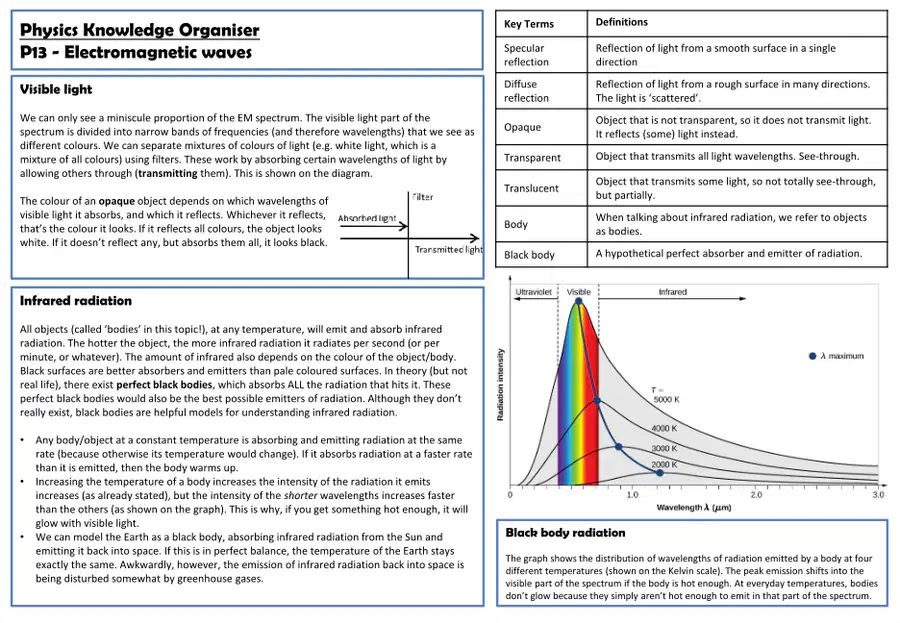
Which of the following statements about electromagnetic waves is correct?
They all travel at different speeds in a vacuum.
They can be either longitudinal or transverse waves.
They form a continuous spectrum of wavelengths.
Visible light has the longest wavelength among EM waves.
53
54
55
56
57
58
59
60
61
62
63
64
65
66
67
68
Open Ended
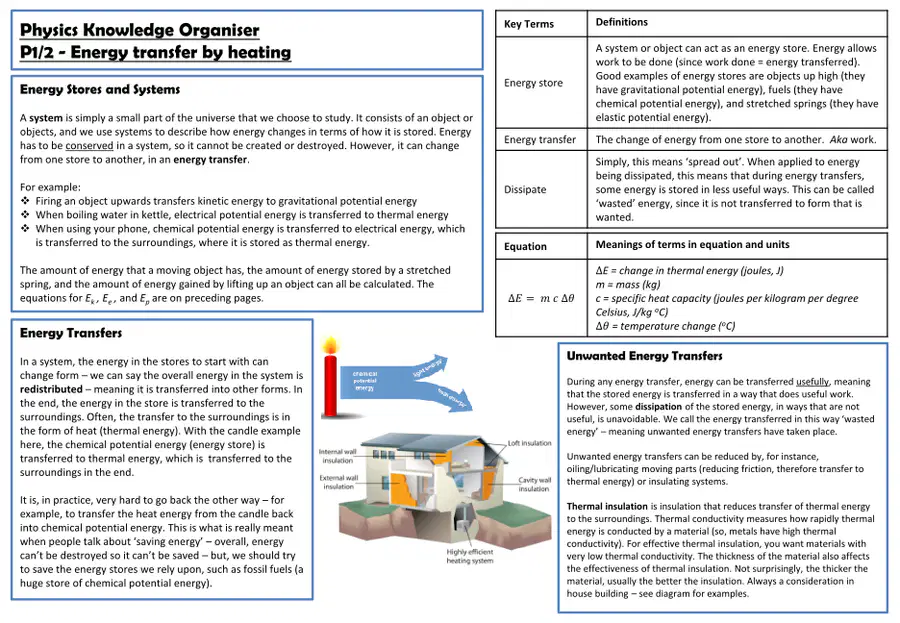
Reflecting on what you have learned about potential energy and force-extension relationships, how might understanding these concepts help in designing safer or more efficient mechanical systems?
69
Multiple Choice
Which of the following best describes the concept of efficiency in energy transfers?
The total amount of energy transferred in a system
The rate at which energy is transferred
The proportion of energy transferred usefully in a system
The amount of energy lost as heat only
Show answer
Auto Play
Slide 1 / 69
SLIDE
Similar Resources on Wayground

65 questions
English Test April
Presentation
•
Professional Development
65 questions
みんなの日本語初級1第3課
Presentation
•
Professional Development
66 questions
DSM1244(5) ESRM LIFECYCLE
Presentation
•
Professional Development
62 questions
NHP Int Unit 9 Present probability
Presentation
•
Professional Development
66 questions
Best Operation Practices (BOP) Training
Presentation
•
Professional Development
65 questions
Mayan Combined slideshow
Presentation
•
KG - University
66 questions
Parts of speech_Determiners
Presentation
•
KG - University
61 questions
Introduction to Microsoft Excel
Presentation
•
KG - University
Popular Resources on Wayground
24 questions
PBIS-HGMS Day 10

Quiz
•
6th - 8th Grade
10 questions
HCS SCI 03 Summer School Review 3
Quiz
•
3rd Grade
11 questions
Home Scope
Quiz
•
7th - 8th Grade
15 questions
HCS SCI 05 Summer School Assessment 3 Review
Quiz
•
5th Grade
35 questions
Lufkin Road Middle School Student Handbook & Policies Assessment
Quiz
•
7th Grade
18 questions
Geo 11.3 Area of Circles and Sectors
Quiz
•
9th - 11th Grade