

Climate

Presentation
•
Science
•
10th Grade
•
Practice Problem
•
Easy

SARAH STRILCHUK
Used 4+ times
FREE Resource
16 Slides • 16 Questions
1

2

3
Multiple Choice
Which of the following is NOT typically considered a biome?
Desert
Rainforest
Mountain
City
4
Open Ended
Why do you think it is important to study different types of environments or biomes on Earth?


7

8
Multiple Choice
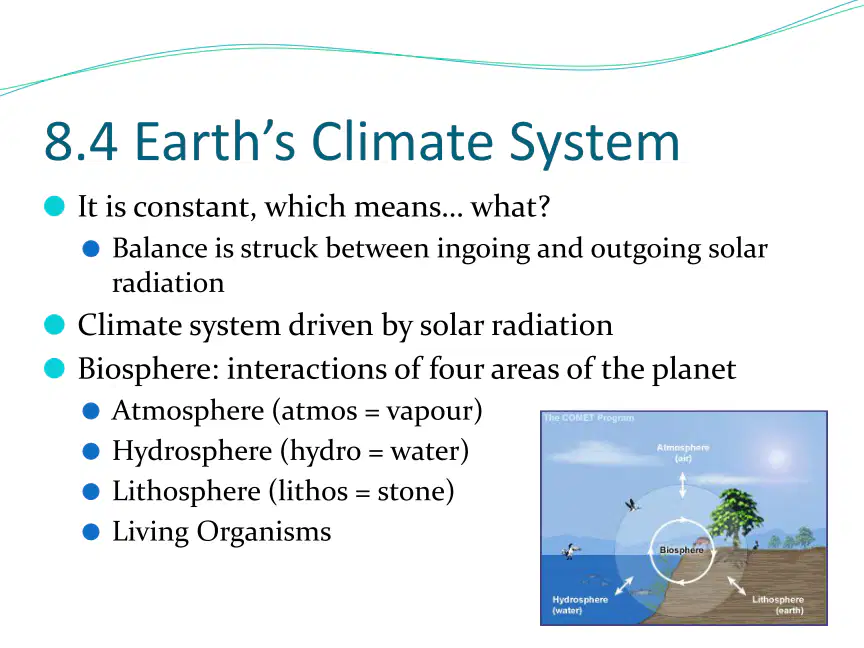
Which of the following is NOT one of the four areas of the planet that interact in the biosphere?
Atmosphere
Hydrosphere
Cryosphere
Lithosphere

10
Open Ended
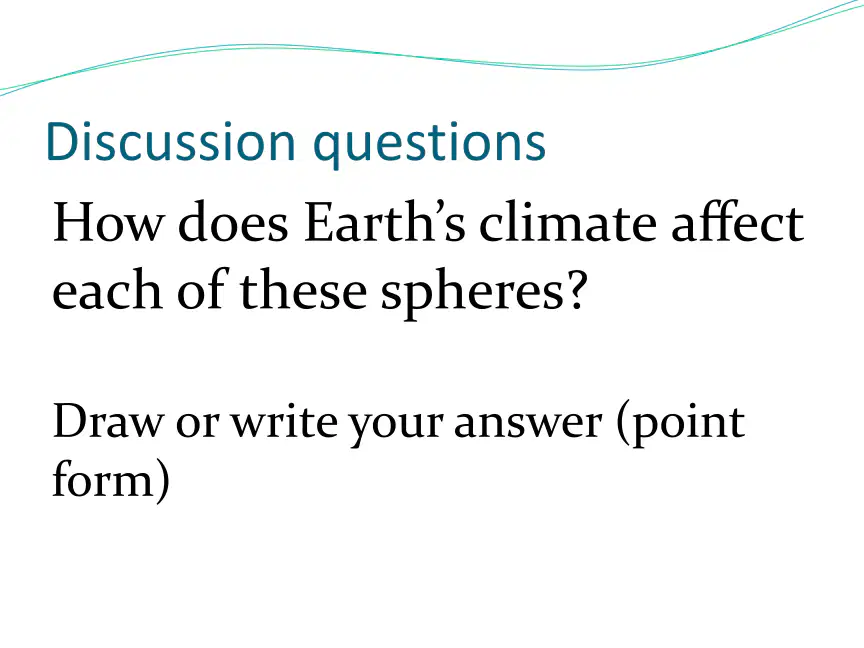
Explain how the balance between ingoing and outgoing solar radiation contributes to the constancy of Earth's climate system.
11
12
13
Open Ended
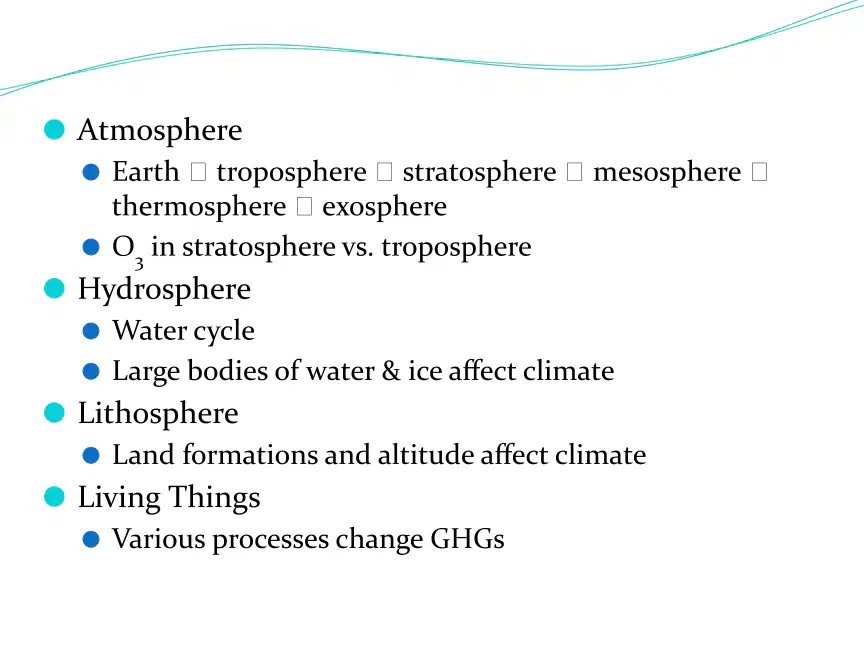
How do land formations and altitude affect climate?
14
15
Fill in the Blanks
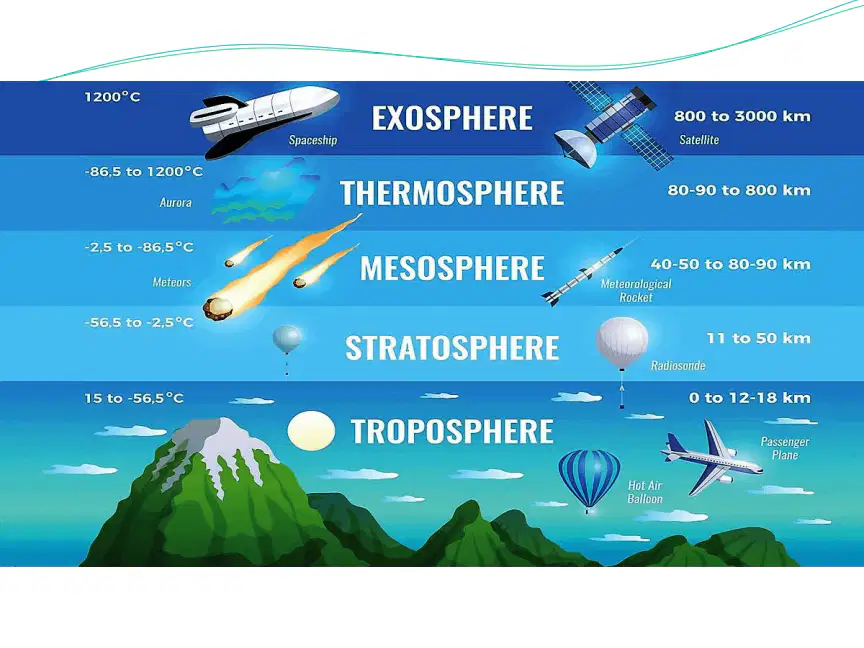
The layer of the atmosphere where most weather events occur is the
Type answer...
16
17
Multiple Select
Which of the following are layers of the atmosphere?
Troposphere
Hydrosphere
Stratosphere
Lithosphere
18
19
Multiple Choice
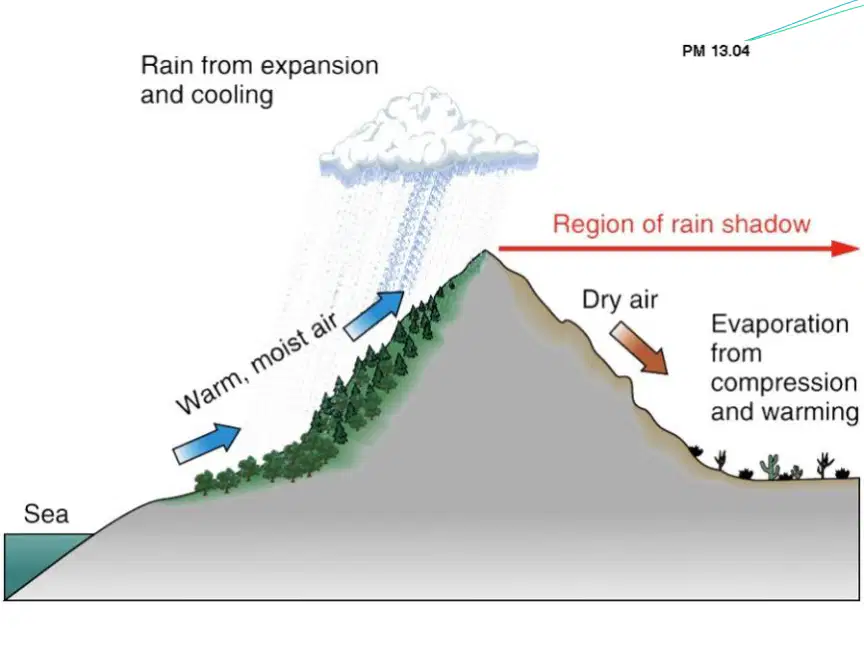
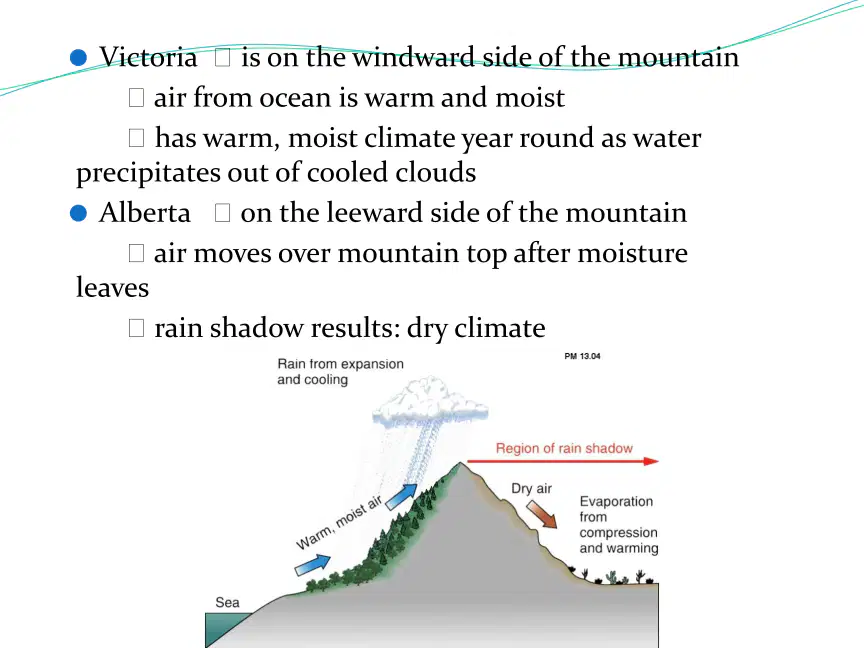
What is the term for the dry region on the leeward side of a mountain, as shown in the diagram?
Rain shadow
Monsoon
Dew point
Cyclone
20
Open Ended
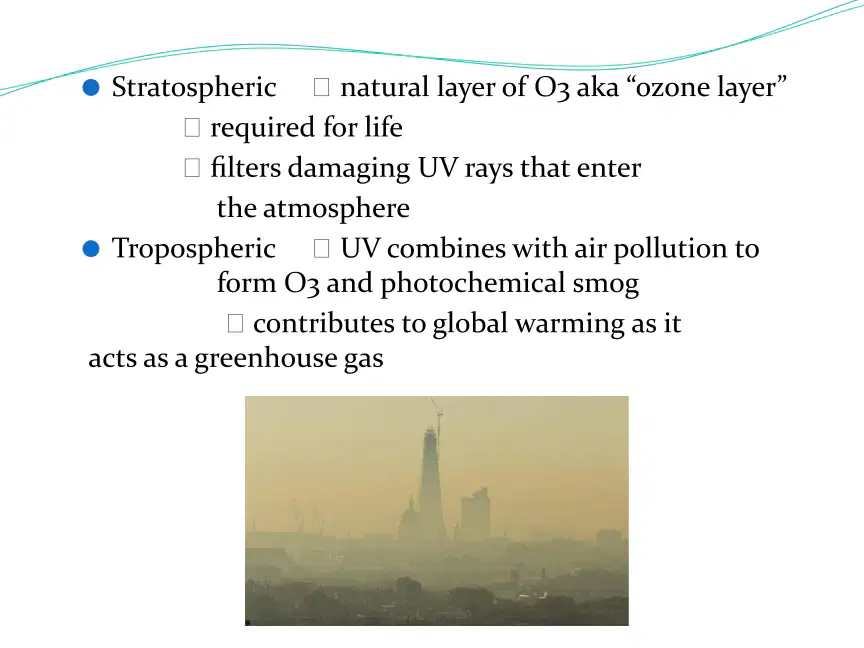
What is the difference between stratospheric and tropospheric ozone?
21
22
Multiple Choice
Which of the following statements about stratospheric and tropospheric ozone is correct?
Stratospheric ozone is harmful to life, while tropospheric ozone protects us from UV rays.
Stratospheric ozone forms photochemical smog, while tropospheric ozone filters UV rays.
Stratospheric ozone is a natural layer that filters UV rays, while tropospheric ozone forms from pollution and acts as a greenhouse gas.
Both stratospheric and tropospheric ozone are required for life.
23
24
Multiple Select
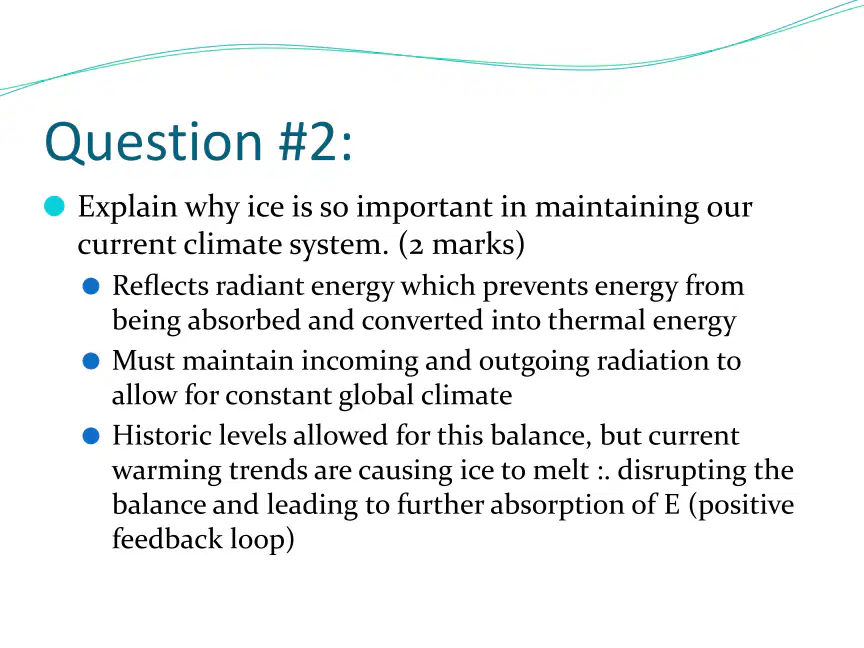
Which of the following are reasons why ice is important for the climate system?
It reflects radiant energy.
It absorbs more energy than it reflects.
It helps maintain the balance of incoming and outgoing radiation.
It causes a positive feedback loop when it melts.
25
Open Ended
Explain why ice is so important in maintaining our current climate system.
26
27
28
Fill in the Blanks
Victoria is on the
Type answer...
29
Open Ended
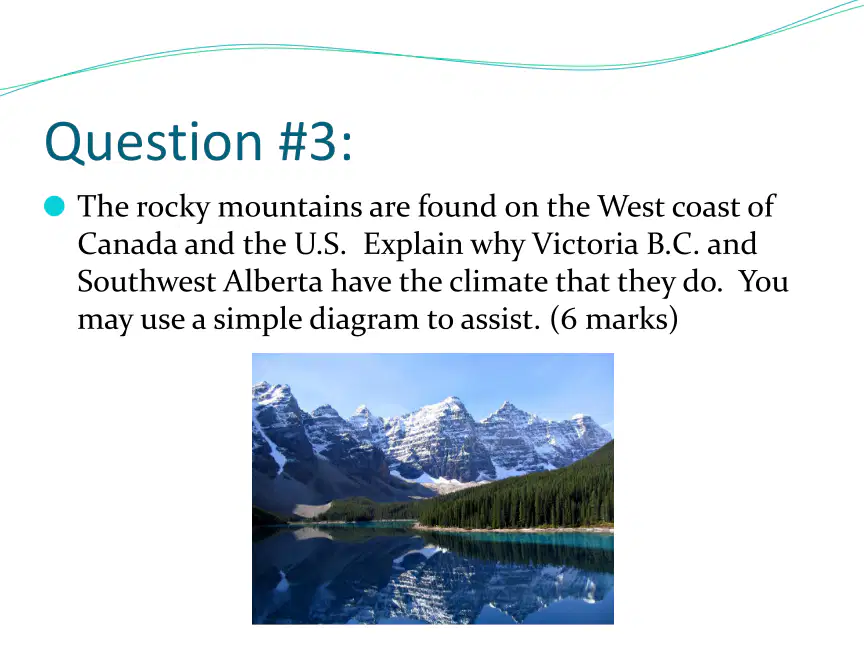
Explain why Victoria B.C. and Southwest Alberta have different climates, even though both are near the Rocky Mountains.
30
31
Open Ended
After learning about different ecosystems, what is one question you still have or something you would like to know more about?
32
Open Ended
What are some different types of ecosystems shown in the images, and how do they differ from each other?
Show answer
Auto Play
Slide 1 / 32
SLIDE
Similar Resources on Wayground

25 questions
America enters World War I
Presentation
•
10th Grade
26 questions
Chemical Bonds
Presentation
•
10th Grade
26 questions
Water Pollution
Presentation
•
9th Grade
27 questions
Solar System
Presentation
•
10th Grade
25 questions
Kennedy--1 step Stoichiometry conversions
Presentation
•
10th Grade
24 questions
Meiosis
Presentation
•
10th Grade
26 questions
DNA Replication - Base Pairs
Presentation
•
10th Grade
26 questions
Types of chemical reactions
Presentation
•
10th Grade
Popular Resources on Wayground
10 questions
Safety Day 2026 – Student Review

Quiz
•
9th Grade
21 questions
Continents and Oceans
Quiz
•
6th Grade
20 questions
Parts of Speech
Quiz
•
5th Grade
16 questions
Subject & Predicate
Quiz
•
5th Grade
25 questions
Multiplication Facts
Quiz
•
5th Grade
12 questions
Map Skills
Quiz
•
3rd Grade
22 questions
Continents and Oceans
Quiz
•
5th Grade
15 questions
Rounding Decimals
Quiz
•
5th Grade
Discover more resources for Science
10 questions
Exploring Chemical and Physical Changes

Interactive video
•
6th - 10th Grade
10 questions
Exploring the Electromagnetic Spectrum for Middle School Science
Interactive video
•
6th - 10th Grade
10 questions
Exploring Force and Motion Concepts
Interactive video
•
6th - 10th Grade
10 questions
Exploring Air Masses and Weather Fronts
Interactive video
•
6th - 10th Grade
10 questions
Exploring the States of Matter
Interactive video
•
6th - 10th Grade
10 questions
Exploring Forces: Net Force, Normal Force, Gravity, and Friction
Interactive video
•
6th - 10th Grade
10 questions
Differentiating Thermal Energy and Temperature
Interactive video
•
6th - 10th Grade
10 questions
Exploring the States of Matter and Thermal Energy
Interactive video
•
6th - 10th Grade