

Week 7: MSK/NM/Cognitive Alterations

Presentation
•
Science
•
University
•
Easy
Standards-aligned

Gretchen Berrocal
Used 7+ times
FREE Resource
41 Slides • 18 Questions
1

2
3
4
5
6
7
8
Multiple Choice
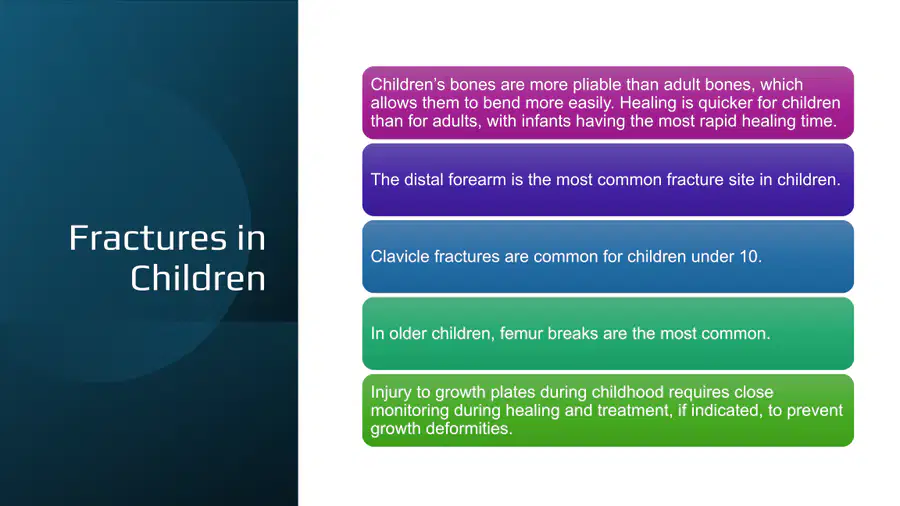
Which of the following bones is most commonly fractured in school-age children and adolescents?
Long bones
Short bones
Flat bones
Irregular bones
9
10

11

12
Multiple Choice
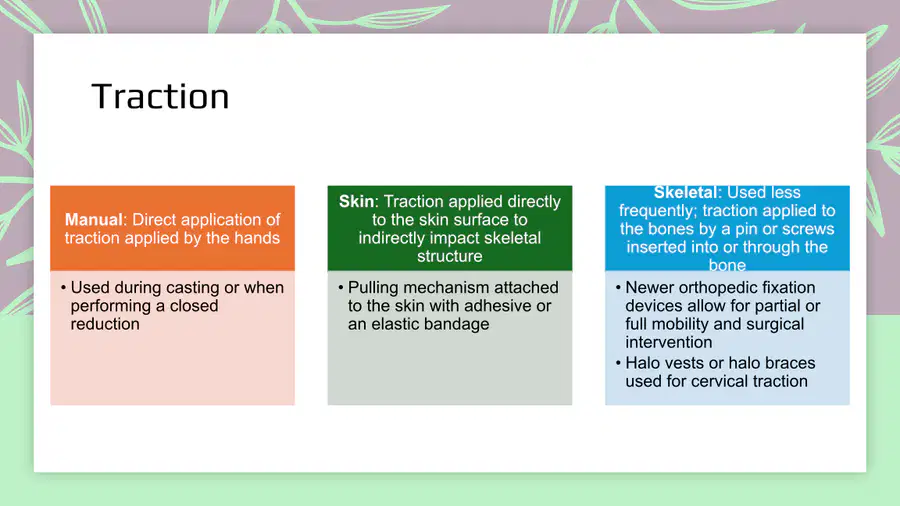
Which of the following are important aspects of pin care for a patient with traction?
Sterile Q tips, dry gauze application, documentation
Applying ice packs, massaging the area, using alcohol wipes
Changing the pin daily, using soap and water, avoiding documentation
Leaving the pin site uncovered, using lotion, avoiding cleaning
13

14
Fill in the Blanks
The most common cause of osteomyelitis and septic arthritis in children is
Type answer...
15

16

17
18
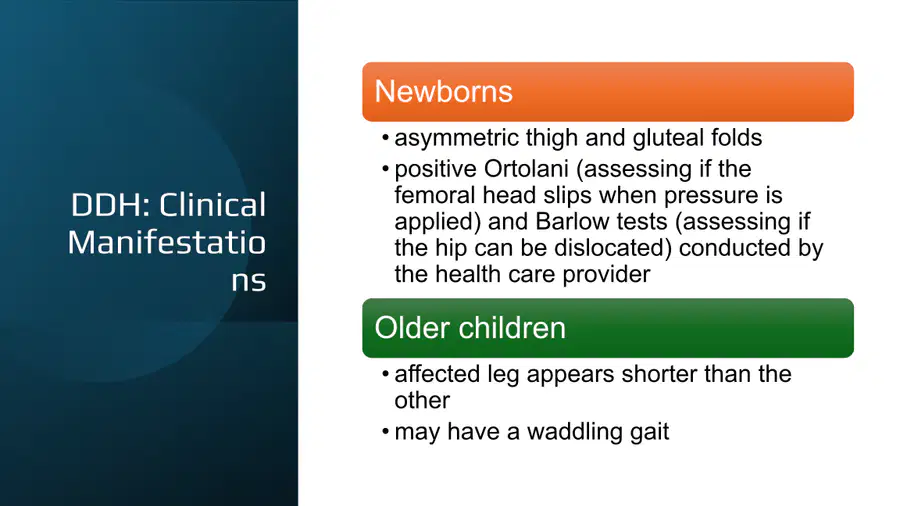
19
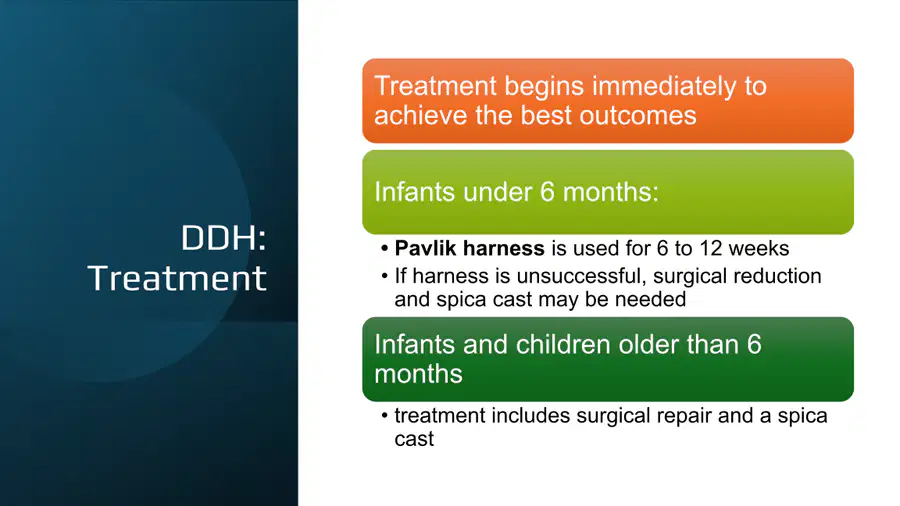
20
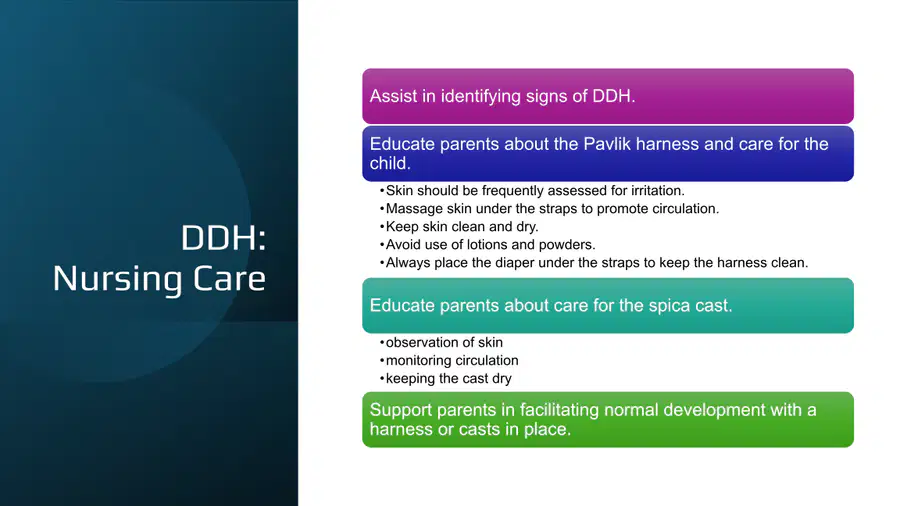
Pavlik Harness
Spica Cast
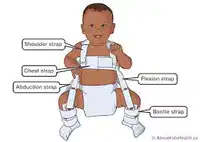
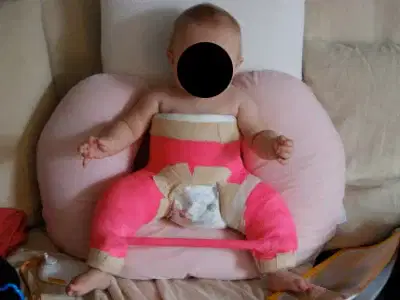
21
22

23
Multiple Choice
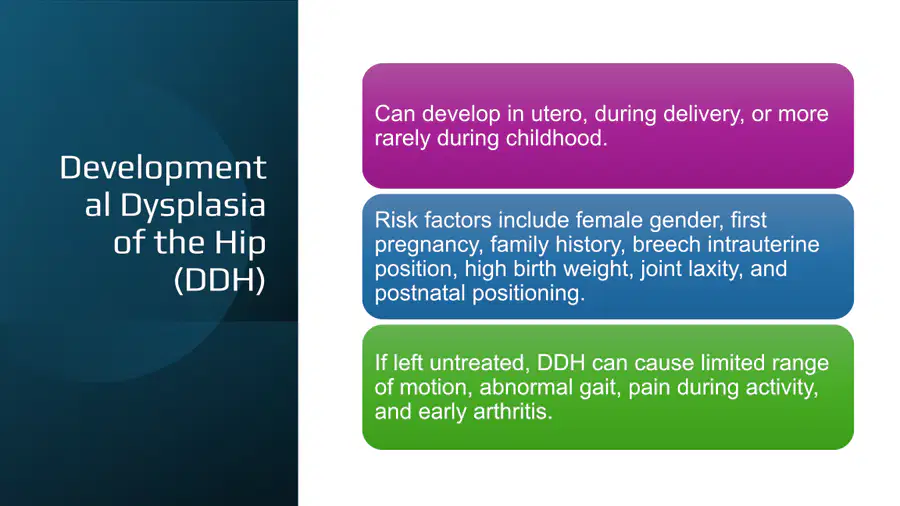
Which of the following is NOT a symptom of Developmental Dysplasia of the Hip (DDH) in children?
Asymmetry of gluteal and thigh folds
Positive Trendelenburg sign
Positive Ortolani and Barlow’s tests
Swollen tender joints
24
Multiple Select
Which of the following are appropriate nursing interventions for a child in a Pavlik Harness?
Maintain harness placement for 12 weeks
Check straps every 1-2 weeks by HCP
Remove harness for several hours daily
Perform neurovascular checks and skin integrity frequently
25
26
Fill in the Blanks
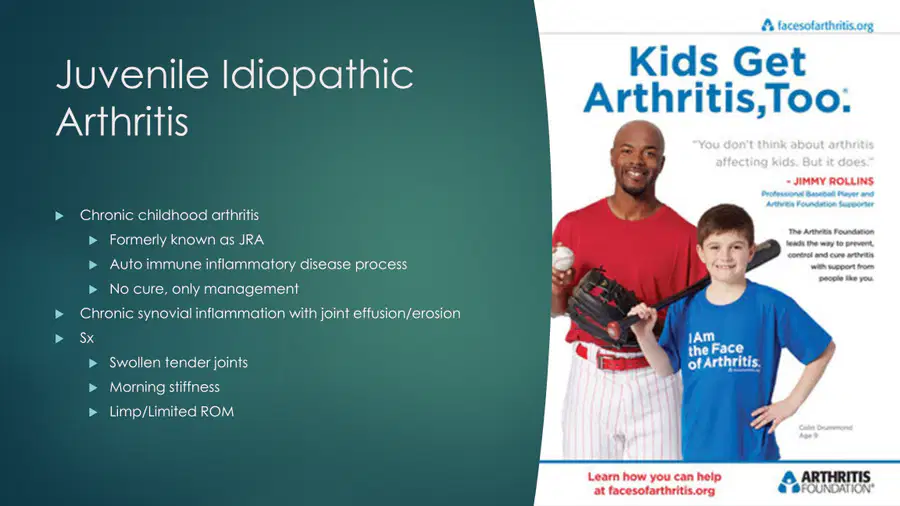
Juvenile Idiopathic Arthritis is a chronic childhood arthritis that was formerly known as
Type answer...
27

28
Open Ended
Explain how disease-modifying antirheumatic drugs (DMARDs) help in the management of Juvenile Idiopathic Arthritis.
29

30
Multiple Choice
Which of the following is a symptom of scoliosis?
Morning stiffness
Asymmetry of scapula, ribs, flanks, shoulders, and hips
Positive Ortolani test
Swollen tender joints
31
Multiple Choice
What is the most common age range for girls to be diagnosed with idiopathic scoliosis?
2-5 years old
8-15 years old
16-20 years old
Over 20 years old
32
33
Multiple Choice
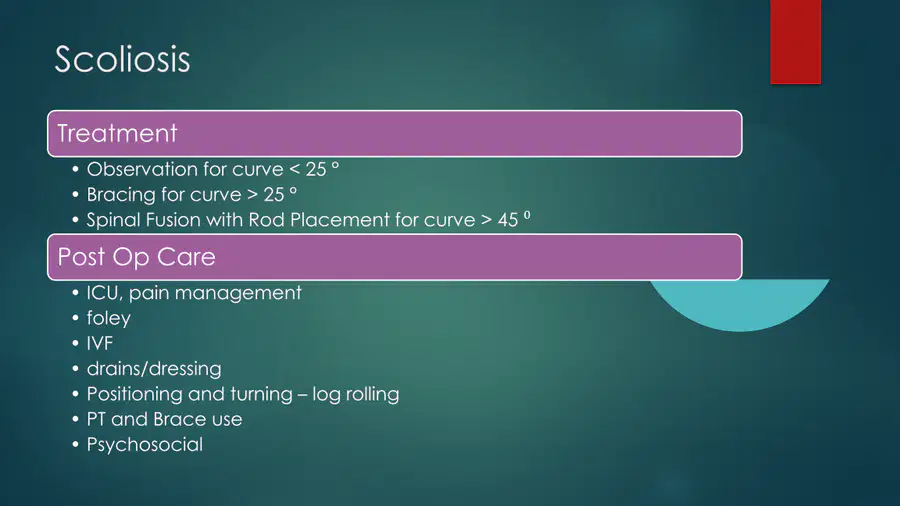
Which of the following is the recommended treatment for scoliosis with a spinal curve greater than 45 degrees?
Observation
Bracing
Spinal Fusion with Rod Placement
Physical Therapy
34
35
Multiple Select
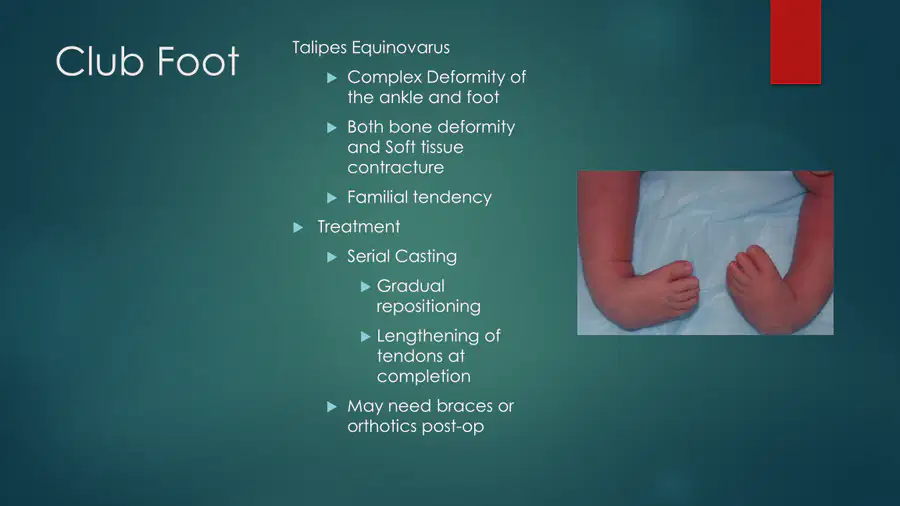
Which of the following are components of the treatment for club foot?
Serial casting
Gradual repositioning
Lengthening of tendons
All of the above
36
Multiple Choice
What is the primary deformity seen in club foot (talipes equinovarus)?
Deformity of the ankle and foot
Deformity of the hand
Deformity of the spine
Deformity of the knee
37

38

39
Fill in the Blanks
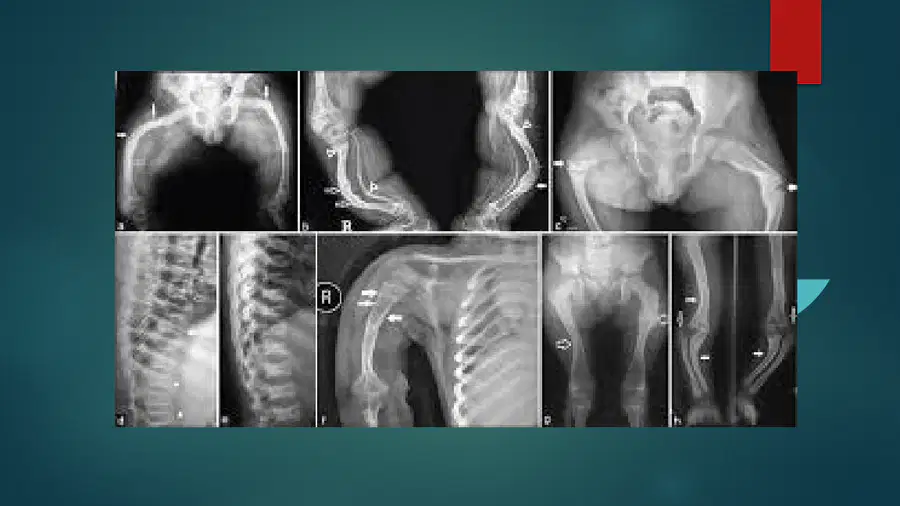
Osteogenesis Imperfecta is primarily characterized by bone
Type answer...
40
41

42

43
44
45
Fill in the Blanks
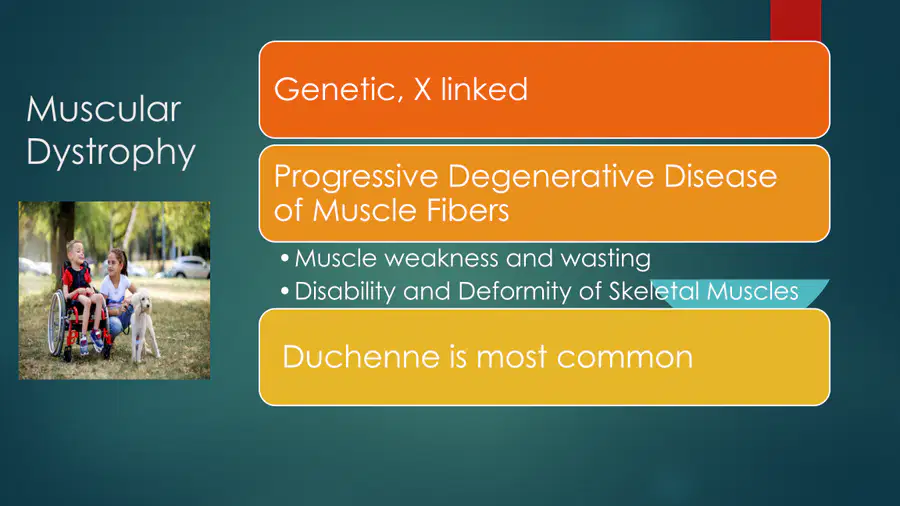
Duchenne is the most common type of
Type answer...
46
47
Multiple Choice
Which neuromuscular disorder is associated with muscle weakness, disability, and deformity of skeletal muscles, and is most commonly seen as Duchenne type?
Cerebral Palsy
Myelomeningocele Spina bifida
Muscular Dystrophy
Guillain-Barré Syndrome
48
Open Ended
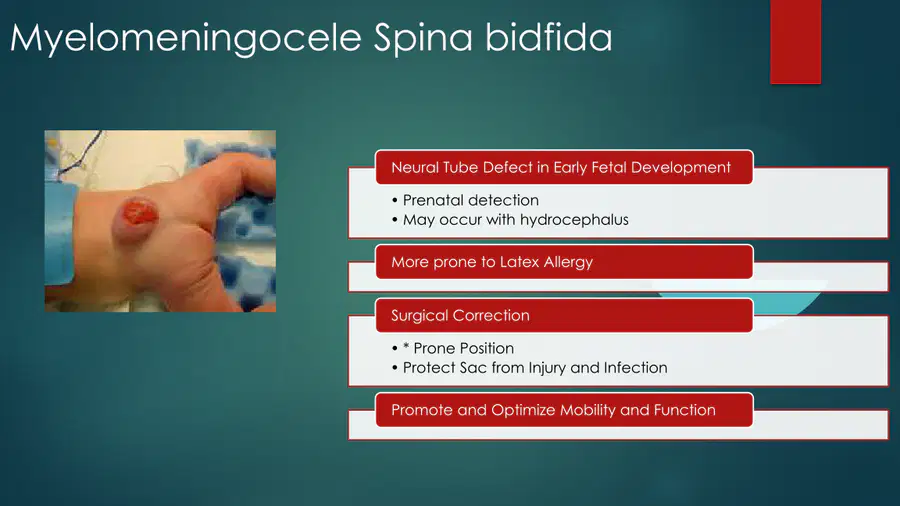
Compare and contrast the management goals for myelomeningocele spina bifida and muscular dystrophy.
49
Multiple Select
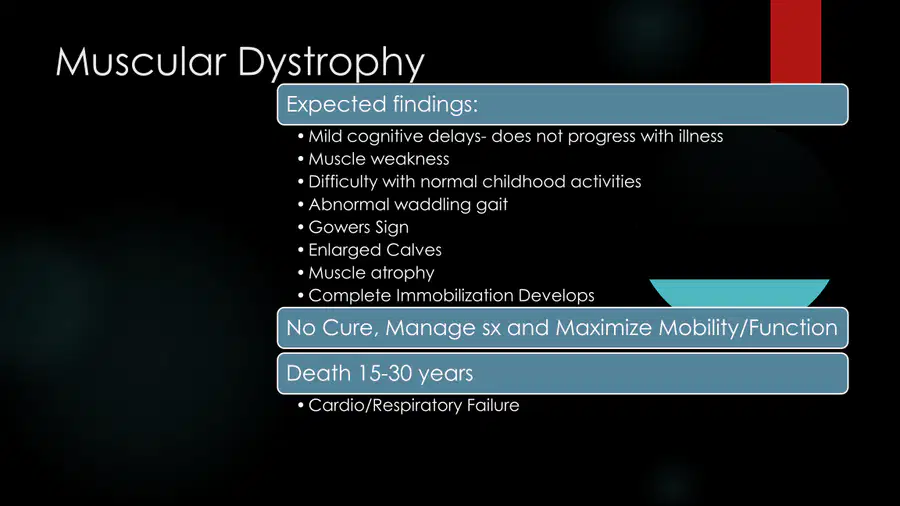
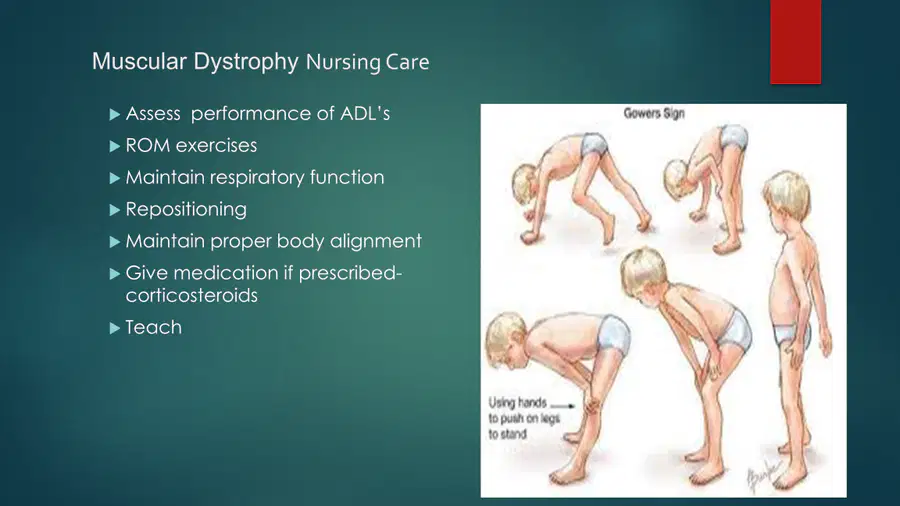
Which of the following are expected findings in a child with muscular dystrophy?
Muscle weakness
Enlarged calves
Complete immobilization develops
Increased muscle tone
50
51
Open Ended
What are some key nursing care interventions for a child with muscular dystrophy?
52
53

54
55
56
57

58
59

Show answer
Auto Play
Slide 1 / 59
SLIDE
Similar Resources on Wayground

58 questions
Cybersecurity concepts
Presentation
•
University
50 questions
Презентация без названия
Presentation
•
KG - University
50 questions
Unit 1 level 333
Presentation
•
University
55 questions
Chapter 5- Molecules and Compounds
Presentation
•
University
57 questions
Introduction to Statistical Analysis
Presentation
•
University
54 questions
C++ Strings
Presentation
•
University
53 questions
Taxation and Regulation
Presentation
•
University
Popular Resources on Wayground
10 questions
Safety Day 2026 – Student Review

Quiz
•
9th Grade
21 questions
Continents and Oceans
Quiz
•
6th Grade
20 questions
Parts of Speech
Quiz
•
5th Grade
16 questions
Subject & Predicate
Quiz
•
5th Grade
25 questions
Multiplication Facts
Quiz
•
5th Grade
12 questions
Map Skills
Quiz
•
3rd Grade
22 questions
Continents and Oceans
Quiz
•
5th Grade
15 questions
Rounding Decimals
Quiz
•
5th Grade
Discover more resources for Science
20 questions
Disney Trivia
Quiz
•
University
10 questions
Spanish Greetings and Goodbyes!
Presentation
•
6th Grade - University
20 questions
Physical or Chemical Change/Phases
Quiz
•
8th Grade - University
39 questions
Unit 7 Key Terms
Quiz
•
11th Grade - University
25 questions
SER and Subject Pronouns
Quiz
•
8th Grade - University
38 questions
Unit 6 Key Terms
Quiz
•
11th Grade - University
19 questions
Key Concepts in Buddhism
Quiz
•
University
0 questions
Cell Domain Basic Review (Biology)
Quiz
•
University