

Communication Skills for CSR

Presentation
•
Business
•
Professional Development
•
Easy

Adrian Wellington
Used 1+ times
FREE Resource
35 Slides • 24 Questions

2
Mastering Communication Skills
Training Session
By Adrian Wellington

3
Training Session Guide: Module 2 – Mastering Communication Skills
Title of Session: Mastering Communication Skills for Customer Service Excellence
Module Reference: Module 2 – Mastering Communication Skills
Delivery Mode: Online (Microsoft Teams)
Audience: Adult Customer Service Representatives in a workplace training program
Duration: 45 minutes
By Adrian Wellington
4
Fill in the Blanks
Type answer...
5
Group Members:
Anissa Geddes
Reeishma Young Sang
Adrian Wellington
By Adrian Wellington
6
By Adrian Wellington

7
Open Ended
Do you think communication skills are important for customer service representatives? Explain your answer.
8
Session Overview:
This training session focuses on equipping Customer Service Representatives (CSRs) with practical and professional communication skills. By engaging in role-play and discussion-based activities, participants will build confidence in active listening, tone management, and adapting communication styles to diverse customers.
By Adrian Wellington
9
Session Overview:
Clear and empathetic communication is vital to ensuring positive customer interactions, particularly in an increasingly digital world (Johnson & Peters, 2019). This session will provide participants with both the tools and the opportunity to apply these essential skills.
By Adrian Wellington
10
Learning Objectives:
By the end of the session, participants should be able to:
Identify and apply key active listening techniques during customer interactions.
Adjust tone and language appropriately for professional and empathetic communication.
Demonstrate the ability to adapt their communication style to match different customer personalities.
Reflect on how communication impacts customer satisfaction and resolution outcomes.
By Adrian Wellington

11
Poll
What is your favourite type of communication?
Verbal
Visual
Non Verbal
Written
12
Open Ended
Explain why______is your preferred (favorite) way to communicate. Give a reason and example.
13
Poll
Which area in communication do you think you need more support and practice?
Active Listening (with colleagues and customers)
Written communication & Understanding audience needs
Conflict resolution
Public Speaking and Presentations
14
WHAT IS COMMUNICATION?
Communication is the process of exchanging information and ideas between two or more people. This can take place in various forms such as verbal, nonverbal, and written.


15
TYPES OF COMMUNICATION
VERBAL - This is the use of spoken or written words to convey a message
NONVERBAL - This includes body language, facial expressions, gestures, and tone of voice
WRITTEN - This is the use of written words to convey a message through emails, letters, and text messages
16

17
Fill in the Blanks
Type answer...
18

19
Discussion Questions:
Participants will be given 3 minutes to discuss the picture and answer the following questions:
1. What differences do you observe in the body language of the two couples?
2. What might these differences in body language suggest about the relationships or communication styles of the two couples?
3. How can body language impact communication in personal and professional relationships?
By Adrian Wellington
20
IMPORTANCE OF COMMUNICATION SKILLS
Builds trust: Clear and concise communication helps build trust with colleagues, clients, and stakeholders.
Resolves conflicts: Effective communication can resolve conflicts and misunderstandings, reducing errors and improving relationships.
Improves collaboration: Good communication skills facilitate collaboration and teamwork, leading to better outcomes and increased productivity.
21

22
Interrupt others while speaking
Use offensive language or gestures
Assume you know what others are thinking
Avoid eye contact
Ignore others' opinions or ideas
DON'Ts
Listen actively and attentively
Speak clearly and concisely
Be aware of your nonverbal cues
Show respect for others' viewpoints
Clarify misunderstandings
DOs:
DOs AND DON'Ts OF COMMUNICATION
23
HOW TO IMPROVE COMMUNICATION SKILLS
Practice active listening
Work on speaking clearly and confidently
Develop good nonverbal cues
Use positive language and tone of voice
Practice in various settings, such as in a group or with authority figures

24
EXAMPLES OF GOOD COMMUNICATION
Timely responses
Clear and concise information
Follow-up
Active listening
Empathy
Solution-focused
Regular updates
transparency
25

26
MAXIMIZING OPPORTUNITIES FOR POSITIVE COMMUNICATION
While the key to success in relationships lies in one’s ability to communicate, it’s not just the words a person uses, but the nonverbal cues or “body language” that speak the loudest.
Facial expressions, gestures, posture, tone of voice, and level of eye contact are powerful communication tools. They can put people at ease, build trust, and draw others towards you, or they can offend, confuse, or push people away. By improving your understanding and use of nonverbal communication, you will be able to better express yourself, connect better with others, and build stronger, more rewarding relationships.
27
TONE OF VOICE WHEN COMMUNICATING
When it comes to tone of voice, it’s not just about what you say, it’s how you say it. When you speak, other people “read” your voice in addition to listening to your words. Things they pay attention to include your:
timing and pace,
how loud you speak,
your tone and inflection, and
sounds that convey understanding, such as “ahh” and “uh-huh.”
Think about how your tone of voice can indicate sarcasm, anger, affection, or confidence.
28
SCENARIOS FOR ADJUSTING TONE AND LANGUAGE
Scenario 2: Product Inquiry
Scenario 1: Angry Customer
Scenario 3: Customer Complaint
Scenario 4: Complex Issue
In groups of 2 or 3, spend 3 minutes designing a role play.
The role play should include what the customer said or did.
What was your response/solution
Show clear communication skills to include de-escalation techniques.
The entire class will discuss what they learnt from the role play.
Share what they would do differently.

29
SCENARIOS FOR ADJUSTING TONE AND LANGUAGE
Scenario 2: Product Inquiry
A customer emails to inquire about a product feature. The customer service representative needs to:
Respond promptly: Use a professional tone and language to respond promptly to the customer's inquiry.
Provide clear information: Use clear and concise language to explain the product feature and its benefits.
Offer additional assistance: Use a friendly and helpful tone to offer additional assistance and support
Scenario 1: Angry Customer
A customer calls in, frustrated with a delayed shipment. The customer service representative needs to:
Acknowledge the customer's frustration: Use a calm and empathetic tone to acknowledge the customer's feelings.
Apologize for the inconvenience: Use professional language to apologize for the delay and offer a solution.
Provide a solution: Use clear and concise language to explain the solution and provide a timeline for resolution.
Scenario 3: Customer Complaint
A customer complains about a product defect. The customer service representative needs to:
Listen actively: Use active listening skills to understand the customer's concern and show empathy.
Apologize sincerely: Use a sincere and professional tone to apologize for the defect and offer a solution.
Provide a solution: Use clear and concise language to explain the solution and provide a timeline for resolution.
30

31
Multiple Choice
What is Body Language?
Postures, gestures, and facial expressions.
The exchange of information through the use of words.
Your words say one thing but your body language say another.
Speak from your point of view.
32
Multiple Choice

An example of verbal communication is:
Phone conversation
Posture
Eye contact
Writing an email
33
Multiple Choice
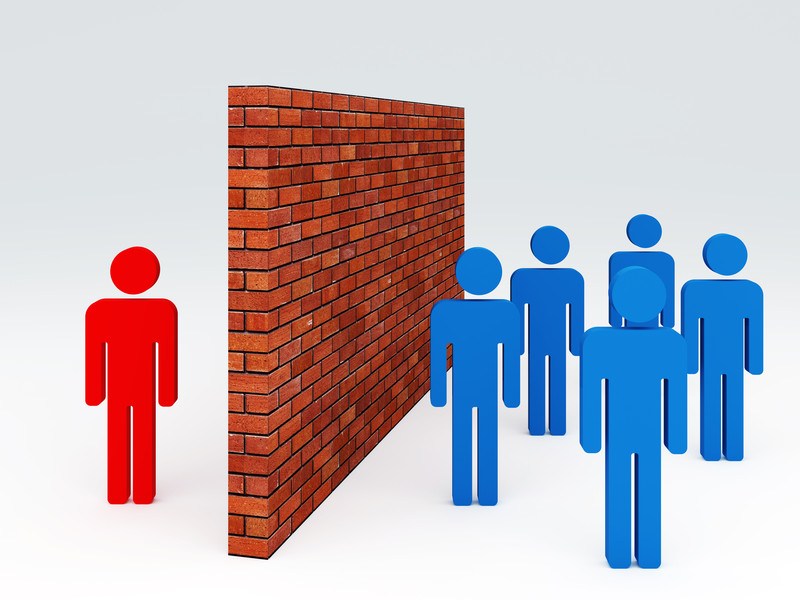
Which of the following is a barrier to communication?
Message is not clear
Not listening
Lack of language skills
All of the above
34
Multiple Choice

A good, clear speaker…
Understands what he/she wants to say
Considers the audience and the setting
Checks to assure understanding, and listens to responses
All of the above
35
Multiple Choice

Includes gestures, facial expressions, and body positions
Feedback
Verbal Communication
Dance
Non-Verbal Communication
36
Multiple Choice

The use of sounds and words to express yourself
Non-Verbal Communication
Customer Service
Interpretive Dance
Verbal Communication
37
Multiple Choice

An example of non-verbal communication is:
Sleeping
Face-to-face conversation
Telephone conversation
Eye Contact
38
Multiple Choice

Good customer service is the ability of an organisation to constantly and consistently exceed:
The speed of sound
The customer's expectations
The rainfall in South America
Their competitor's sales
39
Multiple Choice

True or False: Communication skills are vital to individuals and businesses
True
False
40
Multiple Choice
Good listening skills include what?
Smiling and waving at people
Yelling loud at people
Writing in slang.
None the above.
41
Multiple Choice
Hearing, thinking about and responding to another person’s message is
“I” Message
Active Listening
Body Language
Mixed Messages
42
Effective Communication Skills
Learning how to effectively communicate and convey your message to others for better understanding and collaboration.
43
Effective Communication Skills
Direct Communication
Clear and straightforward: "I think we should focus on the marketing strategy for the new product launch."
Specific and concise: "We need to meet the project deadline to avoid delays."
Indirect Communication
Implied meaning: "I'm not sure if we're on track to meet the deadline, maybe we should review our progress."
Suggestive language: "Have you considered looking into the marketing strategy for the new product launch?"
44
Effective Communication Skills
Key Differences between Indirect & Direct communication
Clarity: Direct communication is clear and straightforward, while indirect communication can be vague or open-ended.
Intent: Direct communication explicitly states the intended message, while indirect communication implies or suggests the message.
45
Multiple Choice
Which type of communication is the following: I'm not sure I know how to create a video?
Direct Communication
Indirect Communication
Verbal Communication
Nonverbal Communication
46
Effective Communication Skills
Choose your words carefully to convey your message effectively.
Be mindful of your tone and body language to ensure clear communication.
Active listening is crucial for effective communication.
Use appropriate channels and mediums for different types of communication.
Provide useful information in automated email responses to enhance communication efficiency.
Use clear and concise language.
Include important information in bold.
Make the recipient feel valued.
47
Multiple Choice
What are some important factors to consider for effective communication?
Choose your words carefully
Wear appropriate clothing
Use social media platforms
Provide useful information in automated email responses
48


49

50

51

52
Multiple Choice
What are the benefits of communication skills?
Fostering positive relationships with family, friends, and coworkers
Improving academic performance and career success
Boosting confidence in social situations
All of the above
53
Multiple Choice
What is verbal communication?
The use of body language, facial expressions, and tone of voice to convey a message
The use of written words to convey a message
The use of spoken or written words to convey a message
None of the above
54
Multiple Choice
What are some examples of written communication?
Emails, letters, and text messages
Body language and facial expressions
Speaking clearly and confidently
Using 2 cans and a rope
55
Multiple Choice
Which of the following is a "DO" for communication?
Interrupt others while they are speaking
Assume you know what others are thinking
Show respect for others' viewpoints
Cover your ears while someone is speaking
56
CONCLUSION...
Improving your communication skills is essential for success in many areas of life. By mastering active listening, speaking clearly and confidently, and developing good nonverbal cues, you'll be able to foster positive relationships, and boost your confidence. Remember to show respect for others' viewpoints and clarify misunderstandings to prevent conflicts.
57

YOU ARE RESPONSIBLE FOR WHAT YOU SAY
WORDS HAVE POWER
YOU CAN CONTROL WHAT YOU SAY
SPEAKING RESPONSIBLY
Controlling what you say is best done by:
Pausing before responding
Mentally planning what you should say
Speaking in a calm tone
WORDS can build up or tear down. Harsh words are destructive and ultimately those harsh words come back to you.
Whatever you speak from your mouth comes from you, by you. No one can be blamed for speaking irresponsibly for you.
Words can build up or tear down. Harsh words are destructive and ultimately those harsh words come back to you.
58
Open Ended
Do you believe that how you communicate impacts customer satisfaction and resolution outcomes?
59

Show answer
Auto Play
Slide 1 / 59
SLIDE
Similar Resources on Wayground

56 questions
Chapter 5: Business Entities, Formation & Support System
Presentation
•
University
52 questions
Microsoft Teams versus Zoom: Challenging the Challenger
Presentation
•
University
56 questions
Chapter 4: Political Environment
Presentation
•
University
52 questions
CIM Lecture 3 - Brand Cultures Communities Identity
Presentation
•
University
54 questions
Proposal
Presentation
•
Professional Development
53 questions
EL Achieve and EdTech
Presentation
•
Professional Development
55 questions
2nd periodical Examination in Mathematics PreK2
Presentation
•
KG
54 questions
Science LT 1 Review for Exam
Presentation
•
Professional Development
Popular Resources on Wayground
24 questions
PBIS-HGMS Day 10

Quiz
•
6th - 8th Grade
10 questions
HCS SCI 03 Summer School Review 3
Quiz
•
3rd Grade
11 questions
Home Scope
Quiz
•
7th - 8th Grade
15 questions
HCS SCI 05 Summer School Assessment 3 Review
Quiz
•
5th Grade
35 questions
Lufkin Road Middle School Student Handbook & Policies Assessment
Quiz
•
7th Grade
18 questions
Geo 11.3 Area of Circles and Sectors
Quiz
•
9th - 11th Grade