
Chemical Reactions Live Class #2

Presentation
•
Science
•
7th Grade
•
Practice Problem
•
Easy
Standards-aligned

Boaz Rottet
Used 6+ times
FREE Resource
9 Slides • 5 Questions
1
2
Making Lewis Dot Structures!
A Lewis structure, or a Lewis diagram, is a model that shows the valence electrons surrounding the symbol for an element. Lewis structures are useful models because they help show why and how elements form chemical bonds.
To draw a Lewis model, follow these steps.
Write the symbol of the element.
Find the number of valence electrons using the group number.
Place dots to represent valence electrons. Place 1 dot on each side of the symbol (above, right, below, and left) until no valence electrons remain.
If there are more than 4 valence electrons, create pairs with the remaining dots.

3
Draw
Draw the Lewis Dot Structure for Carbon
Open the periodic table on another tab on your computer to determine the number of
4
Draw
Draw the Lewis Dot Structure for Sulfur
Open the periodic table on another tab on your computer to determine the number of valence electrons.
5
Follow these steps to use Lewis diagrams to model covalent bonding.
(Sharing of Valence Electrons)
Draw Lewis models of each element.
Identify the electrons that will pair up to share. Repeat until all electrons are paired.
Redraw the model as a full molecule.

6
Draw
Use Lewis structures to model the covalent bond between Oxygen and Hydrogen
7

Remember, we want to satisfy the octet rule for all elements in a covalent bond. Oxygen will need 8 valence electrons to satisfy the octet rule.
Hydrogen is the exception because it is in the first period on the periodic table. Hydrogen and Helium are the only elements on the periodic table that are happy when they have 2 valence electrons!
8
Draw
Use Lewis structures to model the covalent bond between Nitrogen and Chlorine
9

Remember, we want to satisfy the octet rule for all elements in a covalent bond. Nitrogen will need 8 valence electrons to satisfy the octet rule.
Chlorine will also need 8 valence electrons to satisfy the octet rule.
Nitrogen has 5 valence electrons so it will want to make 3 covalent bonds.
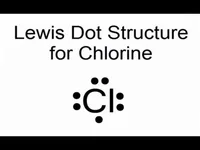
Chlorine has 7 valence electron so it will want to make 1 covalent bond.
Nitrogen will be our central element to build off of because it wants to make more bonds!
10

11
Draw
Use Lewis structures to model the covalent bond between Carbon and Fluorine
12

Remember, we want to satisfy the octet rule for all elements in a covalent bond. Fluorine will need 8 valence electrons to satisfy the octet rule.
Carbon will also need 8 valence electrons to satisfy the octet rule.
Carbon has 4 valence electrons so it will want to make 4 covalent bonds.
Fluorine has 7 valence electrons so it will want to make 1 covalent bond.
Carbon will be our central element to build off of because it wants to make more bonds!
13

14
Modeling Ionic Bonds (Stealing/Transfer of Valence Electrons)
Follow the steps below to use Lewis diagrams to model an ionic bond.
Draw a Lewis structure of each element.
Draw arrows to show the movement of the electrons.
Draw the final structures of the ions.

Show answer
Auto Play
Slide 1 / 14
SLIDE
Similar Resources on Wayground

13 questions
Domains and Kingdoms of Life
Presentation
•
7th Grade
13 questions
Mutations & the Environment
Presentation
•
7th Grade
10 questions
MS-ESS2-3 Plate Tectonics and Seafloor Spreading
Presentation
•
7th Grade
11 questions
Dichotomous Key
Presentation
•
7th Grade
12 questions
Respiratory and Circulatory Systems
Presentation
•
7th Grade
12 questions
Characteristics of Life
Presentation
•
7th Grade
10 questions
Classification of Living Things
Presentation
•
7th Grade
13 questions
evolution and natural selection
Presentation
•
7th Grade
Popular Resources on Wayground
10 questions
Safety Day 2026 – Student Review

Quiz
•
9th Grade
21 questions
Continents and Oceans
Quiz
•
6th Grade
20 questions
Parts of Speech
Quiz
•
5th Grade
16 questions
Subject & Predicate
Quiz
•
5th Grade
25 questions
Multiplication Facts
Quiz
•
5th Grade
12 questions
Map Skills
Quiz
•
3rd Grade
22 questions
Continents and Oceans
Quiz
•
5th Grade
15 questions
Rounding Decimals
Quiz
•
5th Grade
Discover more resources for Science
10 questions
Exploring Chemical and Physical Changes

Interactive video
•
6th - 10th Grade
14 questions
Week 1 Falcon Flex Fast and Curious
Quiz
•
7th Grade
42 questions
Explore Plate Tectonics and Boundaries
Quiz
•
7th Grade
21 questions
Waves and Wave Properties
Quiz
•
6th - 8th Grade
16 questions
Photosynthesis and Cellular Respiration Review
Quiz
•
7th Grade
20 questions
Food Webs + Energy Pyramids
Quiz
•
7th Grade
9 questions
Biology: Cell Structure
Interactive video
•
7th Grade
8 questions
Diffusion and Osmosis Review
Presentation
•
6th - 8th Grade