

Unit 4 Review: Earth's Place in the Universe

Presentation
•
Science
•
6th Grade
•
Practice Problem
•
Easy
+3
Standards-aligned

Isis Vargas
Used 21+ times
FREE Resource
34 Slides • 32 Questions
1
Earth's Place in the Universe

2
Rotation and Revolution

3
Earth rotates on its axis like a spinning top.
This rotation takes 24 hours and gives us day and night.
The Sun appears to rise and set because of Earth’s rotation.
💡 Think About It: If Earth stopped spinning, what would happen to day and night?
Rotation – Earth's Daily Spin

4
Earth revolves around the Sun in an oval-shaped orbit.
One full revolution takes 365 days, which makes one year.
The path Earth follows is called its orbit.
Revolution – Earth’s Yearly Journey

5
Rotation vs. Revolution

🌞 Quick Check: What causes day and night? Rotation or revolution?
6
Multiple Choice
What causes day and night on Earth?
Earth's revolution
Earth's rotation
The Moon’s movement
The Sun moving around Earth
7
Multiple Choice
How long does it take Earth to complete one revolution around the Sun?
24 hours
30 days
365 days
1 year
8
Multiple Choice
Which of the following is true?
Rotation takes longer than revolution
Earth’s revolution causes day and night
Rotation happens in 24 hours
The Moon causes Earth to rotate
9

10
Earth is tilted at 23.5 degrees as it orbits the Sun.
This tilt changes how sunlight hits different parts of Earth.
More direct sunlight = warmer temperatures (summer)
Less direct sunlight = cooler temperatures (winter)
Why Do We Have Seasons?
☀️ Think About It: What would happen if Earth had no tilt?

11
When the Northern Hemisphere tilts toward the Sun, it is summer there and winter in the Southern Hemisphere.
When the Northern Hemisphere tilts away, it is winter there and summer in the Southern Hemisphere.
Areas near the equator get sunlight year-round, so they don’t have big season changes.
🌍 Did You Know? The North and South Poles can have 6 months of daylight or 6 months of darkness!
How do seasons work?

12
Summer Solstice (June 21): Longest day in the Northern Hemisphere.
Winter Solstice (December 21): Shortest day in the Northern Hemisphere.
Spring (March 21) and Fall (September 21) Equinoxes: Equal daylight and night everywhere!
🌞 Quick Check: Why do days get shorter in the fall?
Solstices and Equinoxes

13
Multiple Choice
Why do we have seasons?
Earth gets closer to the Sun in summer
Earth's axis is tilted
The Sun gets hotter and colder
Earth’s rotation changes
14
Multiple Choice
When is the longest day of the year in the Northern Hemisphere?
March 21
June 21
September 21
December 21
15
Multiple Choice
Which place has little to no seasonal change?
North Pole
Equator
Southern Hemisphere
Mountains
16
Multiple Choice

What season it is in the Northern Hemisphere in the diagram?
Spring
Summer
Fall
Winter
17

18
The Moon does not make its own light; it reflects the Sun’s light.
As the Moon orbits Earth, different parts of it are lit up, creating phases.
One full cycle of phases takes about 29.5 days.
Why does the moon change shape?

🌙 Think About It: If the Moon didn’t move, would we still see phases?
19


20
Waxing = The Moon is growing brighter (from New Moon to Full Moon).
Waning = The Moon is getting darker (from Full Moon to New Moon).
The First and Last Quarter Moons look like half-moons!
🌍 Did You Know? The same side of the Moon always faces Earth because its rotation and revolution have the same pace.
Waxing vs. Waning

21
Multiple Choice
Why do we see different Moon phases?
The Moon changes shape
The Moon moves around Earth
Clouds cover part of the Moon
The Sun moves away from the Moon
22
Multiple Choice
Which phase is when the Moon is fully lit?
New Moon
First Quarter
Full Moon
Waxing Crescent
23
Multiple Choice
If the Moon is waxing, what is happening?
It is getting darker
It is getting brighter
It is disappearing
It is moving away from Earth
24
Multiple Choice

Label the moon phases from the diagram
1: Waxing Crescent
2: Waning Gibbous
3: Full Moon
4: Waxing Gibbous
5: Last Quarter
6: Waning Crescent
7: New Moon
8: First Quarter
1: First Quarter
2: Waxing Gibbous
3: Full Moon
4: Waning Gibbous
5: Last Quarter
6: Waning Crescent
7: New Moon
8: Waxing Crescent
1: Third Quarter
2: Waxing Gibbous
3: New Moon
4: Waning Gibbous
5: First Quarter
6: Waning Crescent
7: Full Moon
8: Waxing Crescent
1: New Moon
2: Waxing Gibbous
3: First Quarter
4: Waning Gibbous
5: Last Quarter
6: Waning Crescent
7: Full Moon
8: Waxing Crescent
25
Tides

26
Tides are the rise and fall of ocean water levels on Earth.
They are caused by the gravitational pull of the Moon and, to a lesser extent, the Sun.
Earth experiences two high tides and two low tides in a 24-hour period.
What Are Tides?

💡 Fun Fact: The Bay of Fundy in Canada has the highest tides in the world—water levels can change by more than 50 feet (15 meters)!
27
The Moon’s gravity pulls on Earth’s water, creating a bulge (high tide) on the side facing the Moon.
A second bulge occurs on the opposite side of Earth due to inertia.
Areas not in the bulges experience low tide.
How the Moon Affects Tides?

28
Spring tides happen when the Earth, Moon, and Sun are aligned (during full moon and new moon), creating the highest high tides and the lowest low tides.
Neap tides happen when the Moon and Sun form a 90-degree angle (during first and third quarter moons), causing weaker tides.
Spring and Neap Tides

29
Multiple Choice
What primarily causes ocean tides on Earth?
Earth’s rotation
The Moon’s gravity
The Sun’s heat
Wind currents
30
Multiple Choice
How many high tides does a coastal area experience in one day
One
Two
Three
Four
31
Multiple Choice
When do spring tides occur?
When the Moon and Sun are aligned
During first and third quarter moons
When the Moon is closest to Earth
During a solar eclipse
32
Multiple Choice

Identify the tide and moon phase on the diagram
Neap Tide
1: First Quarter
2: Third Quarter
Spring Tide
1: Full Moon
2: New Moon
Neap Tide
1: New Moon
2: Full Moon
Spring Tide
1: New Moon
2: Full Moon
33
Multiple Choice

Identify the tide and moon phase in the diagram
Neap Tide
1: New Moon
2: Full Moon
Spring Tide
1. First Quarter
2. Third Quarter
Neap Tide
1. Third Quarter
2. First Quarter
Spring Tide
1. New Moon 2. Full Moon
34
35
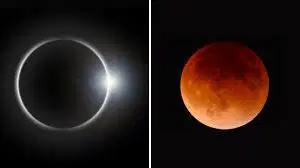
An eclipse happens when one object in space blocks sunlight.
There are two main types:
🌞🌑 Solar Eclipse: The Moon blocks sunlight and casts a shadow on Earth.
🌍🌕 Lunar Eclipse: The Earth blocks sunlight, making the Moon dark.
Eclipses don’t happen every month because the Moon’s orbit is tilted.
🧐 Quick Question: Why don’t we have eclipses every month?
What is an Eclipse?

36
Happens during a New Moon 🌑.
The Moon moves between Earth and the Sun, blocking sunlight.
There are three types:
🔴🌑 Total: The Moon completely covers the Sun.
🌓 Partial: Only part of the Sun is covered.
☀️⭕ Annular: The Moon is farther away and leaves a ring of sunlight.
⚠️ Never look at a solar eclipse without protection! Use special eclipse glasses. 😎
Solar Eclipse

37
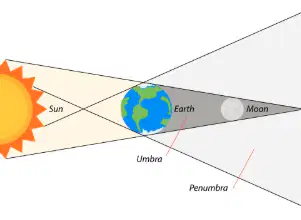
Happens during a Full Moon 🌕.
The Earth moves between the Sun and the Moon, casting a shadow on the Moon.
There are two types:
🔴 Total: The Moon is fully in Earth’s shadow and looks red.
🌘 Partial: Only part of the Moon is dark.The Moon looks red in a total eclipse because Earth’s atmosphere filters sunlight.
🌕 Fun Fact: A lunar eclipse can be seen from anywhere on Earth where it is nighttime!
Lunar Eclipse
38
Multiple Choice
Why don’t we see a solar eclipse every month?
The Moon’s orbit is tilted
The Earth blocks the Sun
The Sun is too far away
The Moon doesn’t always reflect sunlight
39
Multiple Choice
What type of solar eclipse happens when the Moon completely covers the Sun?
Annular
Partial
Total
Hybrid
40
Multiple Choice
What is the main difference between a solar and a lunar eclipse?
A solar eclipse happens at night, and a lunar eclipse happens during the day.
A solar eclipse is when the Moon blocks the Sun, and a lunar eclipse is when Earth blocks sunlight from reaching the Moon.
A lunar eclipse happens every month, but a solar eclipse does not.
Lunar eclipses only happen in summer.
41
Multiple Choice

What does the diagram illustrate?
Total Lunar Eclipse
Penumbral Eclipse
Lunar Eclipse
Solar Eclipse
42
Multiple Choice

What does the diagram illustrate?
Total Solar Eclipse
Penumbral Eclipse
Lunar Eclipse
Solar Eclipse
43
44
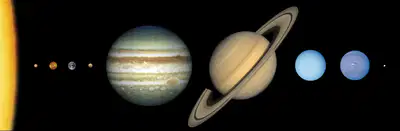
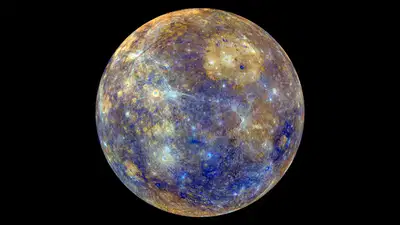
Closest planet to the Sun. 🌞
Extreme temperatures: very hot during the day, freezing at night. ❄️🔥
No atmosphere, so it can’t trap heat.
No moons.
Mercury
45
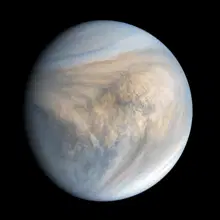
Similar in size to Earth. 🌎
Thick, dense atmosphere traps heat, making it the hottest planet. 🔥
Covered with thick clouds of sulfuric acid.
No moons.
Venus
46
The only planet with liquid water, solid ice, and water vapor. 💧❄️☁️
Has one moon. 🌕
Supports life because its appropriate distance from the sun, right temperature and oxygen-rich atmosphere.
Earth

47
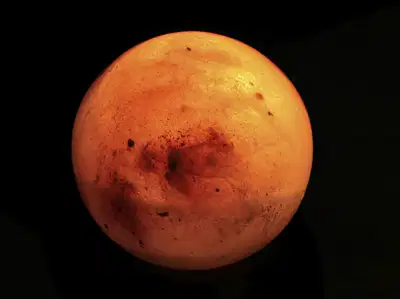
The “Red Planet” due to iron oxide (rust) on its surface. 🔴
Has a thin atmosphere, ice caps, rift valleys, and volcanoes. 🌋
Could have supported life in the past.
Two small moons.
Mars
48
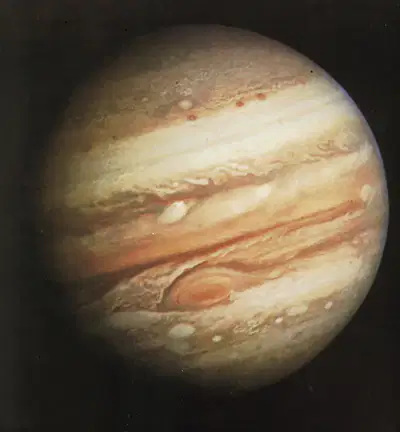
Largest planet in the solar system.
Has at least 66 moons!
The Great Red Spot is a giant storm. 🌪️
Jupiter
49
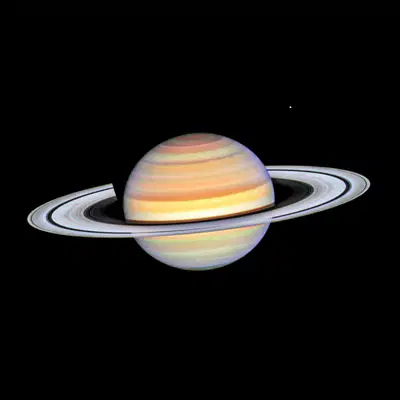
The second-largest planet.
Made mostly of hydrogen and helium.
Has at least 60 moons and the most visible rings.
Saturn
50
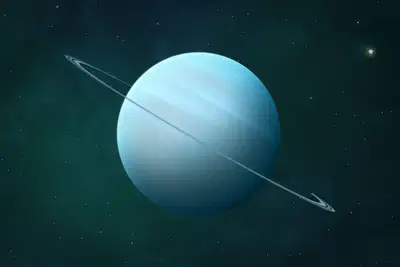
Bluish-green color due to methane in the atmosphere.
Two sets of rings.
Made of ice and rock. ❄️
Rotates on its side!
Uranus
51
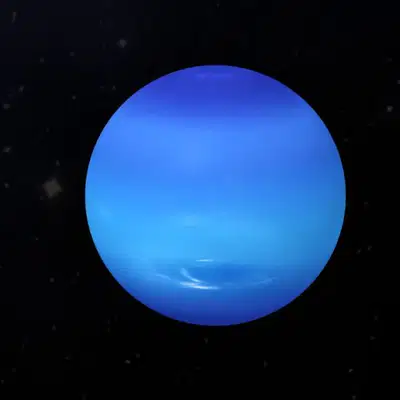
Farthest planet from the Sun.
Deep blue with large storms. 🌪️
Has 13 moons and several rings.
Neptune
52
Multiple Choice
Why does Uranus look bluish-green?
It has water on its surface
It is covered in ice
Its atmosphere contains methane
It is far from the Sun
53
Multiple Choice
What is the Great Red Spot on Jupiter?
A giant ocean
A huge storm
A mountain
A moon
54
Multiple Choice
Why does Mercury have extreme temperatures?
It has no atmosphere
It is far from the Sun
It has a thick atmosphere
It has many moons
55
Multiple Choice
Which feature makes Earth unique in the solar system?
It has a thick atmosphere
It has one moon
It has water in three states
It is the largest planet
56
Multiple Choice
Which is the farthest planet from the Sun?
Jupiter
Saturn
Neptune
Mars
57
Multiple Choice
Why is Venus the hottest planet?
It is closest to the Sun
It has a dense atmosphere that traps heat
It has a rocky surface
It has many moons
58
Multiple Choice
Why does Mars appear red?
Its surface contains a lot of iron oxide (rust)
It has a thick atmosphere
It is the hottest planet
It is made mostly of gas
59
Multiple Choice
What is Saturn best known for?
Its large size
Its many moons
Its bright, visible rings
Its thick atmosphere
60
61
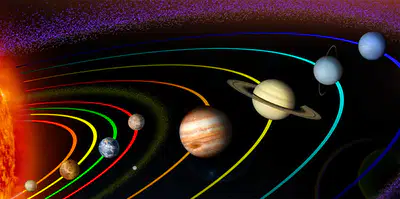
Gravity keeps planets in orbit around the Sun. ☀️🪐
The force of gravity works over long distances, shaping galaxies.
Earth's gravity is the strongest force acting on the Moon. 🌍🌕
Gravity in the Universe
62
Scientists used telescopes to discover new planets, stars, and asteroids. 🔭
The biggest challenge of space travel is escaping Earth’s gravity. 🚀
Early space exploration relied on ground-based telescopes.
Space Exploration
63
Telescopes like Hubble and James Webb provide detailed images of space.
Space telescopes help us study distant planets and galaxies.
Space Telexcopes

64
Multiple Choice
What is the strongest force acting on the Moon?
What is the strongest force acting on the Moon?
Earth’s gravitational field
The Moon’s own gravity
The force of space wind
65
Multiple Choice
What was a major challenge in early space exploration?
Finding new planets
Escaping Earth’s gravity
Building telescopes
Training astronauts
66
Multiple Choice
Why do scientists send telescopes into space?
To explore the ocean
To take closer pictures of space objects
To send astronauts to Mars
To detect gravity waves
Earth's Place in the Universe
Show answer
Auto Play
Slide 1 / 66
SLIDE
Similar Resources on Wayground

57 questions
Ocean and Weather Patterns
Presentation
•
6th Grade
57 questions
Earth Spheres and Rock Cycle Review
Presentation
•
6th Grade
61 questions
EOG Review | Local & Global Weather Patterns
Presentation
•
5th Grade
56 questions
Forces
Presentation
•
6th Grade
63 questions
12 Environmental Issues in Europe LESSON
Presentation
•
6th Grade
59 questions
G6 Second Review ST
Presentation
•
6th Grade
63 questions
Naming Forces
Presentation
•
6th Grade
58 questions
Common Assessment 3 Review Lesson
Presentation
•
6th Grade
Popular Resources on Wayground
10 questions
Safety Day 2026 – Student Review

Quiz
•
9th Grade
21 questions
Continents and Oceans
Quiz
•
6th Grade
20 questions
Parts of Speech
Quiz
•
5th Grade
16 questions
Subject & Predicate
Quiz
•
5th Grade
25 questions
Multiplication Facts
Quiz
•
5th Grade
12 questions
Map Skills
Quiz
•
3rd Grade
22 questions
Continents and Oceans
Quiz
•
5th Grade
15 questions
Rounding Decimals
Quiz
•
5th Grade
Discover more resources for Science
20 questions
Elements, compounds, and mixtures
Quiz
•
6th Grade
10 questions
6.6D - Relative Density Review
Quiz
•
6th Grade
10 questions
Exploring Chemical and Physical Changes

Interactive video
•
6th - 10th Grade
20 questions
CONDUCTION,CONVECTION AND RADIATION
Quiz
•
6th Grade
20 questions
Rocks and The Rock Cycle
Quiz
•
6th Grade
19 questions
Describing and Classifying Matter
Presentation
•
6th Grade
21 questions
Waves and Wave Properties
Quiz
•
6th - 8th Grade
20 questions
Phases of the Moon
Quiz
•
6th Grade