

Critical Reading of Life of a Vet

Presentation
•
English
•
4th Grade
•
Practice Problem
•
Medium

Dazhong Primary School
Used 3+ times
FREE Resource
35 Slides • 8 Questions
1


Primary 4 Unit 2
Life of a Vet
Close and Critical Reading 2
2
We are learning that/to:
• identify the features of texts that recount.
• the verb forms used in the text show the
relationship between events.
• the words, illustrations and organisation of a
text work together to communicate meaning.
3
Personal recounts
4
Personal recounts
• How is it organised?
5
Personal recounts
• How is it organised?
•Orientation
6
Personal recounts
• How is it organised?
•Orientation
Introduces what the recount is about, e.g., What happened?
Who are involved? (main characters)
7
Personal recounts
• How is it organised?
•Orientation
• Record of events in
chronological order
Introduces what the recount is about, e.g., What happened?
Who are involved? (main characters)
8
Personal recounts
• How is it organised?
•Orientation
• Record of events in
chronological order
Introduces what the recount is about, e.g., What happened?
Who are involved? (main characters)
Series of actions/events described in the order that they happened
9
Personal recounts
• How is it organised?
•Orientation
• Record of events in
chronological order
• Comment
Introduces what the recount is about, e.g., What happened?
Who are involved? (main characters)
Series of actions/events described in the order that they happened
10
Personal recounts
• How is it organised?
•Orientation
• Record of events in
chronological order
• Comment
Introduces what the recount is about, e.g., What happened?
Who are involved? (main characters)
Series of actions/events described in the order that they happened
Author’s reflection, opinions or
thoughts about the event
11
Personal recounts
• How is it organised?
•Orientation
• Record of events in
chronological order
• Comment
• A recount is generally written in the past tense.
Introduces what the recount is about, e.g., What happened?
Who are involved? (main characters)
Series of actions/events described in the order that they happened
Author’s reflection, opinions or
thoughts about the event
12
Personal recounts
• How is it organised?
•Orientation
• Record of events in
chronological order
• Comment
• A recount is generally written in the past tense.
What are the language features found in ‘Dogs and Escalators Don’t Go Together!’ ? What other features make you understand the text better?
Introduces what the recount is about, e.g., What happened?
Who are involved? (main characters)
Series of actions/events described in the order that they happened
Author’s reflection, opinions or
thoughts about the event
13
Language features
The author uses the first person pronoun and different
verb forms and tenses to:
• retell her personal experience
• show the sequence of events
• convey her knowledge and thoughts
• address her audience directly
14
Language features
The author uses the first person pronoun and different
verb forms and tenses to:
• retell her personal experience
• show the sequence of events
• convey her knowledge and thoughts
• address her audience directly
Let’s see how she does this in different parts of her recount:
• orientation
• record of event(s)
• comment
15
Drag and Drop
•
•
•
•
16

Let's read the passage together.
17
Draw
Box (WHEN) (WHERE)
Circle (WHO)
18

19
20
21
22
23

24

25
26
27
28
29
Drag and Drop
that happened in her clinic, the writer used
30
Drag and Drop
To provide comments about the event, such as providing an opinion or stating a fact, the writer used
31
Drag and Drop
32

33
34
35
36
Open Ended
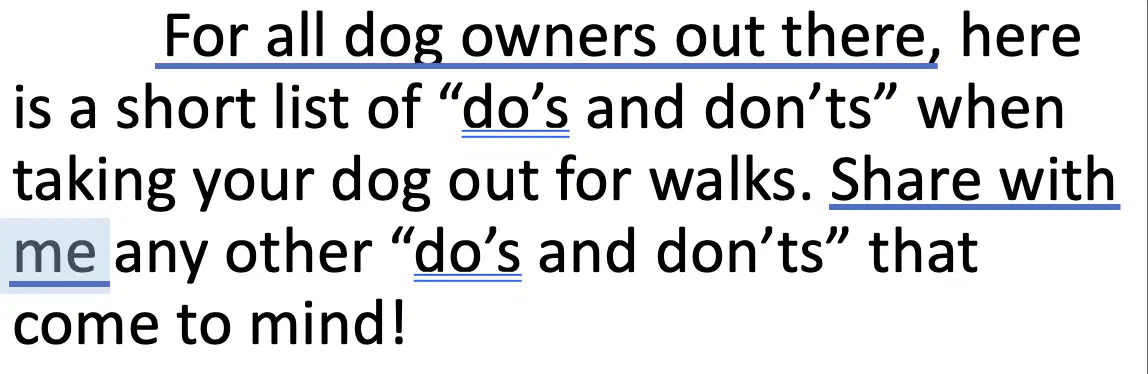
What is the writer’s purpose for doing this?
37
38


Other features of the text
(Illustrations)
How does this illustration
help you as a reader in
predicting what the blog
entry may be about?
39
Open Ended

How does this illustration help you as a reader in predicting what the blog entry may be about?
40


Other features of the text
(Notice)
Compared to a paragraph of text, how does this notice make it easier for
you to understand the
writer’s message?
41


Let’s practise.
Read the blog post ‘Doctor Orders a Warm Bath’.
1) Identify the different parts of the recount:
• Orientation
• Record of events in chronological order
• Comment
2) Identify and explain why different verb forms are used in
describing each part of the text.
3) Explain how the illustrations support the text.
42

Let’s reflect on our learning.
Think about:
• three things you have learnt about the features of texts that
recount
• two things you have learnt that you would use in your
reading or writing
• one question you have about what you have just learnt
43
Open Ended
Think about:
• three things you have learnt about the features of texts that recount
• two things you have learnt that you would use in your reading or writing
• one question you have about what you have just learnt
Primary 4 Unit 2
Life of a Vet
Close and Critical Reading 2
Show answer
Auto Play
Slide 1 / 43
SLIDE
Similar Resources on Wayground

33 questions
Elements of Poetry
Presentation
•
4th Grade
35 questions
Parts of Speech
Presentation
•
KG
37 questions
Days of the Week and Daily Activities
Presentation
•
4th - 5th Grade
36 questions
Elements of Plot via Shells
Presentation
•
5th Grade
42 questions
The Miraculous Journey of Edward Tulane Chapters 12-14 & Vocab
Presentation
•
3rd - 5th Grade
35 questions
The Power of Music
Presentation
•
3rd Grade
37 questions
Plural Forms of Nouns
Presentation
•
3rd Grade
39 questions
3rd ENGLISH Q#1
Presentation
•
3rd Grade
Popular Resources on Wayground
10 questions
Safety Day 2026 – Student Review

Quiz
•
9th Grade
21 questions
Continents and Oceans
Quiz
•
6th Grade
20 questions
Parts of Speech
Quiz
•
5th Grade
16 questions
Subject & Predicate
Quiz
•
5th Grade
25 questions
Multiplication Facts
Quiz
•
5th Grade
12 questions
Map Skills
Quiz
•
3rd Grade
22 questions
Continents and Oceans
Quiz
•
5th Grade
15 questions
Rounding Decimals
Quiz
•
5th Grade
Discover more resources for English
20 questions
Inferences
Quiz
•
4th Grade
15 questions
Subject/Verb agreement
Quiz
•
4th Grade
8 questions
Context Clues Practice
Quiz
•
4th Grade
15 questions
Singular and Plural Nouns
Quiz
•
4th Grade
12 questions
Figurative Language
Quiz
•
4th Grade
20 questions
4 Types of Sentences
Quiz
•
4th - 5th Grade
11 questions
Theme
Quiz
•
4th Grade
15 questions
Character Traits
Quiz
•
4th Grade