Search Header Logo
Human Impact Lesson

Human Impact Lesson

Assessment

Presentation

Biology

9th - 12th Grade

Medium

NGSS
MS-LS2-4, MS-LS2-5, MS-ESS3-4

+10

Standards-aligned

Created by

Shevonne Richardson

Used 5+ times

FREE Resource

12 Slides • 32 Questions

1

MORE DATA REVIEW

2

media

3

Multiple Choice

Question image

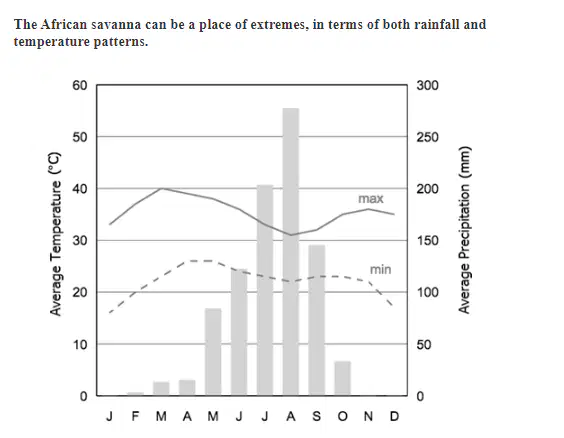
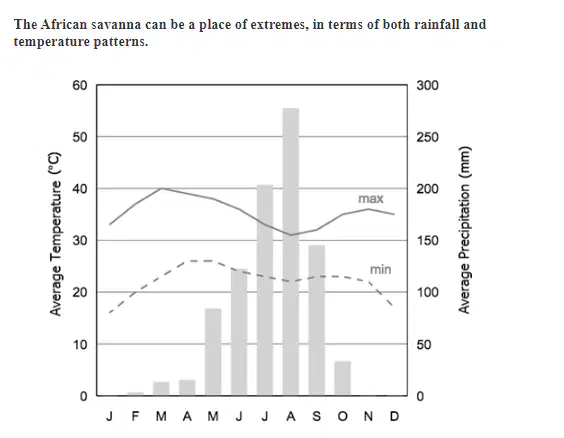
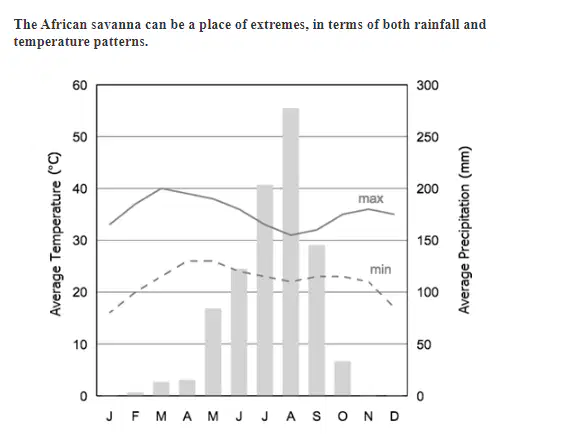
What is the maximum temperature in June?

1

40°C

2

20°C

3

38°C

4

40°C

4

Hotspot

If you wanted to answer a question about the amount of rain, where should you look?

5

Multiple Choice

Question image

When the average temperature was approximately 40°C, what was the average precipitation?

1

150mm

2

200 mm

3

40 mm

4

25 mm

6

media

7

Multiple Choice

Question image

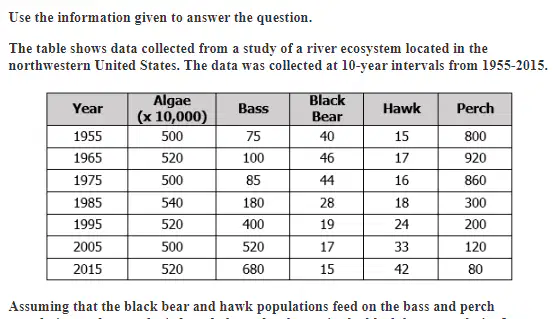
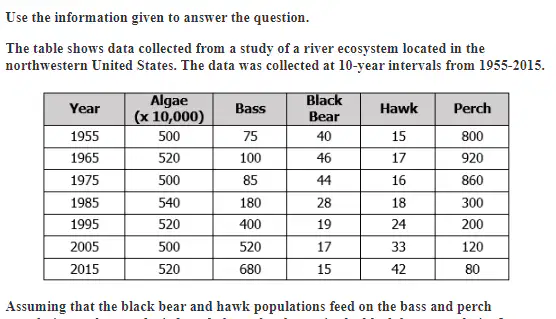
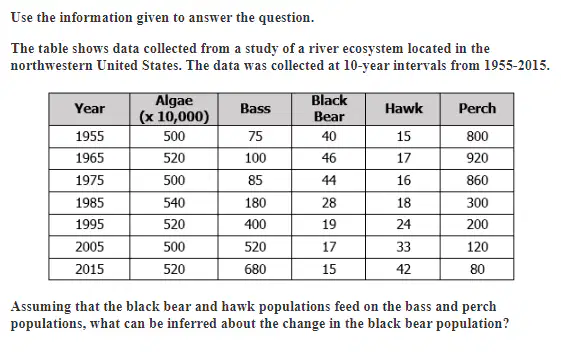
Between 1955 and 2015, which two species showed the most consistent decline?

1

Algae & Bass

2

Black Bear and Hawk

3

Black Bear & Perch

4

Perch and Algae

8

Multiple Choice

Question image

Based on the predator-prey relationships described, which statement best explains the black bear population decline?

1

Increase in algae led to fewer black bears

2

The increased bass population led to more competition with hawks and reduced the available food

3

The black bear declined because the perch population increased

4

Increased in the hawk population led to few black bear

9

Multiple Choice

Question image

What is this image illustrating?

1

Limiting Factors

2

Biodiversity

3

Carrying Capacity

4

Habitat Destruction

10

What is Biodiversity?

  • BIO means - "Life"

  • Diversity means - "Variety"

11

Poll

Vote: Biodiversity is Important

Yes; is necessary for life

No; biodiversity isn't necessary because we don't interact with one another all the time.

12

Poll

Biodiversity is

Increasing (Getting better; different types of animals, plants, etc)

Decreasing (Getting worse; less animals, plants, etc)

13

Multiple Choice

Who/what is causing a decrease in biodiversity on Earth?

$10 biology bucks

1

Big animals such as elephants

2

Humans

3

Artificial Intelligence/Technology

4

Asteroids

14

​Human Impact on Biodiversity

15

Word Cloud

How are humans contributing to the decrease in biodiversity? (Give a one or two word answer)

16

​1) Pollution
2) Habitat Fragmentation
3) Introduction of invasive species (non-native)
4) Deforestation
5) Overharvesting/Poaching
6) Resource Depletion

17

Multiple Select

Pollution can cause harm to the ___________.

1

water

2

land

3

air

18

Multiple Select

Which image shows pollution? (Select all that apply)

1
2
3

19

​Habitat Fragmentation

media

20

Multiple Choice

Why is habitat fragmentation hazardous to animals?

1

Animals may not thrive in their new habitat

2

If coral reefs die, so will many fish species that depend on them

3

Habitat fragmentation causes loss of habitat for many organisms

4

Habitat fragmentation does not pose a threat to animals.

21

Multiple Choice

Question image

Habitat fragmentation occurs when…

1

An ecosystem is able to recover, or adjust easily to change

2

The temperature of ocean water causes algae to leave coral reefs.

3

Smaller fragments of a habitat join to make a large habitat

4

A large area of habitat is broken up into smaller isolated areas

22

Word Cloud

Question image

What would happen if someone brought a Lion to Sumter and set it free?

23

Multiple Choice

Why do the populations of invasive species grow so quickly? 
1
Invasive Species are native to an area. 
2
Invasive species are prey to many animals.
3
Invasive species have no predators.
4
Invasive species keep the ecosystems in equilibrium.

24

media

An invasive species is an introduced, nonnative organism (disease, parasite, plant, or animal) that begins to spread or expand its range from the site of its original introduction and that has the potential to cause harm to the environment, the economy, or to human health.


Invasive Species (Non-Native)

25

Multiple Choice

What makes a species invasive?

1
Moving to a new ecosystem and taking resources from natives 
2
Not having papers
3
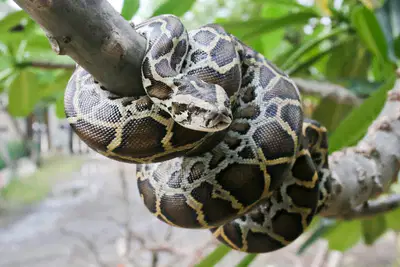
Species that can't adapt
4
Plants that take up too much space

26

media

Non-Native species CAN BE USED FOR GOOD

27

Multiple Choice

What is Deforestation?

1

The permanent removal of trees in the forest to make room for something else

2

Taking trees out of the forest and planting them somewhere

3

Taking trees out of the forest and planting them in another forest

28

Multiple Select

Which of the following describe the negative effects of deforestation?

1

Animals lose their homes.

2

Animals move to a new home and thrive.

3

climate change

4

Increased carbon in the air

5

Increased oxygen in the air

29

Overharvesting & Poaching

media

30

media

Resource Depletion

31

media

32

Multiple Choice

Question image

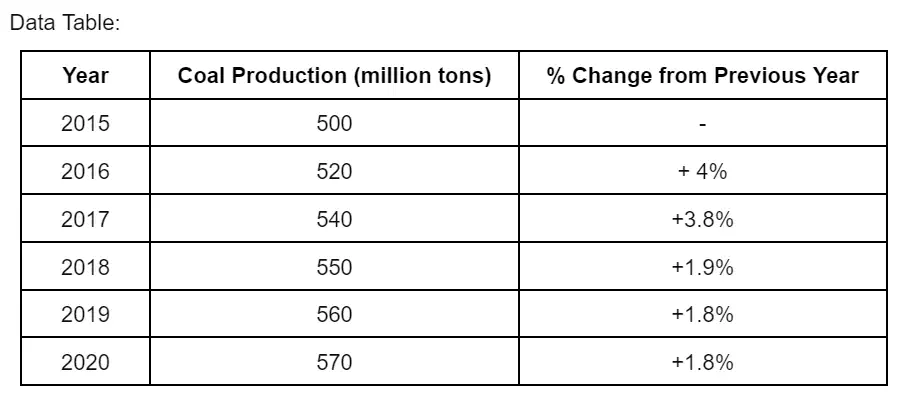
A country heavily relies on coal as its primary source of energy for electricity 

   generation. Over the years, the country has been extracting coal at a rapid rate 

   without significant conservation efforts, causing the depletion of coal. The government 

   has now realized the importance of sustainable resource management and is 

   considering implementing stricter regulations on coal mining.


What trend is observed in the coal production data from 2015 to 2020?

1

Fluctuating

2

Increasing

3

Decreasing

4

Stagnant

33

Multiple Choice

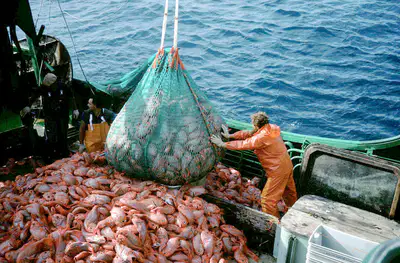
Fishing tuna at a rate of more than they can replace themselves is known as?

1

Habitat destruction

2

unsustainable

3

trophic cascade

4

overharvesting

34

Multiple Choice

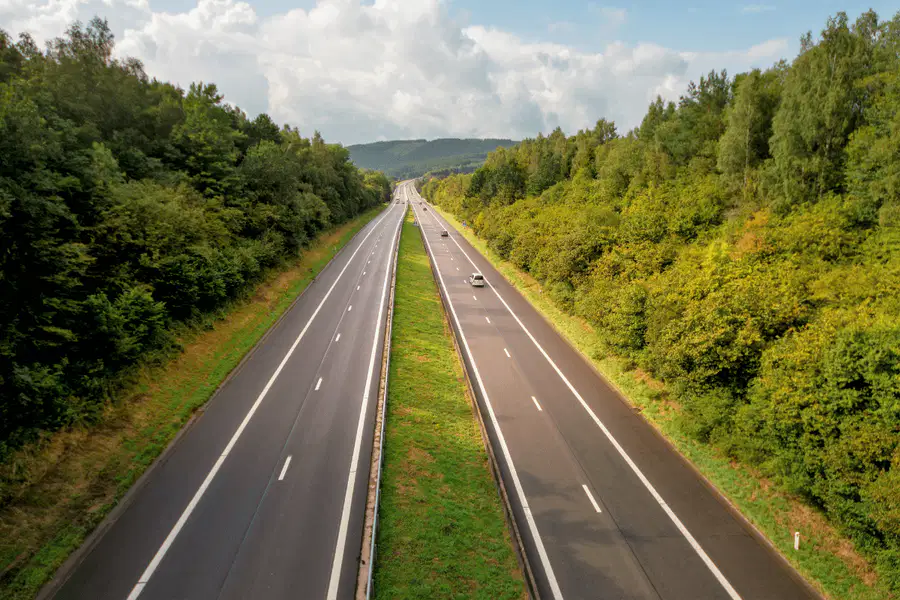
A good example of the fragmentation of habitat would be _____.

1

Cutting down a forest to build a housing development.

2

Draining a swamp to develop the land.

3

Building a road through the woods.

4

Polluting the James River

35

Multiple Choice

Which of the following is NOT a way in which humans are destroying habitats?

1

Clearing out prairies to grow a single crop

2

Gathering rain water to use to water crops

3

Building a shopping mall with a large parking lo

4

Cutting trees for toilet paper

36

Multiple Choice

Biodiversity refers to
1
extinct species
2
the variety of species on Earth
3
nonrenewable resources
4
the rate of species decline

37

Multiple Choice

Question image
When taken to a new habitat, non-native plants often threaten native plants of the new habitat.  Why do they do this?
1
Non-native plants are able to mutate rapidly
2
Non-native  plants cause native animals to relocate
3
Non-native plants are able to be used for medicine
4
Non-native plants compete with native plants for resources

38

Multiple Choice

Question image
Kudzu has overgrown many parts of southern Missouri and native ground plants have disappeared from the area. This is an example of:
1
Parasitism between kudzu and the native plants
2
A predator prey relationship between ground plants and kudzu
3
Competition occurring between the native and invasive species
4
Commesalism occurring between the kudzo and native plants

39

Multiple Choice

Adding harmful waste to water, air or land

1

Smog

2

Renewable Resources

3

Pollution

4

Nonrenewable Resources

40

Multiple Choice

This is defined as the permanent removal of trees.

1

Reforestation

2

Deforestation

3

Forestry

4

Mining

41

Multiple Choice

All of the following are causes for biodiversity loss, EXCEPT:

1

Habitat Loss

2

Invasive Species

3

Replanting trees

4

Pollution

42

Multiple Choice

How does plastic effect sea life?

1

Microplastics create dead zones in the oceans

2

Wildlife such as dolphins, seals and seabirds often eat plastic, mistaking it for food

3

Plastics provide habitats for marine life

4

None of the above

43

Multiple Choice

Coal, oil and natural gas
1
fossil resources
2
carbon resources
3
natural resources
4
renewable resources

44

Multiple Select

What are the greatest problems facing plants, animals, and people?
1

introducing of an invasive species  

2
habitat destruction
3

Pollution

4

Habitat Fragmentation

MORE DATA REVIEW

Show answer

Auto Play

Slide 1 / 44

SLIDE