

Lesson - Supply Chain Management

Presentation
•
Business
•
9th Grade
•
Practice Problem
•
Easy

Alicia Delande
Used 11+ times
FREE Resource
19 Slides • 9 Questions
1

Supply Chain Management (SCM)
2
Supply Chain Management (SCM)
Definition
The process of overseeing the flow of products, information, and finances, from raw materials to finished products.
3
Importance
Why is supply chain management important?
It allows businesses to monitor the flow of raw materials to a finished product or service for the ultimate consumer.
When a supply chain is managed well, companies can cut unnecessary costs and deliver products to the consumer faster and efficiently.
4
The physical movement of goods from suppliers to manufacturers, distributors and retailers and ultimately to the end consumer.
Supply Chain Model

5
Raw Materials
Where does it start?
The first step in a supply chain model involves acquiring raw materials, which could involve mining, farming, or other extraction methods depending on the product.
Raw materials will be processed and transformed into finished goods.

6
Supplier
What does a supplier do?
In the supply chain model, the supplier is the organization or individual that produces and/or acquires raw materials for others to use to make goods.

7
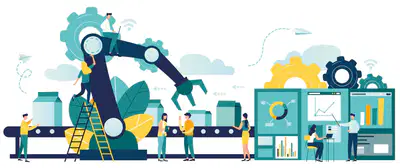
Manufacturer
What does a manufacturer do?
In the supply chain model, the manufacturer transforms raw materials from the supplier into finished goods.
This is usually a factory or manufacturing facility.
8
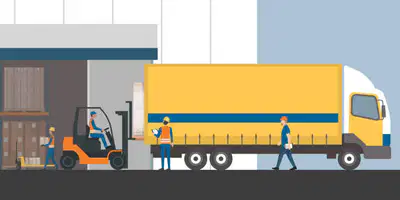
Distributor
What does a distributor do?
In the supply chain model, the distributor buys large quantities of finished goods from the manufacturer and sells them to retailers in smaller quantities at a higher price.
9
Retailer
What does a retailer do?
In the supply chain model, the retailer is the final point of sale.
They sell products directly to the consumer through brick-and-mortar physical stores and/or online platforms.
10
Multiple Choice
Supply chain management is important for all of the following reasons EXCEPT?
cut unnecessary costs
ensures products are made with no harmful chemicals
deliver products to the consumer faster
monitors the flow of raw materials
11
Categorize
produces and/or acquires raw materials
transforms raw materials into finished goods
buys finished goods and sells them in small quantities
sell products directly to the consumer
Categorize each task to the right part of the supply chain model:
12
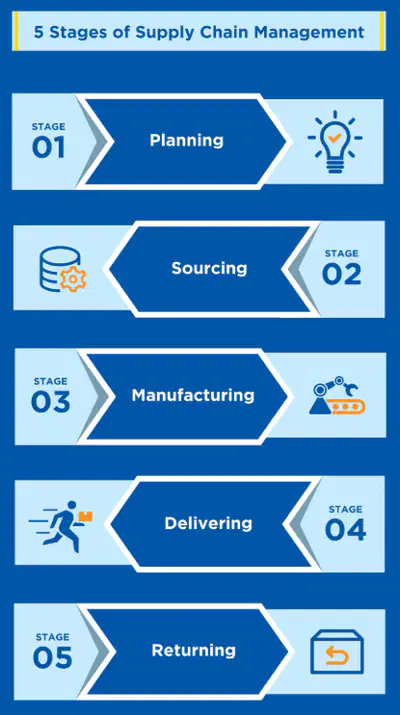
The supply chain processes involve planning, sourcing, manufacturing, delivering, and returning.
Supply Chain Stages
13
Supply Chain Stages
Importance of the five stages:
The five stages of supply chain management are crucial for ensuring efficient product production, timely delivery, and effective customer service, allowing businesses to optimize costs, manage inventory levels, and maintain competitiveness in the market.
14
Planning
What happens at the planning stage?
The planning stage of a supply chain refers to the initial phase where a company forecasts future demand, determines required inventory levels, allocates resources, and plans production schedules to effectively meet customer needs.
15
Sourcing
What happens at the sourcing stage?
The sourcing stage of a supply chain is when a company identifies, evaluates, and selects suppliers to acquire the necessary raw materials, components, or services needed to produce their final product.
16
Manufacturing
What happens at the manufacturing stage?
The manufacturing stage of a supply chain refers is when raw materials are transformed into finished products through production processes like cutting, assembly, and quality control.
17
Delivery
What happens at the delivery stage?
The delivery stage of a supply chain is when finished products are transported from the manufacturing facility to the retailer, involving logistic planning and managing of inventory to meet customer demand.
18
Return
What happens at the returning stage?
The return stage of a supply chain refers to the process of managing products that are being returned by customers back to the seller, which may involve repairing, restocking, recycling, or disposing of those returned items.
19
Multiple Choice
The _______ stage of a supply chain refers to the process of managing products that are being returned by customers back to the seller.
Planning
Sourcing
Manufacturing
Delivering
Returning
20
Multiple Choice
The _______ stage of a supply chain refers to when a company forecasts future demand and determines required inventory.
Planning
Sourcing
Manufacturing
Delivering
Returning
21
Multiple Choice
The ________ stage of a supply chain refers is when raw materials are transformed into finished products through production processes like cutting, assembly, and quality control.
Planning
Sourcing
Manufacturing
Delivering
Returning
22
Multiple Choice
The ________ stage of a supply chain is when finished products are transported from the manufacturing facility to the retailer.
Planning
Sourcing
Manufacturing
Delivery
Returning
23
Multiple Choice
The _____ stage of a supply chain is when a company identifies, evaluates, and selects suppliers to acquire the necessary raw materials, components, or services needed to produce their final product.
Planning
Sourcing
Manufacturing
Delivery
Returning
24
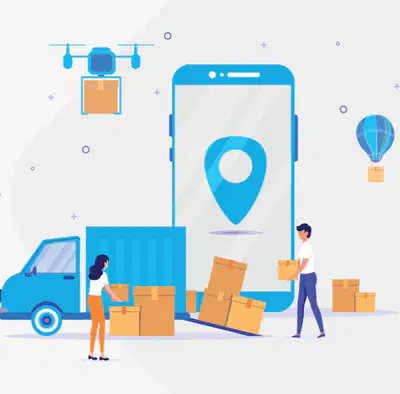
Learn about the supply chain management stages for a cell phone.
Apply SCM to a Product
25
SCM for a Cell Phone
Planning
This stage involves forecasting market demand for different phone models, determining production quantities, and identifying potential suppliers to meet those needs.
Sourcing
Manufacturing
Delivery
Returning
Acquiring the necessary raw materials and components like screens, processors, batteries, and casing from various suppliers, negotiating prices and delivery terms.
The actual assembly of the cell phone, including attaching components, quality control checks, and packaging at a factory.
Transporting the finished phones from the factory to retailers, distributors, and ultimately to consumers through various logistics channels.
Managing the process of receiving and processing returned phones due to defects, customer dissatisfaction, or warranty claims.


26
Reorder
Reorder the following stages of supply chain management for a cell phone:
Forecasting market demand for different phone models
Acquiring the necessary raw materials
Assembly of the cell phone
Transporting the finished phones from the factory to retailers
Receiving and processing returned phones
27
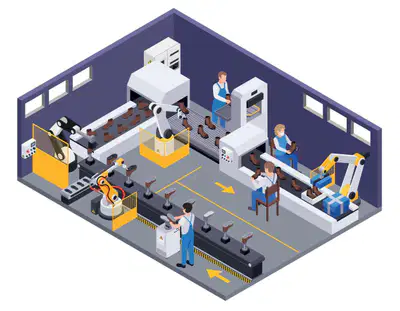
Learn about the supply chain management stages for sneakers.
Apply SCM to a Product
28
Reorder
Reorder the following stages of supply chain management for sneaker:
Forecasting demand and designing the sneaker
Identifying and securing raw materials like leather, fabric and rubber
Cutting and assembling the sneaker components, including stitching, gluing, and attaching soles
Coordinating the delivery of sneakers to retailers
Receiving and processing returned sneakers
Supply Chain Management (SCM)
Show answer
Auto Play
Slide 1 / 28
SLIDE
Similar Resources on Wayground

21 questions
Exponent Rules
Presentation
•
9th Grade
21 questions
Geometric Sequences
Presentation
•
9th Grade
21 questions
Enzymes
Presentation
•
9th Grade
21 questions
Geologic Time Periods Overview
Presentation
•
9th Grade
21 questions
Primary and Secondary Succession
Presentation
•
9th Grade
22 questions
Greece - 4 Types of Government
Presentation
•
9th Grade
22 questions
Evolution Review
Presentation
•
9th Grade
22 questions
Economic Resources & Scarcity
Presentation
•
9th - 10th Grade
Popular Resources on Wayground
10 questions
HCS SCI 03 Summer School Review 4

Quiz
•
3rd Grade
11 questions
HSMS - Standard Response Protocol
Quiz
•
6th - 8th Grade
16 questions
1.1-1.2 Quiz Review
Quiz
•
9th - 12th Grade
12 questions
Exponent Expressions
Quiz
•
6th Grade
20 questions
Adding and Subtracting Integers
Quiz
•
6th - 7th Grade
11 questions
Northeast States
Quiz
•
3rd - 4th Grade
10 questions
Characterization
Quiz
•
3rd - 7th Grade
10 questions
Common Denominators
Quiz
•
5th Grade