
5.13 Extinction

Presentation
•
Science
•
9th - 12th Grade
•
Practice Problem
•
Easy
+21
Standards-aligned

Samantha Kasper
Used 4+ times
FREE Resource
15 Slides • 8 Questions
1
2

3
Objectives
interpret the various natural and anthropogenic factors that can lead to species extinction
compare past mass extinction events in Earth‘s history
explain conservation efforts intended to prevent and mitigate extinction
4
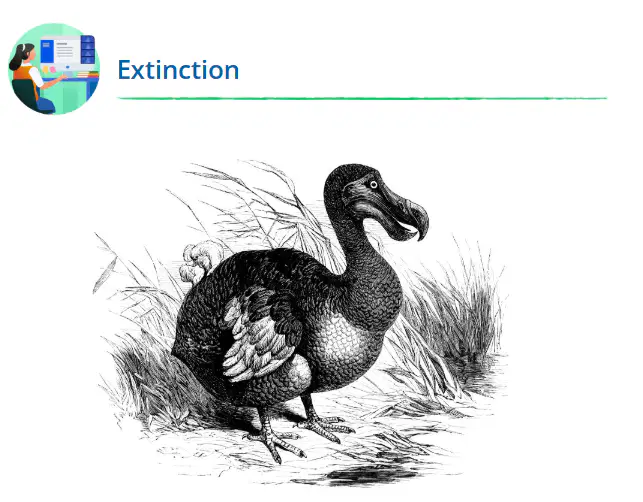
Extinction
If the population of a species gets too low, the species becomes at risk of extinction.
There are two different categories of extinction:
extinct in the wild = species can only be found in captivity.
extinct = species can no longer can found in the wild, and all individuals in captivity have also died
5
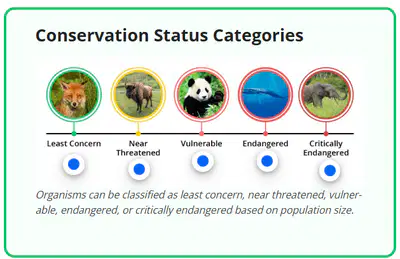
Most species do not quickly change from having a healthy population size to becoming extinct. There are typically warning signs of extinction as a healthy population size decreases over time.
6
Regional extinction is when a species no longer exists in a specific region of the world. They may live elsewhere in the world so there is a possibility of reintroducing the species to the region in which they went extinct.
Example: gray wolves
Global Extinction is when a species no longer exists anywhere in the world. Since the population no longer exists anywhere in the world, there is no hope for the rehabilitation of the species.
Example: dinosaurs
7

interpret the various natural and anthropogenic factors that can lead to species extinction
8
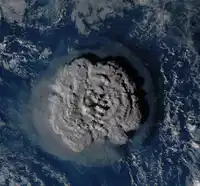
Natural Causes of Extinction
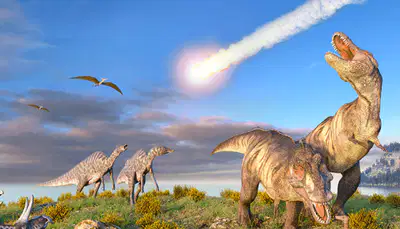
Extinctions are not a new phenomenon. Organisms have been going extinct for hundreds of thousands of years due to natural causes such as:
asteroids
volcanic ash
climate change
genetic factors
9
Multiple Choice
How might volcanic eruptions lead to the climate becoming warmer?
A volcanic eruption results in high concentrations of ash in the atmosphere, blocking out the sun‘s rays.
A volcanic eruption results in high concentrations of greenhouse gases in the atmosphere, trapping heat near Earth‘s surface.
A volcanic eruption emits carbon dioxide, which causes an increase in the ocean‘s pH.
10
Anthropogenic (Human) Causes of Extinction
The Holocene extinction, the extinction event currently occurring on Earth, began in the late 1800s. The Holocene extinction is different from the previous five extinctions because it is caused entirely by human activity.
Some anthropogenic (human) causes of extinction include:
habitat destruction
fragmentation
invasive species
poaching
pollution
11
Multiple Choice
What is the number one anthropogenic (human) cause of extinction?
habitat detruction
poaching
volcanic eruptions
asteroids
12
13
Poll

interpret the various natural and anthropogenic factors that can lead to species extinction
1😳
2😬
3🙂
4😎
5🤩
14
compare past mass extinction events in Earth‘s history
15
Multiple Choice
According to "When will the next mass extinction occur?", which of the following statements best describes the current mass extinction event?
It is happening at the same rate as past mass extinctions, due to natural causes alone.
It is occurring at a much faster rate than normal, largely driven by human activities.
It is expected to begin in the distant future, as Earth's climate returns to Ice Age conditions.
16
Poll
compare past mass extinction events in Earth‘s history
1😳
2😬
3🙂
4😎
5🤩
17
explain conservation efforts intended to prevent and mitigate extinction
18
Extinction Mitigation
Since extinction rates have accelerated, humans have taken action to slow down extinction rates and to restore population sizes of endangered or vulnerable species. There are a few ways in which mitigation can be done, including:
habitat conservation
breeding
enacting protective laws
19
Multiple Select
Why is habitat conservation an important method for mitigating extinction?
Habitat conservation helps prevent extinction since habitat destruction is the number one cause of extinction.
Habitat conservation helps prevent extinction by decreasing the rate of predation of vulnerable and endangered species.
Habitat conservation helps prevent extinction because it ensures organisms have a place to live that meets their needs.
Habitat conservation helps prevent extinction because invasive species are more closely monitored in habitat conservations.
20
Multiple Choice
What is one way humans can mitigate accelerated extinction rates?
By increasing urbanization and expanding agricultural land.
By reducing habitat destruction and implementing conservation efforts.
By promoting the use of pesticides and herbicides in farming.
21
Poll
explain conservation efforts intended to prevent and mitigate extinction
1😳
2😬
3🙂
4😎
5🤩
22
Today, you learned:
about anthropogenic and natural causes of extinction;
the similarities and the differences between Earth‘s mass extinction events; and
about mitigation efforts to help prevent and reverse the extinction of species.
In an upcoming lesson, you learn about how scientists are attempting to bring species back from extinction.
23
Show answer
Auto Play
Slide 1 / 23
SLIDE
Similar Resources on Wayground

15 questions
photosynthesis and cellular respiration
Presentation
•
9th - 12th Grade
21 questions
7.3 Weather Patterns
Presentation
•
9th - 12th Grade
18 questions
Unit 11: Newton's Laws of Motion
Presentation
•
9th - 12th Grade
17 questions
Intro to Blood Flow
Presentation
•
9th - 12th Grade
16 questions
Air Masses
Presentation
•
9th - 12th Grade
18 questions
Immune System and Biotechnology
Presentation
•
9th - 12th Grade
20 questions
Properties of Water
Presentation
•
9th - 12th Grade
Popular Resources on Wayground
10 questions
Safety Day 2026 – Student Review

Quiz
•
9th Grade
21 questions
Continents and Oceans
Quiz
•
6th Grade
20 questions
Parts of Speech
Quiz
•
5th Grade
16 questions
Subject & Predicate
Quiz
•
5th Grade
25 questions
Multiplication Facts
Quiz
•
5th Grade
12 questions
Map Skills
Quiz
•
3rd Grade
22 questions
Continents and Oceans
Quiz
•
5th Grade
15 questions
Rounding Decimals
Quiz
•
5th Grade
Discover more resources for Science
10 questions
Exploring Chemical and Physical Changes

Interactive video
•
6th - 10th Grade
20 questions
Atomic Structure
Quiz
•
9th Grade
10 questions
Exploring the Electromagnetic Spectrum for Middle School Science
Interactive video
•
6th - 10th Grade
10 questions
Exploring Force and Motion Concepts
Interactive video
•
6th - 10th Grade
10 questions
Exploring Air Masses and Weather Fronts
Interactive video
•
6th - 10th Grade
14 questions
Periodic Trends
Interactive video
•
11th Grade
10 questions
Exploring the States of Matter
Interactive video
•
6th - 10th Grade
10 questions
Exploring Forces: Net Force, Normal Force, Gravity, and Friction
Interactive video
•
6th - 10th Grade