

Discovery of Cells

Presentation
•
Science
•
7th Grade
•
Practice Problem
•
Easy
+10
Standards-aligned

Boaz Rottet
Used 9+ times
FREE Resource
13 Slides • 1 Question
1
In this lesson, you will learn about some of the important events in the discovery of cells.
Discovery of Cells
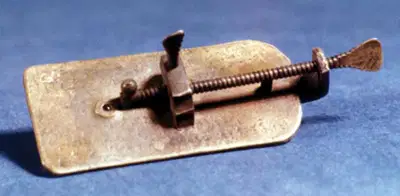
What do you think this is a picture of?
2
Draw
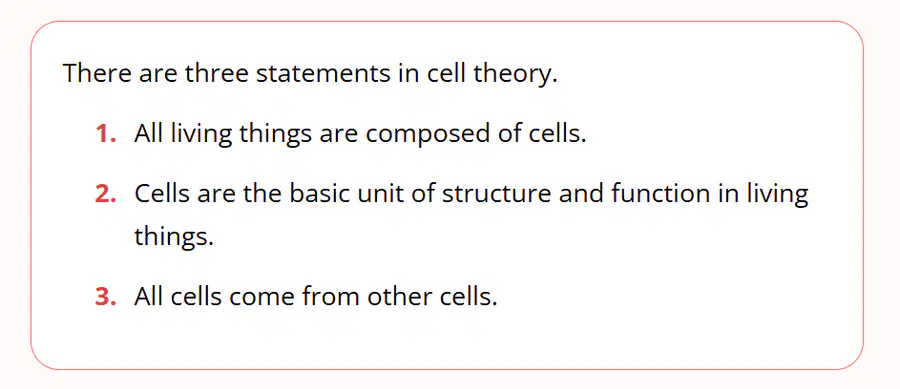
Write at least one part of the cell theory.
There are 3 parts!
3
4
Recall that cell theory is an important concept in biology. Theories are scientific statements supported by a great deal of evidence. Many scientists contributed data to support cell theory. In today's lesson, you will learn about these four scientists:
Zacharias Janssen
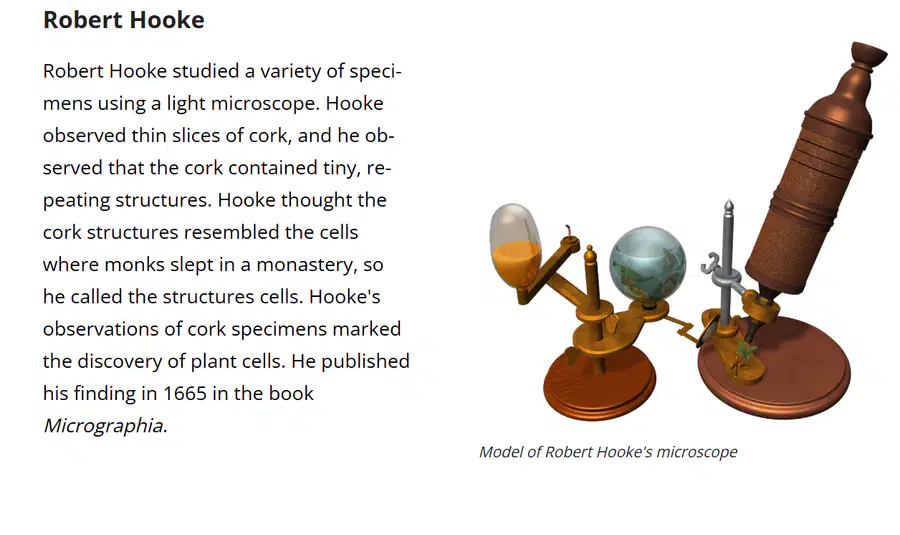
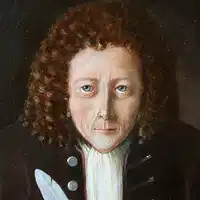
Robert Hooke
Antonie van Leeuwenhoek
Robert Brown
Each of these scientists contributed important data to the growing knowledge base about cells.

5
We are going to be meeting some old scientists. Please give them a nice warm welcome or a round of applause when you meet them.
They are kind of shy.

6

8
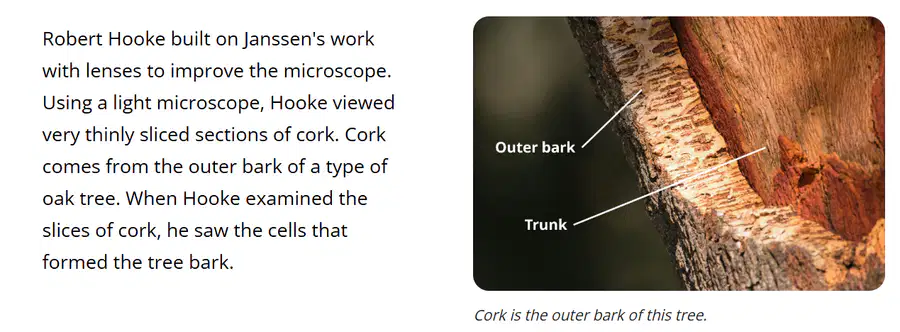

9
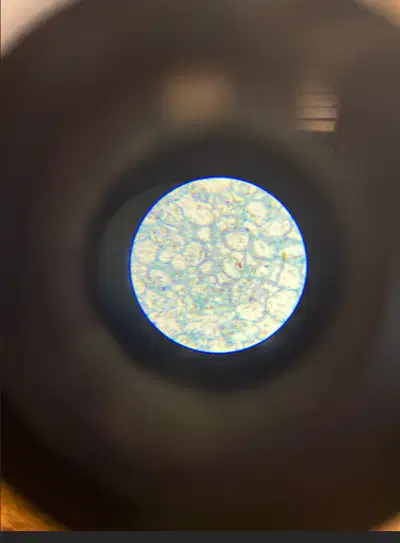
This is what your slide should look like!


11
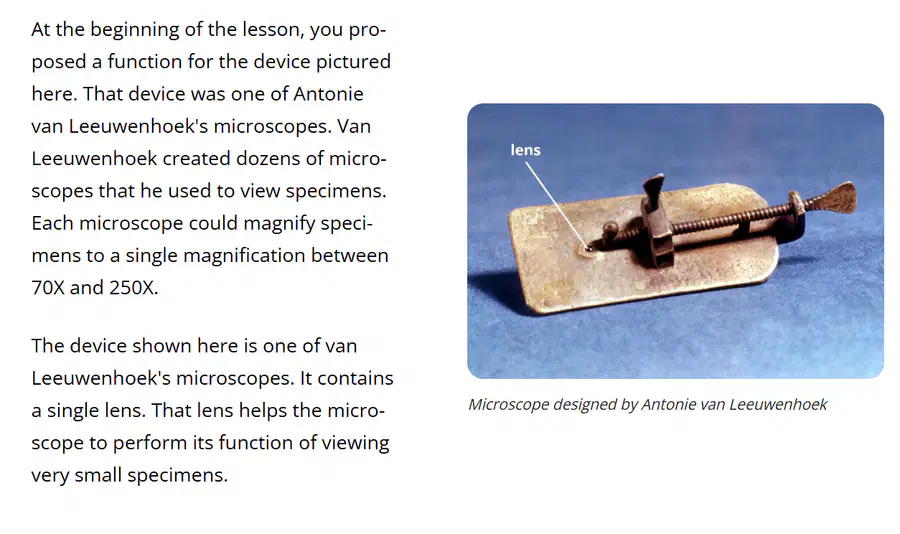
12

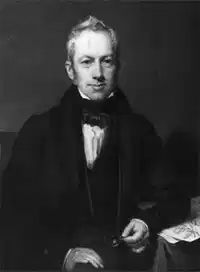
Robert Brown was able to take the detailed observations that led to the discovery of the nucleus, because advances in technology produced better microscopes. The first microscopes could not produce the clear, highly magnified images that Brown saw. As technology advances, humans can make new discoveries about the world around them.
13
Here are some interesting facts about Zacharias Janssen, Robert Hooke, Antonie van Leeuwenhoek, and Robert Brown, focusing on their contributions to cell theory and how technological advancements influenced their discoveries:
Zacharias Janssen:
Fact: Invented the first compound microscope around 1595 with his father Hans Janssen.
Technological Advancement: Their invention allowed for higher magnification, enabling later discoveries in cell biology.
Robert Hooke:
Fact: Coined the term “cell” in 1665 after observing cork cells under a microscope.
Technological Advancement: Used advanced microscopes to make detailed biological observations, introducing the concept of cells.
Antonie van Leeuwenhoek:
Fact: Improved microscopes, achieving up to 250x magnification.
Technological Advancement: His microscopes enabled the first observations and descriptions of microorganisms like bacteria and protozoa.
Robert Brown:
Fact: Discovered the cell nucleus in 1831 while studying orchid cells.
Technological Advancement: Enhanced microscope optics and staining techniques facilitated his discovery of cellular structures.
14

In this lesson, you will learn about some of the important events in the discovery of cells.
Discovery of Cells
What do you think this is a picture of?
Show answer
Auto Play
Slide 1 / 14
SLIDE
Similar Resources on Wayground

10 questions
Washington precedents
Presentation
•
7th Grade
10 questions
Model matter, for 5th (recap of atoms, molecules and compunds)
Presentation
•
1st - 3rd Grade
12 questions
Types of Cells
Presentation
•
7th Grade
8 questions
Cells
Presentation
•
7th Grade
8 questions
Type of Cells
Presentation
•
7th Grade
12 questions
LEAF STRUCTURE
Presentation
•
6th - 7th Grade
13 questions
Cells and Life
Presentation
•
7th Grade
7 questions
Plant and Animal Cell
Presentation
•
7th Grade
Popular Resources on Wayground
10 questions
HCS SCI 03 Summer School Review 4

Quiz
•
3rd Grade
11 questions
HSMS - Standard Response Protocol
Quiz
•
6th - 8th Grade
16 questions
1.1-1.2 Quiz Review
Quiz
•
9th - 12th Grade
12 questions
Exponent Expressions
Quiz
•
6th Grade
20 questions
Adding and Subtracting Integers
Quiz
•
6th - 7th Grade
11 questions
Northeast States
Quiz
•
3rd - 4th Grade
10 questions
Characterization
Quiz
•
3rd - 7th Grade
10 questions
Common Denominators
Quiz
•
5th Grade