

Wilson Demo

Presentation
•
Social Studies
•
9th - 12th Grade
•
Practice Problem
•
Hard

Aimee Wilson
Used 1+ times
FREE Resource
31 Slides • 1 Question
1


Elections in U.S.
2

Governing Elections
STATE CONTROL
• Set time/locations, most
dates
• Choose format of acceptable
ballots & how to file for
candidacy
• Rules & procedures for
registration
• Draws congressional district
lines
• Certifies election results
FEDERAL CONTROL
• Sets date for federal, general
elections (President, Congress)
• Judicial jurisdiction on election
policy
• Constitutional suffrage
amendments
• Enforces civil rights legislation
• Administers & enforces
campaign finance laws
3


Types of Elections
Primary v. General
Presidential v. Midterm
4
Poll
How many of you like discussing politics?
100% Bring it on
Meh...it's ok
Only when I have to
I would rather have a root canal
5


The Electoral College
6


Why was it Created?
• View of people:
• Framers did not trust the
people to decide directly.
The common man is too
easily fooled and not as well
educated as framers of the
U.S. Constitution.
• Federalism:
• Framers did not want
Congress to choose.
• Anti-Federalists were still
afraid of the national
government having too
much power – wanted
states to pick the president.
7

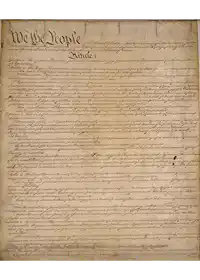
United States Constitution
• The United States Constitution outlines
how the President is to be elected.
Article II: Explains Electoral College
•
12th Amendment- changed way EC
voted- 2 separate votes for President &
VP
•
538electors
• House (435) + Senate (100)
• + 3 for DC (23rd Amendment)
• Equals the total number of Electoral
votes for each state
8

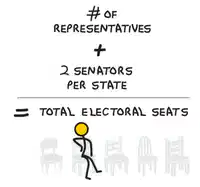
How many votes in Electoral College does
each state get?
Total number in Congress
House
(every state has at least 1)
+
Senate
(every state has 2)
9

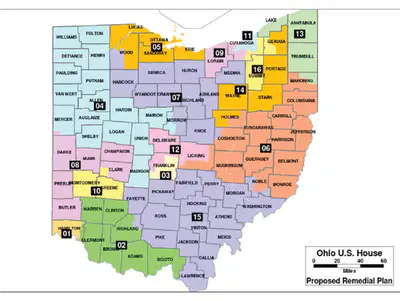
2024 Presidential Election (OHIO)
2020 Census Data
15 House Districts
+
2 Senators =
17 total Electoral
College votes
10


Electoral College Process
11

On the first Tuesday,
following the first
Monday in November
the General Election
takes place…
However, people are
actually voting for
“electors”
12

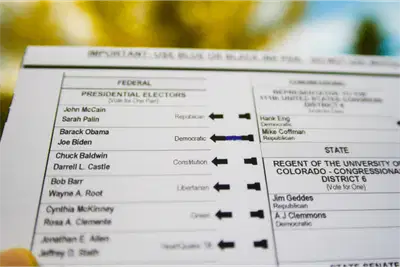
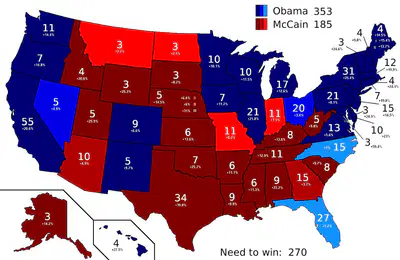
• On election day, when voters vote
for the president, they are
actually voting for the “electors”
representing one of the
candidates
• The candidate who receives the
most votes in a state gets all of
its electoral votes – “winner
takes all”
• A candidate needs 270 electoral
votes to win.
13


14

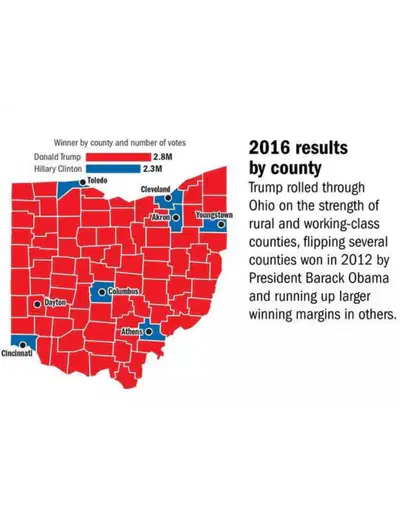
Winner Take All
The only states that do
not use the Winner
Takes All method are:
- Nebraska (NE)
- Maine (ME)
15


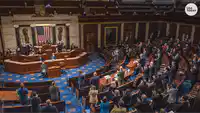

• Electors chosen by
State Legislatures and
these electors vote in
December
• Votes are counted &
certified in a joint
session of Congress in
January
• The President is
inaugurated on
January 20th
(20th Amendment)
16

Arguments Against the
Electoral College
17

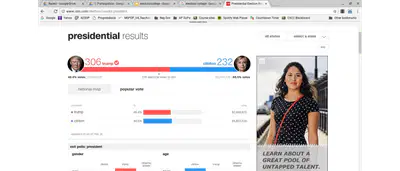
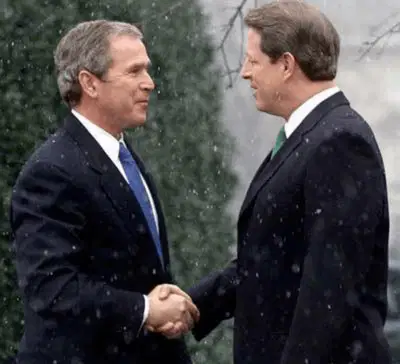
# 1 - Person who doesn’t win popular
vote can be elected President
– 5 Elections
1824 (John Quincy Adams v. Andrew Jackson)
1876 (Rutherford B. Hayes v. Samuel Tilden)
1888 (Benjamin Harrison v. Grover Cleveland)
2000 (Gore v. Bush)
2016 (Clinton v. Trump )
18


#2- Winner Take All Over
-Exaggerates Win
19


#2- Winner Take All Over
-Exaggerates Win
20

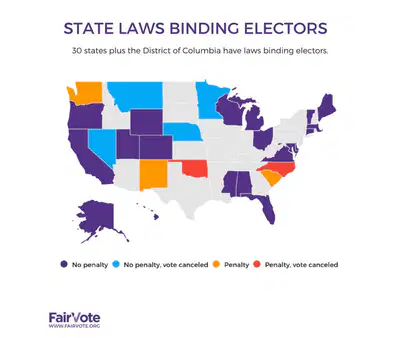
#3: Electors Do Not Have to Do What We
Tell Them To
• Faithless Electors- electors who cast vote for someone
other than who they were supposed to vote for based
off popular vote
21


#4 Just Pay Attention to Enough to Win
Bellwether states: states that tend
to vote how the actual election turns
out.
Examples: Ohio, Florida, Pennsylvania, Indiana,
Wisconsin, New York
● Ohio was 93% accurate from 1900-2012
Swing States: States that do
not tend to vote the same every
election.
22


#5 Lowers Voter Turnout
If your state
is always
red and
you are
blue- why
vote?
You feel
your vote
doesn’t
matter
23


#6 Small States are Overrepresented
55
705,454
84%
3
194,717
304%
24

Arguments in Favor of Keeping it
25

#1: Tradition!
It’s what the Founding Fathers wanted
26


#2: Need Constitutional Amendment
27

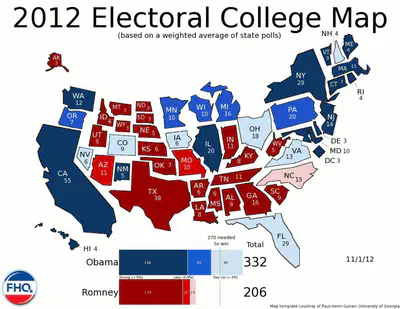
#3 Federalism- State Power
All states
matter-
even
small
states!
28


#4: Need Broad Support
29


Counter Response?
30

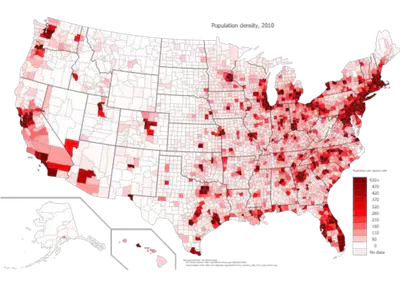
Counter Response?
In the 2020
election, the
population in the
yellow circles
were enough to
outvote the
ENTIRE country if
they ALL voted
the same way.
If they did that, how do you think the rest of the country would feel?
Would they even bother to vote?
31


#4: Need Broad Support
32


Alternatives
• National Popular Vote Interstate Compact
• Proportional Allocation of Votes
• Congressional District Plan
• National Bonus Plan
• Direct Election with Instant Runoff (Ranked Voting)
• Direct Vote with Plurality
Elections in U.S.
Show answer
Auto Play
Slide 1 / 32
SLIDE
Similar Resources on Wayground

24 questions
Bantu Migration
Presentation
•
8th - 11th Grade
26 questions
Ancient India & the Indus River Valley
Presentation
•
9th - 12th Grade
25 questions
Feudalism and Manorialism
Presentation
•
9th - 12th Grade
23 questions
Latin American Revolutions
Presentation
•
10th - 12th Grade
24 questions
American Civil War
Presentation
•
9th - 12th Grade
21 questions
Scientific Revolution
Presentation
•
9th - 12th Grade
24 questions
The Columbian Exchange
Presentation
•
9th - 12th Grade
22 questions
Karl Marx: Economic Revolutionary
Presentation
•
8th - 12th Grade
Popular Resources on Wayground
10 questions
Safety Day 2026 – Student Review

Quiz
•
9th Grade
21 questions
Continents and Oceans
Quiz
•
6th Grade
20 questions
Parts of Speech
Quiz
•
5th Grade
16 questions
Subject & Predicate
Quiz
•
5th Grade
25 questions
Multiplication Facts
Quiz
•
5th Grade
12 questions
Map Skills
Quiz
•
3rd Grade
22 questions
Continents and Oceans
Quiz
•
5th Grade
15 questions
Rounding Decimals
Quiz
•
5th Grade
Discover more resources for Social Studies
10 questions
Exploring the Age of Exploration: Key Events and Figures

Interactive video
•
6th - 10th Grade
9 questions
Exploring Ancient Mesopotamia and Its Civilizations
Interactive video
•
10th Grade
20 questions
Chapter 8 Test "Types of Business Organizations"
Quiz
•
12th Grade
39 questions
Unit 7 Key Terms
Quiz
•
11th Grade - University
10 questions
Debating the Legacy of Christopher Columbus
Interactive video
•
6th - 10th Grade
38 questions
Unit 6 Key Terms
Quiz
•
11th Grade - University
27 questions
World Geography - Q1 9week Test
Quiz
•
9th Grade
22 questions
U3T2 Vocab FAC: Domestic Policy
Quiz
•
10th Grade