Search Header Logo
2024   3.5 The Solar System

2024 3.5 The Solar System

Assessment

Presentation

Science

9th - 12th Grade

Easy

Created by

Jody Suprenant

Used 2+ times

FREE Resource

33 Slides • 33 Questions

1

Multiple Choice

Question image

Models of the solar system with Earth at the center are called _____________________ models.

1

geocentric

2

heliocentric

3

terrestrial

4

none of the above

2

Multiple Choice

Question image

Models of the solar system with Sun at the center are called _____________________ models.

1

geocentric

2

heliocentric

3

terrestrial

4

none of the above

3

Multiple Choice

The universe is _________________ years old

The Earth & the Solar System are _________________________ years old

1

13.8 Billion

4.6 Billion

2

4.6 Billion

13.8 Billion

3

4.6 Million

13.8 Million

4

13.8 Million

4.6 Million

4

media

5

media
media

6

Multiple Choice

Question image
  1. Base your answer to the following question on your knowledge of Earth science. The diagram represents the elliptical orbit for one planet in our solar system. The two foci of the orbit are shown as the Sun and F2. 


which condition would produce an orbit with a greater eccentricity?  

1

A) a decrease in the distance between the Sun and F2 

2

B) an increase in the distance between the Sun and F2 

3

C) a constant decrease in the orbital velocity of the planet

4

D) a constant increase in the orbital velocity of the planet 

7

Multiple Choice

  1.  The gravitational attraction between two objects in the solar system is greatest when their masses are


1

small, and the objects are close together

2

small, and the objects are far apart

3

large, and the objects are far apart

4

large, and the objects are close together

8

Multiple Choice

Which bar graph correctly shows the orbital eccentricity of the planets in our solar system?

1
2
3
4

9

Labelling

  1. Describe the changes in gravitational force between planet D and the star Upsilon Andromedae during one complete orbit around the star. Be sure to label on the diagram where the force is greatest and where the force is least.


Drag labels to their correct position on the image

Greatest

Least

10

Multiple Choice

Question image

he diagram below shows a satellite in four different positions as it revolves around a planet.


Which graph best represents the changes in this satellite's orbital velocity as it revolves around the planet?

1
2
3
4

11

Multiple Choice

What happens to the period of orbit as distance from the star increases?

1

Increases

2

Decreases

3

Stays the same

12

Multiple Choice

Question image
Which diagram shows a planet with the least eccentric orbit?
1
1
2
2
3
3
4
4

13

Multiple Choice

Question image

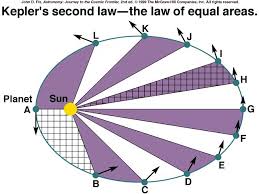
Where is the planet moving faster?

1
Position A to B
2
Position B to C
3
Position H to I
4
Position I to J

14

Multiple Choice

Question image
What is true about the area between points A, B and the Sun, and the area between points H, I and the Sun?
1
The area between A, B and the Sun is the largest.
2
The area between H, I and the Sun is the largest
3
Both areas are equal in size
4
There is not enough information to determine the areas

15

Multiple Choice

Question image

A planet moving counterclockwise in its orbit will be increasing speed at position _?_.

1

P1

2

P2

3

P3

4

P4

16

media
media

17

Multiple Choice

Question image

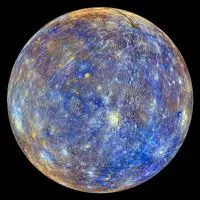
Why does Mercury have so many craters?

1

Mercury has almost no atmosphere

2

Mercury is very large

3

Mercury is made of gas

4

Mercury has a soft surface

18

Multiple Choice

Question image
  1. Base your answer to the following question on the  diagram below which shows the Earth's orbit and the partial orbit of a comet on the same plane around the Sun. 


Compared with the Earth's orbit, the comet's orbit has

A) less eccentricity

B) more eccentricity

C) the same eccentricity 


1

less eccentricity

2

more eccentricity

3

the same eccentricity 

19

media
media

20

Multiple Choice

Which planet has a period of rotation that is longer than its period of revolution?

(Its DAY is LONGER than its YEAR)

1

Mars

2

Jupiter

3

Venus

4

Neptune

21

media
media

22

media
media

23

media
media
media
media
media

24

Multiple Choice

The four inner planets are:

1

Jupiter, Saturn, Uranus and Neptune

2

Mercury, Venus, Earth and Pluto

3

Mercury, Venus, Earth and Mars

4

Jupiter, Saturn, Neptune and Pluto

25

Multiple Choice

The group of inner planets are known as:
1

The Rocky Planets

2
The Gas Giants
3
The Outer Planets
4
The Hallow Planets

26

media
media

27

media
media
media
media

28

media

29

media

30

media

31

Multiple Choice

Question image
  1. The graph below shows the varying amount of gravitational attraction between the Sun and an asteroid in our solar system. Letters A, B, C, and D indicate four positions in the asteroid's orbit. 

Which diagram best represents the positions of the asteroid in its orbit around the Sun? [Note: The diagrams are not drawn to scale.]

1
2
3
4

32

Multiple Choice

Which of the following best describes an asteroid?

1

It is made of ice and dust

2

It is also known as a "shooting star"

3

It has a nucleus, coma, and tail

4

It is a LARGE chunk of rock and metal

33

Multiple Choice

Most asteroids lie between the orbits of

1

Jupiter and Saturn.

2

Mars and Jupiter.

3

Jupiter and Neptune.

4

Mars and Earth.

34

Multiple Choice

What force keeps planets, comets, asteroids, and meteoroids in orbit around the Sun?

1

Electricity

2

Solar power

3

Inertia

4

Gravity

35

Multiple Choice

Where is the Asteroid Belt located?

1

Between Earth and Mars

2

In the Kuiper belt

3

Between Mars and Jupiter

4

Beyond the Oort cloud

36

media
media

37

Multiple Choice

Question image

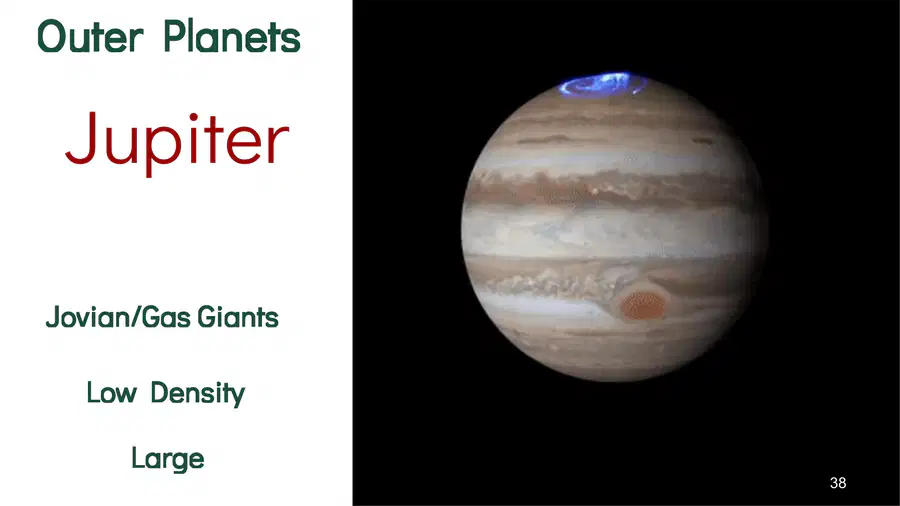
Why is Jupiter important to Earth

1

it is lined up so it blocks the sun

2

takes up all the gases

3

its gravity pulls in asteroids to prevent them from hitting Earth

38

media
media

39

media
media

40

media
media

41

Multiple Choice

The group of outer planets are known as:
1
The Terrestrial Planets
2
The Gas Giants
3
The Inner Planets
4
The Rocky Planets

42

Match

​ Match the planet to its description.

Mars
Mercury
Earth
Neptune

Red in color because of the iron in the soil.

The smallest terrestrial planet.

The only terrestrial planet with one moon.

Has the longest-length year in the solar system.

43

Multiple Choice

The four outer  planets are:

1

Jupiter, Saturn, Uranus and Neptune

2

Mercury, Venus, Earth and Pluto

3

Mercury, Venus, Earth and Mars

4

Jupiter, Saturn, Neptune and Pluto

44

media

45

media

46

media

47

media

48

media

49

media

50

media

51

media

52

Fill in the Blanks

Type answer...

53

Multiple Choice

Which of the following best describes a comet?

1

It is made of ice, rock, and dust.

2

It is located between Mars and Jupiter

3

It has a short elliptical orbit

4

Comets are leftover fragments from the time when planets formed in the solar system.

54

media
media
media
media

55

Dropdown

Question image
Base your answers to questions 6 and 7 on the diagram below, which shows the orbit of planet D around the star Upsilon Andromedae. The dashed lines show where the paths of the first four planets

of our solar system would be located if they were going around Upsilon Andromedae instead of the Sun. All distances are drawn to scale.


Planet D has a much ​
eccentric orbit than any of the first four planets of our solar system.

56

Multiple Choice

Question image

A small piece of rock (usually the size of an M&M) that enters Earth's atmosphere and burns up. People call these "shooting stars".

1

Meteoroid

2

Meteorite

3

Meteor

4

Comet

57

media
media

58

media
media

59

media
media
media

60

media
media

61

media
media
media
media

62

media

63

media

64

Multiple Choice

Which is NOT part of our solar system? 

1

the moons around Jupiter

2

asteroids and meteoroids

3

comets

4

stars that are not the Sun

65

media

66

Match

Match the following terms to the correct definition

A smaller rock that orbits the sun.

A rock that is falling through Earth's atmosphere.

A larger rock that orbits the sun.

A rock that has hit the Earth.

An object that orbits the sun and is made of ice and rock.

Meteoroid

Meteor

Asteroid

Meteorite

Comet

Question image

Models of the solar system with Earth at the center are called _____________________ models.

1

geocentric

2

heliocentric

3

terrestrial

4

none of the above

Show answer

Auto Play

Slide 1 / 66

MULTIPLE CHOICE