

Periodic Table_Groups and Periods

Presentation
•
Science
•
8th Grade
•
Practice Problem
•
Hard
+6
Standards-aligned

Shelia Billingsley
Used 3+ times
FREE Resource
33 Slides • 0 Questions
1
Discover new features in Lessons!
Finish all phases of “I-do ; We-do ; You-do” with Quizizz
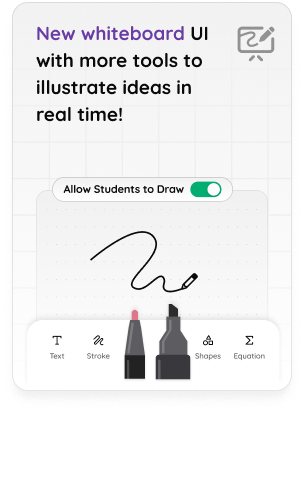
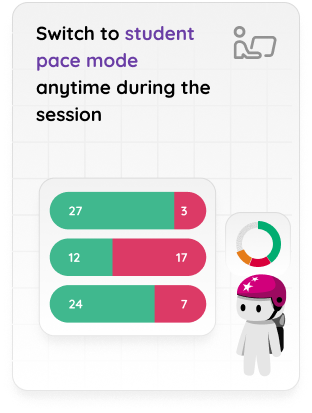
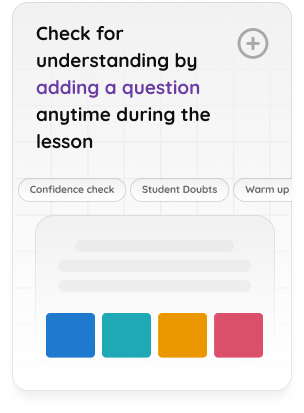

You can also create lessons directly on Google Slides using “Quizizz Extension”.
Read more about it here
2

Periods on the Periodic Table
The periods on the PT are the rows
numbered from 1-7.
Atomic number increases from left to
right.
Those in the same period have the same
number of energy levels or shells.
Chemical properties are not all similar.
3

4

Groups on the Periodic Table
The groups or families on the PT are the
columns numbered from 1-18.
Same number of valance electrons.
Chemical properties are very similar.
Groups 1 is the most reactive and group
18 is the most inert (stable).
5

Families on the Periodic Table
Elements on the periodic table can be grouped into
families based on their chemical properties.
Each family has a specific name to differentiate it
from the other families in the periodic table.
Elements in each family
react differently with
other elements.
6

HYDROGEN
7

ALKALI METALS
8

ALKALI METALS
Group 1
Hydrogen is not a member, it is a non-metal
1 electron in the outer shell
Soft and silvery metals
Very reactive, esp. with water
Conduct electricity
9

ALKALINE EARTH METALS
10

ALKALINE EARTH METALS
Group 2
2 electrons in the outer shell
White and malleable
Reactive, but less than Alkali metals
Conduct electricity
11

TRANSITION METALS
12

TRANSITION METALS
Groups in the middle
Good conductors of heat and electricity.
Solid at room temperature
Variable charge states
Malleable: can bond with many elements in a variety of
shapes.
13

RARE EARTH METALS
14

BORON FAMILY
15

BORON FAMILY
Group 13
3 electrons in the outer shell
Can share electrons to form compounds
Most are metals
Boron is a metalloid
16

CARBON FAMILY
17

CARBON FAMILY
Group 14
4 electrons in the outer shell
Can share electrons to form compounds
Contains metals, metalloids, and a non-metal
Carbon (C)
Carbon is the most versatile element (Organic
Chemistry)
18

NITROGEN FAMILY
19

NITROGEN FAMILY
Group 15
5 electrons in the outer shell
Can share electrons to form compounds
Contains metals, metalloids, and non-metals
20

OXYGEN FAMILY
21

OXYGEN FAMILY
Group 6 or 16
6 electrons in the outer shell
Can share electrons to form compounds
Contains metals, metalloids, and non-metals
Reactive
22

HALOGENS
23

Halogens
Group 17
7 electrons in the outer shell
All are non-metals
Very reactive are often bonded with elements from
Group 1
24

NOBLE GASES
25

Noble Gases
Group 18
Exist as gases
Non-metals
8 electrons in the outer shell = Full
Helium (He) has only 2 electrons in the outer shell =
Full
Not reactive with other elements
26

NOBLE GASES
27

METALS
28

METALS
• SHINY
• GOOD CONDUCTORS
• SOLID AT ROOM TEMPERATURE (EXCEPT Hg,
Mercury)
• HIGH DENSITIES
• HIGH MELTING POINTS
• MALLEABLE
• DUCTILE
• HARD
• GROUP 1
• GROUP 2
• TRANSITION GROUP
• LOSES ELECTRONS WHEN MAKING COMPOUNDS
29

NONMETALS
30

NON-METALS
• BRITTLE
• DULL
• NOBLE GASES
• POOR CONDUCTORS
• NOT DUCTILE
• GAINS ELECTRONS WHEN MAKING COMPOUNDS
31

Metalloid
A chemical element that has
properties of metals and
nonmetals, or is a mixture of
metals and nonmetals.
Think a metallic colloid!
(They’re both stuck in the
middle!)
Boron, Silicon, Germanium,
Arsenic, Antimony, Tellurium,
Polonium, (Astatine is
debatable)
• The Stair-Step distinguishes
between the metals and
non-metals
32

Color the families of metals and nonmetals
METALLOIDS
85
At
33

METALLOIDS
• CHARACTERISTICS OF BOTH METALS & NON-
METALS
• SEMI-CONDUCTORS
• FOUND ON ZIG-ZAG LINE/STAIRCASE
• USED IN COMPUTERS
Discover new features in Lessons!
Finish all phases of “I-do ; We-do ; You-do” with Quizizz
You can also create lessons directly on Google Slides using “Quizizz Extension”.
Read more about it here
Show answer
Auto Play
Slide 1 / 33
SLIDE
Similar Resources on Wayground

28 questions
Periodic Table Review
Presentation
•
8th Grade
24 questions
Review: Watersheds, Estuaries, and Dead Zones
Presentation
•
8th Grade
24 questions
10/17 - Weather Maps and Symbols
Presentation
•
8th Grade
24 questions
Satellite Images and Topographic Maps Test Review LESSON
Presentation
•
8th Grade
26 questions
Traits and Alleles
Presentation
•
7th - 8th Grade
23 questions
Chapter 8, Lesson 2
Presentation
•
8th Grade
27 questions
Ionic and covalent bonding
Presentation
•
8th Grade
28 questions
Newtons laws
Presentation
•
8th Grade
Popular Resources on Wayground
24 questions
PBIS-HGMS Day 10

Quiz
•
6th - 8th Grade
10 questions
HCS SCI 03 Summer School Review 3
Quiz
•
3rd Grade
11 questions
Home Scope
Quiz
•
7th - 8th Grade
15 questions
HCS SCI 05 Summer School Assessment 3 Review
Quiz
•
5th Grade
35 questions
Lufkin Road Middle School Student Handbook & Policies Assessment
Quiz
•
7th Grade
18 questions
Geo 11.3 Area of Circles and Sectors
Quiz
•
9th - 11th Grade