

Understanding point of care testing

Presentation
•
Specialty
•
12th Grade
•
Hard

Haydee Barajas
FREE Resource
20 Slides • 38 Questions
1
Multiple Choice
Which of the following best describes point-of-care testing (POCT)?
Testing performed in a specialized laboratory
Testing performed near the patient or at the site of care
Testing performed only by pathologists
Testing performed only in hospital settings
2
Multiple Choice
Important in determining which blood product can be safely used for blood transfusion.
Blood Bank Specimen
Blood Culture Testing
Coagulation Specimen
Glucose Test
3
Multiple Choice
Tube color/additive for used for the collection of blood bank specimen.
Lavender Top or EDTA tube
Light Blue Top or Sodium Citrate tube
Yellow Top or SPS tube
Gray Top or Potassium Oxalate and Sodium Fluoride tube
4
Multiple Choice
A test that checks the blood for pathogens for patients who have a fever of unknown origin (FUO). The test determines the presence of bacteria in the blood that causes bacteremia or presence of microorganism and toxins in the blood that causes septicemia.
Blood Bank Specimen
Blood Culture Testing
Coagulation Specimen
Glucose Test
5
Multiple Choice
How many blood culture sets should we collect?
5-6 blood culture sets
1-2 blood culture sets
4-6 blood culture sets
2-4 blood culture sets
6
Multiple Choice
Crucial in the blood collection procedure because it prevents the contamination by microbial flora in the skin which can be introduced in blood culture bottles and affect the results.
Skin Antisepsis
Skin Testing
Hemostasis
Vasoconstriction
7
Multiple Choice
A physician requests this to assess the blood clotting functions especially if the patient has unexplained bleeding.
Blood Banking
Blood Culture Testing
Coagulation Tests
Hemostasis
8
Multiple Choice
All are coagulation tests, EXCEPT:
Prothrombin Time (PT)
Activated Partial Thromboplastin Time (APTT)
Thrombin Time (TT)
Glucose Tolerance Test (GTT)
9
Multiple Choice
A blood-thinning medicine that is used to prevent dangerous clots. It is an anticoagulant therapy.
Fibrinolysis
INR
Prothrombin
Warfarin
10
Multiple Choice
Tube color/additive for coagulation specimens
Lavender top or EDTA tube
Light blue top with 3.4% Citrate tube
Light blue top with 3.2% Citrate tube
Pink top or EDTA tube
11
Multiple Choice
This blood test is done to check if the patient is suffering from diabetes and other metabolic problems. It is also used to monitor insulin therapy.
2-hour Postprandial Glucose
Glucose Tolerance Test
Lactose Tolerance Test
Paternity/Parentage Testing
12
Multiple Choice
Also called “Oral Glucose Tolerance Test”; This is to evaluate the ability of the body to metabolize glucose by measuring the tolerance level to high glucose level.
2-hour Postprandial Glucose
Glucose Tolerance Test
Lactose Tolerance Test
Paternity/Parentage Testing
13
Multiple Choice
Tube color/additive used for Blood Alcohol (ETOH) Specimens
Lavender Top or EDTA tube
Light Blue Top or Sodium Citrate
Green Top or Heparinized tube
Gray Top or Potassium Oxalate and Sodium Fluoride
14
Multiple Choice
The specimen used is urine instead of blood. The chain of custody protocol is strictly implemented since legal implications are involved.
Blood Alcohol (Ethanol) Specimens
Trace Element Testing
Drug Screening
15
Multiple Choice
Which type of POCT provides results that indicate the presence or absence of a substance?
Quantitative
Qualitative
Analytical
Confirmatory
16
Multiple Choice
Quantitative POCT results are expressed in:
Positive or negative
Units of measurement
Pass or fail
Descriptive terms
17
Multiple Choice
Which type of test measures the exact amount of a substance?
Qualitative
Quantitative
Screening
Diagnostic
18
Multiple Choice
CLIA-waived tests are:
High complexity tests
Moderate complexity tests
Simple tests with low risk of error
Tests only performed in hospitals
19
Multiple Choice
Which of the following is an example of a CLIA-waived test?
Complete blood count
Urine pregnancy test
Blood culture
Tissue biopsy
20
Multiple Choice
7. The hematology department of a clinical laboratory is responsible for:
analyzing blood and its components
testing urine samples
performing X-rays
analyzing tissue biopsies
21
Multiple Choice
Which department analyzes blood glucose levels?
Hematology
Chemistry
Microbiology
Immunology
22
Multiple Choice
Which department focuses on identifying microorganisms?
Chemistry
Hematology
Microbiology
Blood bank
23
Multiple Choice
Quality control (QC) in laboratory testing is designed to:
Document patient demographics
Monitor and evaluate test accuracy
Schedule patient appointments
Train new staff
24
Multiple Choice
Which is an example of a quality control procedure?
Running control samples
Completing incident reports
Scheduling maintenance
Patient counseling
25
Multiple Choice
Quality assurance (QA) focuses on:
Day-to-day test accuracy
Overall laboratory process improvement
Emergency protocols
Scheduling patient appointments
26
Multiple Choice
The primary purpose of quality assurance in laboratories is to:
Identify patient errors
Ensure reliable and accurate patient results
Improve staff attendance
27
Multiple Choice
Which of the following is considered a high complexity test?
Urine dipstick
Glucose meter reading
PCR genetic testing
Rapid strep test
28
Multiple Choice
Moderate complexity tests include:
Basic urinalysis
Manual differential white blood cell count
Rapid influenza test
Complete blood count
29
Multiple Choice
Which law regulates laboratory testing in the U.S.?
HIPAA
CLIA
OSHA
FDA
30
Multiple Choice
Point-of-care glucose testing is classified as:
High complexity
Moderate complexity
CLIA-waived
Non-regulated
31
Multiple Choice
In quality control, control samples should be run:
Only when equipment fails
At regular intervals
Only when a new employee is trained
Once a month
32
Multiple Choice
The blood bank department specializes in:
Analyzing hormone levels
Crossmatching and preparing blood for transfusion
Detecting infections
Genetic testing
33
Open Ended
Which is an example of a qualitative test result?
34
Multiple Choice
Which test complexity category requires the most highly trained personnel?
Waived
Moderate
High
None
35
Multiple Choice
Which department performs tests on cerebrospinal fluid to check for infection?
Hematology
Microbiology
Chemistry
Immunology
36
Multiple Choice
An example of quality assurance is:
Running daily control samples
Reviewing and revising standard operating procedures
Recalibrating an instrument
Recording patient demographics
37
Multiple Choice
The immunology department focuses on:
Hormone analysis
Study of immune system and antibodies
Blood cell morphology
Genetic mutations
38
Multiple Choice
Which of the following is NOT a CLIA-waived test?
Urine dipstick
Rapid strep
Manual microscopic urinalysis
Fecal occult blood test
39

●Medical laboratories are essential in healthcare settings.
●Found in hospitals, ambulatory care facilities, and public
health departments.
●Staffed by various certified professionals including MTs,
MLTs, and phlebotomists.
Role of Medical Assistants
●Medical assistants (MAs) collect specimens for testing.
●Specimens are sent to outside reference laboratories.
●Tests help document health, screen for diseases, and
assist in diagnosis.
40

Importance of Laboratory Requisitions
●Lab requisitions are necessary for testing
specimens outside the lab.
●Inaccurate requisitions can lead to rejected
specimens and delays.
●Proper documentation is crucial for patient
satisfaction.
41

Understanding Point Of Care Testing
and Laboratory Procedures
Introduction to Medical Laboratories
42

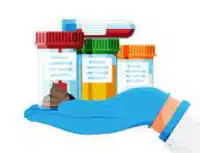
Labeling Specimens Correctly
●Always label specimens accurately to avoid
errors.
●Include patient’s name, date of birth, and
collection details.
●Verify labels against health records before
sending to the lab
43

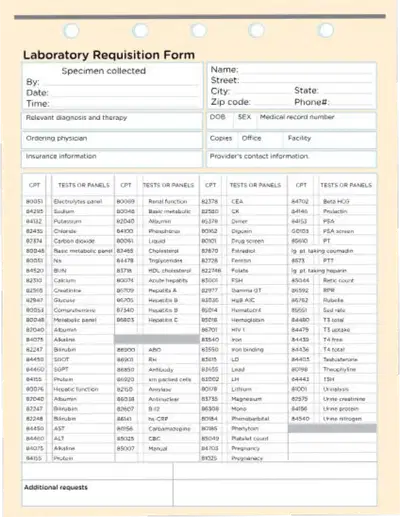
Choosing Appropriate Laboratory Tests
●Select tests based on provider’s orders.
●Confirm patient fasting status when required for blood tests.
●Document urine temperature for specific screenings.
Matching Specimens to Requisitions
●Confirm all specimens match the correct lab requisition.
●Mislabeling can lead to delays in diagnosis and treatment.
●Double-check before transporting specimens to the lab.
44

Clinical Laboratory Departments
Different departments perform specific tests:
●Urinalysis,
●Hematology,
●Chemistry,
●Microbiology,
●Cytology,
●Blood Bank.
Each department has unique functions and
specimen types.
45

Hematology Tests
●Hematology involves blood cell counts: RBCs,
WBCs, and platelets.
●Helps diagnose anemia, infections, and blood
disorders.
●Regular monitoring can indicate health changes.
46


Microbiology Testing
●Microbiology studies bacteria, fungi,
and viruses.
●Specimens can include blood, urine,
and wound material.
●Critical for diagnosing infections and
guiding treatment.
47


Chemistry Tests Overview
●Chemistry tests analyze
chemicals in blood and other
fluids.
●Includes lipid profiles and
glucose levels.
●Essential for assessing
metabolic and organ function.
48


●Blood banks process and
store blood for
transfusions.
●Essential for surgeries and
treating blood disorders.
●Strict protocols ensure
safety and compatibility.
49


●Cytology involves
examining cells for
diagnostic
purposes.
●Helps identify
cancer and other
diseases.
●Utilizes samples
from various body
sites.
Pathology
50


The most common specimens in ambulatory care
settings include:
●Blood
●Urine
●Swab samples
●Each type requires specific handling and
processing techniques.
51


Processing Specimens Before
Transport
●Some specimens require
processing to maintain integrity.
●Example: Ensure swabbed
specimens are moist by breaking
the fluid chamber.
●Urine specimens may need
centrifuging before transport.
52

●Some specimens require
processing to maintain integrity.
●Example: Ensure swabbed
specimens are moist by breaking
the fluid chamber.
●Urine specimens may need
centrifuging before transport.
Specimen
Handling
●Medical assistants play a crucial
role in obtaining, processing, and
preparing specimens for
transport.
●Consider all specimens as
potentially infectious to protect
yourself and others.
●Follow standard precautions to
minimize exposure to
disease-causing
microorganisms.
53


●Label packages with biohazard
identification when transporting
specimens.
●This alerts handlers to the potential
infectious nature of the contents.
●Proper labeling is crucial for safety
during transport.
Special Handling
for Urine Samples
●Urine samples for bilirubin testing
need protection from light.
●Use dark containers to prevent
light exposure.
●Test urine samples within one
hour of collection or refrigerate
them.
Biohazard
Identification
54

Quality Assurance vs Quality Control
●Quality assurance (QA) refers to policies/procedures for reliable
test results
●Quality control (QC) is more specific to uncovering and
eliminating errors
●Examples:
●QC - Checking reagent strip expiration dates
●QA - Rotating stock to use newest items first
55

Quality Control in
Laboratories
●Quality assurance (QA)
ensures reliability of test
results.
●Quality control (QC) focuses
on accuracy and error
prevention.
●Examples include checking
reagent expiration dates
and refrigerator
temperatures.
56

Quality Assurance
Measures
●QA policies ensure overall
reliability of laboratory
processes.
●Regular audits and staff
training enhance quality.
●Continuous improvement is
key to patient safety.
57

CREDITS: This presentation template was created by Slidesgo, and includes
icons by Flaticon, and infographics & images by Freepik
Thanks!
Do you have any questions?
youremail@freepik.com
+34 654 321 432
yourwebsite.com
Please keep this slide for attribution
58


Which of the following best describes point-of-care testing (POCT)?
Testing performed in a specialized laboratory
Testing performed near the patient or at the site of care
Testing performed only by pathologists
Testing performed only in hospital settings
Show answer
Auto Play
Slide 1 / 58
MULTIPLE CHOICE
Similar Resources on Wayground

50 questions
Quantifiers
Presentation
•
KG
52 questions
Marketing
Presentation
•
11th - 12th Grade
49 questions
Clinical Anatomy: Hips don't lie
Presentation
•
University
49 questions
NOUNS
Presentation
•
12th Grade
53 questions
random reagan quiz
Presentation
•
KG
52 questions
Module 1: Practical Research 2
Presentation
•
12th Grade
53 questions
UNIT 8 : A HARD DAY'S WORK
Presentation
•
11th - 12th Grade
49 questions
Unit 2: Functions Review
Presentation
•
8th Grade
Popular Resources on Wayground
24 questions
PBIS-HGMS Day 10

Quiz
•
6th - 8th Grade
10 questions
HCS SCI 03 Summer School Review 3
Quiz
•
3rd Grade
11 questions
Home Scope
Quiz
•
7th - 8th Grade
15 questions
HCS SCI 05 Summer School Assessment 3 Review
Quiz
•
5th Grade
35 questions
Lufkin Road Middle School Student Handbook & Policies Assessment
Quiz
•
7th Grade
18 questions
Geo 11.3 Area of Circles and Sectors
Quiz
•
9th - 11th Grade