

3.1.2 Nonrenewable Resources

Presentation
•
Science
•
8th Grade
•
Practice Problem
•
Easy
+9
Standards-aligned

Megan Horvat
Used 8+ times
FREE Resource
20 Slides • 4 Questions
1

3.1.2
2
Objectives
recognize the importance of many nonrenewable resources
explain the processes required to form nonrenewable resources
examine how people use nonrenewable resources in their daily lives
3
climate
nonrenewable resource
weathering
Prerequisite Vocab
fossil fuel
New Vocab
4
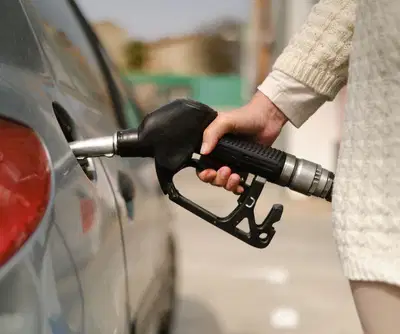
energy source formed from dead organisms
Fossil Fuel
5
Categorize
natural resource
solar energy
wind power
geothermal energy
provide energy
Decide whether the description matches a renewable or non-renewable resource.
6

7

Fossil fuels are non-renewable resources that have formed deep within the Earth over millions of years. These resources are extracted from the ground and burned to produce energy.
Fossil Fuels
8
Photosynthesis and Fossil Fuels
Plants use photosynthesis to convert light energy into chemical energy. This chemical energy remains stored in plants even after it is converted into fossil fuels. This means that the energy released from burning coal, oil, and natural gas originally came from the sun.
9
Match
Match the image with the name of that nonrenewable resource.
coal
oil
natural gas
nuclear energy
coal
oil
natural gas
nuclear energy
10
11
Match
Match the description to the fossil fuel that is being described.
oil
natural gas
coal
a thick black liquid that makes gasoline
odorless vapor used for heat and cooking
solid rocky material that is burned
a thick black liquid that makes gasoline
odorless vapor used for heat and cooking
solid rocky material that is burned
12
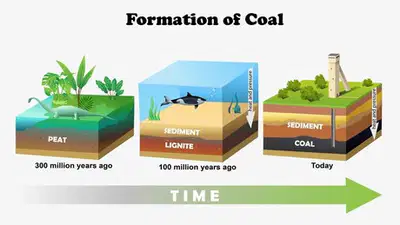
fossils that form coal are found on land
sediment layers build up on the dead organisms
heat and pressure slowly convert the organic remains into coal
Coal Formation
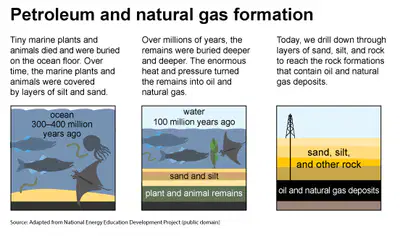
many fossils that form oil and natural gas originate in areas that were once oceans
sediment builds up and alters the organic remains with extreme heat and pressure
Oil and Gas Formation
13

14
Minerals
Minerals are naturally occurring substances found in the ground. Earth's minerals are the components that form rocks. Minerals appear individually as single minerals, or rocks may be composed of various minerals.
15

Gold, silver, aluminum, copper, and iron
good conductivity that make them useful for heat and electricity
Metallic Minerals
used in their raw unaltered state or as components for other materials
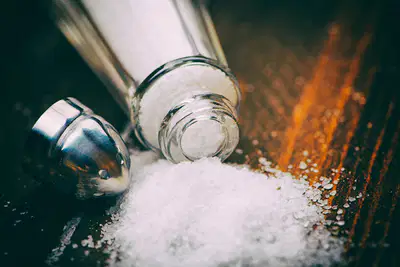
ex. halite in the form of table salt, limestone, sand, gravel, and clay
Nonmetallic Minerals
16

17
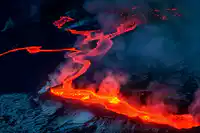
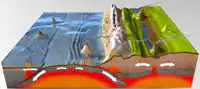
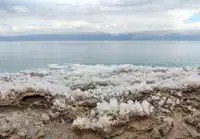
high temperatures that melt rock into magma and lava
Extreme Conditions
formed as Earth's tectonic plates move around and collide.
High Pressure
when mineral-rich solutions, such as ocean water, evaporate it leaves behind mineral crystals, such as salt
Evaporation
18
19
Multiple Choice
Why are minerals considered a nonrenewable resource?
minerals are replaced every few years
minerals take a long time to form
mineral use alters their form but does not deplete them
minerals are all metals and reusable
20

21
Soil
Soil is a foundational component of agriculture. It is a mixture of rock and mineral particles, decayed organic material, air, and water. Without good soil, humans would be unable to produce the food necessary for survival.
However, soil is a type of nonrenewable resource. Soil is considered a nonrenewable resource because of the time it takes to develop into usable means, such as growing crops.
22

23
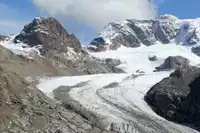
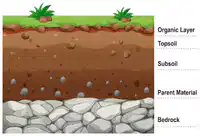
A significant component of soil is fragmented pieces of rock and minerals. Weathering takes a long time to build enough soil for plants to grow.
Weathering
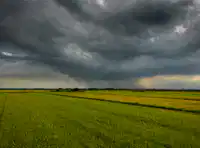
A climate's characteristics, such as temperature and rainfall, impact how quickly soil forms. In areas where soil forms slower, soil depletion has a much longer impact.
Climate
forms over thousands of years.
rises to the surface over millions of years.
It breaks down into soil layers
Bedrock
24
3.1.2
Show answer
Auto Play
Slide 1 / 24
SLIDE
Similar Resources on Wayground

20 questions
Parts of an Atom
Presentation
•
8th Grade
20 questions
Short-Term & Long-Term Environmental Changes
Presentation
•
8th Grade
18 questions
Ecosystems
Presentation
•
8th Grade
20 questions
Tectonic Plates
Presentation
•
8th Grade
18 questions
Force and Motion Review
Presentation
•
8th Grade
18 questions
Classification
Presentation
•
8th Grade
20 questions
Theory of Evolution and Natural Selection
Presentation
•
8th Grade
19 questions
Acceleration
Presentation
•
8th Grade
Popular Resources on Wayground
10 questions
Safety Day 2026 – Student Review

Quiz
•
9th Grade
21 questions
Continents and Oceans
Quiz
•
6th Grade
20 questions
Parts of Speech
Quiz
•
5th Grade
16 questions
Subject & Predicate
Quiz
•
5th Grade
25 questions
Multiplication Facts
Quiz
•
5th Grade
12 questions
Map Skills
Quiz
•
3rd Grade
22 questions
Continents and Oceans
Quiz
•
5th Grade
15 questions
Rounding Decimals
Quiz
•
5th Grade
Discover more resources for Science
20 questions
Newton's Laws of Motion
Quiz
•
8th Grade
15 questions
potential and kinetic energy
Quiz
•
8th Grade
21 questions
Newton's Laws of Motion
Quiz
•
8th Grade
20 questions
Elements, Compounds and Mixtures
Quiz
•
8th Grade
10 questions
Exploring Chemical and Physical Changes

Interactive video
•
6th - 10th Grade
20 questions
Physical vs Chemical Changes
Quiz
•
8th Grade
20 questions
Conduction, convection, and Radiation Practice
Quiz
•
8th Grade
21 questions
Waves and Wave Properties
Quiz
•
6th - 8th Grade