
Intermediate Disturbance Hypothesis

Presentation
•
Biology
•
9th - 12th Grade
•
Hard
+2
Standards-aligned

Michael Belmonte
FREE Resource
5 Slides • 12 Questions
1
Intermediate Disturbance Hypothesis
The intermediate disturbance hypothesis (IDH) states that moderate levels of disturbance lead to greater species diversity than lower or higher levels of disturbance.


2
Multiple Choice

How the makeup of a community changes over time starting from the day after a disturbance.
ecological succession
change
high biodiversity
soils
3
Multiple Choice
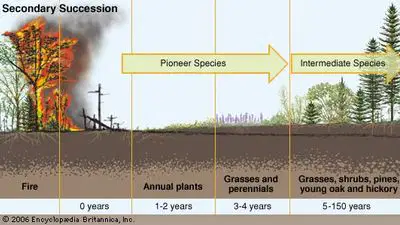
This is when organisms populate an area for the first time.
high biodiversity
primary succession
low biodiversity
change succession
4
Multiple Choice
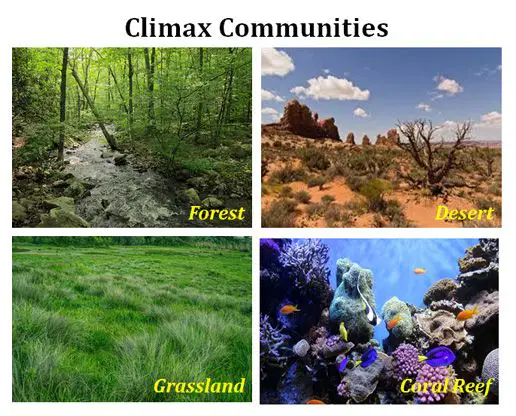
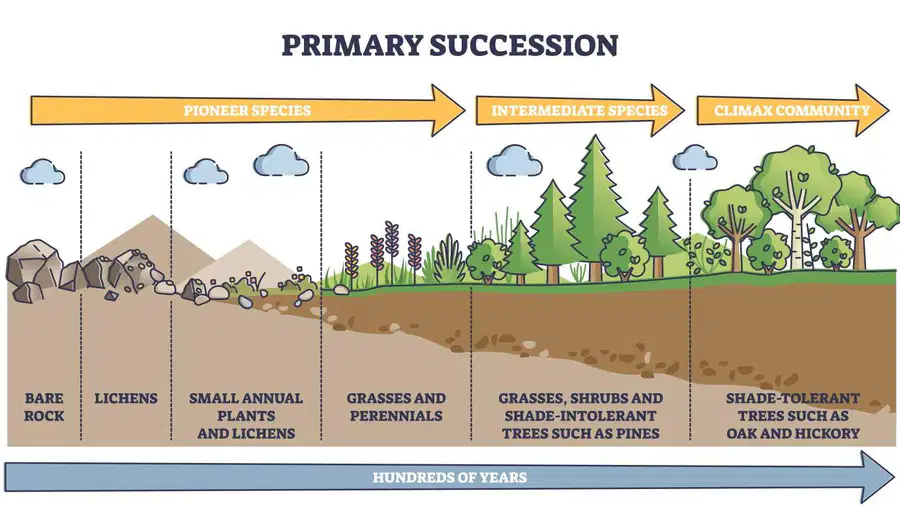
This community contains a predictable assemblage of species that would remain stable until the next big disturbance.
populate community
climax community
lycophytes community
dense forests
5
Multiple Choice
We now know that an ecosystem is in later successional stages if it has...
high biodiversity
species
populate
change
6
7
Multiple Choice
What is a change brought about by a physical, chemical, or biological agent that impacts population size or community structure?
resistance
stability
disturbance
resilience
8
Multiple Select
Which of the following are examples of natural disturbances? (Select ALL that apply!)
tornado
tsunami
volcano
earthquake
urbanization
9
Multiple Choice
Higher biodiversity =
higher ecosystem resilience
lower ecosystem resilience
10
Multiple Choice
What is habitat diversity?
Diversity within a species
# of species and abundance in the community
How many different habitats are in a region
11
Multiple Choice
What is species diversity?
Diversity within a species
# of species and abundance in the community
How many different habitats are in a region
12
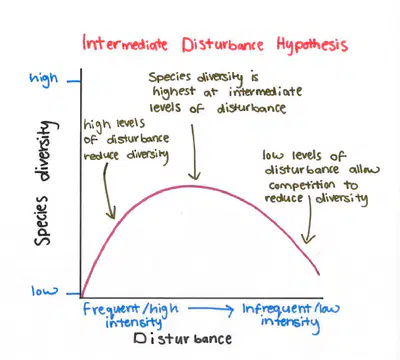
IF an ecosystem suffers frequent disturbances, many of the ecological relationships are disrupted and organisms may find it difficult to survive & reproduce. Some species die out.
IF an ecosystem is rarely disturbed, then it is stable and the number of species remains relatively unchanged.
Intermediate levels of disturbance may actually stimulate microevolution and speciation!
13
Multiple Choice
This hypothesis says that intermediate disturbances—not too big and not too little—are ideal.
build or rebuild soils
Long Disturbance Hypothesis
Intermediate Disturbance Hypothesis
Small Disturbance Hypothesis
14
How can IDH stimulate Microevolution?
The IDH proposes that species diversity is generally maximized if disturbance is neither too rare nor too frequent because species that thrive at both early and late successional stages can coexist.
15
Multiple Choice
The only constant is...
death
change
taxes
birth
16
Multiple Choice
What is the ability of an ecosystem to recover after it has undergone a disturbance?
resistance
stability
disturbance
resilience
17
On a larger scale, disturbances of intermediate frequency and/or intensity may generate diversity. For example, a fire of intermediate or mixed severity could increase diversity by generating spatial heterogeneity within a landscape.
This is because a mixed severity fire will result in a complex of patches in a landscape. Patches differ in severity of burn and include:
- unburned patches
- low severity burn patches
- moderate severity burn patches where perhaps one-third to two-thirds of the vegetation is killed
- high severity burn patches where almost all the vegetation is killed .
In this case, the IDH may not hold on a local scale (within patches) because species richness within a small area may decline (for example, in severely burnt areas). However, on a larger landscape scale a fire of intermediate severity may increase species diversity. This is because areas or patches that differ in burn severity, and that are at different stages of post-fire change, would sustain more species with different disturbance sensitivities.

spatial heterogeneity - the uneven distribution of characteristics or features across a landscape or population.
Intermediate Disturbance Hypothesis
The intermediate disturbance hypothesis (IDH) states that moderate levels of disturbance lead to greater species diversity than lower or higher levels of disturbance.
Show answer
Auto Play
Slide 1 / 17
SLIDE
Similar Resources on Wayground

13 questions
Mutation
Presentation
•
9th - 12th Grade
10 questions
Types of Evolution
Presentation
•
9th - 12th Grade
15 questions
Conner Biodiversity Lesson
Presentation
•
9th - 12th Grade
14 questions
3.5.2 Dichotomous Keys, Phylogenetic Trees, & Cladograms
Presentation
•
9th - 12th Grade
12 questions
Before Darwin Build Up to Evolution
Presentation
•
9th - 12th Grade
11 questions
Bacterial Reproduction
Presentation
•
9th - 12th Grade
13 questions
Lesson Mutation
Presentation
•
9th - 12th Grade
13 questions
Vascular Plants Lesson
Presentation
•
9th - 12th Grade
Popular Resources on Wayground
24 questions
PBIS-HGMS Day 10

Quiz
•
6th - 8th Grade
10 questions
HCS SCI 03 Summer School Review 3
Quiz
•
3rd Grade
11 questions
Home Scope
Quiz
•
7th - 8th Grade
15 questions
HCS SCI 05 Summer School Assessment 3 Review
Quiz
•
5th Grade
35 questions
Lufkin Road Middle School Student Handbook & Policies Assessment
Quiz
•
7th Grade
18 questions
Geo 11.3 Area of Circles and Sectors
Quiz
•
9th - 11th Grade