

Untitled Lesson

Presentation
•
Social Studies
•
8th Grade
•
Practice Problem
•
Hard

Derrick Capps
Used 1+ times
FREE Resource
7 Slides • 0 Questions
1
Washington State Regions
2
Regions
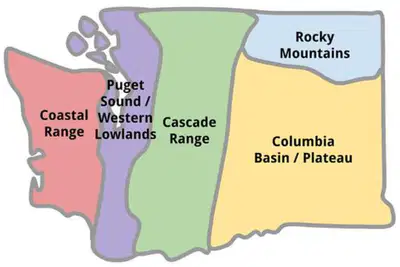
3
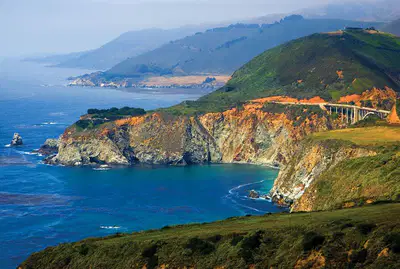
Long and narrow area of the state bordering the Pacific Ocean
Stretches from the Strait of Juan de Fuca and Olympic Peninsula to the mouth of the Columbia River near Long Beach, Washington
Features include:
Rain forests, High mountains of the Olympic Peninsula, Wide and sandy beaches from Ocean Shores to the mouth of the Columbia River
Traditional industries in the region: Fishing, Lumber, Recreation, Shipping
Region is sparsely populated
Coastal Range
4
Narrow region approximately 50 miles wide
Located between the Coastal region and the Cascade Mountains
Extends from Bellingham/Canadian border to the end of Puget Sound in Olympia region
Reaches south to less populated river valleys of the Chehalis and Cowlitz Rivers
Most densely populated region of the state
Major centers of commerce: Seattle, Everett, and Tacoma
Hilly area with elevations ranging from sea level to 1,000 feet
Exposure to salt water on the shore
Puget Sound/Western Lowlands


5
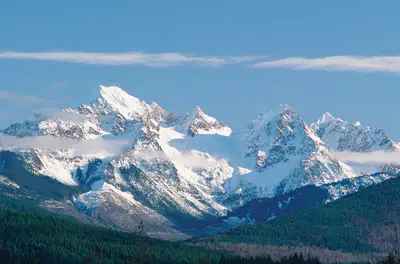
It runs north and south.
Stretches through Oregon into Northern California.
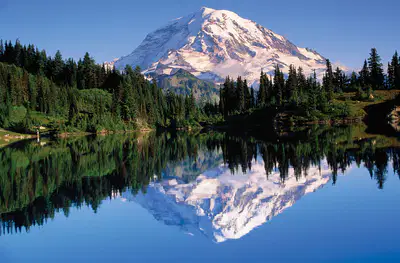
Mountains in the Cascades have an average height of 6,000 feet.
Contains 5 volcanoes in Washington state:
Mt. Baker, Glacier Peak, Mt. Rainier, Mt. Adams,
Mt. St. Helens
Acts as a natural barrier between Western/Eastern WA
Cascade Range
6
Location: East of the Cascade Mountains
Size: Largest geographical region in the state; world's second largest lava plateau (after Deccan Plateau in India)
Formation: Result of at least 55 different lava flows occurring 10 to 15 million years ago
Major Rivers: Columbia River and Snake River flow through the Columbia Plateau
Agriculture: Provides irrigation water for farming a variety of crops, including:
Wheat, Grapes, Potatoes, Fruit trees (e.g., apples, cherries)
Columbia Plateau

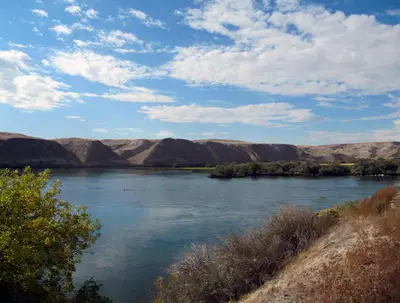
7
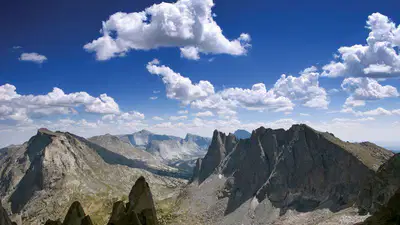
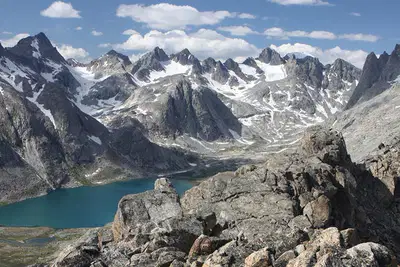
The Rocky Mountains extend from Canada to the Mexico border.
The segment of the Rockies in Washington is relatively small.
Altitudes in the Rocky Mountains range from 4,000 to nearly 10,000 feet.
The region is characterized as isolated and rugged.
It experiences long, cold winters and short, cool summers.
This area receives less rain than the Olympic and Cascade Mountains.
Despite lower rainfall, the precipitation levels are still higher overall.
Rocky Mountains/ Okanogan Highlands
Washington State Regions
Show answer
Auto Play
Slide 1 / 7
SLIDE
Similar Resources on Wayground

7 questions
Pearl Harbor
Presentation
•
8th Grade
6 questions
Review: Historical Documents
Presentation
•
8th Grade
9 questions
Holocaust Video Review
Presentation
•
8th Grade
7 questions
Lesson 5.4 -- Abolitionism
Presentation
•
8th Grade
6 questions
The Impact of McCulloch v. Maryland
Presentation
•
8th Grade
6 questions
Mexcian-American War (Background)
Presentation
•
8th Grade
6 questions
Unit 5 Age of Jackson- Origin of Political Parties
Presentation
•
8th Grade
6 questions
hamilton
Presentation
•
8th Grade
Popular Resources on Wayground
10 questions
Safety Day 2026 – Student Review

Quiz
•
9th Grade
21 questions
Continents and Oceans
Quiz
•
6th Grade
20 questions
Parts of Speech
Quiz
•
5th Grade
16 questions
Subject & Predicate
Quiz
•
5th Grade
25 questions
Multiplication Facts
Quiz
•
5th Grade
12 questions
Map Skills
Quiz
•
3rd Grade
22 questions
Continents and Oceans
Quiz
•
5th Grade
15 questions
Rounding Decimals
Quiz
•
5th Grade
Discover more resources for Social Studies
19 questions
Foundations of America
Quiz
•
6th - 8th Grade
10 questions
Exploring the Age of Exploration: Key Events and Figures

Interactive video
•
6th - 10th Grade
20 questions
Articles of Confederation
Quiz
•
8th Grade
15 questions
Middle Ages of the Middle East Vocab List (CFA #2)
Quiz
•
6th - 8th Grade
13 questions
American Revolution Review
Quiz
•
8th Grade
18 questions
American Revolution Unit 3
Quiz
•
8th Grade
10 questions
Indigenous Peoples' Day Quiz
Quiz
•
8th Grade
5 questions
American Revolutionary War
Interactive video
•
8th Grade