

CM 02.2 Changes in Matter

Presentation
•
Chemistry
•
11th Grade
•
Practice Problem
•
Easy
Standards-aligned

Robert Fetters
Used 14+ times
FREE Resource
13 Slides • 7 Questions
1

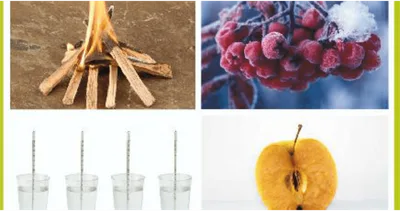
LESSON 2: CHANGES IN
MATTER
ThePhoto by PhotoAuthor is licensed under CCYYSA.
2



Lesson 2.2 Changes in Matter
• Define physical change and list several common
physical changes.
observation: orderly, direct information gathering
about a phenomenon
• Define chemical change and list several indications
that a chemical change has taken place.
• Apply the law of conservation of mass to chemical
reactions.
3



Lesson 2.2 Changes in Matter (cont.)
Matter can undergo physical and
chemical changes.
physical change
phase change
chemical change
law of conservation of mass
4


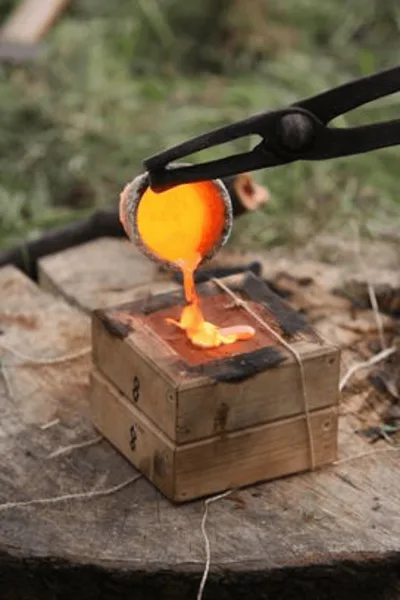
Physical Changes
• A change that alters a substance without
changing its composition is known as a
physical change.
5

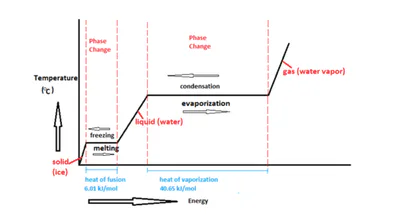
Physical Changes
• A phase change is a transition of matter from
one state to another.
• Boiling, freezing, melting, and condensing all
describe phase changes in chemistry.
6

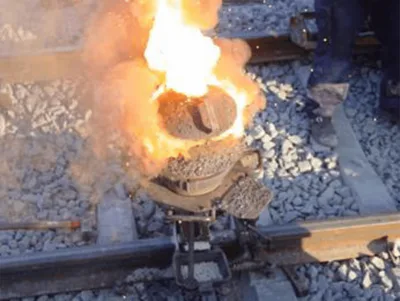
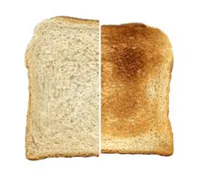
Chemical Changes
• A change that involves one or more
substances turning into new substances is
called a chemical change.
• Decomposing, rusting, exploding, burning, or
oxidizing are all terms that describe chemical
changes.
7

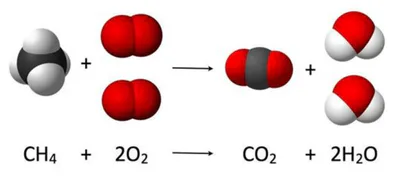
Conservation of Mass
• The law of conservation of mass states
that mass is neither created nor destroyed
in a chemical reaction, it is conserved.
• The mass of the reactants equals the mass of
the products.
massreactants = massproducts
8
Multiple Choice
When one substances turns into another, what kind of change has taken place?
chemical reaction
physical reaction
extensive reaction
nuclear reaction
9
Multiple Choice
The law of conservation of mass states that:
Matter can be created and destroyed.
Matter can be created but not destroyed.
The products of a reaction always have a greater mass than the reactants.
The products of a reaction must have the same mass as the reactants.
10
1. Use the data in the table to answer the following questions.
a) How many grams of bromine reacted?
b) How many grams of compound were formed?
Practice Problems
Aluminum and Liquid Bromine Reaction
Substance
Before Reaction
After Reaction
Aluminum
10.3 g
0.0 g
Liquid Bromine
100.0g
8.2 g
Compound
0.0g
11
2. From a laboratory process designed to separate water into H2
and O2 gas, a student collected 10.0 grams of hydrogen and 79.4
g of oxygen.
a) How much H2O was originally involved in the process.
Practice Problems
12
3. A student carefully placed 15.6 g of Na in a reactor supplied with
an excess quantity of Cl2 gas. When the reaction was complete, the
student obtained 39.7 g of NaCl.
a) Calculate how many grams of Cl2 gas reacted.
b) How many grams of Na reacted?
Practice Problems
13
4. A 10.0-g sample of Mg reacts with O2 to form 16.6 g of MgO
(magnesium oxide). How many grams of O2 reacted?
Practice Problems
14
5. 106.5 g of HCl (g) react with an unknown amount of NH3 (g) to
produce 156.3 g of NH4Cl (s).
a) How many grams of NH3 (g) reacted?
b) Is the law of conservation of mass observed in the reaction?
Justify your answer.
Practice Problems
15
Categorize
crushing an aluminum can
Classify each example as a physical change or chemical change.
16
Open Ended
Describe the results of a physical change and list three examples
of physical change.
17
Open Ended
Describe the results of a chemical change. List four indicators of
chemical change.
18
Open Ended
In the complete reaction of 22.99 g of sodium with 35.56 g of chlorine, what mass of sodium chloride is formed?
19
Open Ended
A 12.2 g sample of X reacts with a sample of Y to form 78.9 g of XY.
What is the mass of Y that reacted?
20


Key Concepts
• A physical change alters the physical properties of a
substance without changing its composition.
• A chemical change, also known as a chemical reaction,
involves a change in a substance’s composition.
• In a chemical reaction, reactants form products.
• The law of conservation of mass states that mass is
neither created nor destroyed during a chemical
reaction; it is conserved.
massreactants = massproducts
LESSON 2: CHANGES IN
MATTER
ThePhoto by PhotoAuthor is licensed under CCYYSA.
Show answer
Auto Play
Slide 1 / 20
SLIDE
Similar Resources on Wayground

16 questions
Civil Rights Landmarks
Presentation
•
11th Grade
16 questions
Forces of Attraction Chapter 12 Section 2
Presentation
•
11th - 12th Grade
19 questions
Types of Chemical Bonds
Presentation
•
11th - 12th Grade
15 questions
REMEDIAL ASSESMEN KIMIA
Presentation
•
11th Grade
17 questions
Civics Prep
Presentation
•
11th Grade
16 questions
Molar Mass & Avogrados Number
Presentation
•
10th - 12th Grade
15 questions
Linear vs Exponential Part 1
Presentation
•
11th Grade
14 questions
Periodic Table and Trends
Presentation
•
10th - 12th Grade
Popular Resources on Wayground
10 questions
Safety Day 2026 – Student Review

Quiz
•
9th Grade
21 questions
Continents and Oceans
Quiz
•
6th Grade
20 questions
Parts of Speech
Quiz
•
5th Grade
16 questions
Subject & Predicate
Quiz
•
5th Grade
25 questions
Multiplication Facts
Quiz
•
5th Grade
12 questions
Map Skills
Quiz
•
3rd Grade
22 questions
Continents and Oceans
Quiz
•
5th Grade
15 questions
Rounding Decimals
Quiz
•
5th Grade
Discover more resources for Chemistry
20 questions
electron configurations and orbital notation
Quiz
•
9th - 12th Grade
20 questions
Periodic Table Trends
Quiz
•
11th Grade
50 questions
Unit 3: Atomic Assault Summative Review
Quiz
•
11th Grade
20 questions
Physical or Chemical Change/Phases
Quiz
•
8th Grade - University
15 questions
Periodicity Module Exam Practice Quiz
Quiz
•
9th - 12th Grade
15 questions
Electron Configurations and Orbital Notation
Quiz
•
11th Grade
8 questions
Label Energy Diagram
Quiz
•
9th - 12th Grade
20 questions
Naming Covalent Compounds
Quiz
•
11th Grade