

April 2024 - Seasonal Allergies

Presentation
•
Professional Development
•
•
Practice Problem
•
Medium

Global APQR
Used 2+ times
FREE Resource
6 Slides • 6 Questions
1

Safety April 2024 - Seasonal Allergies
James, Jas, Frank
2
Multiple Choice
What percentage of Canadians suffer from seasonal allergies?
10%
50%
25%
65%
3
Multiple Select
What are associated with seasonal allergies?
Clear discharge from the nose
Yellow discharge from the nose
Itchy eyes
Runny nose
4
About one-quarter of Canadians suffer from seasonal allergies, according to the Canadian Society of Allergy and Clinical Immunology (CSACI). Common symptoms of seasonal allergies include sneezing, an itchy nose and throat, nasal congestion, a runny nose, coughing and watery, itchy, and reddened eyes.
A common cold is usually associated with a variety of symptoms in addition to a runny nose: cough, body aches, fatigue, and occasional yellow nasal discharge. All of these symptoms usually resolve in one to two weeks.
https://globalnews.ca/news/10333131/spring-allergy-season-canada-2024/#:~:text=About%20one%2Dquarter%20of%20Canadians,%2C%20itchy%2C%20and%20reddened%20eyes.
https://www.dukehealth.org/blog/common-allergy-questions-and-answers
5
Multiple Choice
Which of these body systems causes allergic reactions?
Endocrine
Nervous
Immune
6
The immune system protects your body against foreign substances by starting a response. This immune response releases antibodies. The antibodies protect you against the threat. Sometimes the immune system attacks a substance that should be harmless, like food or pollen, and this causes allergies.
https://www.urmc.rochester.edu/
7
Match
Match the allergens to their associated seasons!
Tree pollen
Grasses
Ragweed
Mold
Spring
Summer
Fall
Winter
Spring
Summer
Fall
Winter
8
While the timing and severity of an allergy season vary across the country, the following climate factors also can influence how bad your symptoms might be:
Tree, grass and ragweed pollens thrive during cool nights and warm days. Molds grow quickly in heat and high humidity. Pollen levels tend to peak in the morning hours. Rain washes pollen away, but pollen counts can soar after rainfall. On a day with no wind, airborne allergens are grounded. When the day is windy and warm, pollen counts surge.
https://acaai.org/allergies/allergic-conditions/seasonal-allergies/
9
Multiple Choice
Which of the following immunoglobulin types are involved in seasonal allergies?
IgG
IgE
IgA
IgM
10
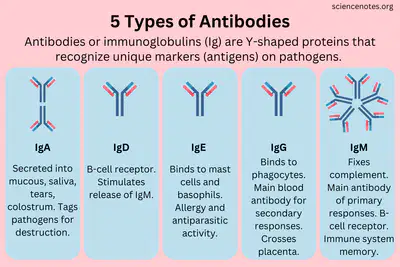
Common allergic reactions, such as hay fever, certain types of asthma, and hives are linked to an antibody produced by the body called immunoglobulin E (IgE). Each IgE antibody can be very specific, reacting against certain pollens and other allergens. In other words, a person can be allergic to one type of pollen, but not another.
https://www.hopkinsmedicine.org/health/conditions-and-diseases/allergies-and-the-immune-system
https://sciencenotes.org/types-of-antibodies-and-their-functions/
11
Multiple Choice
Is it possible to develop seasonal allergies later in life, if not experienced as a child?
Yes
No
12
Even kids who have never had seasonal allergies in years past can develop them. Seasonal allergies can start at almost any age, though they usually do not develop before a child is 2 years old. Most people with seasonal allergies develop them by age 20.
https://kidshealth.org/en/parents/seasonal-allergies.html#:~:text=Even%20kids%20who%20have%20never,develop%20them%20by%20age%2020
Safety April 2024 - Seasonal Allergies
James, Jas, Frank
Show answer
Auto Play
Slide 1 / 12
SLIDE
Similar Resources on Wayground

7 questions
DESAFIO_PROVAPR_FILO_1_EM_002
Presentation
•
1st Grade
9 questions
Pierwszy rozbiór Polski
Presentation
•
6th Grade
9 questions
Learning Design BUILDS Analysis
Presentation
•
University
9 questions
DESAFIO_PROVAPR_6_EF_HIST_002
Presentation
•
6th Grade
9 questions
DESAFIO_PROVAPR_7_EF_LP_004
Presentation
•
7th Grade
10 questions
Keunikan Virus: Menjelajahi Dunia Mikro
Presentation
•
10th Grade
10 questions
DESAFIO_PROVAPR_3_EM_LP_Q004
Presentation
•
3rd Grade
10 questions
DESAFIO_PROVAPR_7_EF_LP_003
Presentation
•
7th Grade
Popular Resources on Wayground
10 questions
HCS SCI 03 Summer School Review 4

Quiz
•
3rd Grade
11 questions
HSMS - Standard Response Protocol
Quiz
•
6th - 8th Grade
16 questions
1.1-1.2 Quiz Review
Quiz
•
9th - 12th Grade
12 questions
Exponent Expressions
Quiz
•
6th Grade
20 questions
Adding and Subtracting Integers
Quiz
•
6th - 7th Grade
11 questions
Northeast States
Quiz
•
3rd - 4th Grade
10 questions
Characterization
Quiz
•
3rd - 7th Grade
10 questions
Common Denominators
Quiz
•
5th Grade
Discover more resources for Professional Development
10 questions
HCS SCI 03 Summer School Review 4
Quiz
•
3rd Grade
11 questions
HSMS - Standard Response Protocol
Quiz
•
6th - 8th Grade
16 questions
1.1-1.2 Quiz Review
Quiz
•
9th - 12th Grade
12 questions
Exponent Expressions
Quiz
•
6th Grade
20 questions
Adding and Subtracting Integers
Quiz
•
6th - 7th Grade
11 questions
Northeast States
Quiz
•
3rd - 4th Grade
10 questions
Characterization
Quiz
•
3rd - 7th Grade
10 questions
Common Denominators
Quiz
•
5th Grade