Cat 4 Lesson
Presentation
•
Science
•
8th Grade
•
Easy
+8
Standards-aligned
Jennifer Guillory
Used 6+ times
FREE Resource
5 Slides • 13 Questions
1
What is the difference between these two cells?
2
Categorize
boxy shape
circular/blob shape
chloroplasts
cell wall
small vacuoles
nucleus
mitochondria
cell membrane
large central vacuole
ribosomes
3
Multiple Choice
4
Multiple Choice
5
What are the 3 parts of the cell theory?
Ink - Pair - Share
6
Reorder
Order the following from smallest to largest.
cell
tissue
organ
organ system
organism
7
Spin the Wheel: Write down as many body systems and their functions as you can!
8
Match
Match the organ system with its function(s).
Integumentary System
Skeletal System
Respiratory System
Digestive System
Protects the body and helps control body temperature
Provides support, protects organs, helps the body move
Takes in oxygen and removes carbon dioxide
Breaks down food, absorbs nutrients, and removes waste
Protects the body and helps control body temperature
Provides support, protects organs, helps the body move
Takes in oxygen and removes carbon dioxide
Breaks down food, absorbs nutrients, and removes waste
9
Open Ended
Name the body system pictured and describe its function.
10
Hotspot
Click on the area of the cell where chromosomes are located.
11
Multiple Choice
12
Multiple Choice
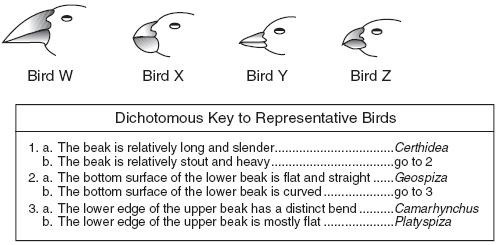
Identify Leaf S
Eastern white pine
balsam poplar
sweet gum
ginko
13
Multiple Choice
Which statement best describes an example of high biodiversity?
A pond ecosystem is populated by a single species of frogs
A state park that includes multiple forest and freshwater ecosystems with many different species of fish, birds and frogs in a variety of colors
A desert ecosystem is populated by organ pipe cacti, camels, and armadillo lizards
14
Multiple Choice
Why is biodiversity in an ecosystem so important?
Because it can help humans where to determine good places to develop farm land.
Because places that have a healthy biodiversity are unaffected by major disturbances.
Because having a high biodiversity allows ecosystems to withstand major changes.
Because having a high biodiversity allows for fewer opportunities of competition for similar resources.
15
Ink - Pair - Share: What do you see happening in the video? What can you assume to be true about the genetics of the parent and the offspring?
16
Multiple Choice
Which statement best explains why all the puppies in this litter look different?
The puppies chose which genes to express.
The puppies where raised in different areas.
They each have a unique blend of genes from both parents.
The puppies have genetic mutations that make them look different.
17
What observations can you make about this diagram?
18
Multiple Choice
What is the difference between these two cells?
Show answer
Auto Play
Slide 1 / 18
SLIDE

Similar Resources on Wayground
16 questions
Newton's First Law of Motion...
Presentation
•
8th Grade
10 questions
Physical versus Chemical Changes
Presentation
•
8th Grade
12 questions
Interdependence and Competition
Presentation
•
7th - 8th Grade
12 questions
Thermal Energy
Presentation
•
8th Grade
15 questions
Magnets
Presentation
•
8th Grade
11 questions
Charles's & Boyle's Laws
Presentation
•
8th Grade
15 questions
Weathering, Erosion & Deposition
Presentation
•
8th Grade
16 questions
8.7 c tides
Presentation
•
8th Grade
Popular Resources on Wayground
10 questions
Safety Day 2026 – Student Review
Quiz
•
9th Grade
21 questions
Continents and Oceans
Quiz
•
6th Grade
20 questions
Parts of Speech
Quiz
•
5th Grade
16 questions
Subject & Predicate
Quiz
•
5th Grade
25 questions
Multiplication Facts
Quiz
•
5th Grade
12 questions
Map Skills
Quiz
•
3rd Grade
22 questions
Continents and Oceans
Quiz
•
5th Grade
15 questions
Rounding Decimals
Quiz
•
5th Grade
Discover more resources for Science
20 questions
Newton's Laws of Motion
Quiz
•
8th Grade
15 questions
potential and kinetic energy
Quiz
•
8th Grade
21 questions
Newton's Laws of Motion
Quiz
•
8th Grade
20 questions
Elements, Compounds and Mixtures
Quiz
•
8th Grade
10 questions
Exploring Chemical and Physical Changes
Interactive video
•
6th - 10th Grade
20 questions
Physical vs Chemical Changes
Quiz
•
8th Grade
20 questions
Conduction, convection, and Radiation Practice
Quiz
•
8th Grade
21 questions
Waves and Wave Properties
Quiz
•
6th - 8th Grade