

Shock Sequence

Presentation
•
Science
•
6th Grade
•
Practice Problem
•
Medium
+4
Standards-aligned

George Smithson
Used 4+ times
FREE Resource
5 Slides • 8 Questions
1
Multiple Choice
What is an earthquake?
An earthquake is a vibration of the surface of the Earth resulting from a sudden release of energy in the Earth's crust.
Energy waves that travel through the Earth's crust
Any geological event caused by the Earth
The motion of large broken pieces of the Earth's crust
2
Multiple Choice
What scale do we measure earthquakes with?
Beaufort scale
Moment magnitude
3
Multiple Choice
How do we locate earthquakes?
Analyzing animal behavior
Using multiple seismographs to triangulate the epicenter
Observing changes in atmospheric pressure
Using seismographs to measure ground shaking
4
Multiple Choice
What are the three types of seismic waves?
Convergent, divergent, transform
Normal, reverse, strike-slip
Compression, tension, shearing
Primary, secondary, surface
5
Multiple Choice
What is the proper sequence of an earthquake?
Foreshock, Main shock, Aftershock
Main shock, Foreshock, Aftershock
Primary, Secondary, Surface
Hypershock, Main shock, Aftershock
6

How do
earthquakes strike?
-When an earthquake happens, it may
have three separate “shocks” to it.
-A foreshock might come first, triggering a
larger earthquake minutes, hours, days, or
even months later
-Can’t tell if it’s a foreshock until later
7
How do
earthquakes strike?
-When an earthquake happens, it may
have three separate “shocks” to it.
-Next up is the mainshock, the largest
earthquake in the series
8
How do
earthquakes strike?
-When an earthquake happens, it may
have three separate “shocks” to it.
Finally, we get aftershocks. These are smaller than the main shock, but dozens to hundreds occur in the hours, days, months, and years after the main shock
9
Multiple Choice
Which shock is the largest in the sequence?
Main shock
Foreshock
Static shock
Aftershock
10
Multiple Choice
Which shock is rare, but always proceeds the main shock?
Main shock
Foreshock
Static shock
Aftershock
11
Multiple Choice
Which type of earthquakes come after a large (7.0) earthquake for hours, days, and years after the event?
Main shock
Foreshock
Static shock
Aftershock
12
How could you locate where an earthquake strikes?
13
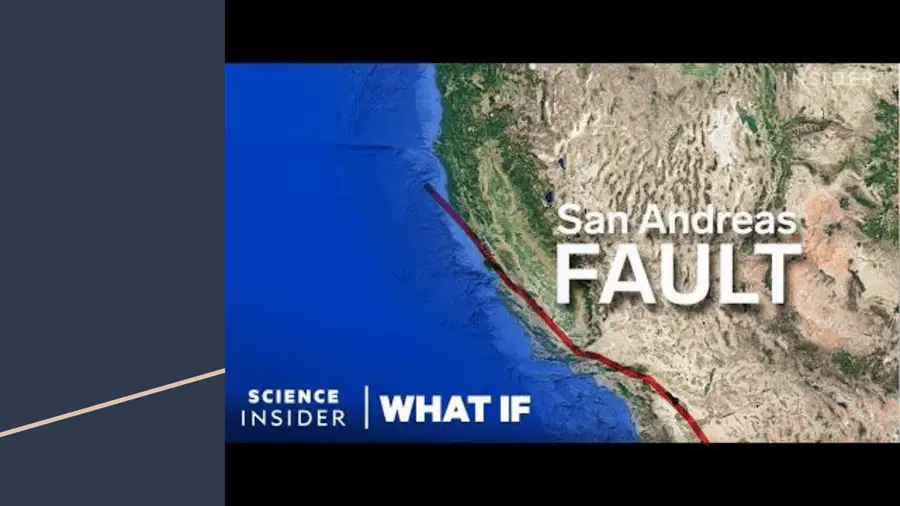
Looking at
the future
What is an earthquake?
An earthquake is a vibration of the surface of the Earth resulting from a sudden release of energy in the Earth's crust.
Energy waves that travel through the Earth's crust
Any geological event caused by the Earth
The motion of large broken pieces of the Earth's crust
Show answer
Auto Play
Slide 1 / 13
MULTIPLE CHOICE
Similar Resources on Wayground

10 questions
Solids, Liquids and Gases
Presentation
•
5th Grade
9 questions
The Immune System
Presentation
•
7th Grade
8 questions
Potential and Kinetic - CDB1 Review
Presentation
•
6th Grade
9 questions
wave properties
Presentation
•
6th Grade
8 questions
Metals Non Metals and Metalloids
Presentation
•
6th Grade
12 questions
Living Things
Presentation
•
KG
11 questions
The Ever-Changing Rocks: Exploring the Rock Cycle
Presentation
•
6th Grade
10 questions
Balanced and Unbalanced Forces
Presentation
•
5th Grade
Popular Resources on Wayground
24 questions
PBIS-HGMS Day 10

Quiz
•
6th - 8th Grade
10 questions
HCS SCI 03 Summer School Review 3
Quiz
•
3rd Grade
11 questions
Home Scope
Quiz
•
7th - 8th Grade
15 questions
HCS SCI 05 Summer School Assessment 3 Review
Quiz
•
5th Grade
35 questions
Lufkin Road Middle School Student Handbook & Policies Assessment
Quiz
•
7th Grade
18 questions
Geo 11.3 Area of Circles and Sectors
Quiz
•
9th - 11th Grade