
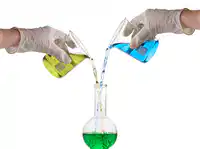
Mixtures

Presentation
•
Science
•
7th Grade
•
Practice Problem
•
Easy

Jayden Campbell
Used 3+ times
FREE Resource
11 Slides • 10 Questions
1
2
Word Cloud
Mixtures are?
3
What are mixtures?
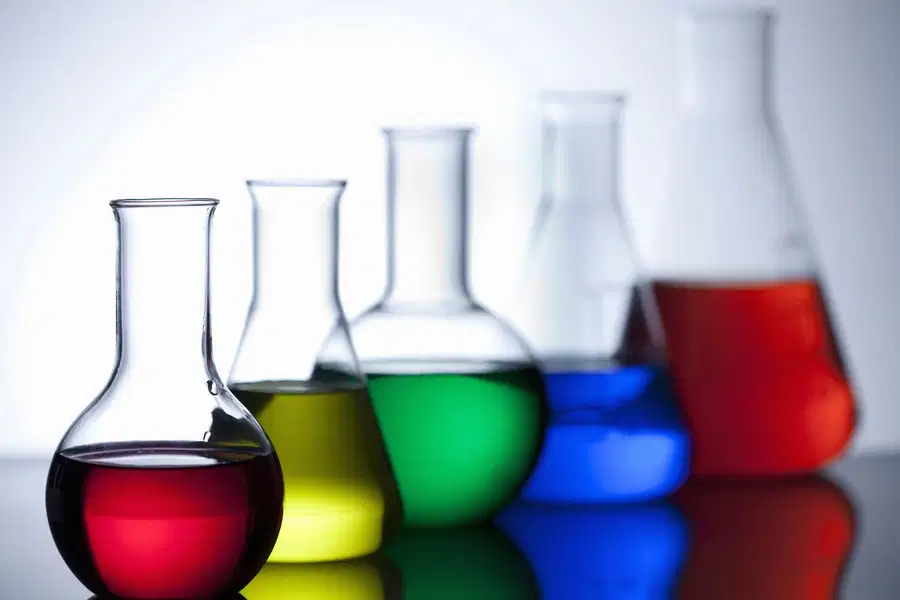
Mixtures are all around us: air, sea water, rock, soil, concrete, steel, milk, shampoo and paint, just to name a few.
All mixtures can be separated into their components, though it's sometimes very difficult. And sometimes the components are also mixtures themselves, like the vinegar in a macaroni salad.
But if you separate vinegar into its components you'll get two substances that are not mixtures: water and acetic acid. We call unmixed substances like this pure.
4
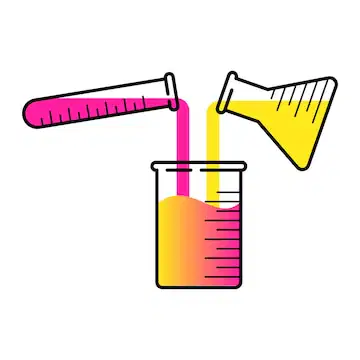
A pure substance is made up of only one type of stuff. Examples include purified water, oxygen, carbon dioxide, iron, diamond, table salt and vitamin C. Ultimately, all mixtures can be analysed into different combinations of pure substances.
It's often difficult to recognize a pure substance just by looking at it. Many mixtures have a uniform appearance, meaning that any part of them looks the same
Pure substance
5
Write the following into your glossary
Mixture: A combination of two or more substances that can be physically separated.
Pure Substance: A substance that contains only one type of stuff.
Components: Parts of a mixture.
6
Word Cloud
Name a mixture that you come across in your everyday life
7
One way to represent pure substances and mixtures is using a particle model.
A pure substance contains only one type of particle. A mixture contains more than one type of particle.
For example, gold is a pure substance. It's made up of many particles of the same type.
The particle model
8
Multiple Choice

This is a...
Mixture
Pure Substance
9
Multiple Choice

This is a...
Mixture
Pure Substance
10
Multiple Choice

This is a...
Mixture
Pure Substance
11
Multiple Choice

This is a...
Mixture
Pure Substance
12
Multiple Choice
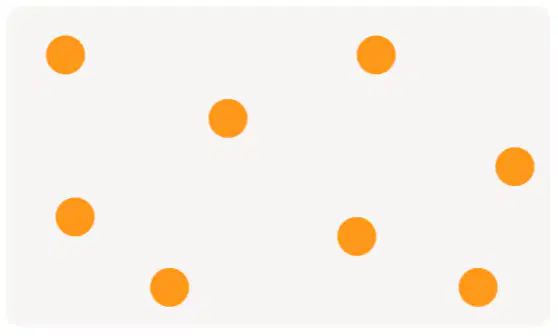
This is a...
Mixture
Pure Substance
13
Multiple Choice

This is a...
Mixture
Pure Substance
14
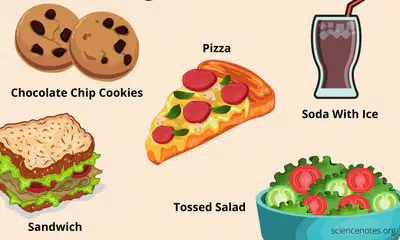
Mixtures can be made from any combination of solids, liquids and gases. The "particles" in a mixture might be solid fragments, liquid droplets or gas bubbles.
Mixing these different components together can produce substances with new properties. For example, foams are formed by mixing gas bubbles into a liquid and some foams can hold their shapes in the way that solids do.
Properties of mixtures
15
Labeling
Label the following with the correct solid, liquid, or gas.
Air
Mud
Milk
Cream
Sand
Butter
Water
Clouds
Dirt
Air
16
Proportions - write a short definition in your glossary
In mixtures, proportions describe how much of each substance is combined to make the mixture. They determine the characteristics of the mixture. For example, in cooking, the proportions of different ingredients affect the taste of the dish. Similarly, in chemistry, proportions determine the concentration and properties of a solution. Getting the proportions right is important for achieving the desired outcome.
17
18
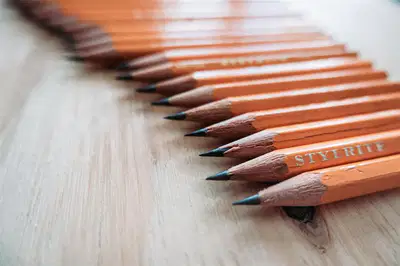
Pencils are produced with a wide range of hardnesses because this affects the darkness of the lines they produce. The softer the lead, the darker the line.
The hardness of the lead depends on the amount of clay in the mixture. The clay becomes hard when it's fired in the kiln, whereas the graphite remains soft. The table on the next slide shows how clay content relates to the standard HB scale – H stands for hardness and B stands for blackness.
Proportions matter
19
Open Ended

Explain how the thickness and darkness of a lead pencil line depends on the proportions of clay and graphite in it.
20

In your Glossary you should have the following:
Mixture
Pure substance
Components
Proportions
Check your work
21
Follow your teachers directions on where to find your quiz.
Quiz time!
Show answer
Auto Play
Slide 1 / 21
SLIDE
Similar Resources on Wayground

17 questions
Heredity (Inherited vs Acquired Traits)
Presentation
•
7th Grade
15 questions
Outer Planets
Presentation
•
7th Grade
16 questions
Speed Time Graphs
Presentation
•
6th - 7th Grade
16 questions
Climate Change Lesson
Presentation
•
7th Grade
17 questions
Periodic Table Arrangement
Presentation
•
7th Grade
17 questions
Evolution
Presentation
•
7th Grade
17 questions
Photosynthesis
Presentation
•
7th Grade
17 questions
7th Grade levels of organization
Presentation
•
7th Grade
Popular Resources on Wayground
10 questions
Safety Day 2026 – Student Review

Quiz
•
9th Grade
21 questions
Continents and Oceans
Quiz
•
6th Grade
20 questions
Parts of Speech
Quiz
•
5th Grade
16 questions
Subject & Predicate
Quiz
•
5th Grade
25 questions
Multiplication Facts
Quiz
•
5th Grade
12 questions
Map Skills
Quiz
•
3rd Grade
22 questions
Continents and Oceans
Quiz
•
5th Grade
15 questions
Rounding Decimals
Quiz
•
5th Grade
Discover more resources for Science
10 questions
Exploring Chemical and Physical Changes

Interactive video
•
6th - 10th Grade
14 questions
Week 1 Falcon Flex Fast and Curious
Quiz
•
7th Grade
42 questions
Explore Plate Tectonics and Boundaries
Quiz
•
7th Grade
21 questions
Waves and Wave Properties
Quiz
•
6th - 8th Grade
16 questions
Photosynthesis and Cellular Respiration Review
Quiz
•
7th Grade
20 questions
Food Webs + Energy Pyramids
Quiz
•
7th Grade
9 questions
Biology: Cell Structure
Interactive video
•
7th Grade
8 questions
Diffusion and Osmosis Review
Presentation
•
6th - 8th Grade