

SS6.4.6 Asoka's Rule

Presentation
•
Social Studies
•
6th Grade
•
Practice Problem
•
Hard

Bjorn Paje
Used 1+ times
FREE Resource
19 Slides • 0 Questions
1


The Asoka’s Rule p.164-167
Read Book and Answer Worksheet
2
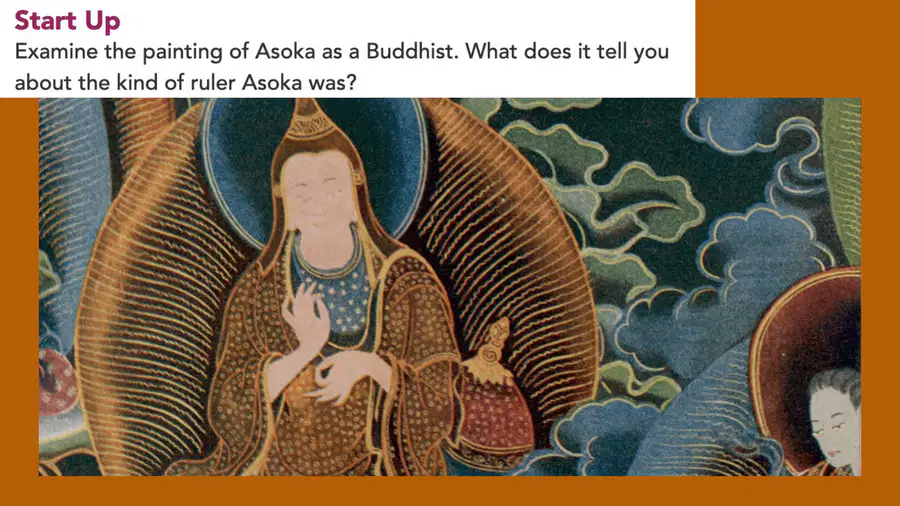
3

4

VOCABULARY
tolerance
willingness to respect
different beliefs and
customs

5

VOCABULARY
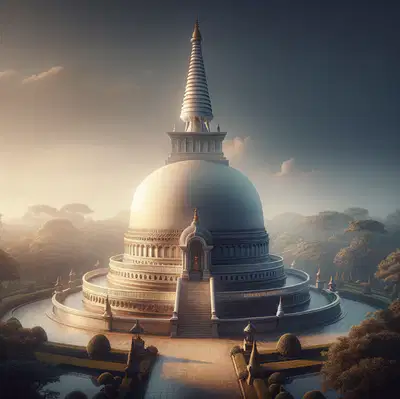
stupa
Buddhist
commemorative
burial ground
6

VOCABULARY
eventually
after a time

7

8

9

10

11

Lesson 6 Asoka's Rule
Lesson Summary
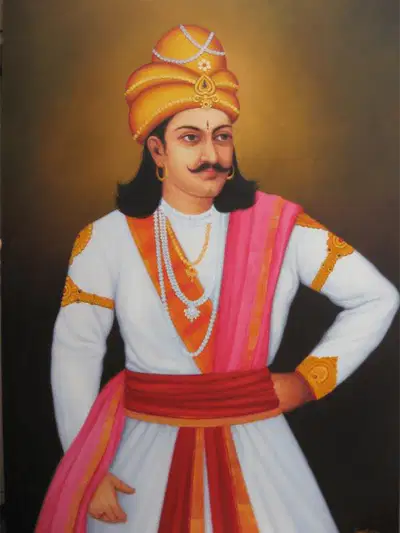
Power in the Maurya empire
passed from grandfather, to father, to son.
When Chandragupta’s
grandson, Asoka, gained power, at first he waged war.
Then he turned to peace.
12

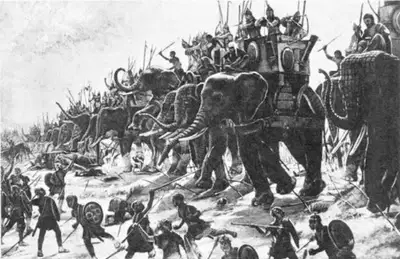
Why Did Asoka Turn to Peace?
Asoka gained the throne after many years of fighting.
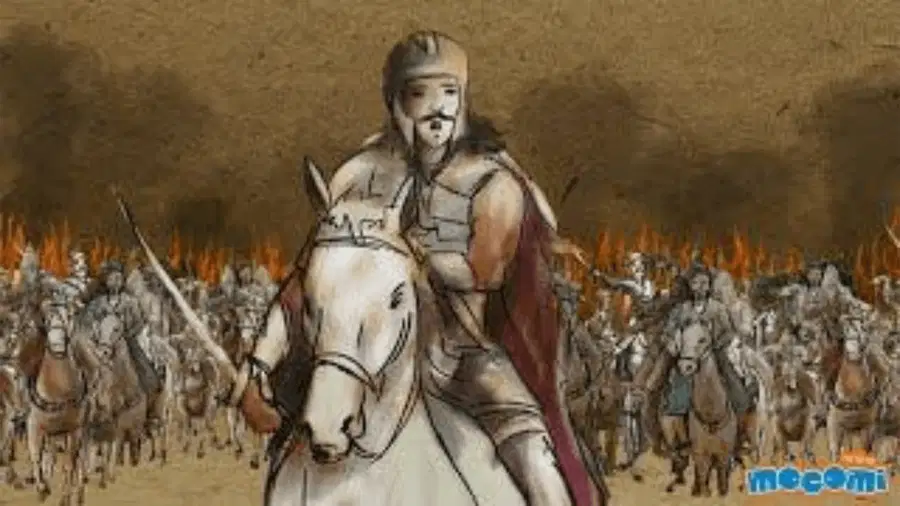
He then went to war again against the kingdom of
Kalinga, which had resisted
conquest.
Asoka conquered Kalinga,
but the war was long and terrible.
13

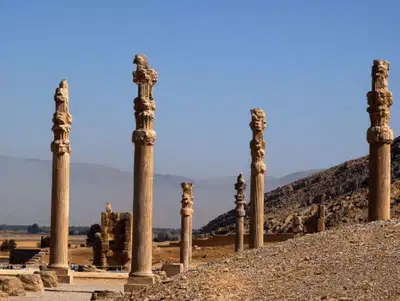
Why Did Asoka Turn to Peace?
The great suffering led Asoka to try to follow the Buddhist ideals of dharma and working for people’s well-being.
To share his ideas,
Asoka had stone pillars, or
columns, set up across his empire that encouraged people to live moral lives.
14

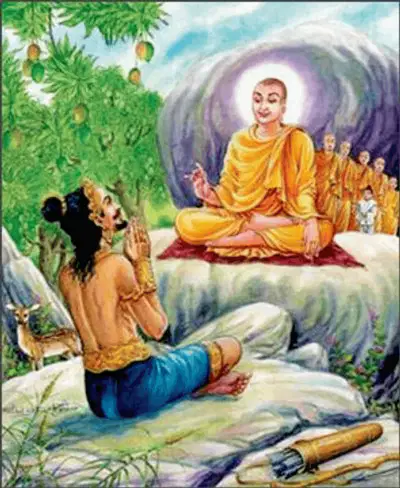
Why Did Asoka Turn to Peace?
While Asoka respected all religions, he became a follower of Buddhism.
His support helped the religion
spread throughout India.
15

What Was Asoka's Legacy?
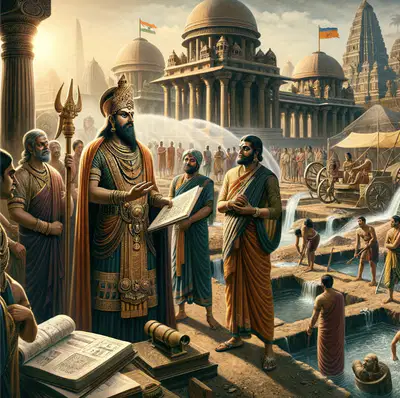
During his 40 years on the throne, Asoka did much to improve the lives of his people.
He set up hospitals, dug wells, and built an excellent
road system.
As a result of Asoka's efforts, India prospered.
16

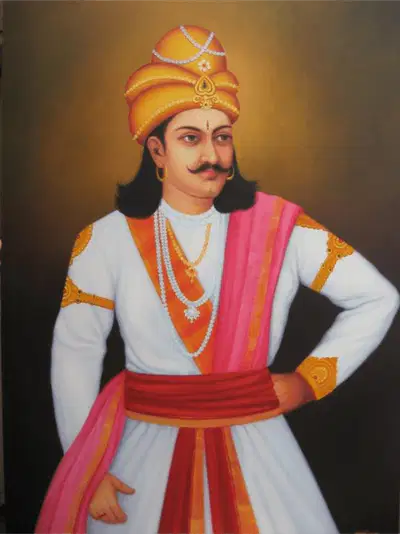
What Was Asoka's Legacy?
The country was at peace and there was little crime.
After Asoka died in 232 BCE, the Maurya empire began to struggle.
By 185 BCE, the Maurya empire came to an end.
17


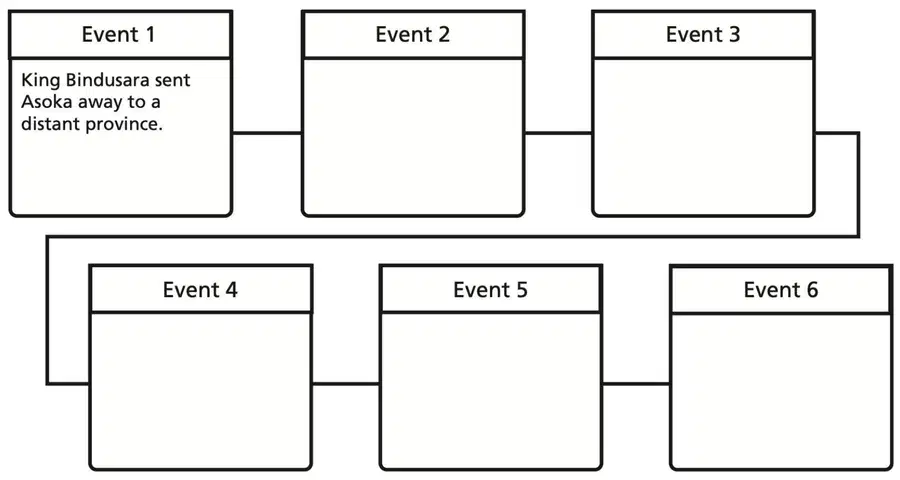
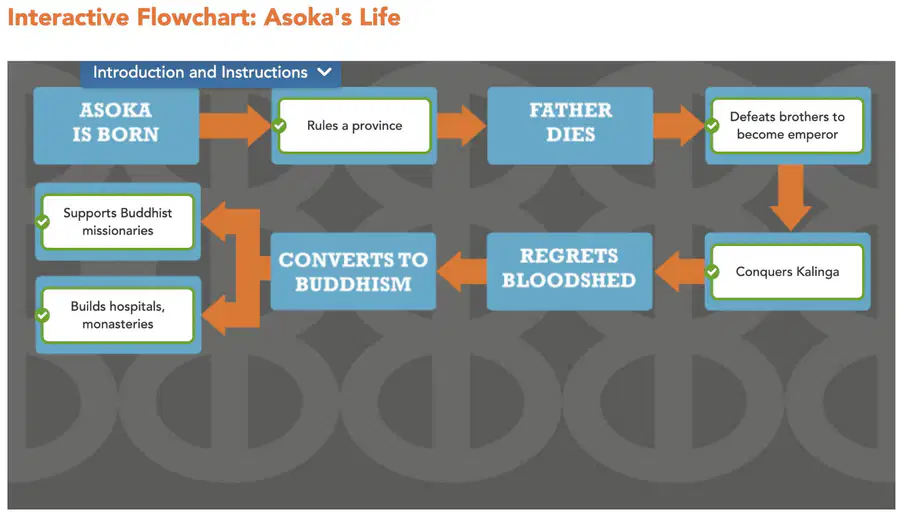
King
Bindusara
died
After four years
of fighting,
Asoka became
the 3rd Maurya
emperor
Asoka conquered
Kalinga, but was
horrified by the
slaughter
Asoka turned
away from
violence and
decided to follow
Buddhist values
Asoka replaced
rule by force with
rule based on
dharma
18


The pillars communicated messages
He apologized for making war on Kalinga, and he
explained his new goals
He urged respect for all religions
Encouraged people to live moral lives
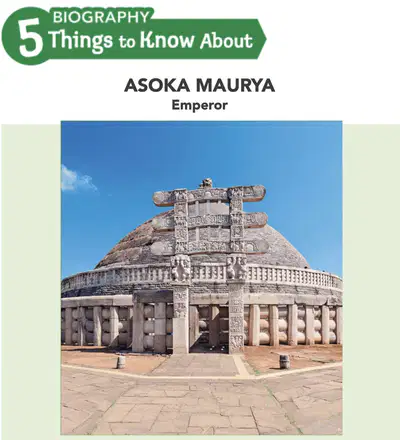
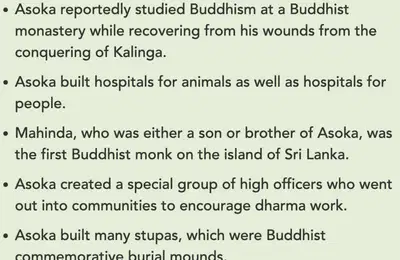
Stupas were Buddhist memorial burial mounds
19


His respect for dharma and ahimsa and belief in
tolerance helped lead to a peaceful reign.
He set up hospitals, dug wells and built an excellent
road system.
There was little crime.
People could leave their homes unguarded and
travel the country without fear.
The Asoka’s Rule p.164-167
Read Book and Answer Worksheet
Show answer
Auto Play
Slide 1 / 19
SLIDE
Similar Resources on Wayground

16 questions
Bill of Rights
Presentation
•
6th Grade
16 questions
BC/AD and BCE/CE
Presentation
•
6th Grade
13 questions
Colonization of Australia
Presentation
•
6th Grade
13 questions
Chapter 5 Section 1-Ancient India
Presentation
•
6th Grade
16 questions
Medieval Japan Culture
Presentation
•
6th Grade
12 questions
Maps and Regions
Presentation
•
6th Grade
13 questions
US/Canada Types Of Governments
Presentation
•
6th Grade
13 questions
The Rise of the Incan Empire
Presentation
•
6th Grade
Popular Resources on Wayground
24 questions
PBIS-HGMS Day 10

Quiz
•
6th - 8th Grade
10 questions
HCS SCI 03 Summer School Review 3
Quiz
•
3rd Grade
11 questions
Home Scope
Quiz
•
7th - 8th Grade
15 questions
HCS SCI 05 Summer School Assessment 3 Review
Quiz
•
5th Grade
35 questions
Lufkin Road Middle School Student Handbook & Policies Assessment
Quiz
•
7th Grade
18 questions
Geo 11.3 Area of Circles and Sectors
Quiz
•
9th - 11th Grade