

Ionic Compounds Lesson

Presentation
•
Science, Chemistry
•
•
Practice Problem
•
Easy

Alice Jarvis
Used 2+ times
FREE Resource
14 Slides • 13 Questions
1

Notes:
Ionic Compounds
Chemistry
2

Chemical Bonds
▪ Created through gain, loss, or sharing of valence electrons
▪ Remember
– Electrons equal atomic number of the element
– Valence electrons equal the group number.
• Krypton
- 8 valence electrons
Example:
• Sodium
1 valence electron
3
Multiple Choice

Valence electrons are the electrons in the outermost orbit of an atom.
True
False
4

What is a Chemical Bond?
▪ A Chemical Bond is created when an atom attempts to fill
its outermost energy level to become stable, also called
the octet rule.
– An energy level is stable when it has 8 valence electrons.
▪ There are 3 types of chemical bonds
– Ionic bonds- transfer of electrons
– Covalent bonds- sharing of electrons
– Metallic bonds- two metals
5

Ionic Compounds
▪ An ionic bonds is an electrostatic attraction between atoms where
there is a transfer of valence electrons.
– Loss of electrons results in a positive charge (tend to be metals)
– Gain of electrons results in a negative charge. (tend to be nonmetals)
– The overall charge of the compound will be neutral.
▪ Two types of Ionic Compounds
– Salts-
▪ NaCl
MgSO4
– Oxides-
▪ CuO
Fe2O3
6
Multiple Choice

The word "transfer" best means
move from one place to another
Exchange
Allocate
7
Multiple Choice
What will be the charge of oxygen if it had 8 protons and 10 electrons?
charge = protons - electrons
2+
2-
0
8

Ionic Compounds
▪ Properties of ionic Compounds
– Very high melting point
– Soluble in water
– Good conductors of electricity when dissolved
in water
▪ Electrolytes
– Atoms build upon each other to create
geometric patterns
▪ Crystal lattices
9

Creating Formulas for Ionic Compounds
▪ The formula of a compound can be determined
by using the Lewis dot structures for each atom.
– Example:
**Remember the
octet rule
Cl
Cl
AlCl3
▪When writing the formula, the cation
(metal) goes first.
Al
Cl
10

Aluminum chloride
11
Multiple Choice

Take a look at the image. What would the charge be for the element oxygen (O)?
2-
0
1-
12

Writing & Naming Binary Ionic Compounds
▪ Name to Formula
– Write the symbol of the
elements
▪ Metal first
– Determine the charge for each
element
▪ If using a transition metal the
charge will be written as a
roman numeral
– Cross the charges
▪ Examples:
Ca Cl
Calcium Chloride
Iron (II) Oxide
Fe O
+2 -1
CaCl2
+2 -2
FeO
13

Writing & Naming Binary Ionic Compounds
▪ Binary ionic compounds will
contain two elements
– Positively charged cation (the
metal)
– Negatively charged anion (the
nonmetal)
▪ Formula to Name
– Name the metal
▪ If using a transition metal write the
charge as a roman numeral
– Name the nonmetal and change
the last syllable to -ide
▪ Examples:
Sodium chlorine
NaCl
Sodium chloride
MnBr2
manganese bromine
manganese (II) bromide
14

Writing & Naming Binary Ionic Compounds
Practice
▪ Strontium Chloride. SrCl2
▪ KI. Potassium Iodide
▪ Aluminum Oxide. Al2O3
▪ AgCl
▪ Calcium Bromide
▪ Na2S. Sodium Sulfide
▪ Beryllium Iodide
▪ Potassium Fluoride. KF
▪ Cs3N
▪ Copper (I) oxide

15
16
Cs and N
17

Writing & Naming Ternary Ionic Compounds
Formula to Name
▪ Name the metal
▪ Name the polyatomic
ion
Name to Formula
▪ Determine the symbol of
the element and the
polyatomic ion.
▪ Cross the charges
A ternary ionic compound will contain an element bonded to a polyatomic ion, which is a
charged group of atoms acting as a single unit.
Polyatomic Ions
Nitrate
NO3
-1
Nitrite
NO2
-1
Sulfate
SO4
-2
Sulfite
SO3
-2
Phosphate
PO4
-3
Hydroxide
OH-1
Cyanide
CN-1
Ammonium
NH4
+1
Al2(SO4)3
Aluminum Sulfate
Calcium Nitrate
Ca (NO3)
2
+2 -1
18

Writing & Naming Ternary Ionic Compounds
Practice
▪
silver (I) nitrate ____________________
▪
CuSO4
________________________
▪
lithium nitrite ____________________
▪
Zn3(PO4)2 _______________________
▪
potassium hydroxide ______________
▪
Pb(NO3)2 ______________________
▪
Polyatomic Ions
Nitrate
NO3
-1
Nitrite
NO2
-1
Sulfate
SO4
-2
Sulfite
SO3
-2
Phosphate
PO4
-3
Hydroxide
OH-1
Cyanide
CN-1
Ammonium
NH4
+1
19
Multiple Choice
20
Multiple Choice
21
Multiple Choice
22
Multiple Choice
2
23
Multiple Choice
24
Multiple Choice
25
Multiple Choice
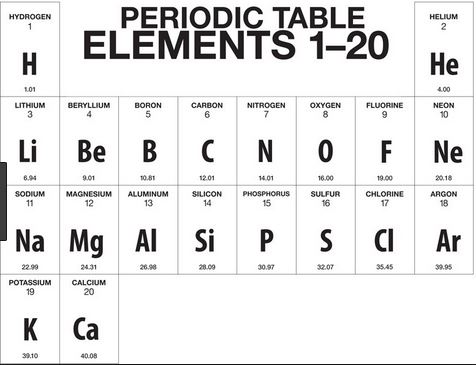
How many valence electrons does Helium Have?
1 Valence electron
2 Valence electron
3 Valence electron
4 Valence electron
5 Valence electron
26
Multiple Choice

Nonmetals tend to
gain electrons
lose electrons
27
Multiple Choice

Metals tend to
gain electrons
lose electrons
Notes:
Ionic Compounds
Chemistry
Show answer
Auto Play
Slide 1 / 27
SLIDE
Similar Resources on Wayground

20 questions
Organelles
Presentation
•
9th Grade
20 questions
CONDUCTION, CONVECTION AND RADIATION
Presentation
•
4th Grade
20 questions
Ecological Hierarchy
Presentation
•
9th Grade
20 questions
Thermodynamics, Physical Science
Presentation
•
9th Grade
20 questions
Properties of Matter
Presentation
•
9th Grade
20 questions
Newton's Laws Extended Day
Presentation
•
8th Grade
20 questions
The Scientific Method
Presentation
•
6th Grade
20 questions
Scientific Method
Presentation
•
4th Grade
Popular Resources on Wayground
10 questions
Safety Day 2026 – Student Review

Quiz
•
9th Grade
21 questions
Continents and Oceans
Quiz
•
6th Grade
20 questions
Parts of Speech
Quiz
•
5th Grade
16 questions
Subject & Predicate
Quiz
•
5th Grade
25 questions
Multiplication Facts
Quiz
•
5th Grade
12 questions
Map Skills
Quiz
•
3rd Grade
22 questions
Continents and Oceans
Quiz
•
5th Grade
15 questions
Rounding Decimals
Quiz
•
5th Grade