

Biology in Psychology (Genetics and Heredity)

Presentation
•
Social Studies
•
11th Grade
•
Easy

Celina Herrera
Used 124+ times
FREE Resource
15 Slides • 3 Questions
1

2
Icebreaker? This or that cards
4
Lets Review
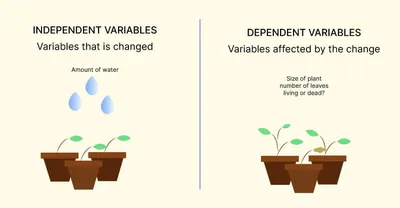
Do tomatoes grow fastest under fluorescent, incandescent, or natural light?
What is the effect of intermittent fasting on blood sugar levels?
Is medical marijuana effective for pain reduction in people with chronic pain?
To what extent does remote working increase job satisfaction?
5
Back to Basics
Cells are the building blocks of living things. Humans have trillions of cells in their body. Cells group together to form tissues and organs.
The cell nucleus is the command center of the cell. Within the cell nucleus is the entire genome, which is all of your genetic material.
The genome is organized into 23 pairs of chromosomes. Within each pair, you get one chromosome from your biological mother and one from your biological father.
6
Multiple Choice
What is considered the command center of the cell.
The Cell Nucleus
The Cell
The Membrane
7
Human Genetics
Genes: are sequences of DNA that code for a particular trait.
Alleles: Specific version of a gene
So what is the difference between genes and alleles?
Example:
Gene: The "eye color gene".
Alleles: The "blue eye allele" and the "brown eye allele" which are both variations of the eye color gene.
8
Dominate vs Recessive
dominant allele: allele whose phenotype will be expressed in an individual that possesses that allele
recessive allele: allele whose phenotype will be expressed only if an individual is homozygous for that allele
Punnett Square
9
Draw
Fill out the Punnett square
10
How do you inherit you alleles from your parents?
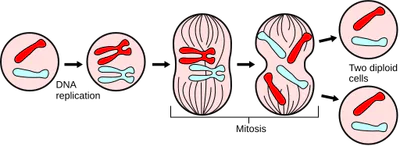
Most cells in your body are soma cells (or body cells) and reproduce by a process called mitosis. In mitosis, 2 identical daughter cells are produced from 1 parent cell. The new daughter cells each have 46 chromosomes like the parent cell did; these new cells are known as diploid cells because they contain 2 of each chromosome (also known as a pair of each chromosome).
11
How do you inherit you alleles from your parents?
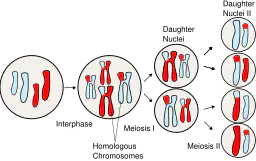
The cells used in reproduction- the egg and sperm- are known as germ cells and are created through a process called meiosis. In meiosis, 4 daughter cells are produced from one parent cell. Each new daughter cell only has 23 chromosomes (one of each instead of a pair like in mitosis); these new cells are known as haploid cells because they contain half the number of chromosomes as the original parent cell.
12
Epigenetics
Epigenetics in psychology provides a framework for understanding how the expression of genes is influenced by experiences and the environment to produce individual differences in behavior, cognition, personality, and mental health.
https://www.youtube.com/watch?v=AvB0q3mg4sQ
13
Cells of Nervous System
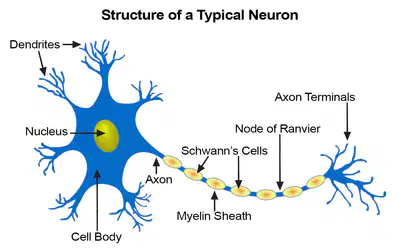
Glia and neurons are the two cell types that make up the nervous system.
What is the difference? Neurons generate and propagate electrical and chemical signals, whereas glia function mainly to modulate neuron function and signaling.
Neuronal communication is made possible by the neuron’s specialized structures.
https://www.youtube.com/watch?v=11-8ecpwOXs
Activity: https://myclass.theinspiredinstructor.com/science/health_diagrams/Neuron_Label.htm
14
Parts of Nervous System
The brain and spinal cord make up the central nervous system.
The peripheral nervous system is comprised of the somatic and autonomic nervous systems.
-The somatic nervous system transmits sensory and motor signals to and from the central nervous system.
-The autonomic nervous system controls the function of our organs and glands, and can be divided into the sympathetic and parasympathetic divisions.
15
Somatic vs. Autonomic
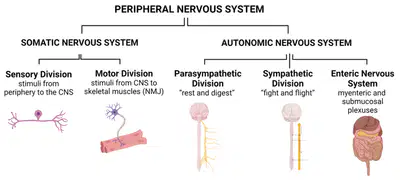
the somatic system controls voluntary movements like walking or reaching, while the autonomic system regulates involuntary bodily functions like heart rate, digestion, and breathing, which you don't consciously control
Overview Nervous System: https://www.youtube.com/watch?v=x8DjPqdlUbg Overview Peripheral Nervous: Activity: https://www.classtools.net/vortex/202102-T8LgH2
Somatic: voluntary
Automatic: involuntary
16
Fill in the Blanks
controls the function of our organs and glands, and can be divided into the sympathetic and parasympathetic divisions (somatic or autonomic?)
17
The Brain and the Spinal Cord (CNS)
The brain consists of two hemispheres, each controlling the opposite side of the body.
Each hemisphere can be subdivided into different lobes: frontal, parietal, temporal, and occipital.
What do the different areas of the brain do?
https://www.youtube.com/watch?v=FczvTGluHKM
18
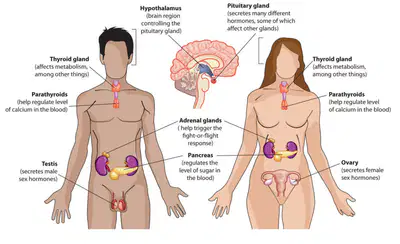
The Endocrine System
The glands of the endocrine system secrete hormones to regulate normal body functions.
Overview: https://www.youtube.com/watch?v=-SPRPkLoKp8
Activity: https://www.purposegames.com/game/endocrine-system-labeling
Show answer
Auto Play
Slide 1 / 18
SLIDE
Similar Resources on Wayground

10 questions
Plessy v. Ferguson
Presentation
•
12th Grade
16 questions
Gettysburg Address Background Information
Presentation
•
11th Grade
16 questions
Marbury v Madison
Presentation
•
11th Grade
14 questions
Gettysburg Address
Presentation
•
11th Grade
12 questions
Declaration of Independence
Presentation
•
11th Grade
12 questions
Logical Fallacies
Presentation
•
11th Grade
15 questions
Imperialism and The Spanish American War
Presentation
•
11th Grade
12 questions
Boston Tea Party
Presentation
•
11th Grade
Popular Resources on Wayground
10 questions
Safety Day 2026 – Student Review

Quiz
•
9th Grade
21 questions
Continents and Oceans
Quiz
•
6th Grade
20 questions
Parts of Speech
Quiz
•
5th Grade
16 questions
Subject & Predicate
Quiz
•
5th Grade
25 questions
Multiplication Facts
Quiz
•
5th Grade
12 questions
Map Skills
Quiz
•
3rd Grade
22 questions
Continents and Oceans
Quiz
•
5th Grade
15 questions
Rounding Decimals
Quiz
•
5th Grade
Discover more resources for Social Studies
39 questions
Unit 7 Key Terms
Quiz
•
11th Grade - University
38 questions
Unit 6 Key Terms
Quiz
•
11th Grade - University
38 questions
The Progressive Era
Quiz
•
11th Grade
25 questions
Progressive Era
Quiz
•
11th Grade
25 questions
Gilded Age Gallery Walk
Presentation
•
9th - 12th Grade
20 questions
How The Constitution Has Changed
Quiz
•
11th Grade
25 questions
Mastery Quiz SSUSH 11-14
Quiz
•
11th Grade
30 questions
Q1 US History Check
Quiz
•
11th Grade