

MATH Lesson 12.13

Presentation
•
Science
•
5th Grade
•
Practice Problem
•
Hard

Jennifer Holmes
Used 2+ times
FREE Resource
43 Slides • 0 Questions
1


3rd Grade Mathematics
December 12, 2023
2

LO: SWBAT multiply a two-digit number by a one-digit
number using the distributive property.
DOL: SW multiply a two-digit number by a one-digit
number using distributive property correctly on 4 out of 5
questions.
TEKS 3.4(G) Use strategies and algorithms, including the standard algorithm, to multiply a two-digit number by a one-digit number.
Strategies may include mental math, partial products, and the commutative, associative, and distributive properties.
3
11
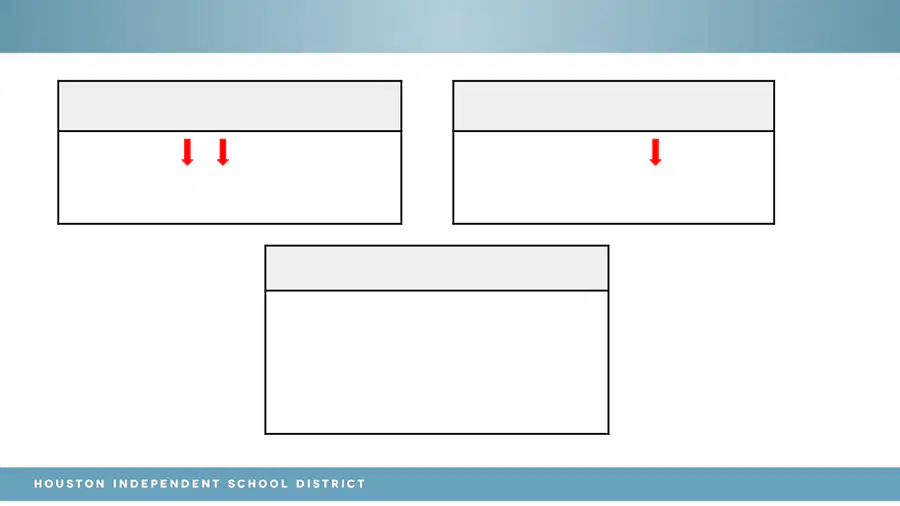
Lesson Vocabulary
Factor(s)
22 x 5 = 110
Product
22 x 5 = 110
Distributive Property
22 x 5
(20 + 2) x 5
(20 x 5) + (2 x 5)
100 + 10
110
4

10
Define Me
Taylor solved the following multiplication expression 25 x 9 using
the distributive property.
25 x 9 =
20 + 5
( 20 x 9) + (5 x 9)
180 + 45 = 225
How would you define distributive
property?
The distributive property
is ___________.
5

12
Write the answer in standard form.
20 + 3
Write23in expanded notation.
Write the answer in standard form.
80 + 7
Write87in expanded notation.
6

13
Write the answer in standard form.
300 + 50 +8
Write358in expanded notation.
Write the answer in standard form.
400 + 7 + 90
Write497in expanded notation.
7

GET Strategy for Multiplication & Division
G: number of Groups
E: number of items in Each group
T: Total number of items
Multiplication
Division
G xE =T
T ÷ G = E
Ex G=T
T ÷E = G
8

When baking one large batch of cookies, Tamia uses 24
cups of flour. How many cups of flour does she need for
8 batches?
Let's read the story problem below.
9

16
When baking one large batch of cookies, Tamia uses 24
cups of flour. How many cups of flour does she need for 8
batches?
How can we represent the problem?
Let's represent the story problem below.
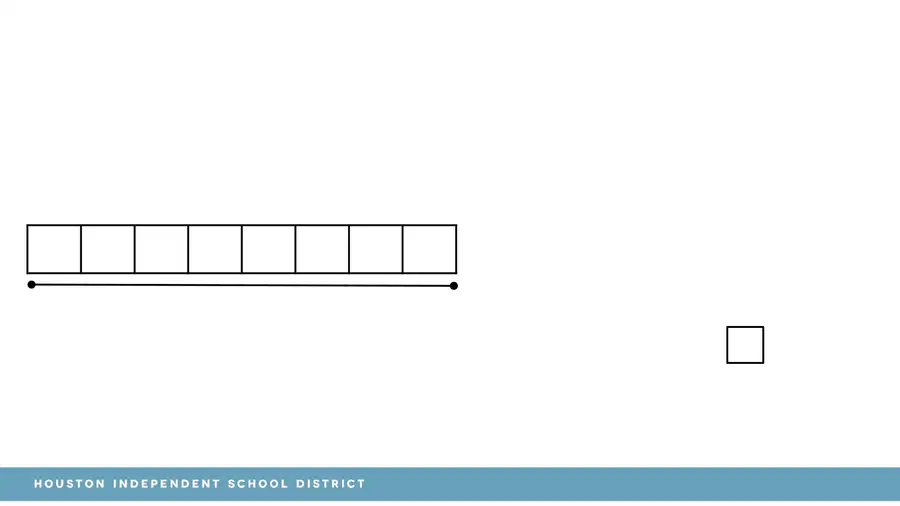
Let’s model this problem with a strip diagram. Draw with me on your board.
10

17
When baking one large batch of cookies, Tamia uses
24 cups of flour. How many cups of flour does she need
for 8 batches?
What operation would you use to solve this problem? Why?
Equation:
11

18
When baking one large batch of cookies, Tamia uses
24 cups of flour. Which expression shows a way to
determine the number of cups of flour she needs for 8
batches?
A. (2 x 8) + (4 x 8)
B. (24 x 8) + 24 x 8)
C. (20 x 8) + (4 x 8)
D. (40 x 8) + (2 x 8)
12
19
When baking one large batch of cookies, Tamia uses 24 cups of flour.
How many cups of flour does she need for 8 batches?
Teacher Exemplar
24
24
24
24
24
24
24
24
?
G: 8 batches
E: 24 cups of flour
T: ? cups of flour
Equation: 24 x 8 =
13

20
When baking one large batch of cookies, Tamia uses 24 cups of flour.
How many cups of flour does she need for 8 batches?
Teacher Exemplar
24 x 8
(20 + 4) x 8
(20 x 8) + (4 x 8)
160 + 32
192
Distributive Property
Tamia needs 192 cups of flour for
8 batches.
14

21
When baking one large batch of cookies, Tamia uses
24 cups of flour. Which expression shows a way to
determine the number of cups of flour she needs for 8
batches?
A. (2 x 8) + (4 x 8)
B. (24 x 8) + 24 x 8)
C. (20 x 8) + (4 x 8)
D. (40 x 8) + (2 x 8)
Answer Key
15

Mr. Brown and eight of his co-workers are combining
money to buy holiday presents for their assistant
principals. Each teacher contributed $45. How much
money did they collect for the presents?
Let's read the story problem below.
16

23
Mr. Brown and eight of his co-workers are combining money to buy
holiday presents for their assistant principals. Each teacher contributed
$45. How much money did they collect for the presents?
How can we represent the problem?
Let's represent the story problem below.
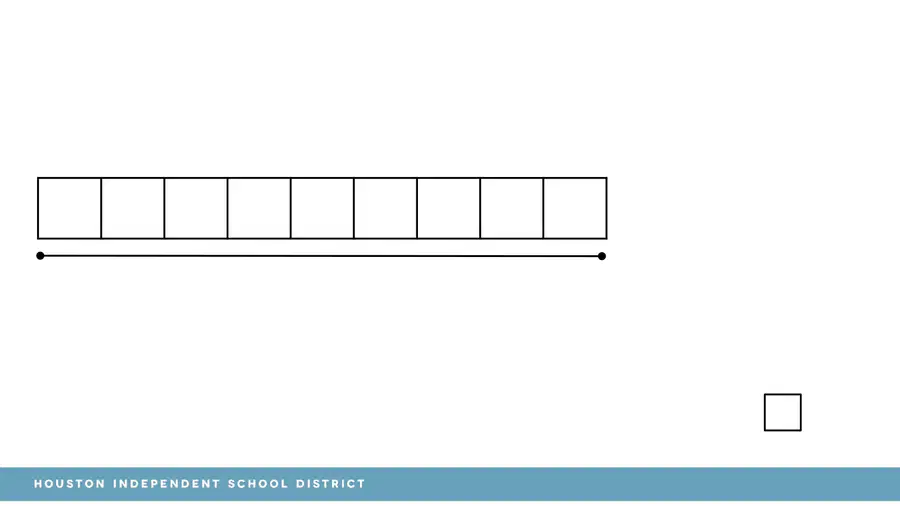
Let’s model this problem with a strip diagram. Draw with me on your board.
17

24
Mr. Brown and eight of his co-workers are combining money to buy
holiday presents for their assistant principals. Each teacher
contributed $45. How much money did they collect for the presents?
What operation would you use to solve this problem? Why?
Equation:
18

25
Mr. Brown and eight of his co-workers are combining money to buy
holiday presents for their assistant principals. Each teacher
contributed $45. How much money did they collect for the presents?
F. $305
G. $81
H. $486
J. $405
19
26
Mr. Brown and eight of his co-workers are combining money to buy
holiday presents for their assistant principals. Each teacher
contributed $45. How much money did they collect for the presents?
Teacher Exemplar
$45 $45 $45 $45 $45 $45 $45 $45 $45
?
G: 9 teachers
E: $45
T: ?
Equation: 45 x 9 =
20

27
Mr. Brown and eight of his co-workers are combining money to buy
holiday presents for their assistant principals. Each teacher
contributed $45. How much money did they collect for the presents?
Teacher Exemplar
45 x 9
(40 + 5) x 9
(40 x 9) + (5 x 9)
360 + 45
405
Distributive Property
The teachers collected $405 for
the presents.
21

28
Mr. Brown and eight of his co-workers are combining money to buy
holiday presents for their assistant principals. Each teacher
contributed $45. How much money did they collect for the presents?
F. $305
G. $81
H. $486
J. $405
Answer Key
22

29
Story Problem
Lupe is saving money for her family vacation. She saves $47 each
month. How much money will she save in 6 months?
Solve the story problem using the distributive property and partial
products.
23

30
Story Problem
The school store purchased 89 packs of notebooks. Each pack of
notebooks contains 6 notebooks.
How many notebooks did the school store purchase?
Solve the story problem using the distributive property and standard
algorithm.
24

31
Story Problem
The school store purchased 89 packs of notebooks. Each pack of
notebooks contains 6 notebooks.
How many notebooks did the school store purchase?
A.
102
B.
534
C.
484
D.
525
25


SW multiply a two-digit number by a one-digit number using distributive
property correctly on 4 out of 5 questions.
26

LO: SWBAT multiply a two-digit number by a one-digit
number using partial products and standard algorithm.
DOL: SW multiply a two-digit number by a one-digit
number using partial products and standard algorithm
correctly on 4 out of 5 questions.
TEKS 3.4(G) Use strategies and algorithms, including the standard algorithm, to multiply a two-digit number by a one-digit number.
Strategies may include mental math, partial products, and the commutative, associative, and distributive properties.
27


10
Who's right?
Alicia solved the following math expression, 46 x 9, using
partial products. Did Alicia solve the expression
correctly?
Alicia's Work
4 6
x 9
54 (9 x 6)
36 (9 x 4)
+
90
Alicia solved the
expression ______
because ______.
28

8
Do Now
Solve for this problem. Show your work.
While on vacation, Robin took thirty-seven
pictures at the zoo and twenty-five at the
museum.
If she later deleted twenty-nine of the
pictures, how many pictures from her
vacation did she still have?
29

11
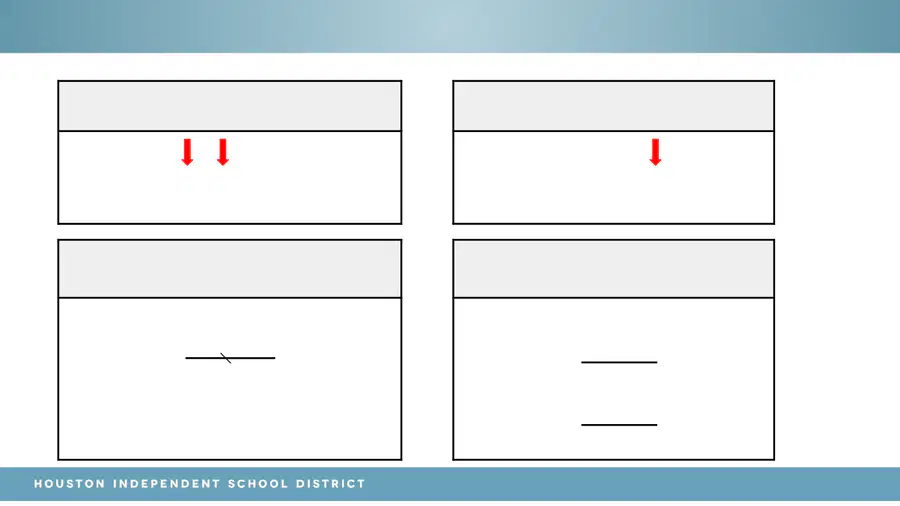
Lesson Vocabulary
Factor(s)
22 x 5 = 110
Product
22 x 5 = 110
Standard Algorithm
22
x 5
Partial Product
22
x 5
110
10 (5 x 2)
100 (5 x 20)+
110
1
30
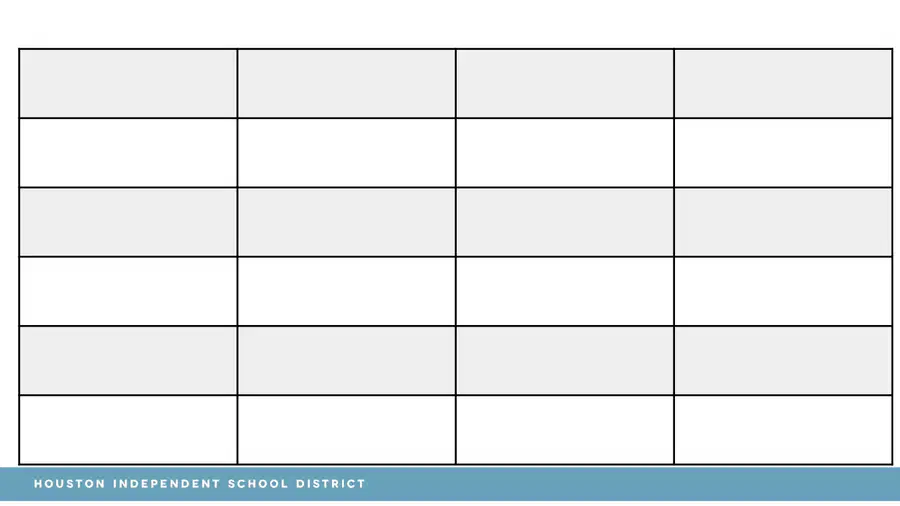
9 x 1 = ________
9 x 2 = ________
9 x 3 = ________
9 x 4 = ________
9 x 5 = ________
9 x 6 = ________
9 x 7 = ________
9 x 8 = ________
9 x 9 = ________
9 x 10 = _______
9 x 5 = ________
9 x 6 = ________
9 x 5 = ________
9 x 7 = ________
9 x 5 = ________
9 x 8 = ________
9 x 5 = ________
9 x 9 = ________
9 x 5 = ________
9 x 10 = _______
9 x 6 = ________
9 x 5 = ________
9 x 6 = ________
9 x 7 = ________
Multiply.
31


GET Strategy for Multiplication & Division
G: number of Groups
E: number of items in Each group
T: Total number of items
Multiplication
Division
G xE =T
T ÷ G = E
Ex G=T
T ÷E = G
32

Kim has 7 bags of candy. Each bag has 36 candies.
How many candies does Kim have?
Let's read the story problem below.
33

15
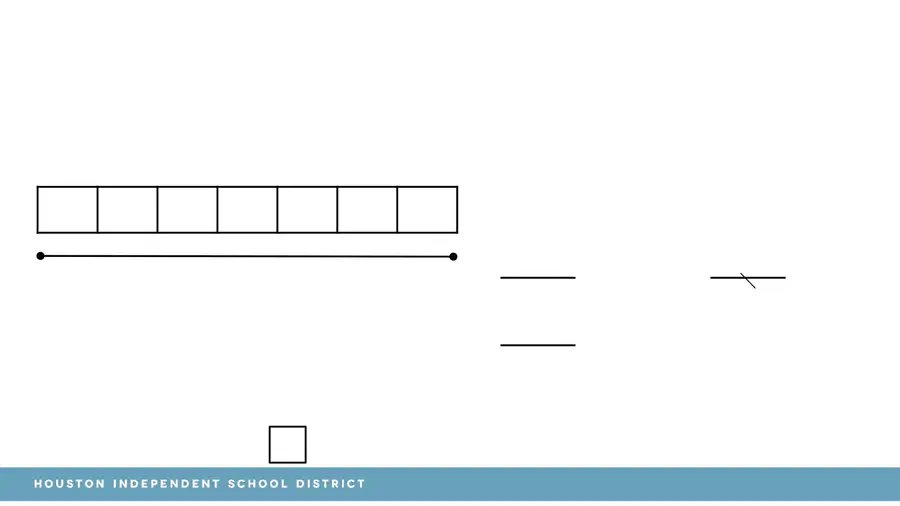
Kim has 7 bags of candy. Each bag has 36 candies. How many
candies does Kim have?
How can we represent the problem?
Let's represent the story problem below.
Let’s model this problem with a strip diagram. Draw with me on your board.
34

16
Kim has 7 bags of candy. Each bag has 36 candies. How many
candies does Kim have?
What operation would you use to solve this problem? Why?
Equation:
Kim has ________ candies.
35
17
Kim has 7 bags of candy. Each bag has 36 candies. How many
candies does Kim have?
Teacher Exemplar
36
36
36
36
36
36
36
?
Partial Products
Standard Algorithm
3 6
x 7
42 (7 x 6)
120 (7 x 30)
252
3 6
x 7
252
4
Kim bought 252 candies.
G: 7 bags
E: 36 candies
T: ? candies
Equation: 36 x 7 =
+
36
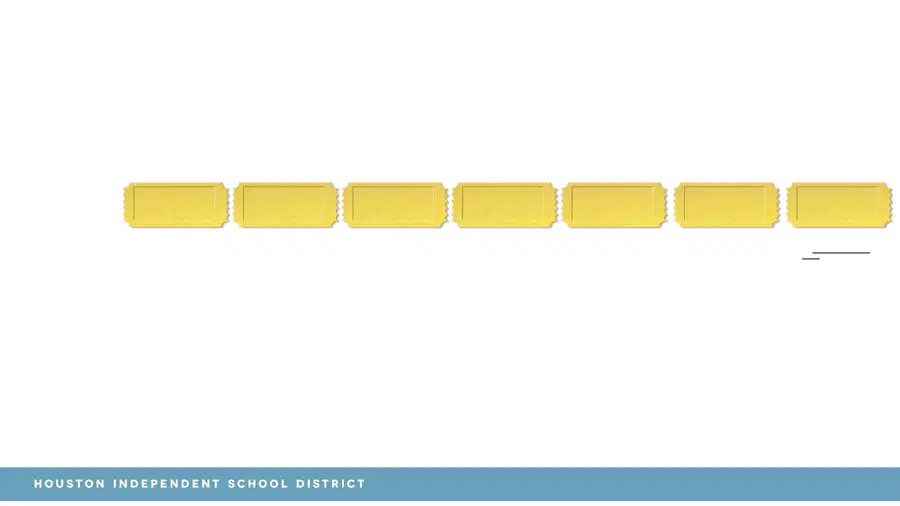

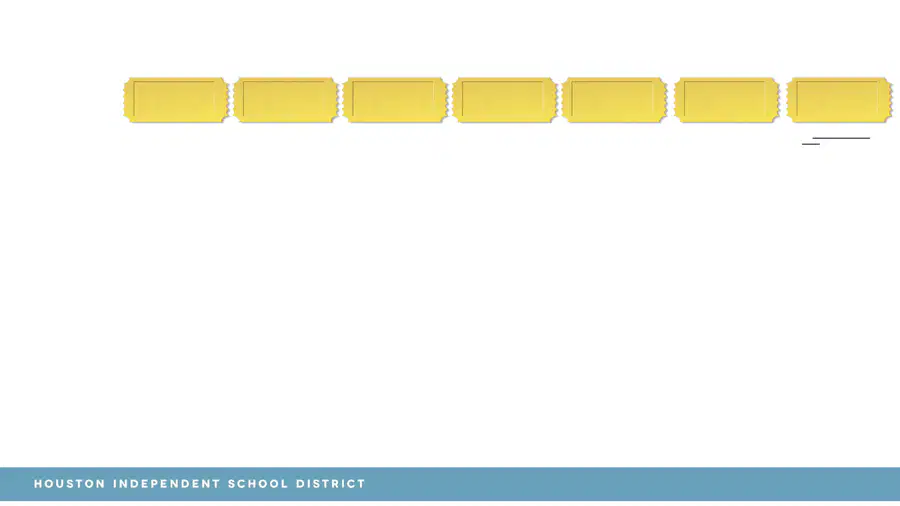
Tasha organized her tickets into an array. One of the
rows in Tasha's array is shown.
There are thirty nine rows in Tasha's array.
How many tickets does Tasha have in all?
Let's read the story problem below.
Ticket
Ticket
Ticket
Ticket
Ticket
Ticket
Ticket
Ticket
Image by Clker-Free-Vector-Images from Pixabay
37

19
How can we represent the problem?
Let's represent the story problem below.
Let’s model this problem with a strip diagram. Draw with me on your board.
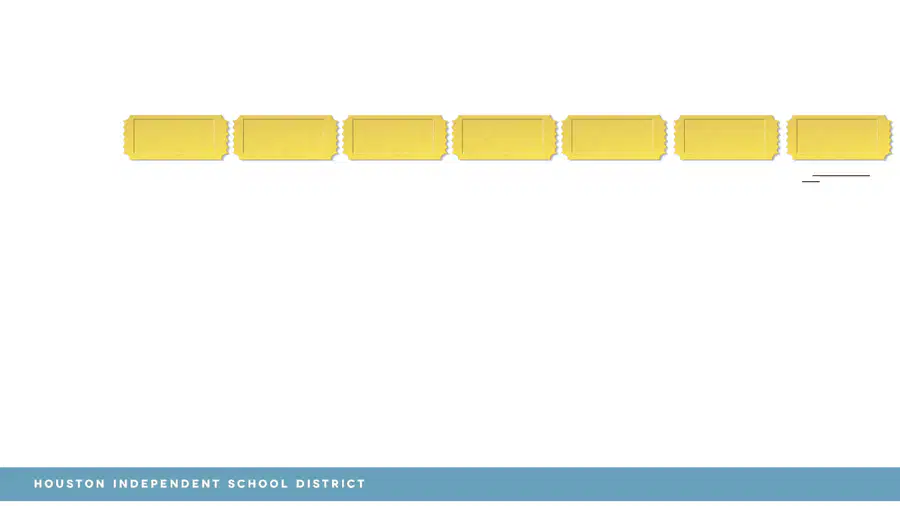
Tasha organized her tickets into an array. One of the rows in Tasha's array is
shown.
There are thirty nine rows in Tasha's array. How many tickets does Tasha have
in all?
Ticket
Ticket
Ticket
Ticket
Ticket
Ticket
Ticket
Ticket
Image by Clker-Free-Vector-Images from Pixabay
38


20
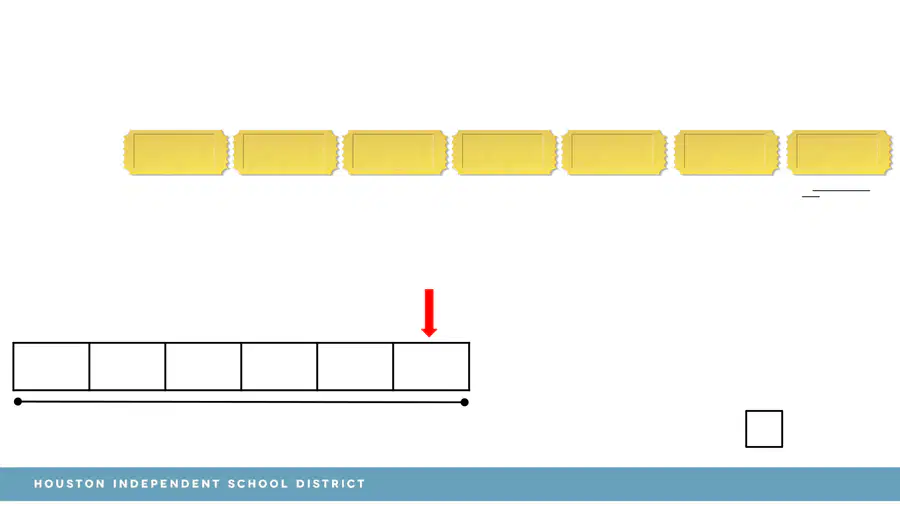
Tasha organized her tickets into an array. One of the rows in Tasha's array is
shown.
There are thirty nine rows in Tasha's array. How many tickets does Tasha have in
all?
Ticket
Ticket
Ticket
Ticket
Ticket
Ticket
Ticket
Ticket
Image by Clker-Free-Vector-Images from Pixabay
What operation would you use to solve this problem? Why?
Equation:
Tasha has _____ tickets.
39

21
Tasha organized her tickets into an array. One of the rows in Tasha's array is
shown.
There are thirty nine rows in Tasha's array. How many tickets does Tasha have in
all?
Ticket
Ticket
Ticket
Ticket
Ticket
Ticket
Ticket
Ticket
Image by Clker-Free-Vector-Images from Pixabay
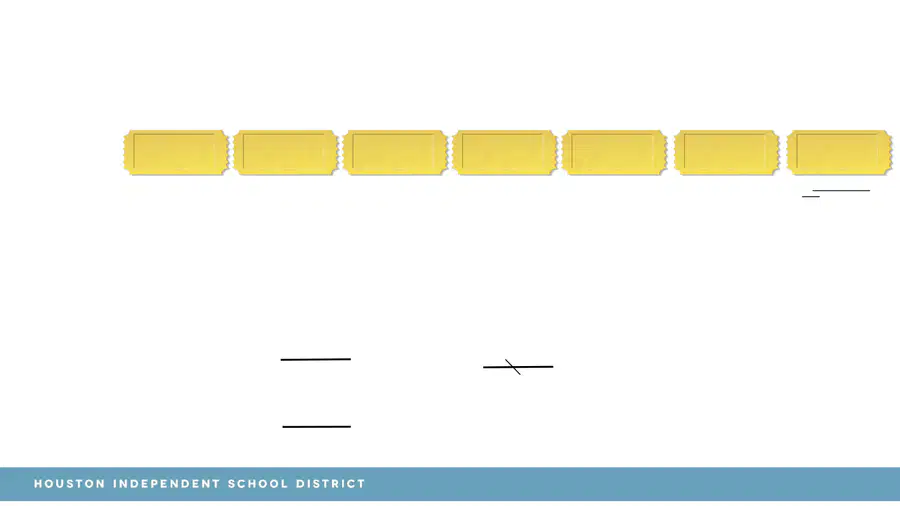
Teacher Exemplar
8
8
8
8
8
…
This is referencing a continuous number of
groups or rows, since there are 39 rows.
?
G: 39 rows
E: 8 tickets
T: ? tickets
Equation: 39 x 8 =
Row 1
40

22
Tasha organized her tickets into an array. One of the rows in Tasha's array is
shown.
There are thirty nine rows in Tasha's array. How many tickets does Tasha have in
all?
Ticket
Ticket
Ticket
Ticket
Ticket
Ticket
Ticket
Ticket
Image by Clker-Free-Vector-Images from Pixabay
Teacher Exemplar
Partial Products
Standard Algorithm
3 9
x 8
72 (8 x 9)
240 (8 x 30)
312
3 9
x 8
312
7
Tasha bought 312 tickets.
+
41

26
Story Problem
Ben has 34 bags. He put 6 party favors in each bag.
How many party favors are there in total?
Solve the story problem using partial products or standard algorithm.
42


27
Story Problem
Ben has 34 bags. He put 6 party favors in each bag.
How many party favors are there in total?
A.
42
B.
204
C.
40
D.
184
Ben has ______ party favors in total.
43


SW multiply a two-digit number by a one-digit number using partial
products and standard algorithm correctly on 4 out of 5 questions.
3rd Grade Mathematics
December 12, 2023
Show answer
Auto Play
Slide 1 / 43
SLIDE
Similar Resources on Wayground

39 questions
Global Winds and Coriolis Effect
Presentation
•
6th Grade
38 questions
Distance On the Coordinate Plane
Presentation
•
6th Grade
41 questions
Non-Fiction Text Types and Features
Presentation
•
5th - 6th Grade
38 questions
{HM2}-Tin5- Bài 6. Chỉnh sửa văn bản
Presentation
•
5th Grade
39 questions
Food and nutrition
Presentation
•
4th Grade
38 questions
MESIN RINGKAS
Presentation
•
6th Grade
40 questions
Work and Power
Presentation
•
KG
39 questions
Properties of Matter (2. Thermal Conductivity)
Presentation
•
5th Grade
Popular Resources on Wayground
24 questions
PBIS-HGMS Day 10

Quiz
•
6th - 8th Grade
10 questions
HCS SCI 03 Summer School Review 3
Quiz
•
3rd Grade
11 questions
Home Scope
Quiz
•
7th - 8th Grade
15 questions
HCS SCI 05 Summer School Assessment 3 Review
Quiz
•
5th Grade
35 questions
Lufkin Road Middle School Student Handbook & Policies Assessment
Quiz
•
7th Grade
18 questions
Geo 11.3 Area of Circles and Sectors
Quiz
•
9th - 11th Grade