
Matter and Energy in Earth's System

Presentation
•
Science
•
6th - 8th Grade
•
Practice Problem
•
Medium
+10
Standards-aligned

Nathan Flajole
Used 39+ times
FREE Resource
13 Slides • 4 Questions
1

2
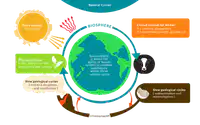
The rock cycle and the water cycle are two important parts of matter and energy in earths system.


3

4

5
Earth's Dynamic Systems
Explore the interactions among Earth's components that work together to create a dynamic system. Learn about the matter and energy involved in Earth's system, including the water cycle driven by the heat of the sun. Discover how these components shape our planet and impact our daily lives.
6
Multiple Choice
Which component of Earth's system is driven by the heat of the sun?
Atmosphere
Biosphere
Hydrosphere
Lithosphere
7
Heat of the Sun
Trivia: Did you know that the hydrosphere is driven by the heat of the sun? The sun's energy causes water to evaporate from oceans, lakes, and rivers, forming clouds. These clouds then release the water as rain, snow, or hail, replenishing the hydrosphere. It's a continuous cycle that keeps our planet's water system in balance!
8
Earth's Dynamic Systems
The Earth's system is composed of four interconnected subsystems: the geosphere (rocks and metals), the hydrosphere (holds all of Earth's water), the atmosphere (thin envelope of gases that contains the weather), and the biosphere (contains all living things on Earth). Additionally, the cryosphere refers to the frozen parts of the Earth's system. Each subsystem plays a crucial role in shaping and sustaining our planet.
9

The earths spheres
10
Multiple Choice
Which subsystem of the Earth's system holds all of Earth's water?
Geosphere
Hydrosphere
Atmosphere
Biosphere
11
Hydrosphere
The hydrosphere is the subsystem of the Earth's system that holds all of Earth's water. It includes all the water on Earth, including oceans, lakes, rivers, groundwater, and even water vapor in the atmosphere. The hydrosphere plays a crucial role in regulating Earth's climate and supporting life on our planet.
12
Interactions and Feedback in Earth's Systems
1. Changes in the cryosphere can impact the geosphere. 2. Land that gains weight can rise slowly. 3. Land that loses weight can sink slowly. 4. Systems provide feedback, which can cause changes or maintain stability. 5. Melting glaciers are an example of positive feedback, adding water to the hydrosphere.
13
Multiple Choice
Which of the following statements about Earth's dynamic systems is true?
Changes in the cryosphere can impact the geosphere.
Land that gains weight can rise slowly.
Land that loses weight can sink slowly.
Systems provide feedback, which can cause changes or maintain stability.
Melting glaciers are an example of positive feedback, adding water to the hydrosphere.
14
Melting Glaciers
Melting glaciers are an example of positive feedback, adding water to the hydrosphere. This process contributes to rising sea levels and impacts coastal areas. Glacial meltwater also plays a crucial role in maintaining freshwater ecosystems and supporting biodiversity. The accelerated melting of glaciers due to climate change is a significant concern for global water resources and climate stability.
15
Greenland's Changing Landscape
Melting glaciers in Greenland are similar to the way two boats sit in water. Just as the boats' positions change, the land in Greenland is also undergoing transformation. Melting glaciers lead to increased erosion and warming of the uncovered land, which further accelerates the melting process. However, the accumulation of more ice at the top of the glaciers can slow down the melting to some extent.
16
Multiple Choice
What is the impact of melting glaciers in Greenland?
Increased erosion and warming of the uncovered land
Slowing down the melting process
Formation of new landmasses
Decreased sea levels
17
Melting Glaciers in Greenland
Trivia: The impact of melting glaciers in Greenland includes increased erosion and warming of the uncovered land. This leads to the formation of new landmasses and decreased sea levels. The melting process is not slowed down by the melting glaciers.
Show answer
Auto Play
Slide 1 / 17
SLIDE
Similar Resources on Wayground

14 questions
Homologous Structures and Superposition
Presentation
•
6th - 8th Grade
16 questions
Catastrophic Events & Aquatic Biomes
Presentation
•
6th - 8th Grade
16 questions
Identifying Variables, Control and Experimental Groups
Presentation
•
6th - 8th Grade
12 questions
Living Things
Presentation
•
KG
10 questions
Homeostasis
Presentation
•
6th - 8th Grade
14 questions
Homeostasis and Cellular Transport
Presentation
•
6th - 8th Grade
15 questions
Muscular System Review
Presentation
•
6th - 8th Grade
12 questions
Biotechnology - GMO - 1/5/2020
Presentation
•
6th - 7th Grade
Popular Resources on Wayground
10 questions
Safety Day 2026 – Student Review

Quiz
•
9th Grade
21 questions
Continents and Oceans
Quiz
•
6th Grade
20 questions
Parts of Speech
Quiz
•
5th Grade
16 questions
Subject & Predicate
Quiz
•
5th Grade
25 questions
Multiplication Facts
Quiz
•
5th Grade
12 questions
Map Skills
Quiz
•
3rd Grade
22 questions
Continents and Oceans
Quiz
•
5th Grade
15 questions
Rounding Decimals
Quiz
•
5th Grade
Discover more resources for Science
20 questions
Newton's Laws of Motion
Quiz
•
8th Grade
20 questions
Elements, compounds, and mixtures
Quiz
•
6th Grade
10 questions
6.6D - Relative Density Review
Quiz
•
6th Grade
15 questions
potential and kinetic energy
Quiz
•
8th Grade
21 questions
Newton's Laws of Motion
Quiz
•
8th Grade
20 questions
Elements, Compounds and Mixtures
Quiz
•
8th Grade
10 questions
Exploring Chemical and Physical Changes

Interactive video
•
6th - 10th Grade
20 questions
CONDUCTION,CONVECTION AND RADIATION
Quiz
•
6th Grade