
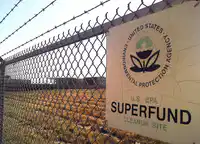
Superfund Sites EMS 596

Presentation
•
English
•
4th - 7th Grade
•
Practice Problem
•
Hard
Standards-aligned

Ari Berntsen
Used 3+ times
FREE Resource
12 Slides • 6 Questions
1
Superfund Sites

Superfund Sites
2
Objectives
By the end of this lesson, students will be able to:
Correctly identify what a Superfund site is with 80% accuracy.
Correctly identify the characteristics of hazardous wastes with 80% accuracy.
Correctly identify who is responsible for the clean up and cost of a Superfund site with 80% accuracy.
Intended audience: Grade 12 - Adults
3
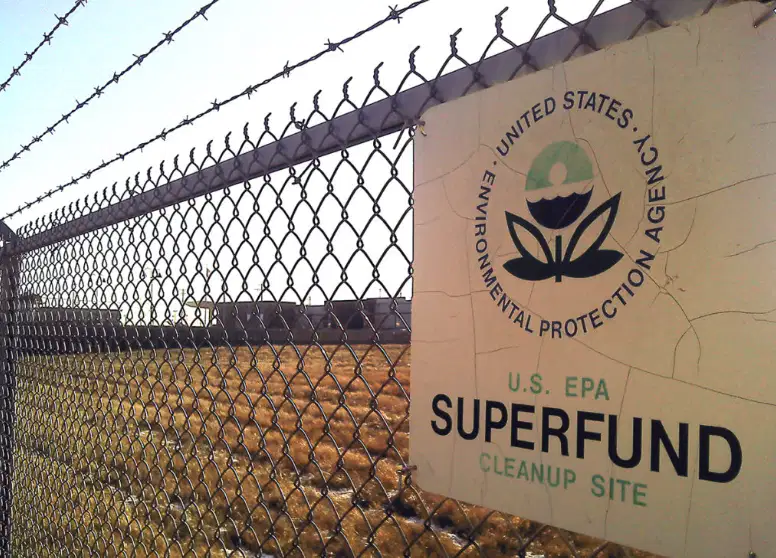
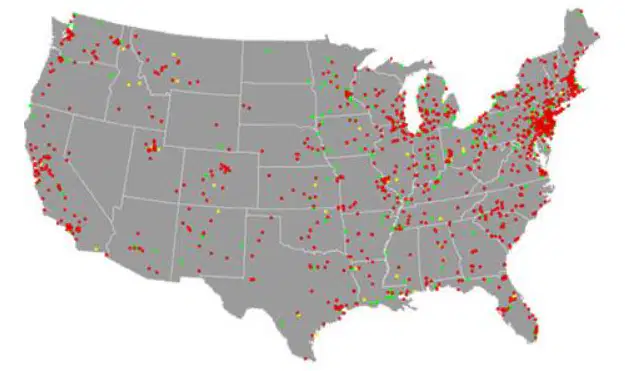
Superfund requires EPA to deal with abandoned, accidentally spilled, or illegally dumped hazardous substances from the past, primarily from businesses and industry.
The U.S. Congress passed the Comprehensive Environmental Response, Compensation, and Liability Act (CERCLA) in response to growing concern about health and environmental threats from hazardous waste sites. This law is commonly called Superfund.
What is Superfund?

4
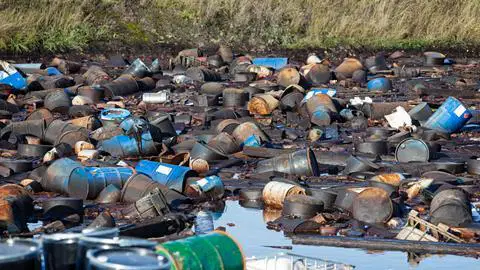
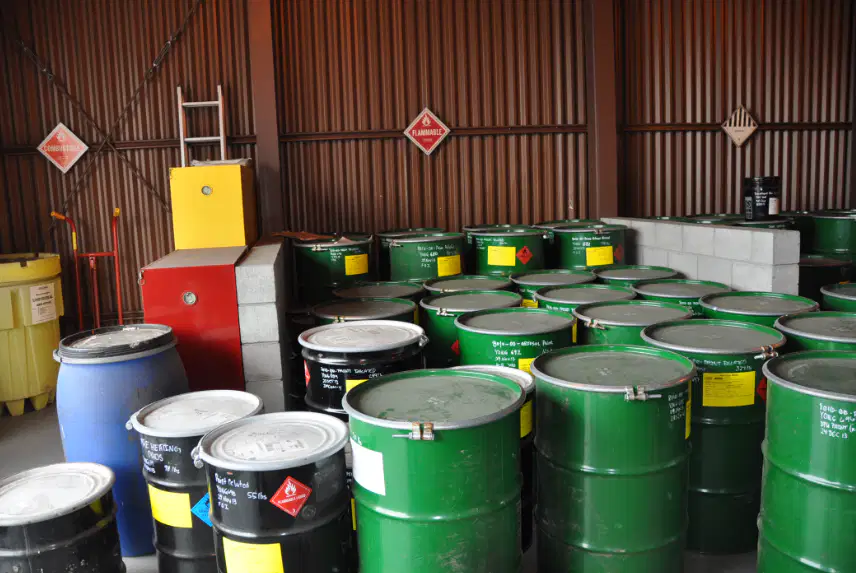
What is hazardous waste?
By-products of society that can pose a substantial or potential threat to human health or the environment when improperly managed.
A waste product with one or more of the following characteristics: ignitable (it can catch fire easily), corrosive (it can eat away material), reactive (it reacts violently or harmfully), or toxic (it is poisonous).
5
An early action is used at a site posing a threat in the near future by preventing human contact with contaminants such as providing clean drinking water to a neighborhood, removing hazardous materials from the site, or preventing contaminants from spreading. Early actions may last a few days or up to five years.
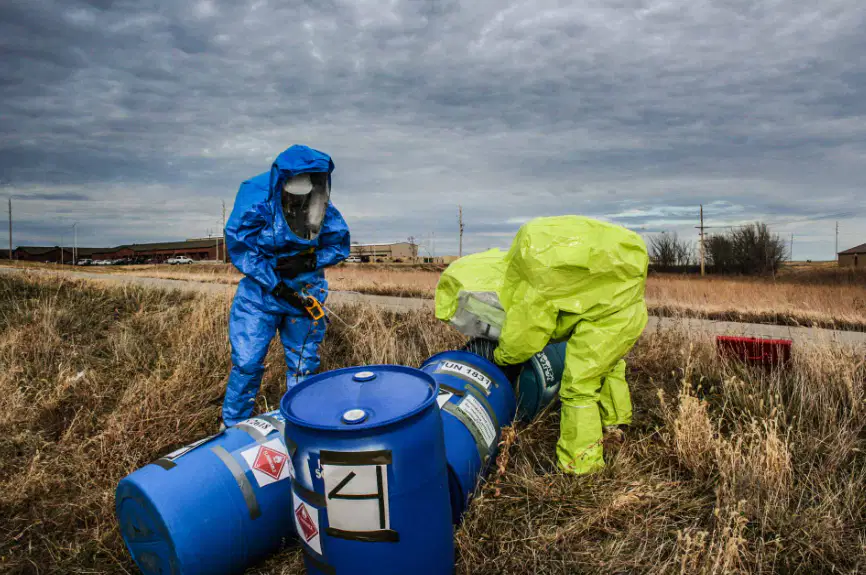
An emergency response is used at a site that requires immediate action to eliminate serious risks to human health and the environment (for example, cleaning up chemicals spilled from an overturned truck on the highway).
EPA Response Actions
A long-term action is used at a site where cleanup may take many years or decades (groundwater cleanups are frequently in this category). Often both early and long-term actions are performed at the same time. For example, leaking storage drums may be removed in an early action while contaminated soil is cleaned up under a long-term action.
6
Open Ended

How does the EPA find out about Superfund sites?
7
Reports by citizens, a reported accident, or planned searchs to discover sites.
EPA first reviews a site to decide what needs to be done. EPA collects information, inspects the area, and talks to people in the community to find out how the site affects them and the environment. Some sites don't require any action.
8
How does the EPA determine risk?
The Hazard Ranking System (HRS)
EPA uses the information it collected to score a site according to the risk it poses to people's health and the environment. To give an HRS score to a site, EPA looks at migration pathways - how contamination moves in the environment. EPA examines four migration pathways:
Groundwater that may be used for drinking water
Surface water used for drinking water, as well as for plant and animal habitats
Soil that people may come in contact with or that can be absorbed lower in the food chain
Air that carries contaminants.
9
Why is clean up so difficult?
Different substances interact with groundwater, surface water, soil and air in different ways.
Let's experiment!

10
The NPL
Sites that get a high score on the HRS can be put on the National Priorities List (NPL). The NPL is a list of the nation's worst hazardous waste sites that qualify for extensive, long-term cleanup action under Superfund. Once a site is placed on the NPL, a more detailed study further pinpoints the cause and extent of contamination, as well as the risks posed to people and the environment nearby. This information helps identify different ways to clean up the site.

11
Poll
What's the average cost of cleaning up a Superfund site?
$250, 000
$43,000,000
$500,000
$75,000,000
12
Who pays for cleanup?
The law says EPA can make the people responsible for contamination pay for site studies and cleanup work. EPA negotiates with these Potentially Responsible Parties (PRPs) to reach an agreement. Sometimes EPA pays for the cleanup out of a pool of money called the Superfund and then tries to make PRPs pay back the costs. Superfund money comes mainly from taxes on chemical and petroleum industries.
13
$43,000,000

15
Multiple Select
What is Superfund site?
A Federal program that is in charge of all environmental laws of the United States.
A Federal program that cleans up the nation's worst hazardous waste sites.
A collection of all Federal and state laws that regulate hazardous materials.
A fund made up of Federal tax revenues used to pay for hazardous waste site cleanups.
16
Multiple Select
What is meant by the term "hazardous waste?"
By-products of society that can pose a substantial or potential threat to human health or the environment when improperly managed.
Mercury in a thermometer.
A waste product with one or more of the following characteristics: ignitable (it can catch fire easily), corrosive (it can eat away material), reactive (it reacts violently or harmfully), or toxic (it is poisonous).
What you had for dinner last night.
17
Multiple Select
Who pays for the sites to be cleaned up?
Organizations and people responsible for contamination at the sites.
EPA through the Superfund trust fund, if responsible parties cannot be identified or cannot perform the cleanup.
The public through a sales tax.
Federal agencies, such as the U.S. Department of Energy, that are responsible for site contamination.
18
Multiple Select
Who is responsible for cleaning up hazardous waste sites?
The U.S. Environmental Protection Agency.
State and local environmental agencies.
The U.S. Coast Guard.
Organizations and people responsible for contamination at the sites.
Superfund Sites
Superfund Sites
Show answer
Auto Play
Slide 1 / 18
SLIDE
Similar Resources on Wayground

13 questions
Punctuating Dialogue
Presentation
•
3rd - 7th Grade
13 questions
Prefix Re- Definitions
Presentation
•
4th - 8th Grade
11 questions
Capitalization- Titles
Presentation
•
4th - 8th Grade
15 questions
Present Simple
Presentation
•
4th - 6th Grade
14 questions
Summarizing text types based on element
Presentation
•
4th - 6th Grade
17 questions
Identifying Claims
Presentation
•
4th - 7th Grade
10 questions
Subject Verb Agreement
Presentation
•
4th - 6th Grade
13 questions
Noun Types
Presentation
•
5th - 7th Grade
Popular Resources on Wayground
24 questions
PBIS-HGMS Day 10

Quiz
•
6th - 8th Grade
10 questions
HCS SCI 03 Summer School Review 3
Quiz
•
3rd Grade
11 questions
Home Scope
Quiz
•
7th - 8th Grade
15 questions
HCS SCI 05 Summer School Assessment 3 Review
Quiz
•
5th Grade
35 questions
Lufkin Road Middle School Student Handbook & Policies Assessment
Quiz
•
7th Grade
18 questions
Geo 11.3 Area of Circles and Sectors
Quiz
•
9th - 11th Grade