Search Header Logo
SEV1c Biogeochemical Cycles

SEV1c Biogeochemical Cycles

Assessment

Presentation

•

Science

•

9th - 12th Grade

•

Medium

•
MS-LS2-3, MS-ESS2-1, MS-ESS2-4

+7

Standards-aligned

Created by

Zena Johnston

Used 12+ times

FREE Resource

15 Slides • 20 Questions

1

The Biogeochemical Cycles

SEV1. Obtain, evaluate, and communicate information to investigate the flow of energy and cycling of matter within an ecosystem. 


C. Analyze and interpret data to construct an argument of the necessity of biogeochemical cycles (hydrologic, nitrogen, phosphorus, oxygen, and carbon) to support a sustainable ecosystem.

2

3

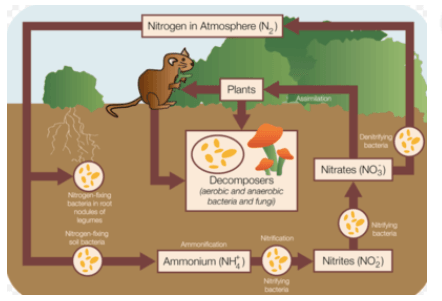
The Nitrogen Cycle

The nitrogen cycle is a vital process in nature that converts nitrogen from the atmosphere into forms that can be used by living organisms. It involves several steps: nitrogen fixation, nitrification, assimilation, ammonification, and denitrification.

The nitrogen cycle is a repeating cycle of processes during which nitrogen moves through both living and non-living things: the atmosphere, soil, water, plants, animals and bacteria. In order to move through the different parts of the cycle, nitrogen must change forms.

media

4

media
  • Nitrogen fixation: Conversion of atmospheric nitrogen into ammonia by nitrogen-fixing bacteria.

  • Nitrification: Conversion of ammonia into nitrite and then into nitrate by nitrifying bacteria.

  • Assimilation: Incorporation of nitrate and ammonia into organic compounds by plants and other organisms.

  • Ammonification: Decomposition of organic nitrogen compounds into ammonia by bacteria and fungi.

  • Denitrification: Conversion of nitrate back into atmospheric nitrogen by denitrifying bacteria.

​

5

Multiple Choice

Question image

A correct path that nitrogen could take would be

1

air -> animals -> plants -> bacteria

2

animals -> air -> bacteria -> plants

3

bacteria -> air -> plants -> animals

4

air -> bacteria -> plants -> animals

6

Multiple Choice

Question image

How is nitrogen "fixed" into a usable form for plants?

1

Through action of bacteria only

2

Through lightning only

3

Through action of bacteria and lightning

4

Through photosynthesis

7

media

Legumes are the best nitrogen-fixing plants. They add nitrogen to the soil naturally. Clover are a common plant that fixes nitrogen.

The picture of the roots above show the nodules where the nitrogen fixing bacteria live.

Nitrogen Fixing Plants
media

8

Multiple Choice

Question image

You are weeding your garden when you accidentally expose some roots of your pea plants. You notice swellings (root nodules) on the roots and there is a reddish tinge to the ones you accidentally damaged. Most likely your peas plants

1

suffer from missing needed minerals.

2

are infected with a parasite.

3

are benefiting from a mutualistic bacteria.

4

are growing more plants from the roots.

9

Multiple Select

Question image

Choose the plants that are examples of legumes. You will need to select more than one correct answer.

1

peas

2

wheat

3

corn

4

clover

5

beans

10

  • Weathering

  • Absorption

  • Decomposition

  • Leaching

  • Rock Cycle

​

Phosphorus Cycle
can you find the steps?
media

11

Multiple Choice

Question image

This is NOT a part of the phosphorus cycle.

1

Phosphate is incorporated into sedimentary rocks.

2

Atmospheric phosphate

3

Phosphate bound to soil

4

Phosphate is absorbed from the soil by plants

12

The Phosphorus Cycle

  • Phosphorus is an essential nutrient for all living organisms.

  • It cycles through the environment in a series of processes.

  • Weathering of rocks releases phosphate into the soil.

  • Plants absorb phosphate and incorporate it into their tissues.

  • Animals obtain phosphorus by consuming plants or other animals.

  • Decomposers break down organic matter, releasing phosphate back into the soil

  • Phosphorus leaches into the water system.

  • Phosphates from dead organisms settle to the bottom of the water and is formed into new rocks.

13

Match

Question image

Match the following

Erosion

Weathering

Runoff

the movement of sediment by wind or wate

the breaking down of rocks

rocks, minerals, or other molecules carr

14

Multiple Select

Question image

What are the important biological factors in the Phosphorus Cycle?

1

Animals

2

Decomposers

3

Plants

4

Water

5

Rocks

15

Human Impact

Human activities such as fertilizer use add nitrogen and phosphorus to the cycle. This can lead to nutrient pollution in water bodies, causing harmful algal blooms.

media

16

Multiple Choice

Question image

What brings nutrients into waterways

1

precipitation

2

runoff

3

transpiration

4

condensation

17

Multiple Choice

Question image

Eutrophication is less likely to occur in the area

1
  1. That are surrounded by fertilized lands

2
  1. Algal bloom is already present.

3
  1. There are numerous aquatic animals

4
  1. Which are not surrounded by fertile lands

18

19

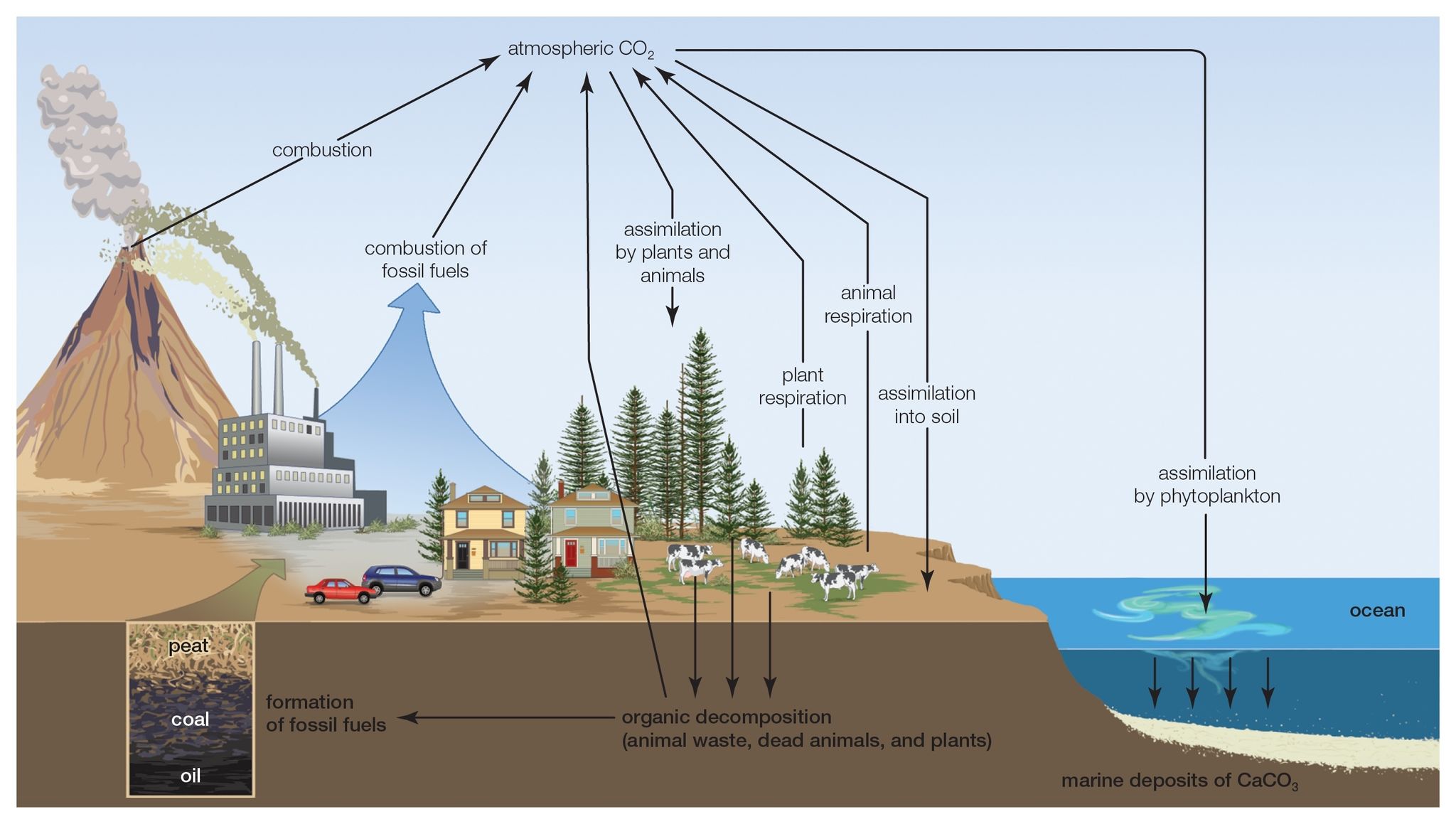
The Carbon Cycle

The carbon cycle is the process by which carbon is exchanged between the atmosphere, oceans, and living organisms. It plays a crucial role in regulating Earth's climate. Carbon dioxide is absorbed by plants during photosynthesis, transferred to animals through the food chain, and released back into the atmosphere through respiration and decomposition.
Human activities, such as burning fossil fuels, have disrupted this cycle, leading to increased carbon dioxide levels and global warming. Understanding and managing the carbon cycle is essential for mitigating climate change.

20

media

21

Multiple Choice

Question image
Which of the following add carbon dioxide to the atmosphere?
1
volcanoes
2
combustion of fossil fuels
3
animal and plant respiration
4
all of these

22

Multiple Choice

Question image
Organisms that do not decompose can be buried and become what?
1
water
2
nutrients
3
air
4
fossil fuels

23

Multiple Choice

Question image

In the carbon cycle, animals can release carbon back into the cycle through __________ or through __________.

1

burning . . . photosynthesis

2

fixation . . . decomposition

3

decomposition . . . photosynthesis

4

respiration . . . decomposition

5

respiration . . . photosynthesis

24

Multiple Choice

Combustion is another word for __________.
1
Transportation
2
Respiration
3
Fossil Fuels
4
Burning

25

media

Carbon sinks absorb more carbon than they give off. Our forests and oceans are carbon sinks.

Some processes release more carbon dioxide into the atmosphere than they absorb. Burning fossil fuels and raising cattle for food release a lot of carbon.

​

26

Multiple Select

Question image

What are two (2) ways to reduce the carbon emissions from passenger cars?

1

Use less expensive gas

2

Carpooling

3

Public Transportation

4

Driving only passenger cars

27

media

28

The Water Cycle

  • Evaporation: The process of water turning into vapor and rising into the atmosphere.

  • Condensation: The vapor cools and turns back into liquid, forming clouds.

  • Precipitation: Water falls from the clouds as rain, snow, sleet, or hail.

  • Runoff: Excess water flows over the land, collecting in rivers, lakes, and oceans.

  • Transpiration: Plants release water vapor through their leaves.

29

Multiple Choice

Which best explains why runoff is important?
1
It returns water to other locations on Earth
2
It increases the chance of flooding
3
It makes evaporation occur faster
4
It increases condensation

30

Multiple Choice

Question image
Which reservoir in the water cycle contains the most water?
1
Ice Caps
2
Lakes
3
Groundwater
4
Oceans

31

Multiple Choice

__________________ is the process by which moisture is carried through plants from roots to small pores on the underside of leaves, where it changes to vapor and is released to the atmosphere. ______________ is essentially evaporation of water from plant leaves.

1

Transpiration

2

Percolation

3

Infiltration

4

Plant Uptake

32

Match

Question image

Match the following

Evaporation

Condensation

Precipitation

Transpiration

Groundwater

A

B

C

D

E

33

Human Activities

Burning fossil fuels and deforestation are major disruptors of biogeochemical cycles. They release large amounts of carbon dioxide, leading to climate change. Additionally, excessive use of fertilizers in agriculture can cause nutrient imbalances in ecosystems. Adopting sustainable practices and reducing our ecological footprint can help mitigate these disruptions.

34

Multiple Select

What are some human activities that disrupt biogeochemical cycles?

1

Burning fossil fuels and deforestation

2

Excessive use of fertilizers in agriculture

3

Adopting sustainable practices

4

Reducing our ecological footprint

35

Multiple Choice

Question image

Humans are responsible for many negative changes in the natural environment. Which of the following best describes why humans have a profound impact on their environment?

1

Humans are able to preserve scarce resources.

2

Humans are able to modify habitats more than any other species.

3

Humans have made attempts to preserve the environment.

4

Humans have encouraged the development of wildlife refuges and parks.

pattern-tertiary
The Biogeochemical Cycles

SEV1. Obtain, evaluate, and communicate information to investigate the flow of energy and cycling of matter within an ecosystem. 


C. Analyze and interpret data to construct an argument of the necessity of biogeochemical cycles (hydrologic, nitrogen, phosphorus, oxygen, and carbon) to support a sustainable ecosystem.

Show answer

Auto Play

Slide 1 / 35

SLIDE