

Week 11-Color Theory

Presentation
•
Other
•
University
•
Practice Problem
•
Hard

Tina Belt
Used 1+ times
FREE Resource
17 Slides • 0 Questions
1

Color Theory
Week 11
2
General information
Funeral Professionals learn color theory because:
It helps us to be successful in the cosmetic side of restorative art
It helps with lighting judgment when we are casketing a decedent for a viewing
it helps us when coordinating the wardrobes of deceased persons
It helps us with decorating and presentation of the service environment
Colors also represent different things as far as mood and mourning and this can vary depending on Culture.
3
4
General information
Colors can create Moods
See page 207 in your text for a full list of colors and their corresponding meanings.
5
Light theory
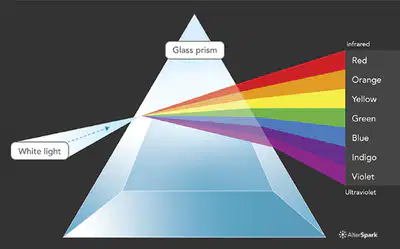
Spectrum
Colors are Arranged in ROY G BIV
Absorption and reflection
We perceive color based on how much light is reflected or absorbed.
White light is dispersed into many colors
6
Light theory
Hues- a color or shade.
Value- the lightness or darkness of a hue.
Tint- a hue into which various quantities of white are mixed.
Shade- a hue into which various quantities of black are mixed; the darkened hue.
Intensity or Chroma-brightness or dullness of a color.
Tone- a hue mixed with either a small quantity of gray or the complement of the hue, resulting in dulling the hue.
Achromatic Color- a color not found in the visible spectrum; a neutral color such as white, black, gray, and silver and gold (for decorative purposes).
Monochromatic Color- variations of one hue; tints, tones, and shades of one hue.
7
Pigment theory/Prang system (color wheel)

8
9
Pigment theory/Prang system (color wheel)
Changing the chroma of a hue with a tone
Creates a more neutral or less intense version of the color.
Harmony-Colors that look good together!
Monochromatic- Variations of one hue; tints, tones, and shades of one hue.

10
Pigment theory/Prang system (color wheel)
Analogous- two or more hues which have the same hue in common.

11
Pigment theory/Prang system (color wheel)
Complementary- directly opposite hues on the color wheel; any two pigmentary hues which, their mixture in equal quantities, produce gray.
Contrast, non-complementary-two colors that are opposite of each other

12
Pigment theory/Prang system (color wheel)
Dimensions of color
Hue- the property of a color by which it is distinguished from other colors.
Value- the lightness or darkness of a hue.
Chroma- brightness or dullness of a color
13
Pigment theory/Prang system (color wheel)
Classes of hues
Primary hue
Secondary hue
Intermediate hue

14
Pigment theory/Prang system (color wheel)
Warm hue and cool hue
Warm Colors--red, orange, and yellow families
Cool Colors- green, blue, and purple, and variations
Changing the value of a hue
Tint
Shade
Tone

15
Color in Illumination
Observe the differences in Color Illumination in this Room throughout the day....
16
Color in Illumination
Mixing colored illumination- the illumination of an identifiable hue.
Additive method- a process of mixing colored lights on a surface on which the wave lengths of
each are combined; adding two or more colored lights together to create another color of light.
Subtractive method- method of diminishing the wave lengths of light by superimposing two or more color transparencies over the same light source; the light is gradually reduced by absorption of colors in the light.
Effects of colored light and white light on colored objects
17
Color in Illumination
Effects of colored light and white light on colored objects- Refer to Page 215 in your textbook for a full spectrum of color effects.
Color Theory
Week 11
Show answer
Auto Play
Slide 1 / 17
SLIDE
Similar Resources on Wayground

14 questions
Recuperación
Presentation
•
12th Grade
12 questions
French New Wave
Presentation
•
University
14 questions
S14 casos reales
Presentation
•
University
10 questions
Dinamizar el aula. Taller 2
Presentation
•
University
10 questions
Evaluación MANIFESTACIONES ARTISTÍSTICAS
Presentation
•
KG - University
16 questions
Procesos de moldeo
Presentation
•
KG - University
13 questions
Research introduction.
Presentation
•
12th Grade
13 questions
Shutter Speed Lesson
Presentation
•
12th Grade
Popular Resources on Wayground
24 questions
PBIS-HGMS Day 10

Quiz
•
6th - 8th Grade
10 questions
HCS SCI 03 Summer School Review 3
Quiz
•
3rd Grade
11 questions
Home Scope
Quiz
•
7th - 8th Grade
15 questions
HCS SCI 05 Summer School Assessment 3 Review
Quiz
•
5th Grade
35 questions
Lufkin Road Middle School Student Handbook & Policies Assessment
Quiz
•
7th Grade
18 questions
Geo 11.3 Area of Circles and Sectors
Quiz
•
9th - 11th Grade