

BIOMOLECULES PART 1

Presentation
•
Biology
•
9th Grade
•
Medium

Michelle Baldevarona
Used 5+ times
FREE Resource
53 Slides • 12 Questions
1

Biomolecules
LC: Recognize the major categories of biomolecules such as
carbohydrates, lipids, proteins, and nucleic acids
References:
Exploring Life Through Science
Breaking Through Science
Science for the 21st Century Learner
2

3

1. I can compare the structures and functions
of carbohydrates, lipids, proteins and
nucleic acid.
2. I can explain how small building blocks can
be used to make a great variety of
molecules that are needed to perform life’s
functions.
3. I can identify common forms of
biomolecules and their functions.
4. I can show appreciations for the
applications of biomolecules to the society
and take actions on how to conserve
world’s resources.
For this unit topic, here are the learning targets
that you will need to accomplish:
Note: Use these learning targets to self-evaluate. When
you read and do activities, always go back to these goals
to check if you have achieved it.
4

YELLOW HIGHLIGHTER: DEFINE PROTEINS,
CARBOHYDRATES, LIPIDS, NUCLEIC ACIDS AND OTHER
TERMS RELATED TO BIOMOLECULES
ORANGE HIGLIGHTER: What is the general
formula for the group?
PINK HIGHLIGHTER: for the primary roles of
these molecules in living organisms
The blue highlighter: monomers and
polymers of the group
•The green highlighter is used for: names of some
specific examples of the group of molecules and
where they would be found.
TERMS
FORMULA
ROLES
MONOMERS/POLYMERS
EXAMPLES
COLOR-CODING STRATEGY
5

Try to take a look around. You are surrounded with organisms. All
organisms—plants, humans, animals, fungi, protists, and bacteria—are
composed of biomolecules. Biomolecules are macromolecules that provide the
structural framework for all living things, as well as the mechanisms needed
to perform various biological processes. A branch of chemistry called
biochemistry focuses on these biomolecules. These biomolecules can be
subdivided into four major categories—carbohydrates, lipids, nucleic acids,
and proteins. In this lesson, you are going to learn how to differentiate these
molecules from one another.
Now, how do we apply this lesson in real life?
6


When you purchase food in the
grocery store or eat something..
Do you read the nutrition facts?
Now let’s see what we got here.
Using the image on the left, try to
investigate the different amounts
of nutrients (fats/lipids,
carbohydrates and proteins)
found in each. Write your
observations in your notebook of
the nutrition information for their
food item, paying particular
attention to fats, carbohydrates
and protein content. This
means that you have a personal
connection with biomolecules.
7


• You probably remember your
parents telling you to eat all the
food on your plate to make you
healthy. Eating a variety of
food gives you a healthy
balance of carbohydrates,
proteins, fats and other
nutrients. There substances
provide the energy and raw
materials the body needs to
grow, repair worn out parts and
function properly. Most of the
nutrients in food are organic
compounds classified as
carbohydrates, lipids,
proteins and nucleic acids.
8

Study the diagram, can
you differentiate a
polymer from a
monomer?
9


Watch the video, if you were able to differentiate it right.
10


Families of Biomolecules
• Carbohydrates
•Lipids
•Proteins
•Nucleic Acids
11

Helpful Mnemonics for you! This represents the
elements mostly found in each biomolecule family.
12

Carbohydrates
How Sweet It Is!
• General formula (CH2O)n
• Simple sugars or large
molecules made of sugar
monomers
• Monosaccharides (monomer)
are covalently linked by
condensation reaction to form
polysaccharides (polymers)
13

Carbohydrates
Reflect on this question:
Why do athletes eat large amounts of rice and fruits
before a competition?
14
Open Ended
Why do athletes eat large amounts of rice and fruits before a competition?
15

Carbohydrates
Rice, pasta, bread, and fruits are rich in sugar
and starch, which are examples of
carbohydrates. A carbohydrate is an organic
molecule that contains the elements carbon,
hydrogen, and oxygen in the ratio of 1:2:1.
During digestion, carbohydrates are broken
down to simple sugars that the body can use
for energy. In effect, the athletes are storing
energy for the competition.
16

Carbohydrates are the most
abundant class of organic
compounds found in living things.
They contain the elements carbon
(C), hydrogen (H), and oxygen (O).
Carbohydrates include sugars,
starches, cellulose and many other
compounds in organisms. They are
either formed from or decomposed
into other carbohydrate forms
through the physiological processes
in plants and animals.
17

•
Thousands of glucose molecules combine to form the
much larger cellulose molecule, which constitutes the
structural framework of plants. Glucose molecules may
also fuse to form molecules of starch, which is stored in
the seeds and serve as food for a growing plant.
•
When animals, including humans, eat cellulose or
starch, the substance is broken down into glucose units,
which are carried by the blood to the liver, where they
are recombined to form glycogen (animal starch) and
stored.
•
If the body needs energy, the glycogen can be broken
down again into glucose, which is then transferred to the
tissues where it is oxidized to carbon dioxide and water,
a process that releases the energy. Some of the glucose is
converted into fats; some react with nitrogen containing
compounds to form amino acids, which in turn are
combined to manufacture proteins that comprise the
animal body.
18

19

FUNCTIONS:
1. Substrate for respiration or source of energy
2.
Intermediate
substances
in
respiration
(e.g.,
glyceraldehydes)
3. Energy storage (e.g., starch and glycogen)
4. Structure (e.g., chitin in arthropod exoskeletons and
fungal walls)
5. Transport (e.g., sucrose transported in the phloem of a
plant)
6. Recognition of molecules that pass through the cell
membrane
20


21

ANOTHER WAY OF
CLASSIFYING
CARBOHYDRATES:
22


23

• Monosaccharides (from the
Greek word -mono, which
means "single"
andsaccharum,which means
"sugar") are also called simple
sugars because they are the
monomers or basic units of
carbohydrates.
Monosaccharides serve as the
building blocks of complex
carbohydrates.
24


25


26

Polysaccharides
Three Types
• Glycogen (animal storage)
• Starch (plant energy storage)
- Easily digested by animals
through hydrolysis
• Cellulose
27

Polysaccharides are long polymers
composed of hundreds and thousands
of monosaccharides. A polymer is a
compound made up of small molecules
arranged in a repeating structure to
form a larger molecule. Glucose is the
monomer often used to form these
carbohydrates. Polysaccharides may
either serve as energy storage or as
structural component.
28


29


Sugars and Structures:
• Monosaccharides
– Five carbon: Ribose
– Six carbon: glucose and fructose
•Disaccharides
–Sucrose
–Lactose
•Polysaccharides
–Starch
–Cellulose
–Glycogen
30
Multiple Choice
Which of the following is an example of monosaccharides?
Maltose
Lactose
Fructose
Glycogen
31
Multiple Choice
Cellulose is a _________
Disaccharide
Oligosaccharide
Monosaccharide
Polysaccharide
32
Multiple Choice
Humans break carbohydrates down during what process?
Protein Synthesis
Metabolism
Amino Acids
None of the Choices
33

Worksheet #1
Glucose is soluble in water. Why
is cellulose, which is made up
glucose, insoluble in water?
(In answering worksheets, make sure to write
the question first, then give the answers.
34

Lipids
35

The
ROLE
LIPIDS
36
Multiple Choice
Carbs and lipids are similar because they...
Are a source of energy for living organisms
Contain the same elements (CHON)
Help with immune response
build structures such as cellulose and chitin
37

Similar to carbohydrates, lipids also contain hydrogen, carbon,
and oxygen. Unlike carbohydrates, however, they are
water-insoluble. And although they may also form chains, they
do not have monomers because lipids are structurally diverse.
Based on structural and physical characteristics, you can classify
lipids as fatty acids, waxes, steroids, triacylglycerols, or
phospholipids. Lipids are present in waxes, butter, and vegetable
oils. Lipids have a variety of functions:
l . Serve as energy storage
2. Acts as a signaling molecule
3. Give thermal insulation
4. Facilitate absorption of fat-soluble
vitamins
5. Component of cell membranes
38

39


Lipids
• Long-term energy storage (more than twice as
much energy per gram as carbohydrates.
• Generally insoluble in water
• Structural components of cells (phospholipids)
• Cellular messengers (hormones)
40

41


Fatty acids consist of a long, hydrophobic
nonpolar hydrocarbon "tail" and a
hydrophilic polar carboxylic acid functional
group at the "head." Natural fatty acids may
be saturated or unsaturated. The saturated
fatty acids have no carbon-carbon double
bonds, while unsaturated fatty acids contain
one or more double bonds in the
hydrocarbon chain. Saturated fatty acids have
higher melting points than unsaturated fatty
acids of the same size. The fatty acids shown
below are lauric acid, a saturated fatty acid
found in coconut oil; and oleic acid, an
unsaturated fatty acid found in animal fat.
42
Multiple Choice
What are the building blocks of lipids?
Nucleotides
Monosaccharides
Amino Acids
Fatty Acids
43
Multiple Choice
What is the common name for lipids?
Lubes
oils
waxes
Fats
44


45


•Phospholipids also have a glycerol backbone
attached to fatty acids (called the "tails").
However, one of the fatty acids is replaced by a
phosphate "head." In addition, the "tails" may
be composed of saturated and unsaturated fatty
acids. Unsaturated fatty acids cause a kink in its
chain.
•Cell membranes take advantage of these split
tendencies by lining up two layers of
phospholipids, with the nonpolar parts facing
toward each other. The result is a barrier
between the inside and outside of the cell. This
is called the phospholipid bilayer.
11 April 2023
INTRO
40
46


More FAT
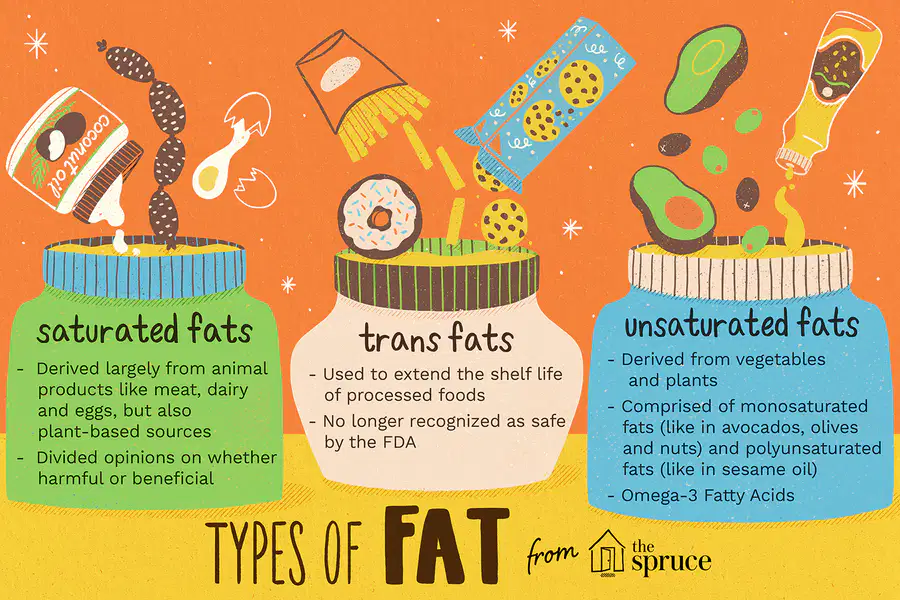
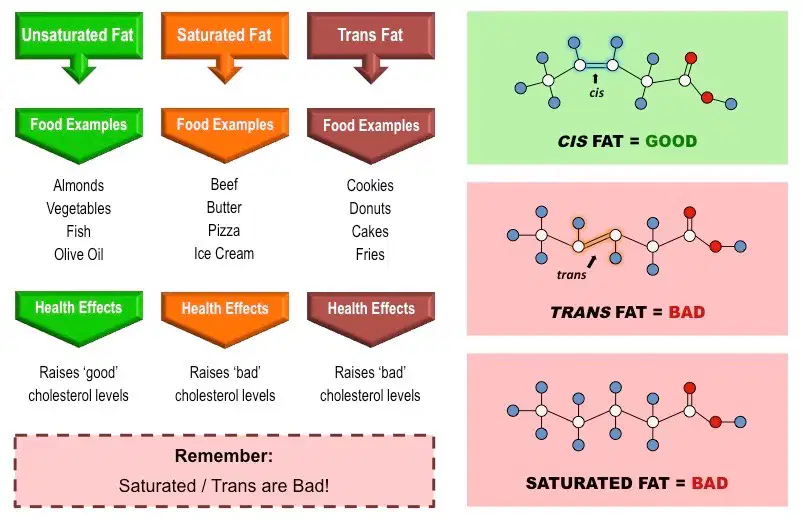
• Triglycerides are composed of three fatty
acids covalently bonded to one glycerol
molecule
•Fatty acids are composed of CH2 units and are
hydrophobic
•Fatty acids can be saturated (all single bonds)
or unsaturated (one or more double bonds)
•A fat (mostly saturated) is solid at room temp.
while an oil (mostly unsaturated) is liquid at
room temp.
47


Phospholipids
• Important structural component of
cell membranes
• Phosphate group (head) is polar
and water soluble (hydrophilic)
• Fatty acid tails are hydrophobic
•This allows the phospholipids to
form bilayers and membranes
48


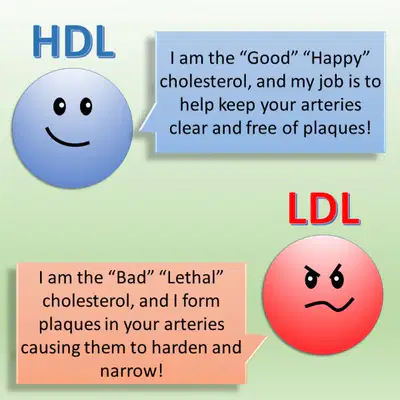
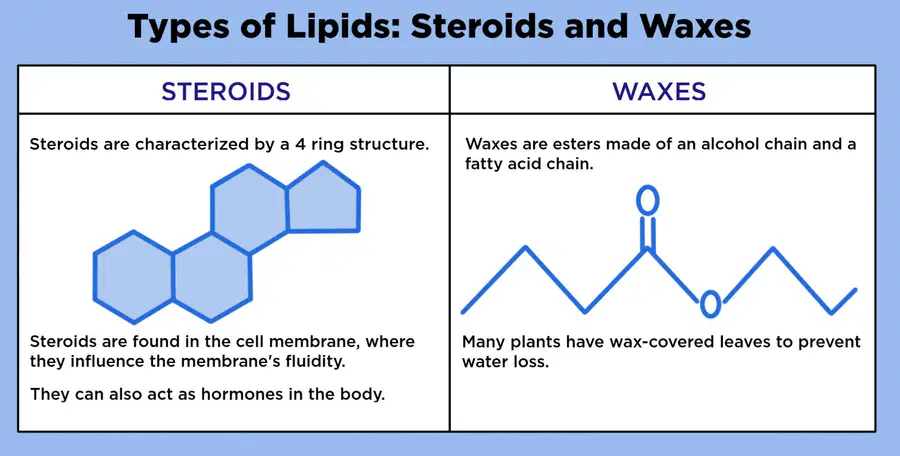
Other Lipids
•Steroids
•Cholesterol
•Hormones
•Waxes
49
50
51
Multiple Choice
One of the biological functions of lipids is it enhances signaling in the body. What body systems is responsible for sending messages and signals all throughout the body?
Circulatory System
Muscular System
Nervous System
Integumentary System
52


53


54
55
56
Multiple Choice
Which of the following items might be high in saturated fat?
ice cream
Whole Wheat Bread
Broccoli
57
Multiple Choice
Why is saturated fat found in so many animal products?
Because it's part of the cell membranes of animal tissues
Because animals must eat saturated fat to survive
Because proteins are broken down into saturated fat when animals die
58
Multiple Choice
Why don't we need to get cholesterol from food?
We do need to eat cholesterol for our body to function properly.
It has been linked to causing cancer in individuals who consume it regularly.
Our body produces all the cholesterol we need for it to function properly.
59
Multiple Choice
What is the difference between HDL cholesterol and LDL cholesterol?
There really is no difference between these types of cholesterol
HDL is "good" of cholesterol that reduces the risk of heart disease and LDL is "bad" cholesterol which increases the risk of heart disease.
HDL is "bad" of cholesterol that reduces the risk of heart disease and LDL is "good" cholesterol which increases the risk of heart disease.
60


Sing-a-long!
61

Worksheet #2
Which lipids are recommended
to include in your diet?
(In answering worksheets, make sure to write the
question first, then give the answers.
62


Please feel free to
message your Science
Teacher for clarification!
63

PROCESS QUESTIONS:
WHY
BIOMOLECULES
IMPORTANT?
64

As a
Lasallian,
how can
you translate
what you had
learned into
something
useful?
65

The End
Biomolecules
LC: Recognize the major categories of biomolecules such as
carbohydrates, lipids, proteins, and nucleic acids
References:
Exploring Life Through Science
Breaking Through Science
Science for the 21st Century Learner
Show answer
Auto Play
Slide 1 / 65
SLIDE
Similar Resources on Wayground

63 questions
Biogeochemical Cycles Review
Presentation
•
9th Grade
61 questions
11.1 PEWARISAN MONOHIBRID
Presentation
•
8th Grade
60 questions
What the Bible says about God
Presentation
•
9th Grade
60 questions
Cells and Cell Processes
Presentation
•
10th - 12th Grade
63 questions
Form 3 Reading Practice
Presentation
•
9th Grade
60 questions
3B Test
Presentation
•
9th Grade
61 questions
Lesson: Newton, Force, and Acceleration
Presentation
•
9th Grade
57 questions
Monday 10.11 primary
Presentation
•
9th Grade
Popular Resources on Wayground
24 questions
PBIS-HGMS Day 10

Quiz
•
6th - 8th Grade
10 questions
HCS SCI 03 Summer School Review 3
Quiz
•
3rd Grade
11 questions
Home Scope
Quiz
•
7th - 8th Grade
15 questions
HCS SCI 05 Summer School Assessment 3 Review
Quiz
•
5th Grade
35 questions
Lufkin Road Middle School Student Handbook & Policies Assessment
Quiz
•
7th Grade
18 questions
Geo 11.3 Area of Circles and Sectors
Quiz
•
9th - 11th Grade