

Y10 Chapter 2 Revision Slide

Presentation
•
Computers
•
10th Grade
•
Practice Problem
•
Easy

David Kang
Used 2+ times
FREE Resource
36 Slides • 33 Questions
1
Direct Data Entry Devices
Chapter 2
2
Draw
Draw out the image of Magnetic Stripe Reader
3
Draw
Draw out the Contactless Card Reader
4


Magnetic Stripe Readers
Contactless debit card readers
Chip & Pin Readers
Card Readers
5

devices that read data encoded on a magnetic stripe found on the back of various cards, such as credit cards, debit cards, and identification cards.
They work by converting the magnetic field changes into electrical signals, which are then decoded into usable data.
These readers are commonly used in retail stores, ATMs, and other points of sale for processing payments or verifying identification.
Magnetic Stripe Reader
6
Advantages of Magnetic Stripe Reader
Fast Data entry, rather than keying in with a keyboard or keypad.
Error-free (because no typing is involved)
Secure (information not in human readable form and because there is no typing, removes the risk of somebody observing your keystrokes.
7
Disadvantages of Magnetic Stripe Reader
Magnetic stripe gets damage (for example, due to exposure to a strong magnetic field) the data is lost
Does not work at a distance.
The information is not human readable, this can be a disadvantage in some applications.
8
Multiple Choice
What type of cards are typically compatible with magnetic stripe readers?
Credit cards only
Debit cards only
Identification cards only
Credit, debit, and identification cards
9
Multiple Choice
Which of the following is a disadvantage of magnetic stripe readers?
Low compatibility
Limited data storage capacity
High cost
User-unfriendly interface
10
Multiple Choice
How do magnetic stripe readers work?
By scanning a barcode
By reading an embedded microchip
By converting magnetic field changes into electrical signals
By using radio frequency identification (RFID) technology
11

devices that enable the processing of payments without the need for physical contact between the card and the reader.
When a card or device is brought close to the reader, data is transmitted wirelessly, allowing for a quick and convenient payment transaction.
These readers are increasingly popular in various sectors, including retail, public transportation, and hospitality
Contactless Debit Card Reader
12
Advantages of Contactless Debit Card Reader
faster transactions (typical transaction takes 10 seconds success post to 30 seconds )
Contactless card system days is 128 bit encryption system to protect the data
Customers do not have to worry about typing errors
13
Disadvantages of Contactless Debit Card Reader
They are more expensive than normal credit debit cards
a thief with a suitable reader could monitor your contactless card transaction was standing at the counter with you
can take money twice, if the customer uses it as a chip and pin card
14
Multiple Choice
Which technology is commonly used in contactless debit card readers?
Infrared
Bluetooth
Radio Frequency Identification (RFID) or Near Field Communication (NFC)
Magnetic field changes
15
Multiple Choice
What is one of the main advantages of contactless debit card readers?
Enhanced security features
Speed and convenience
Offline transaction processing
Unlimited transaction amounts
16
Multiple Choice
What is a potential concern when using contactless debit card readers?
Longer transaction times
Limited card compatibility
Data interception or unauthorized transactions
Inability to process mobile device payments
17

These readers require the cardholder to enter a Personal Identification Number (PIN) to authenticate the transaction, ensuring an added layer of security.
The chip on the card stores the necessary data and communicates with the reader when the card is inserted into the device.
Chip and Pin readers have become the global standard for card payments, offering improved security against fraud compared to magnetic stripe readers.
Chip and Pin Reader
18
Advantages of Chip and Pin Reader
more secure system down, contactless payment
More robust system that magnetic stripe cards
19
Disadvantages of Contactless Debit Card Reader
Fraud - need to be careful to ensure pin is not read by somebody else while typing it in
20
Multiple Choice
Which organization's acronym represents the global standard for Chip and Pin technology?
RFID
NFC
Mastercard, and Visa
PIN
21
Multiple Choice
What makes Chip and Pin transactions more secure compared to magnetic stripe payments?
The use of an embedded microchip and PIN authentication
Increased data storage capacity
Faster transaction times
Compatibility with mobile payment platforms
22
Multiple Choice
What is a disadvantage of using Chip and Pin readers?
Limited compatibility with global card issuers
Inability to process offline transactions
People may peek or record over your pin number
Lack of security features
23

Radio Frequency Identification (RFID) readers
RFID technology uses radio waves to transmit data between an RFID tag and a reader.
The tags can store a range of information, and the readers can access this information wirelessly from a distance.
24
Advantages of RFID
Contactless and efficient data transfer
Durable tags suitable for different environments
Capability to read multiple tags at once
25
Disadvantages of RFID
Higher implementation costs compared to barcodes
Possible radio wave interference affecting readings
Security risks due to data interception or tampering
26
Multiple Choice
What does RFID stand for?
a) Radio Frequency IDentification
b) Radio Frequency Interaction Device
c) Remote Field Information Database
d) Restricted to small data storage
27
Multiple Choice
RFID tags are:
a) Contactless and durable
b) Easily damaged and complex
c) Limited to line-of-sight
d) Restricted to small data storage
28
Multiple Choice
A disadvantage of RFID is:
a) Quick processing time
b) High implementation cost
c) Compatibility with smartphones
d) Cost-effective maintenance
29
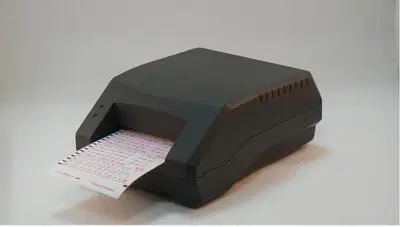
Optical Mark Recognition (OMR)
OMR scans documents to detect marked areas, such as checkboxes or bubbles, and converts them into digital data.
It is commonly used for processing forms, exams, and surveys.
30
Advantages of Optical Mark Recognition
Quick processing of large volumes of forms
Reduction of human errors in data entry
Cost-effective compared to other scanning technologies
31
Disadvantages of Optical Mark Recognition
Only reads specific types of marks, not text
Prone to errors from smudges or stray marks
Requires specially designed forms for proper functioning
32
Multiple Choice
OMR technology is commonly used for:
a) Reading barcodes
b) Scanning QR codes
c) Processing forms and surveys
d) Smartphone compatibility
33
Multiple Choice
OMR is prone to errors from:
a) Complex fonts
b) Smudges or stray marks
c) Radio wave interference
d) Smartphone compatibility
34
Multiple Choice
OMR requires:
a) Radio waves for data transfer
b) Specially designed forms
c) Built-in error correction
d) Line-of-sight scanning
35

Optical Character Recognition (OCR)
OCR scans printed or handwritten text and converts it into digital text, allowing for easier editing, searching, and storage.
36
Advantages of Optical Character Recognition
Time-saving digitization of text
Enhanced searchability of text content
Accessibility for visually impaired individuals
37
Disadvantages of Optical Character Recognition
Recognition errors with complex fonts or poor handwriting
Higher costs for advanced OCR systems
Limited support for some languages or character sets
38
Multiple Choice
OCR is used to:
a) Scan and digitize text
b) Read radio frequency tags
c) Process marked forms
d) Store large amounts of data
39
Multiple Choice
OCR can struggle with:
a) Efficient data entry
b) Complex fonts or poor handwriting
c) Reading multiple tags at once
d) Error correction capabilities
40
Multiple Choice
OCR enhances:
a) Data storage capacity
b) Text searchability
c) Line-of-sight requirements
d) Error correction capabilities
41

Barcode scanner
Barcodes are patterns representing data that can be scanned by a barcode reader and converted into digital information.
They are widely used for product tracking, inventory management, and point-of-sale systems.
42
Advantages of Barcode Scanner
Improved data entry efficiency and accuracy
Cost-effective implementation and maintenance
Broad applicability across various products and surfaces
43
Disadvantages of Barcode Scanner
Requires line-of-sight scanning
Limited data storage capacity
Vulnerability to damage and readability issues
44
Multiple Choice
Barcodes are widely used for:
a) Advertising and information sharing
b) Product tracking and inventory management
c) Processing forms and surveys
d) Wireless communication
45
Multiple Choice
A disadvantage of barcodes is:
a) Requires line-of-sight scanning
b) Durable and efficient data transfer
c) Cost-effective implementation
d) Compatibility with smartphones
46
Multiple Choice
Barcodes are vulnerable to:
a) Radio wave interference
b) Damage and readability issues
c) Smudges or stray marks
d) Complex fonts and poor handwriting
47

QR Quick Response Code
QR codes are 2D barcodes that store data in both horizontal and vertical dimensions.
They can be scanned by smartphones or dedicated QR code readers for various applications, including advertising and information sharing.
48
Advantages of QR Scanner
Greater data storage capacity compared to traditional barcodes
Compatibility with smartphones for easy scanning
Built-in error correction for better damage resistance
49
Disadvantages of QR Scanner
Dependence on smartphones for scanning
Greater complexity in generating and implementing QR codes
Privacy concerns related to user behavior tracking
50
Multiple Choice
QR codes store data in:
a) Horizontal dimensions only
b) Vertical dimensions only
c) Both horizontal and vertical dimensions
d) Neither horizontal nor vertical dimensions
51
Multiple Choice
QR codes offer:
a) Limited data storage capacity
b) Built-in error correction
c) Line-of-sight scanning
d) Limited compatibility with smartphones
52
Multiple Choice
A disadvantage of QR codes is:
a) Dependence on smartphones for scanning
b) Improved data entry efficiency
c) Resistance to damage
d) Broad applicability across products
53
Storage Devices and Media
Chapter 3
54
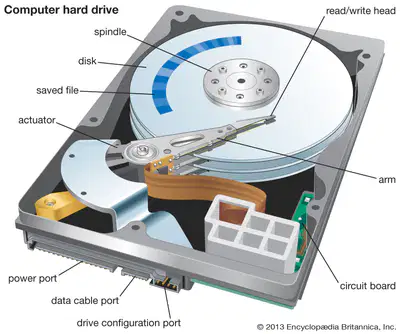
Hard Disk Drive
HDDs are magnetic storage devices with spinning disks that use read/write heads to store and access data.
55
Advantages of Hard Disk Drive
Larger storage capacities at lower prices
More affordable per unit of storage than SSDs
Wide compatibility with various systems
56
Disadvantages of Hard Disk Drive
Susceptible to mechanical failure or damage due to moving parts
Slower read and write speeds compared to SSDs
Generates more noise and heat
57
Multiple Choice
HDDs store data using:
a) Spinning magnetic disks
b) Flash memory
c) Optical disks
d) Tape storage
58
Multiple Choice
A disadvantage of HDDs is:
a) Lower cost per unit of storage
b) Faster read and write speeds
c) Noise and heat generation
d) Wide compatibility with systems
59
Multiple Choice
Compared to SSDs, HDDs have:
a) Faster read and write speeds
b) No moving parts
c) Larger storage capacities at lower prices
d) Less noise and heat generation
60
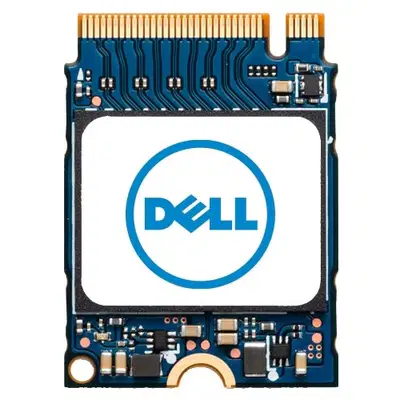
Solid State Drive (SSD)
SSDs are storage devices that use flash memory to store data without moving parts, offering faster performance.
61
Advantages of Solid State Drive (SSD)
Significantly faster read and write speeds
Less prone to mechanical failures or physical damage
Produces less noise and heat
62
Disadvantages of Solid State Drive (SSD)
Higher cost per unit of storage compared to HDDs
Finite number of write cycles, leading to wear over time
Smaller storage capacities at higher prices
63
Multiple Choice
SSDs use _____ to store data.
a) Spinning disks
b) Flash memory
c) Optical disks
d) Tape storage
64
Multiple Choice
An advantage of SSDs is:
a) Higher cost per unit of storage
b) Susceptibility to mechanical failures
c) Faster read and write speeds
d) Finite number of write cycles
65
Multiple Choice
Compared to HDDs, SSDs have:
a) Slower read and write speeds
b) Larger storage capacities at lower prices
c) More noise and heat generation
d) Fewer mechanical failures due to no moving parts
66

Key factors when writing Presentations
Key factors when writing presentations involve elements that make a presentation engaging, informative, and well-structured, ensuring the message is effectively conveyed to the audience.
These factors include content relevance, clear communication, and appropriate visuals.
67

Audience Characteristics:
Audience characteristics refer to the traits and demographics of the people attending a presentation.
These characteristics can include age, education level, cultural background, and prior knowledge, which help shape the presentation's content and style to best suit the audience.
68

Needs of the Audience:
The needs of the audience involve understanding the expectations, interests, and requirements of those attending the presentation.
Identifying the audience's needs helps to tailor the presentation's content and delivery to address their specific concerns or questions, resulting in a more effective and engaging experience.
69
Open Ended
What do you need to consider if you are to prepare a presentation for a younger audience?
Direct Data Entry Devices
Chapter 2
Show answer
Auto Play
Slide 1 / 69
SLIDE
Similar Resources on Wayground

60 questions
The Constitution
Presentation
•
9th - 10th Grade
64 questions
Pizza
Presentation
•
10th Grade
61 questions
Verbs like GUSTAR
Presentation
•
10th Grade
66 questions
Brake Technology
Presentation
•
10th Grade
66 questions
Fishing and Aquaculture Lesson
Presentation
•
10th Grade
61 questions
Foundations of Sentence Structure
Presentation
•
10th Grade
60 questions
Unit 6 Building Solutions Lesson A
Presentation
•
10th Grade
Popular Resources on Wayground
24 questions
PBIS-HGMS Day 10

Quiz
•
6th - 8th Grade
10 questions
HCS SCI 03 Summer School Review 3
Quiz
•
3rd Grade
11 questions
Home Scope
Quiz
•
7th - 8th Grade
15 questions
HCS SCI 05 Summer School Assessment 3 Review
Quiz
•
5th Grade
35 questions
Lufkin Road Middle School Student Handbook & Policies Assessment
Quiz
•
7th Grade
18 questions
Geo 11.3 Area of Circles and Sectors
Quiz
•
9th - 11th Grade