2.3 Energy & Temperature
Presentation
•
Science
•
7th Grade
•
Practice Problem
•
Easy
+5
Standards-aligned
William Katumba
Used 4+ times
FREE Resource
5 Slides • 35 Questions
1
Review questions; Conservation & Transfer of energy
First, answer these review questions from yesterday's lesson.
2
Multiple Choice
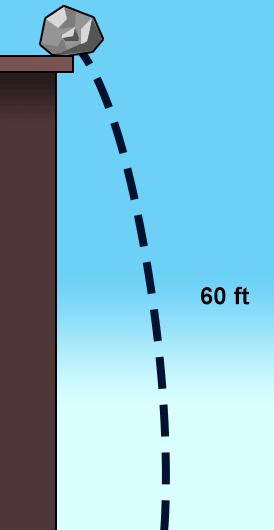
The rock in the picture is pushed over the edge and it begins to fall. Which type of energy conversion is taking place?
mechanical to heat
sound to mechanical
potential to kinetic
kinetic to potential
3
Multiple Choice
A ball is projected into the air. Where is potential energy the greatest?
4
Multiple Choice
Within the alarm clock seen here, energy is transformed. It is time to get up! The alarm clock goes off. What are the energy transformations taking place in your alarm clock?
electrical to magnetic to sound
electrical to mechanical to sound
electrical to mechanical to light
chemical to electrical to mechanical
5
Multiple Choice
Muscles convert chemical energy into
light energy.
nuclear energy.
mechanical energy.
electromagnetic energy.
6
Multiple Choice
True
False
7
Multiple Choice
True
False
8
Multiple Choice
Kinetic -> Potential
Gravitational Potential -> Kinetic -> Sound
Electrical -> Chemical
Heat -> Nuclear
9
Multiple Choice
to do work
to power things
to move objects
to turn on a light
10
Multiple Choice
Energy can created or destroyed but not transformed from one form to another
Energy cannot be created or destroyed, it can only transformed from one form to another
Energy can't be created, destroyed or transformed at all times.
11
2.3; Energy & Temperature
Lesson objectives; You'll be able to;
State the difference between energy & temperature
Describe what happens when you heat up solids, liquids, and gases
Explain what is mean by equilibrium
TEXTBOOK REFFERENCE; PAGES 144 - 145
Video; https://youtu.be/vuBPgTMKUc0
12
Poll
On a scale of 1-5, how much prior knowledge do you have about today's lesson objectives?
1; I know nothing about this
2; I've heard about it in the past, don't remember what it's all about
3. I have a vague idea. I can get some multiple choice questions correct
4; I can clearly explain / answer one of the lesson objectives
5; I can already explain all 3 lesson objectices
13
Prior knowledge questions
Let's see what you already know about this topic..
14
Multiple Choice
Reading a thermometer;
Select the temperature in °C
40°C
100°C
96°C
36°C
15
Multiple Choice
Reading a thermometer;
Look at the thermometer and select the closest temperature in degrees Celsius:
15°C
70°C
20°C
65°C
16
Multiple Choice
Thermometer
Ruler
Balance
Magnifying Glass
17
Multiple Choice
Its ok if you don't know the answer. Take your best guess.
A measure of the average kinetic energy of the individual particles in an object is called:
thermal energy
conduction
convection
temperature
18
Multiple Choice
In what units do we measure temperature?
In Degrees
In Inches
In Centimeters
In Pounds
19
Fill in the Blanks
Type answer...
20
Fill in the Blanks
Type answer...
21
Multiple Choice
State the unit of temperature
Celcius
Fahrenheit
Thermometer
Degrees
22
Multiple Choice
State the unit of energy
Joules
Temperature
Newtons
Kelvins
23
Multiple Choice
What is temperature?
How hot or cold something is
The ability to do work
24
Ability to do work
Determined by how much is in the energy 'store'
Energy
How hot or cold something is
Determined by how fast molecules are moving or vibrating
Definition;
Temperature is the average Kinetic energy of the molecules of a substance
Temperature
Temperature & Energy
25
Multiple Choice
True or false; Temperature and energy are the same thing
True
False
26
Multiple Choice
True or False; Energy is determined by how fast molecules are moving or vibrating
True
False
27
Multiple Choice
True or False; Temperature is determined by how fast molecules are moving or vibrating
True
False
28
Multiple Choice
Temperature is a measure of the average _____ energy of the molecules of a substance
Potential
Mechanical
Electomagnetic
Kinetic
29
Multiple Choice
A swimming pool and a coffee cup are both heated to 250C. Which of the following are true?
They have the same amount of energy because they are both at 250C
The swimming pool has more energy because it has more water mass.
The coffee cup has more energy because it is smaller.
None of these.
30
What happens when you heat things up? (Page 145)
Heating changes the movement of particles;
If you heat a solid, the particles vibrate more. If you heat a liquid or gas, the particles move faster and vibrate more.
The energy that you need to increase the temperature of a material depends on;
The mass of the material
What the material is made of
The temperature rise that you want
31
Fill in the Blanks
Type answer...
32
Multiple Choice
True or false; Heating changes the movement of particles;
True
False
33
Multiple Choice
The energy that you need to increase the temperature of a material depends on;
The mass of the material
The natural composition of the material
The temperature rise you want
All of these
34
Draw
Draw three simple pictures that show the arrangement of particles in solids, liquids, and gases
35
Open Ended
Explain what happens to the particles in an object when it is heated up
36
Multiple Choice
True of false; Page 145
Energy is transferred from a cold object to a hot object
True
False
37
Multiple Choice
True of false; Page 145
Energy is transferred from a hot object to a cold object
True
False
38
Multiple Choice
Page 145; When two objects in contact reach the same temperature, they are said to be in ______
Equilibrium
Balance
Equivalence
Unity
39
Multiple Choice
Thermal equilibrium is reached when;
Both objects have the same mass
The temperature difference between two objects in contact is 0
Both objects have the same potential energy
Both objects are warm
40
Multiple Choice
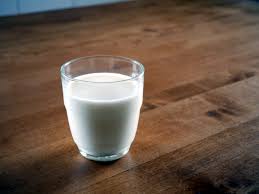
During the summer, Gonza takes a glass of milk from the refrigerator and places it on the kitchen counter. Over time, heat energy is transferred to the milk from the air. Which change would most likely occur?
The temperature of the milk will increase.
The temperature of the milk will decrease.
The milk will change from a liquid to a gas.
The milk will change from a liquid to a solid.
Review questions; Conservation & Transfer of energy
First, answer these review questions from yesterday's lesson.
Show answer
Auto Play
Slide 1 / 40
SLIDE

Similar Resources on Wayground
36 questions
The Genetic Code: Ch 4 L 1
Presentation
•
7th - 8th Grade
33 questions
Plant Systems
Presentation
•
7th Grade
34 questions
Chromosomes, DNA, and Genes Review
Presentation
•
7th - 8th Grade
37 questions
Genetic Engineering
Presentation
•
6th - 7th Grade
37 questions
DATA COLLECTION AND ANALYSIS
Presentation
•
7th Grade
39 questions
PURE SUBSTANCES AND MIXTURES
Presentation
•
7th Grade
31 questions
Reactions
Presentation
•
7th Grade
31 questions
asexual and sexual reproduction
Presentation
•
7th Grade
Popular Resources on Wayground
24 questions
PBIS-HGMS Day 10
Quiz
•
6th - 8th Grade
10 questions
HCS SCI 03 Summer School Review 3
Quiz
•
3rd Grade
11 questions
Home Scope
Quiz
•
7th - 8th Grade
15 questions
HCS SCI 05 Summer School Assessment 3 Review
Quiz
•
5th Grade
35 questions
Lufkin Road Middle School Student Handbook & Policies Assessment
Quiz
•
7th Grade
18 questions
Geo 11.3 Area of Circles and Sectors
Quiz
•
9th - 11th Grade