

Unit 3B -LL: Energy Flow Pt2

Presentation
•
Biology
•
9th - 12th Grade
•
Medium
+5
Standards-aligned

Jennifer Alber
Used 12+ times
FREE Resource
22 Slides • 20 Questions
1
Unit 3 Test Review Pt2 (3.6-3.9)
Standards:
HS-LS2-3: Construct and revise an explanation based on evidence for the cycling of matter and flow of energy in aerobic and anaerobic conditions.
HS-LS2-4: Use mathematical representations to support claims for the cycling of matter and flow of energy among organisms in an ecosystem.
2
3
Multiple Choice
Heterotrophs can eat
plants
meat
plants and meat
sunlight energy
4
Multiple Choice
What is the name of the process that autotrophs or producers use to make food?
cellular respiration
photosynthesis
photo respiration
cellularsynthesis
5
Multiple Choice
If an autotroph uses light as its energy source it is called a...
photoautotroph
chemoautotroph
photoheterotroph
photochemoautotroph
6
Multiple Choice
Humans are considered... because we use.... to get our food.
chemoautotroph - chemicals
chemoheterotroph - chemicals
photoautotroph - light
photoheterotroph - light
7
Multiple Select
What was/were the Amoeba Sisters favorite animal(s)?
velvet ant
water pig
sloth
silkie bantam chicken
8
9
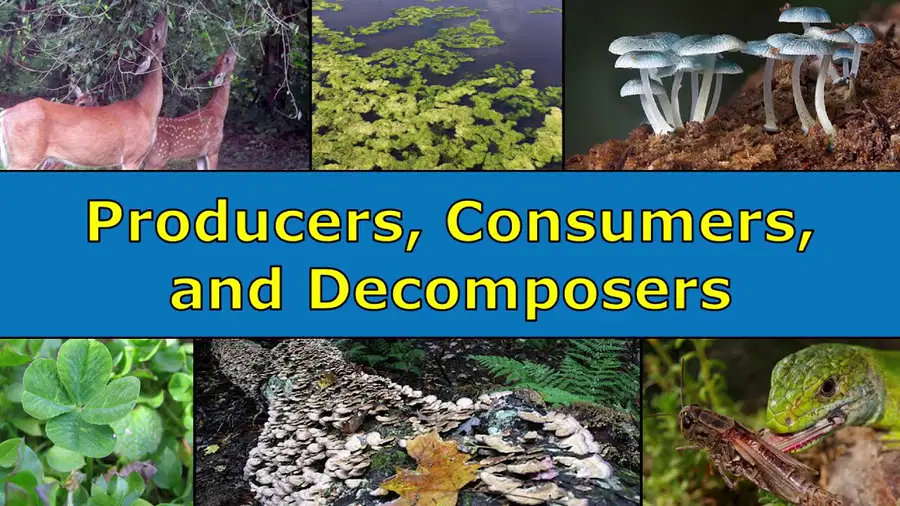
Consumers are heterotrophs.
Hetero = other & Troph = to eat, ('other eaters')
Herbivores(plants)/Carnivores(meat)/Omnivores(both)
Producers are autotrophs.
Auto = self & Troph = to eat, ('self feeders')
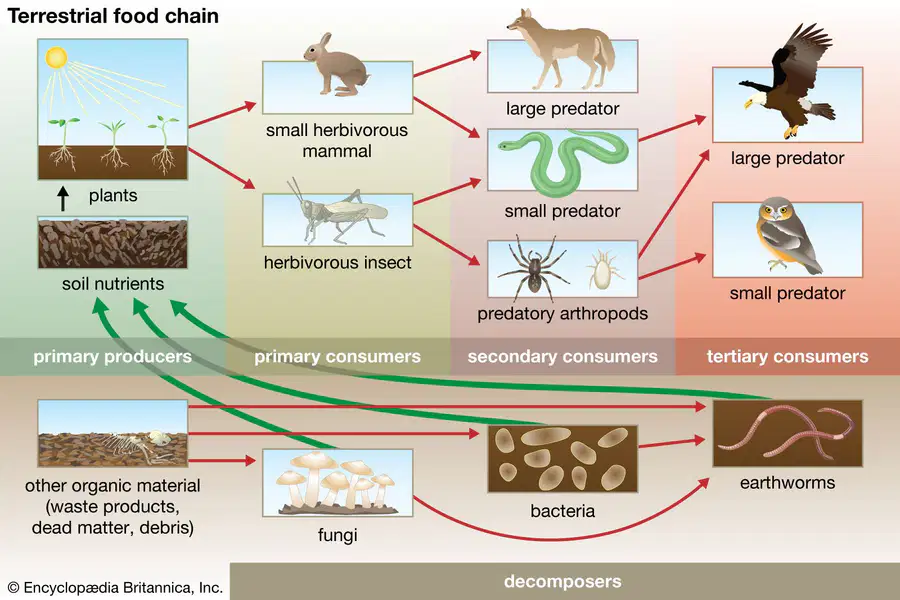
10% Rule - 90% used or lost as heat, move decimal for each trophic level
Decomposers breakdown organic matter back to soil (carbon cycle in biosphere)
Detritivores - organic matter Decomposers - dead
10
Multiple Choice
What is another term for a producer?
Autotroph
Heterotroph
Herbivore
Carnivore
11
Match
3.? - A consumer that eats only plants is a(n) _1_. Consumers that prey on other consumers are called _2_. Consumers that eat both plants & animals are known as _3_. Organisms that break down organic material are called _4_ and those that break down dead or decaying organisms are called _5_.
1
2
3
4
5
herbivore
carnivore
omnivore
detritivores
decomposers
herbivore
carnivore
omnivore
detritivores
decomposers
12
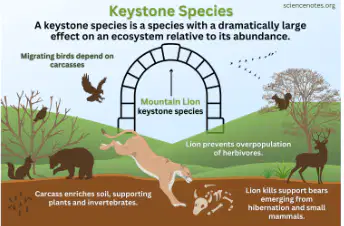
Ecosystems are constantly changing.
Keystone species are organisms that keep an ecosystem in balance; if threatened, ecosystem drastically changes!
Keystone Species
13
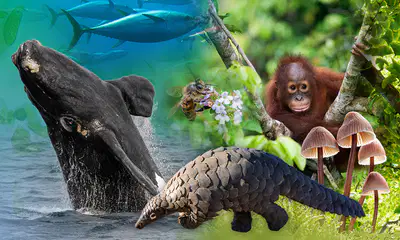
Biodiversity is the number of organisms that an area has at a given time.
The MORE biodiverse, the MORE sustainable!
Sustainability is the ability to maintain a certain rate of coexistence between the biosphere and humans.
Biodiversity & Sustainability
14
Multiple Choice
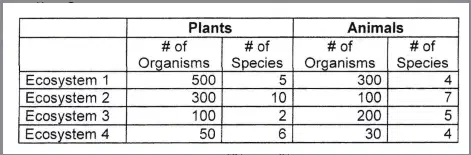
Which ecosystem is the MOST sustainable?
Ecosystem 1
Ecosystem 2
Ecosystem 3
Ecosystem 4
15
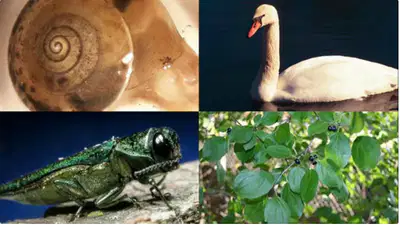
Any organism that:
Is NOT native to the ecosystem and cause HARM to the ecosystem
Grows & reproduces QUICKLY
Outcompete native species for food
Cause carry disease
Has NO natural predators, which disturbs energy flow
MI Invasive Species to watch out!
Invasive Species
16
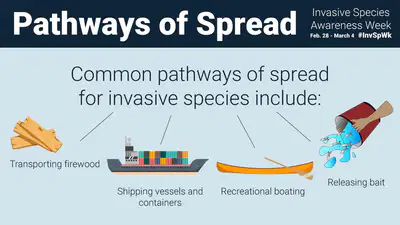
Human activities can unintentionally spread invasive species:
Spreading firewood
Shipping vessels and containers
Recreational boating
Releasing bait, non-native plants & exotic pets
Transport of Invasive Species
17
Multiple Choice

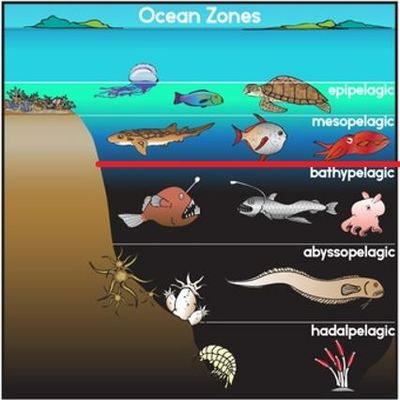
Examine the chart- what seems to be happening to the amount of oxygen the deeper you go into the ocean?
Oxygen is increasing the deeper you go.
Oxygen is decreasing the deeper you go.
18
The word "photo" means light.
The word "synthesis" means to make.
So the word photosynthesis literally means, to make using light.
Producers convert sunlight energy into chemical energy (glucose).
Sunlight cannot reach the aphotic zone. Aphotic = without light
19
Multiple Choice

Plants can survive in the aphotic zones of the ocean.
True
False
20

21
There is no sunlight, so there are no plants and no photosynthesis in the aphotic zone.
For a long time, scientists thought this meant there was no life in the aphotic zone, until 1977...
Enter Robert Ballard.
He takes expeditions to the ocean floor in his submersible.

22
Robert Ballard was the first scientist to discover there was life on the ocean floor. BUT, there are very different kinds of producers living in the deep ocean.
As you watch the 2m video read the captions to learn about Hydrothermal Vents.
23
Multiple Choice
Do you think deep ocean producers can do photosynthesis?
Yes, they can
No, they can't
24
There is no sunlight, so there are no plants or photosynthesis in the deep ocean.
The main kinds of producers are bacteria that do chemosynthesis, where they use chemicals released from the Earth to help them create sugar. See equation caption...

25
Anaerobes - grow without oxygen present
Acidophiles - grow best at acidic (low) pH values
Alkaliphiles - grow best at high pH values
Endoliths - lives inside rock or the pores between mineral grains
Halophiles - require high amounts of salt for growth
Methanogens - produce methane from a chemical reaction of hydrogen & carbon dioxide

26
Multiple Choice
3.9 - Chemosynthesis relies on which energy source?
thermal
chemical
nuclear
light
27
Match
3.9 - Chemosynthesis uses _1_ energy to produce organic matter and can occur in _2_ environments without _3_. Chemosynthetic bacteria can support _4_ organisms by being incorporated into their tissue or being _5_.
1
2
3
4
5
chemical
extreme
sunlight
larger
consumed
chemical
extreme
sunlight
larger
consumed
28

29

30
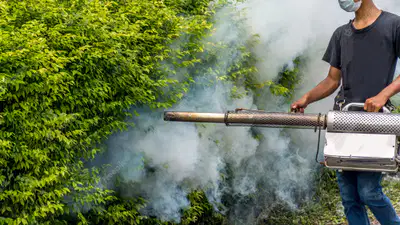
DDT was used widely and sprayed on crops as a pesticide against insects & mosquitoes, but was banned in 1972.
DDT

31
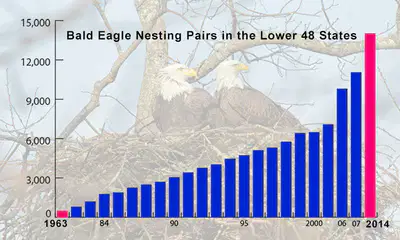
DDT levels entered food chains and remained in tissues of fish but became more concentrated in higher trophic levels, eagles & falcons.
The Bald Eagle was added to the Endangered Species List as a result of thinning eggshells caused by DDT.
The pesticide DDT is now illegal in the US BUT is still manufactured here & used around the world!
Biomagnification
32
33
Multiple Choice
DDT is:
a food additive
an insecticide
a medicine
34
Multiple Choice
Mosquitoes transmitted DDT directly to
humans
fish
birds
crops
35
Multiple Choice
The way DDT was passed from mosquitoes to small fish and then bigger fish was
mosquitoes drinking the blood of fish
fish eating mosquitoes
birds eating fish
36
Multiple Choice
The top predator in the food chain we are shown, that is infected with DDT, is
humans
large mouth bass
eagles
minnows
37
38
Multiple Choice
DDT's most serious affect on eagles is
starvation
their eggs broke & eaglets died
loss of their feathers
poisoning
39
Multiple Select
Humans helped eagles survive by (choose all that apply)
banning DDT in the US
providing them with food
collected & incubated their eggs for them
40
AVOID eating high level predators, like tuna and other large fish, with high mercury levels
Eat a plant-based diet
Advocate for pesticide reduction

41
Multiple Choice
3.6 - How does introducing DDT into an ecosystem impact a food chain?
Fish-eating birds have thinning eggshells.
Decrease population of secondary & tertiary consumers.
Biomagnification of toxic substances increase at each trophic level.
All of these.
42

Let's see who our winners are and head back to the
Live Lesson Room for Chat Q&A!
Unit 3 Test Review Pt2 (3.6-3.9)
Standards:
HS-LS2-3: Construct and revise an explanation based on evidence for the cycling of matter and flow of energy in aerobic and anaerobic conditions.
HS-LS2-4: Use mathematical representations to support claims for the cycling of matter and flow of energy among organisms in an ecosystem.
Show answer
Auto Play
Slide 1 / 42
SLIDE
Similar Resources on Wayground

38 questions
Unit 7.1: Evidence for Evolution Notes
Presentation
•
9th - 12th Grade
39 questions
Evolution Terms part 2
Presentation
•
9th - 12th Grade
38 questions
Chemistry Test Review
Presentation
•
9th - 12th Grade
34 questions
Biology EOC Reporting Category 1 Review
Presentation
•
9th - 12th Grade
37 questions
graphing Lesson
Presentation
•
9th - 12th Grade
38 questions
Enzymes Lesson & Biomolecules Review
Presentation
•
9th - 12th Grade
37 questions
Balancing Chemical Equations
Presentation
•
9th - 12th Grade
Popular Resources on Wayground
10 questions
Safety Day 2026 – Student Review

Quiz
•
9th Grade
21 questions
Continents and Oceans
Quiz
•
6th Grade
20 questions
Parts of Speech
Quiz
•
5th Grade
16 questions
Subject & Predicate
Quiz
•
5th Grade
25 questions
Multiplication Facts
Quiz
•
5th Grade
12 questions
Map Skills
Quiz
•
3rd Grade
22 questions
Continents and Oceans
Quiz
•
5th Grade
15 questions
Rounding Decimals
Quiz
•
5th Grade
Discover more resources for Biology
20 questions
Cell organelles and functions
Quiz
•
10th Grade
20 questions
Cell Transport
Quiz
•
9th - 12th Grade
25 questions
photosynthesis and cellular respiration
Quiz
•
9th Grade
20 questions
Cell Cycle
Quiz
•
9th Grade
8 questions
DNA vs. RNA
Presentation
•
9th - 12th Grade
14 questions
Ecological Succession: Primary and Secondary
Quiz
•
9th Grade
20 questions
Macromolecules
Quiz
•
10th Grade
20 questions
Characteristics of Life
Quiz
•
9th - 10th Grade