Lesson: Solutions, Acids, and Bases
Presentation
•
Science, Chemistry
•
9th Grade
•
Medium
Standards-aligned
William Jared Lovering
Used 12+ times
FREE Resource
22 Slides • 15 Questions
1
2
3
4
5
6
7
8
9
10
11
12
13
14
15
16
17
18
19
20
21
22
23
Multiple Choice
When found in food, acids often taste ________.
Sour
Bitter
Salty
Slippery
24
Multiple Choice
When found in food, bases often taste _______.
Sour
Bitter
Salty
Soggy
25
Multiple Choice
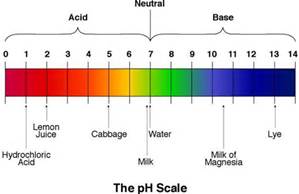
Four solutions are tested and found to have the following pH values. Which of these substances would be considered the weakest acid?
Lemon Juice - pH=2
Apple Juice - pH=4.5
Shower Cleaner - pH=5.5
Hydrogen Peroxide - pH=7
26
Multiple Choice
27
Multiple Choice
NaOH may be found in drain cleaners and as a component of soaps. Is NaOH an acid or a base?
Acid
Base
Neither (Neutral)
28
Multiple Choice
A substance doing the dissolving, usually the part of a solution present in the larger amount
solvent
solute
solution
solubility
29
Multiple Choice
a substance being dissolved, usually the part of the solution in the lesser amount
solvent
solute
solubility
concentration
30
Multiple Choice
a substance that vigorously reacts with most metals to produce hydrogen; it readily conducts electricity; it turns litmus red and has a pH of less than 7; it typically is corrosive or sour-tasting
acid
base
neutral
solution
31
Multiple Choice
a substance that does not react with most metals or readily conduct electricity; it turns litmus blue and has a pH of greater than 7; it typically feels slippery and is bitter-tasting
acid
base
neutral
solution
32
Multiple Choice
a substance that has a pH of 7; water is an example
acid
base
neutral
concentration
33
Multiple Choice
indicator that turns red in the presence of an acid and blue in the presence of a base
solvent
solute
litmus
temperature
34
Multiple Choice
describes how much solute has been dissolved in a solution and is expressed in some kind of ratio
conductivity
solute
concentration
solubility curve
35
Multiple Choice
the measure of a solution's ability to conduct electricity
concentration
conductivity
solubility curve
temperature
36
Multiple Choice
The picture shows how you might change an variable in an experiment about what affects the rate of dissolving. What results do you expect to see?
A will dissolve slowest because it has the largest number of particles.
D will dissolve slowest because it has the smallest surface area.
All pieces will dissolve at an equal rate.
C will dissolve slowest because it has the most bonds between sugar molecules.
37
Multiple Choice
What does a neutralization reaction produce?
acids
bases
water and a salt
carbonated water
Show answer
Auto Play
Slide 1 / 37
SLIDE

Similar Resources on Wayground
32 questions
Genetic Engineering
Presentation
•
8th Grade
30 questions
Periodic Table Trends
Presentation
•
10th Grade
31 questions
Chemistry Unit Review
Presentation
•
8th Grade
30 questions
Know Your Lab Equipment
Presentation
•
10th Grade
29 questions
Heating and Cooling Curves
Presentation
•
9th Grade
29 questions
Unit 6.1 & 6.2 CFA Point Recovery
Presentation
•
9th Grade
32 questions
Science 9 - Unit B Review Slides
Presentation
•
9th Grade
27 questions
Big Bang Theory
Presentation
•
9th Grade
Popular Resources on Wayground
10 questions
Safety Day 2026 – Student Review
Quiz
•
9th Grade
21 questions
Continents and Oceans
Quiz
•
6th Grade
20 questions
Parts of Speech
Quiz
•
5th Grade
16 questions
Subject & Predicate
Quiz
•
5th Grade
25 questions
Multiplication Facts
Quiz
•
5th Grade
12 questions
Map Skills
Quiz
•
3rd Grade
22 questions
Continents and Oceans
Quiz
•
5th Grade
15 questions
Rounding Decimals
Quiz
•
5th Grade
Discover more resources for Science
10 questions
Exploring Chemical and Physical Changes
Interactive video
•
6th - 10th Grade
20 questions
Atomic Structure
Quiz
•
9th Grade
10 questions
Exploring the Electromagnetic Spectrum for Middle School Science
Interactive video
•
6th - 10th Grade
10 questions
Exploring Force and Motion Concepts
Interactive video
•
6th - 10th Grade
10 questions
Exploring Air Masses and Weather Fronts
Interactive video
•
6th - 10th Grade
10 questions
Exploring the States of Matter
Interactive video
•
6th - 10th Grade
10 questions
Exploring Forces: Net Force, Normal Force, Gravity, and Friction
Interactive video
•
6th - 10th Grade
10 questions
Differentiating Thermal Energy and Temperature
Interactive video
•
6th - 10th Grade