Search Header Logo
Rate of Reaction

Rate of Reaction

Assessment

Presentation

•

Science

•

9th Grade

•

Hard

•
NGSS
MS-PS1-2, MS-PS1-4, MS-PS3-4

+3

Standards-aligned

Created by

Dimpi Nayyar

Used 2+ times

FREE Resource

16 Slides • 42 Questions

1

media

2

media

3

media

4

Multiple Choice

One of the signs of a chemical reaction taking place is:
1
Bubbles are produced 
2
Reactants are not combining
3
Products are not forming
4
Color is not changing

5

Multiple Choice

Which of the following describes a precipitate?
1
a liquid forms when a block of metal is heated
2
a solid forms when one liquid is poured into another
3
a gas forms when a solid is placed in a liquid
4
bubbles form when an acid is poured on a rock

6

Multiple Choice

Each substance in a chemical reaction is called a

1

reactant

2

product

3

species

4

compound

7

Fill in the Blanks

Type answer...

are the substances you have before a reaction.

8

Multiple Choice

What is the rate of reaction?

1

How fast a reaction is

2

How big a reaction is

3

How loud a reaction is

4

How much gas a reaction produces

9

media

10

media

11

media

12

media

13

Multiple Choice

Activation energy is required to start a chemical reaction. What is activation energy?

1

The energy needed for a reaction to occur

2

The minimum amount of energy needed for a reaction to potentially occur

3

The energy added by a catalyst

4

The energy possessed by the products

14

Multiple Choice

Why don't all collisions between particles cause a reaction?

1

the particles also need to collide with a catalyst

2

not all the particles collide with enough energy

3

not all the particles collide at a high enough temperature

4

the particles need to collide with each other twice

15

Multiple Choice

In a chemical reaction, how quickly or slowly reactants turn

into products is called the

1

Catalyst

2

Reaction Rate

3

Concentration

4

Temperature

16

Multiple Choice

What makes an effective collision?

1

When molecules collide.

2

When molecules collide with the proper orientation.

3

When molecules collide with proper orientation and enough kinetic energy.

4

High Temperature.

17

Reaction Rates

How fast a reaction goes

media

18

Results in more collisions with adequate activation energy.

More collisions.

​

Decreases activation energy.​

Reason

Increase Temperature

​

Increase reactant concentration.

​

Addition of a catalyst.​

Factor

Factors that increase reaction rate

Timberlake 13.1

19

Factors that affect rate of reaction

1. Concentration

media
media

20

Multiple Choice

When water is added to solution, will it become more..

1

Concentrated

2

Dilute

21

Multiple Choice

Why does a higher concentration increase the rate of reaction?

1

it increases the amount of reactants

2

it lowers the activation energy

3

it increases the energy of reactant particles

4

it increases the frequency of collision

22

Multiple Choice

The minimum amount of energy needed for colliding particles to react is called

1

Chemical Energy

2

Kinetic Energy

3

Activation Energy

4

Potential Energy

23

Multiple Choice

Why does a higher concentration increase the rate of reaction?

1

it increases the amount of reactants

2

it lowers the activation energy

3

it increases the energy of particle collisions

4

it increases the frequency of collisions

24

media

25

media

26

media

27

28

Multiple Select

Which statements explain why increasing temperature increases the rate of a chemical reaction?

(answers can be more than one)

1

Heat makes the molecules move faster and collide more often.

2

Heat makes the molecules have energy greater than activation energy

3

Increasing temperature lowers the activation energy for the reaction

29

Multiple Choice

This is when heat is absorbed, it is an

1

Exothermic reaction

2

endothermic reaction

3

both

4

none

30

Multiple Choice

When heat is released it is an

1

exothermic reaction

2

endothermic reaction

3

both

4

none

31

Multiple Choice

Question image

Your hands get cold outside from not wearing gloves

1

exothermic

2

endothermic

3

both

4

none

32

Multiple Choice

Question image

Fire is an example of

1

exothermic reaction

2

endothermic reaction

3

none

4

both

33

Multiple Choice

Question image

A melting ice cube is an example of

1

exothermic

2

endothermic

3

none

4

both

34

Multiple Choice

Question image

Frying an egg is an example of

1

exothermic reaction

2

endothermic reaction

3

both

4

none

35

Multiple Choice

Question image
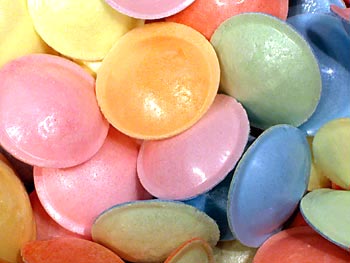
Have you ever eaten sherbet sweets candy? They fizz in your mouth and your tongue feels cold. Why do you think that is?
1
It is an exothermic reaction
2
It is an endothermic reaction
3
It is made of ice
4
It is dissolving your mouth

36

Multiple Choice

Increase in temperature causes the particles to

1

slow down

2

move faster

3

stay apart from each other

4

move in the correct order

37

Multiple Choice

Four statements about the effect of increasing temperature on a reaction are shown.

1  The activation energy becomes lower.

2  The particles move faster.

3  There are more collisions between reacting particles per second.

4  There are more collisions which have energy greater than the activation energy.

Which statements are correct?

1

1, 2 and 3

2

1, 3 and 4

3

2, 3 and 4

4

2 and 3 only

38

Multiple Choice

Which one shows that a chemical reaction has occurred?

1

dissolving

2

melting

3

formation of a gas

4

bending

39

Multiple Choice

Question image

How would decreasing the temperature change the rate of reaction?

1

The rate would increase.

2

The rate would decrease.

3

The rate would stay the same.

40

Multiple Choice

The ______________is required to break the bonds of the reactants.

1

Carbonic energy

2

Activation energy

3

Plutonic energy

4

Resting energy

41

Multiple Choice

Why does a higher temperature increase the rate of a reaction?

1

it increases both the frequency and energy of particle collisions

2

it only increases the frequency of particle collisions

3

it only increases the energy of particle collisions

4

it reduces the activation energy of the reaction

42

Multiple Choice

In an exothermic reaction, heat is ...

1

taken in

2

given out

43

Multiple Choice

Question image

Which one of the mixture has the highest concentration?

1

40 g/dm3

2

32 g/dm3

3

24 g/dm3

44

media

45

Multiple Choice

A substance that increases speed of chemical reaction without being being changed is called:

1

Catalyst

2

Acid

3

Base

4

pressure

46

Multiple Choice

Catalyst helps to

1

increase the amount of product obtained

2

to lower the activation energy

3

provide an alternative reaction route

4

decrease the frequency of collision

47

media

48

Multiple Choice

Smaller particle size allows for a _________ surface area to be exposed for the reaction.
1
larger
2
smaller

49

Multiple Choice

Why does a higher concentration increase the rate of reaction?

1

it increases the amount of reactants

2

it lowers the activation energy

3

it increases the energy of particle collisions

4

it increases the frequency of particle collisions

50

Multiple Choice

Why does breaking up a solid reactant increase the rate of reaction?

1

it creates more solid

2

it creates more energy

3

it increases the total surface area

4

it increases the concentration

51

Multiple Choice

Grinding a seltzer tablet into powder increases the rate of reaction due to increased

1

concentration

2

surface area

3

temperature

4

reactants

52

Multiple Choice

Increasing the ____ causes the particles (atoms

or molecules) of the reactants to move more quickly so that

they collide with each other more frequently and with more

energy.

1

Catalyst

2

Surface Area

3

Temperature

4

Concentration

53

Multiple Choice

Question image

Powdered sugar has a greater ______ _____ than a solid cube of

sugar.

1

Surface Area

2

Catalyst

3

Temperature

54

Multiple Choice

What does NOT happen when the temperature is increased?

1

Particles collide more often

2

Particles collide with more energy

3

Particles move faster

4

More particles collide in the correct orientation

55

Multiple Choice

Question image

The following graph shows two different reaction pathways for the same overall reaction at the same temperature. Which pathway is slower and why?

1

Red, because the activation energy is larger

2

Blue, because the activation energy is lower

3

both reaction progress at the same rate

56

Multiple Choice

How does a catalyst work in speeding up a reaction?

1

By lowering the activation energy or reaction

2

by giving them more energy

3

by making them more available

57

Multiple Choice

A temperature increase causes the particles

1

to slow down

2

to move faster

3

have proper orientation

4

hit in the right order

58

Multiple Select

Check four factors that affects the rate of a reaction

1

temperature

2

concentration

3

surface area

4

volume

5

catalysts

pattern-tertiary
media

Show answer

Auto Play

Slide 1 / 58

SLIDE