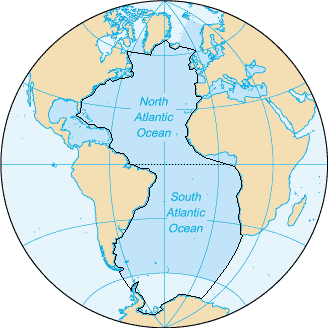
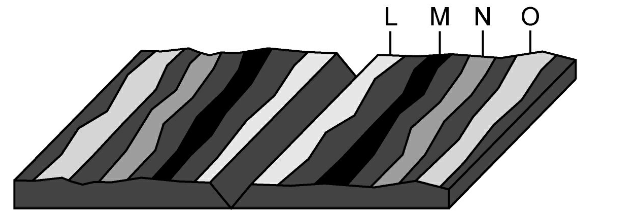
1a /1b
Presentation
•
Science
•
11th - 12th Grade
•
Hard
ELIJAH Diaz
FREE Resource
4 Slides • 64 Questions
1
Multiple Choice
2
Multiple Choice
Scientists use ______ to map the ocean floor
radar
pulsar
lidar
sonar
3
Multiple Choice
What is label D
Trench
Mid ocean ridge
abyssal plain
sea mount
4
Multiple Choice
What is the process happening at G?
Deep ocean trench
mid ocean ridge
subduction
creation of new sea floor
5
Multiple Choice
The material that is rising up from the mantle to form new ocean crust is called?
Lava
Slate
Sedimentary Rocks
Magma
6
Multiple Choice
7
Multiple Choice
8
Multiple Choice
How is it possible for new crust to be formed without increasing the surface area of the Earth?
Crust is recycled in subduction zones at the same time it is created at mid-ocean ridges
New crust is underwater where it sinks
New crust breaks more easily than old crust
The oldest crust just breaks apart as the plates move
9
Multiple Choice
Rock at the mid ocean ridges...
is the oldest rock on the earth.
is older than continental rock.
is younger than continental rock.
10
Multiple Choice
Seafloor spreading...
creates new oceanic crust
destroys or recycles crust
creates new continental crust
creates old crust
11
Multiple Choice
The average density of continental crust is 2.8 g/cm3 and the average density of oceanic crusts is 3.2 g/cm3. If these two plates came together, what would happen?
The two plates would push apart and form a rift zone.
The oceanic plate would rise up over the continental plate.
The oceanic plate would sink under the continental plate.
The two plates would meet head on and rise up to form mountains.
12
Multiple Choice
13
Multiple Choice
The San Andreas Fault in California is known as an active earthquake area. What type of boundary is it?
Converging
Diverging
Transform
Sea Floor Spreading
14
Multiple Choice
Passive continental margins are known for having a lot of earthquakes and active volcanoes
True
Fasle
15
Multiple Choice
16
Multiple Choice
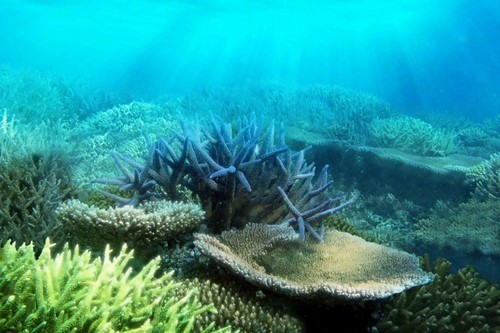
As the depth of the ocean water increases, the temperature...
increases (warmer)
decreases (colder)
17
Multiple Choice
The landforms of the ocean are different than the ones on land
True
false
18
Multiple Choice
This part of the ocean floor is relatively shallow water and surrounds land.
Continental Drift
Continental Slope
Continental Shelf
Continental Breakfast
19
Multiple Choice
Where are you walking when you are wading in the ocean?
Ocean Trench
Abyssal Plain
Continental Slope
Continental Shelf
20
Multiple Choice
The steep slope where the continental shelf drops to the ocean floor is called the...
Continetal drop
Ocean ridge
Oceanic slope
Continental Slope
21
Multiple Choice
The gently sloping transition between the continental slope and the deep ocean floor is called the...
Oceanic Trenches
Seamounts
Continental Rise
Continental Drop
22
Multiple Choice
23
Multiple Choice
24
Multiple Choice
What is the deepest part of the ocean?
Abyssal Hill
Oceanic Crust
Ocean Trenches
Volcano
25
Multiple Choice
26
Multiple Choice
A mountain that rises above the ocean floor but stays below the surface of the water is called ...
Sea Hills
Oceanic Crust
Continental Shelf
Seamount
27
Multiple Choice
An underwater volcano that eventually forms an island is an.....
Mid-Ocean Ridge
Volcanic Island
Hawaii
None are correct
28
Multiple Choice
Identify #3 and #9
Continental shelf
Continental slope
Continental rise
Seamount
Rift Valley
29
Multiple Choice
Identify #1 and #11
Continental shelf
Continental slope
Continental rise
Seamount
Rift Valley
30
Multiple Choice
31
Multiple Choice
32
Multiple Choice
33
Multiple Choice
Identify #4 and #8
Continental shelf
Continental slope
Continental rise
Seamount
Rift Valley
34
Multiple Choice
Identify #5 and #7
Continental shelf
Abyssal plain
Continental rise
Seamount
Rift Valley
35
Multiple Choice
Heat breaks the hydrogen bonds
True
False
36
Multiple Choice
Which letter indicates where water is in both the solid and liquid phase at the same time?
A
B
C
D
E
37
Multiple Choice
Which property explains why ice floats?
adhesion
density
cohesion
heat capacity
38
Multiple Choice
39
Multiple Choice
40
Multiple Choice
Water has a low rate of vaporization which is why there is a lot of ocean water
True
False
41
Multiple Choice
Water is a universal solvent
True
False
42
Multiple Choice
Ocean salinity is approx....
.35%
35%
3.5%
43
Multiple Choice
What would cause a body of water to have a higher salinity?
decreasing condensation
increasing transpiration
increasing evaporation
decreasing evaporation
44
Multiple Choice
45
Multiple Choice
______ causes deep ocean currents
The Coriolis Effect
gravity
wind
density differences
46
Multiple Choice
47
Multiple Choice
48
Multiple Choice
49
Multiple Choice
50
Multiple Choice
51
Multiple Choice
52
Multiple Choice
How much of Earth's water is available to drink?
2%
12%
1%
53
Multiple Choice
The ability of water molecules to stick to each other, creating surface tension is called:
Cohesion
Adhesion
Insulation
Ph
54
Multiple Choice
The fact that water can stick to other substances is called:
Ph
Adhesion
Cohesion
Insulation
55
Multiple Choice
56
Multiple Choice
57
Multiple Choice
58
Multiple Choice
59
Multiple Choice
This molecule structure is
Ice
Water
Vaporized water
60
Multiple Choice
This molecule structure is
Ice
Water
Vaporized water
61
Multiple Choice
This molecule structure is
Ice
Water
Vaporized water
62
Multiple Choice
Colder water rises
True
False
63
Multiple Choice
Warmer water is less dense than cold water
True
False
64
Multiple Choice
Currents are essential to life in the ocean
True
false
65
Explanation Slide...
​
66
Explanation Slide...
​
67
Explanation Slide...
​
68
Explanation Slide...
​
Show answer
Auto Play
Slide 1 / 68
MULTIPLE CHOICE

Similar Resources on Wayground
64 questions
Q4WK3 Eng Z - Elizabethan Eng. Lit.
Presentation
•
11th - 12th Grade
64 questions
Metabolism Review
Presentation
•
11th - 12th Grade
64 questions
Metabolism Overview
Presentation
•
11th - 12th Grade
64 questions
Lesson 3 When People Cannot Obtain Food
Presentation
•
10th - 12th Grade
61 questions
Skin Case Study and Articles
Presentation
•
12th Grade
65 questions
Digestive System
Presentation
•
10th - 12th Grade
62 questions
Brandon in Japan
Presentation
•
KG
64 questions
Federalism Part II
Presentation
•
12th Grade
Popular Resources on Wayground
24 questions
PBIS-HGMS Day 10
Quiz
•
6th - 8th Grade
10 questions
HCS SCI 03 Summer School Review 3
Quiz
•
3rd Grade
11 questions
Home Scope
Quiz
•
7th - 8th Grade
15 questions
HCS SCI 05 Summer School Assessment 3 Review
Quiz
•
5th Grade
35 questions
Lufkin Road Middle School Student Handbook & Policies Assessment
Quiz
•
7th Grade
18 questions
Geo 11.3 Area of Circles and Sectors
Quiz
•
9th - 11th Grade