

Unit 6 Section 3: Stoichiometry

Presentation
•
Chemistry, Science
•
10th - 12th Grade
•
Practice Problem
•
Medium
+2
Standards-aligned

Abby Fancsali
Used 28+ times
FREE Resource
33 Slides • 47 Questions
1

Yeast bread rises because the yeast breaks down sucrose (C12H22O11) during cellular respiration and reduces carbon dioxide. The zero Calorie sweetener Steviol (C20H30O3) has a similar chemical structure. Is it possible to replace sugar with Steviol when baking? If so, is there anything else you need to do to the recipe?
2
Drag and Drop
3
Multiple Choice
Which type of reaction makes a new substance from one or more compounds?
Combustion
Single-Replacement
Double-Replacement
Decomposition
Synthesis
4
Multiple Choice

Is Potassium carbonate soluble or insoluble?
soluble
insoluble
5
Drag and Drop
6
Multiple Choice
What is the name for the solid formed during a reaction between aqueous substances?
Aqueous solid
7

Analyze data and predict the stoichiometric ratios in a chemical equation
Model the conservation of mass in a chemical equation
Apply Math to interpret Chemical equations
8
Quantifying Reactants and Products
Chemical equations work like a recipe
Balanced equations tell you the ingredients you need and the proper ratios
Stoichiometry: The calculation of quantities in a chemical reaction
Can be quantified in terms of moles, mass, volume, and number or atoms/molecules
The total amount of atoms remains the same throughout the equation due to the Law of Conservation of mass
Several types of Stoichiometry problems exist
Mole-Mole
Mole-Mass (Mole-Volume, Mole-Molecules)
Mass-Mass
9
Proportionality of Reactants & Products
In a chemical equation, the chemical symbols tell you the ingredients, and the coefficients in front of them tell you the ratios in terms of moles
Example: N2(g) + 3H2 (g) → 2NH3 (g)
For every 1 mole of N2, you can get 2 moles of NH3
For every 3 moles of H2 you can get 2 moles of NH3
You need at least 1 mole of N2 and 3 moles of H2 for the reaction to take place
10
Mole Ratios
A mole Ratio is a conversion factor derived from the coefficients of balanced equations
Can be used to determine the amount of reactant or product involved in a chemical reaction
Example: N2(g) + 3H2 (g) → 2NH3 (g)
11
Multiple Choice
3 Mg + 1 Fe2O3 → 3 MgO + 2 Fe;
What is the Ratio of moles of Mg to moles Fe?
12
Multiple Choice
What is the mole ratio of Ba(OH)2 to AlPO4?
2AlPO4 + 3Ba(OH)2 → 2Al(OH)3 + Ba3(PO4)2
(Use the most simplified form)
3 mol Ba(OH)2 / 2 mol AlPO4
1 mol Ba(OH)2/ 1 mol AlPO4
2 mol Ba(OH)2/ 3 mol AlPO4
1 mol Ba(OH)2/ 3 mol AlPO4
13
Multiple Choice
What is the mole ratio of Mg to MgCl2?
Mg + 2HCl → MgCl2 + H2
(Use the most simplified form)
2 mol Mg/ 1 mol MgCl2
1 mol Mg/ 2 mol MgCl2
1 mol Mg/ 1 mol MgCl2
2 mol Mg/ 2 mol MgCl2
14
Mole-Mole Calculations
Mole ratios are used in mole-mole calculations
Converting between the moles of one reactant/product and the moles of another reactant/product
Given: The Moles of one part of the balanced equation
Want: The Moles of another part of the balanced equation
15
Mole-Mole Calculations Sample Problem #1
How many moles of O2 would you need to produce 25 moles of H2O ?from the following equation: 2H2 + O2 → 2 H2O
Step 1: Identify what value you are starting with
25 moles H2O
Step 2: identify the molar ratio for what you need
Going from H2O to O2
16
Multiple Choice
How many moles of H2O are in the following balanced equation: 2H2 + O2 → 2 H2O ?
1
2
3
4
17
Multiple Choice
How many moles of O2 are in the following balanced equation: 2H2 + O2 → 2 H2O ?
1
2
3
4
18
Mole-Mole Calculations Sample Problem #1
How many moles of O2 would you need to produce 25 moles of H2O from the following equation: 2H2 + O2 → 2 H2O ?
Step 1: Identify what value you are starting with
25 moles H2O
Step 2: identify the molar ratio for what you need
Going from H2O to O2
Step 3: Set up your conversion
19
Fill in the Blanks
How many moles of O2 would you need to produce 25 moles of H2O from the following equation: 2H2 + O2 → 2 H2O?
Type answer...
20
Mole-Mole Calculations Sample Problem #2
How many moles of ammonium (NH3) are produced when 0.60 moles of nitrogen react with hydrogen in the Following Reaction: N2 + 3H2→2NH3
Step 1: Identify what you are starting with
0.60 moles of Nitrogen
Step 2: Identify what ratio you need to get what you want
21
Multiple Choice
Based on the equation
N2 + 3H2→2NH3
What is the molar ratio of N2 to NH3?
3 H21 N2
1 N22 NH3
2 NH33 H2
22
Mole-Mole Calculations Sample Problem #2
How many moles of ammonium (NH3) are produced when 0.60 moles of nitrogen react with hydrogen?
Step 1: Write a balanced equation
N2 + 3H2→2NH3
Step 2: Identify what you are starting with
0.60 moles of Nitrogen
Step 3: Identify what ratio you need to get what you want
23
Fill in the Blanks
How many moles of ammonium (NH3) are produced when 0.60 moles of nitrogen react with hydrogen?
Type answer...
24
Mole-Mole Calculations Sample Problem #3
Aluminum combines with oxygen gas to form Aluminum Oxide (Al2O3). How many moles of Aluminum are needed to form 3.7 mols of Aluminum Oxide?
Step 1: Write your balanced equation
___Al + ___ O2 →___Al2O3
25
Dropdown
26
Mole-Mole Calculations Sample Problem #3
Aluminum combines with oxygen gas to form Aluminum Oxide (Al2O3). How many moles of Aluminum are needed to create 3.7 moles of Aluminum Oxide?
4 Al + 3 O2 →2 Al2O3
Step 2: Identify the molar ratio you need
27
Multiple Choice
In the equation
4 Al + 3 O2 →2 Al2O3
What is the molar ratio between Aluminum and Aluminum Oxide?
3 O24 Al
2 Al2O33 O2
2 Al2O3 4 Al
28
Mole-Mole Calculations Sample Problem #3
Aluminum combines with oxygen gas to form Aluminum Oxide (Al2O3). How many moles of Aluminum are needed to create 3.7 moles of Aluminum Oxide?
4 Al + 3 O2 →2 Al2O3
Step 2: Identify the molar ratio you need
Step 3: Set up your Conversion Factor
29
Fill in the Blanks
Aluminum combines with oxygen gas to form Aluminum Oxide (Al2O3). How many moles of Aluminum are needed to create 3.7 moles of Aluminum Oxide?
Type answer...
30
Fill in the Blanks
Mg(s) + 2 HCl(aq) --> MgCl₂(aq) + H₂(g)
How many moles of HCl are consumed in the production of 7.5 moles of MgCl₂?
Type answer...
31
Fill in the Blanks
For the following reaction, how many moles of pure copper (Cu) is needed to produce 8 moles of pure silver (Ag)? Round to a Whole Number
2AgNO3 + Cu --> Cu(NO3)2 + 2Ag
Type answer...
32
Fill in the Blanks
N2 + 3H2 → 2NH3
How many moles of hydrogen are needed to react with 5 moles of nitrogen?
Type answer...
33
Fill in the Blanks

2 KClO3 → 2 KCl + 3 O2
How many moles of oxygen are produced when 6.7 moles of KClO3 decompose completely? Round to 1 Decimal Place
Type answer...
34
Mole-Mass Calculations
You are given a quantity of a substance in Moles and asked to solve for the mass of an unknown quantity
To do this you need
the molar mass of a substance to convert from moles to grams
a molar ratio between the two substances you are changing between
35
Mole-Mass Calculations Practice 1
Potassium chlorate is sometimes decomposed in the laboratory to generate oxygen in the reaction: 2KClO3(s) → 2KCl(s) + 3O2(g). What mass of KClO3 do you need to produce 0.50 mol O2?
Step 1: Identify what you are starting with
0.50 mol of O2
Step 2: Identity what you need to know
Need:
Molar Ratio from the balanced equation
Mass of KClO3
36
Drag and Drop
37
Fill in the Blanks
Calculate the molar mass of KClO3 . Round to Two Decimal Places
Type answer...
38
Mole-Mass Calculations Sample Problem 1
Potassium chlorate is sometimes decomposed in the laboratory to generate oxygen in the reaction: 2KClO3(s) → 2KCl(s) + 3O2(g). What mass of KClO3 do you need to produce 0.50 mol O2?
Step 1: Identify what you are starting with
Step 2: Identify what you need to know
Step 3: Set up your conversion
39
Fill in the Blanks
What mass of KClO3 do you need to produce 0.50 mol O2? Round to 2 Decimal Places
Type answer...
40
Mole-Mass Calculations Practice 2
Carbon, C(s), reacts with sulfur dioxide, SO2(g), to form carbon disulfide, CS2(l), and carbon dioxide, CO2(g). How many grams of CO2 would be produced if 0.852 mole of C is completely consumed by sulfur dioxide? 3 C + 2SO2 → CS2 + 2 CO2
Step 1: Set up our equation with our molar ratio and molar mass conversions
41
Multiple Choice
What is the molar ratio between Carbon and Carbon Dioxide in the equation
3 C + 2SO2 → CS2 + 2 CO2
2 mol CO23 mol C
3 mol CO22 mol C
1 mol CO23 mol C
42
Fill in the Blanks
What is the Molar Mass of CO2? Round to a whole Number
Type answer...
43
Mole-Mass Calculations Practice 2
Carbon, C(s), reacts with sulfur dioxide, SO2(g), to form carbon disulfide, CS2(l), and carbon dioxide, CO2(g). How many grams of CO2 would be produced if 0.852 mole of C is completely consumed by sulfur dioxide?
3 C + 2SO2 → CS2 + 2 CO2
Step 2: Set up our equation
44
Fill in the Blanks
Carbon, C(s), reacts with sulfur dioxide, SO2(g), to form carbon disulfide, CS2(l), and carbon dioxide, CO2(g). How many grams of CO2 would be produced if 0.852 mole of C is completely consumed by sulfur dioxide? Round to 2 Decimal Places
Type answer...
45
Fill in the Blanks
Using the balanced chemical equation:
Mg + 2 HCl --> MgCl2 + H2
How many grams of MgCl2 is produced if 4.67 moles of HCl react? Round to A whole Number
Type answer...
46
Fill in the Blanks
Using the balanced chemical equation:
4NH3 + 3O2 --> 2N2 + 6H2O
Determine the Number of grams of N2 is produced if 4.03 moles of NH3 react? Round to one Decimal place
Type answer...
47
Fill in the Blanks
Using the balanced chemical equation:
2C4H10 + 13O2 --> 10H2O + 8CO2
Calculate the number of grams of C4H10 needed to produce 5.12 moles of CO2. Round to one Decimal Place
Type answer...
48
Mole-Volume Calculations
In a mole-to-volume problem, you are given a quantity of a substance in Moles and asked to solve for the volume of an unknown quantity for a gas
Only applies to gases at STP Conditions, when 1 mole of a gas = 22.4 Liters
49
Mole-Volume Sample Problem 1
Nitrogen monoxide (NO), combines with Oxygen Gas to form the brown gas Nitrogen dioxide (NO2) how many mol of NO2 are produced when 34 L of O2 reacts with an excess of NO at STP
Step 1: Write a balanced equation
__NO +__O2 → __NO2
50
Mole-Volume Sample Problem 1
Nitrogen monoxide (NO), combines with Oxygen Gas to form the brown gas Nitrogen dioxide (NO2) how many mol of NO2 are produced when 34 L of O2 reacts with an excess of NO at STP 2NO +__O2 → 2NO2
Step 1: Identify what you are starting with
Have to turn liters of O2 into moles of NO2 first
51
Multiple Choice
How many liters of gas are in a mole
6.02 × 10²³
22.4
18
100
52
Multiple Choice
What is the molar ratio between NO2 and O2 in the equation
2NO + O2 → 2NO2
2 O22 NO2
2 O21 NO2
1 O22 NO2
53
Mole-Volume Sample Problem 1
Nitrogen monoxide (NO), combines with Oxygen Gas to form the brown gas Nitrogen dioxide (NO2) how many liters of NO2 are produced when 34 L of O2 reacts with an excess of NO at STP?
Step 1: Write a balanced equation
Step 2: Set up your Conversion factors
54
Fill in the Blanks
Nitrogen monoxide (NO), combines with Oxygen Gas to form the brown gas Nitrogen dioxide (NO2) how many liters of NO2 are produced when 34 L of O2 reacts with an excess of NO at STP? Round to 2 Decimal Places
Type answer...
55
Final Problem Type Grams to Grams
You are given an amount for a reactant or product in grams, and you will turn it into grams of another reactant or product
Go from grams to moles, moles to moles, moles to grams

56
What mass of water is produced by burning 5.00 g of methane?Methane burns in air by the following reaction:
CH4(g) + 2O2(g) → CO2(g) + 2H2O(g)
Start with identifying what you have
5 grams CH4
Identify a process
grams methane -> moles Methane ->moles water -> grams water
Step one: find the molar masses for Methane and water andIdentify the Molar Ratio Needed
57
Fill in the Blanks

What is the mass of Methane (CH4)? Round your answer to a whole number
Type answer...
58
Fill in the Blanks
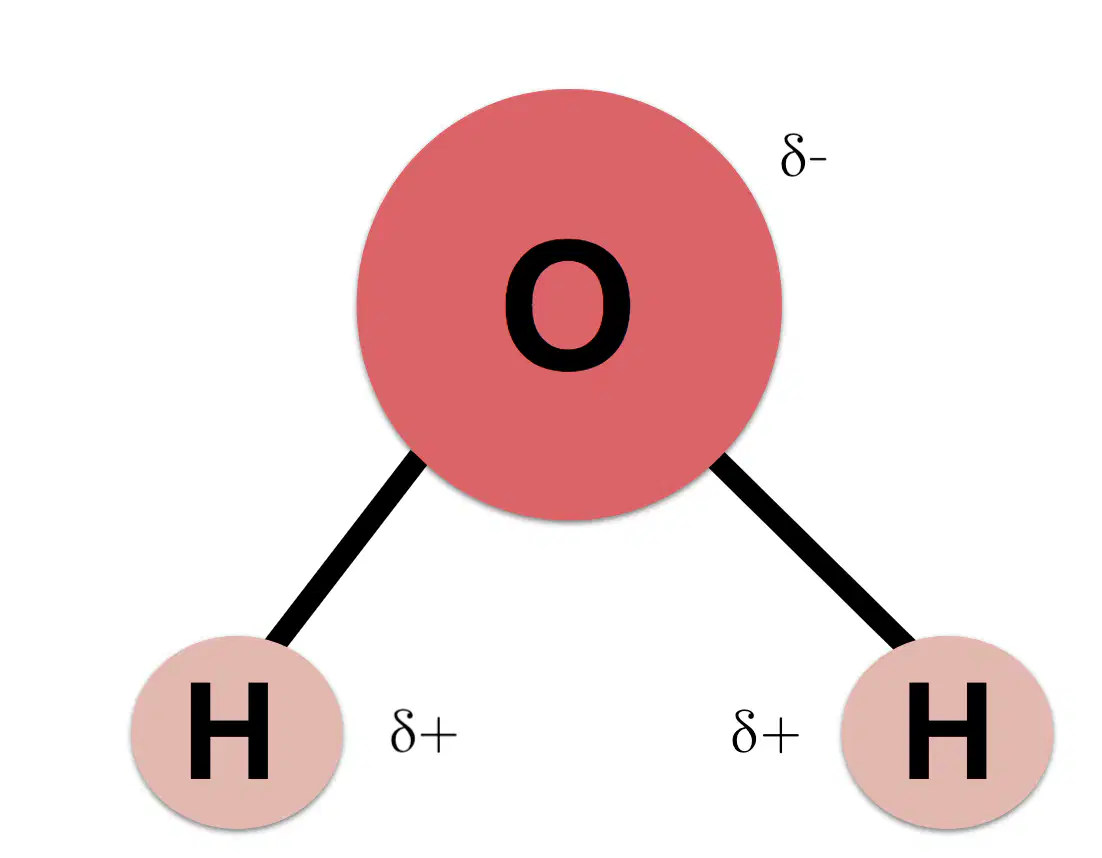
What is the mass of water (H2O)? Round your answer to a whole number
Type answer...
59
Drag and Drop
60
Step 2: Set up the equation and Solve
What mass of water is produced by burning 5.00 g of methane? Methane burns in air by the following reaction:
CH4(g) + 2O2(g) → CO2(g) + 2H2O(g)
Grams to Grams Sample Problem 1
61
Fill in the Blanks
Methane burns in air by the following reaction:
CH4(g) + 2O2(g) → CO2(g) + 2H2O(g)
What mass of water is produced by burning 5.00 g of methane? Round your Answer to two Decimal Places
Type answer...
62
Grams to Grams Sample Problem 2
Oxygen gas can be produced by decomposing potassium chlorate using the reaction below. If 12.76 g of KClO3 is heated and decomposes completely, what mass of oxygen gas is produced?
2KClO3 (s) → 2KCl (s) + 3O2 (g)
Step 1: Identify what we know and what we want
Know: 12.76 g of KClO3
Want: grams of O2
63
Fill in the Blanks
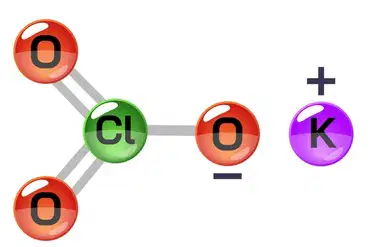
What is the Mass of KClO3 (Round to a whole Number)
Type answer...
64
Grams to Grams Sample Problem 2
Oxygen gas can be produced by decomposing potassium chlorate using the reaction below. If 12.76 g of KClO3 is heated and decomposes completely, what mass of oxygen gas is produced?
2KClO3 (s) → 2KCl (s) + 3O2 (g)
65
Multiple Choice
In the Chemical Equation 2KClO3 (s) --> 2KCl (s) + 3O2 (g), what is the ratio to between KClO3 and O2
2KClO3 : 2O2
2KClO3 : 3O2
3KClO3 : 2O2
2KClO3 : 1 O2
66
Grams to Grams Sample Problem 2
Oxygen gas can be produced by decomposing potassium chlorate using the reaction below. If 12.76 g of KClO3 is heated and decomposes completely, what mass of oxygen gas is produced?
2KClO3 (s) → 2KCl (s) + 3O2 (g)
67
Fill in the Blanks
How many grams are in one Mole of O2 Gas?
Type answer...
68
Grams to Grams Sample Problem 2
Oxygen gas can be produced by decomposing potassium chlorate using the reaction below. If 12.76 g of KClO3 is heated and decomposes completely, what mass of oxygen gas is produced?
2KClO3 (s) → 2KCl (s) + 3O2 (g)
69
Fill in the Blanks
Oxygen gas can be produced by decomposing potassium chlorate using the reaction below. If 12.76 g of KClO3 is heated and decomposes completely, what mass of oxygen gas is produced?
2KClO3 (s) --> 2KCl (s) + 3O2 (g)
Round to Two Decimal Places
Type answer...
70
Grams to Grams Sample Problem 3:
Silver oxide, Ag2O, reacts with hydrogen, H2, at high temperatures to produce silver metal, Ag, and water, H2O. The balanced equation is:
Ag2O(s) + H2(g) → 2 Ag(s) + H2O(l)
How many grams of Ag2O must be consumed to produce 50.0 g of silver metal?
71
Fill in the Blanks
What is the molar mass of Ag? Round to one decimal place
Type answer...
72
Grams to Grams Sample Problem 3:
Silver oxide, Ag2O, reacts with hydrogen, H2, at high temperatures to produce silver metal, Ag, and water, H2O. The balanced equation is:
Ag2O(s) + H2(g) → 2 Ag(s) + H2O(l)
How many grams of Ag2O must be consumed to produce 50.0 g of silver metal?
73
Multiple Choice
What is the molar ratio between silver oxide and silver in the following balanced equation:
Ag2O(s) + H2(g) → 2 Ag(s) + H2O(l)
2 mol Ag 2 mol AgO
1 mol Ag2 mol Ag2O
2 mol Ag1 mol Ag2O
74
Grams to Grams Sample Problem 3:
Silver oxide, Ag2O, reacts with hydrogen, H2, at high temperatures to produce silver metal, Ag, and water, H2O. The balanced equation is:
Ag2O(s) + H2(g) → 2 Ag(s) + H2O(l)
How many grams of Ag2O must be consumed to produce 50.0 g of silver metal?
75
Fill in the Blanks
What is the molar mass of Silver Oxide (Ag2O) Round to one Decimal Place
Type answer...
76
Grams to Grams Sample Problem 3:
Silver oxide, Ag2O, reacts with hydrogen, H2, at high temperatures to produce silver metal, Ag, and water, H2O. The balanced equation is:
Ag2O(s) + H2(g) → 2 Ag(s) + H2O(l)
How many grams of Ag2O must be consumed to produce 50.0 g of silver metal?
77
Fill in the Blanks
How many grams of Ag2O must be consumed to produce 50.0 g of silver metal? Round to one Decimal Place
Type answer...
78
Fill in the Blanks
Calculate the mass of hydrogen formed when 27 g of aluminum reacts with excess hydrochloric acid according to the balanced equation below. 2Al + 6HCl → 2 AlCl3 + 3 H2. Round to a Whole Number
Type answer...
79
Fill in the Blanks
2Na + 2H2O → 2NaOH+ H2
How many grams of hydrogen are produced if 120 g of Na are available? Round to One Decimal Place
Type answer...
80
Fill in the Blanks
B2H6 + 3O2 -->2 HBO2 + 2 H2O
What mass of O2 will be needed to burn 36.1 g of B2H6? Round to a Whole Number
Type answer...
Yeast bread rises because the yeast breaks down sucrose (C12H22O11) during cellular respiration and reduces carbon dioxide. The zero Calorie sweetener Steviol (C20H30O3) has a similar chemical structure. Is it possible to replace sugar with Steviol when baking? If so, is there anything else you need to do to the recipe?
Show answer
Auto Play
Slide 1 / 80
SLIDE
Similar Resources on Wayground

76 questions
Battle for Europe WWII
Presentation
•
9th - 12th Grade
79 questions
Introduction to Ecology
Presentation
•
10th - 12th Grade
76 questions
Types of Reactions 2 - Single Replacement Reactions
Presentation
•
9th - 12th Grade
74 questions
External Parts of Computer
Presentation
•
11th Grade - University
77 questions
Movement of Synovial Joints
Presentation
•
9th - 12th Grade
75 questions
Exponential and Logarithmic Graphs
Presentation
•
11th Grade
77 questions
Level K Sight Words
Presentation
•
KG
Popular Resources on Wayground
10 questions
Safety Day 2026 – Student Review

Quiz
•
9th Grade
21 questions
Continents and Oceans
Quiz
•
6th Grade
20 questions
Parts of Speech
Quiz
•
5th Grade
16 questions
Subject & Predicate
Quiz
•
5th Grade
25 questions
Multiplication Facts
Quiz
•
5th Grade
12 questions
Map Skills
Quiz
•
3rd Grade
22 questions
Continents and Oceans
Quiz
•
5th Grade
15 questions
Rounding Decimals
Quiz
•
5th Grade
Discover more resources for Chemistry
20 questions
electron configurations and orbital notation
Quiz
•
9th - 12th Grade
20 questions
Periodic Table Trends
Quiz
•
11th Grade
25 questions
Writing and Naming Binary Ionic compounds
Quiz
•
10th Grade
20 questions
COUNTING ATOMS
Quiz
•
10th Grade
50 questions
Unit 3: Atomic Assault Summative Review
Quiz
•
11th Grade
20 questions
Physical or Chemical Change/Phases
Quiz
•
8th Grade - University
15 questions
Periodicity Module Exam Practice Quiz
Quiz
•
9th - 12th Grade
20 questions
Naming Ionic Compounds
Quiz
•
10th Grade