Review Unit 1-What is life?
Presentation
•
Science, Biology
•
7th Grade
•
Medium
+7
Standards-aligned
Staci Kilpatrick
Used 20+ times
FREE Resource
1 Slide • 35 Questions
1
Test Review
Unit 1-What is life?
2
Multiple Choice
Abiotic can be defined as?
An organism that is alive
Non-living parts of the environment
Living Parts of the environment
A new kind of Pokemon that lives with Pikachu
3
Multiple Select
Select all the Abiotic factors in the image:
rotten log
plants
Sun
water
air
4
Multiple Choice
Biotic can be defined as
the living or once living parts of an environment
non-living parts of an environment
rocks and water
snakes and water
5
Multiple Select
Select ALL the biotic factors
Rotten log
water
dragon fly
bacteria
sunlight
6
Multiple Choice
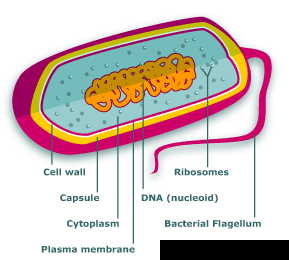
Which type of cell is pictured?
7
Multiple Choice
Which of the following has DNA?
prokaryotes
eukaryotes
prokaryotes and eukaryotes
8
Multiple Choice
Which type of cell is pictured?
9
Multiple Choice
10
Multiple Choice
11
Multiple Select
Cell Wall
12
Multiple Choice
The densely packed area of a cell that has the DNA and controls the cell's activities.
Chloroplast
Cell Membrane
Nucleus
Mitochondria
13
Multiple Choice
What do you call the jelly-like fluid in a cell?
Nucleus
14
Multiple Choice
What surrounds the cytoplasm of all cells and controls what goes in and out of the cell?
15
Multiple Choice
Name the outermost layer of a plant cell that protects and supports it.
Cell Membrane
Cell Wall
Golgi Apparatus
Cytoplasm
16
Multiple Choice
Which of the following is the correct order of organization from most basic (simple) to most complex?
a. Organism, compound, cell, tissue, element, organ, organ system
a. Organ system, organ, element, tissue, cell, organism, compound
a. Element, Compound, Organelle, Cell, tissue, organ, organ system, organism
a. Cell, organ, tissue, compound, element, organ, organism, organ system
17
Multiple Choice
18
Multiple Choice
19
Multiple Choice
Nucl
20
Multiple Choice
Turgor pressure is a result of the amount of water in what plant cell organelle?
Mitochondrion
Nucleus
Cell wall
Vacuole
21
Multiple Choice
Which of the following does not have a nucleus?
prokaryotes
eukaryotes
prokaryotes and eukaryotes
22
Multiple Choice
23
Multiple Choice
Bacteria are an example of __________.
prokaryotes
eukaryotes
24
Multiple Select
Which of the following are components of cell theory?
Cells must contain DNA
All living things are made of cells
Cells only come from other cells
Cells are the basic unit of life
25
Multiple Choice
An organism made of only one cell is called _____ .
Eukaryotic
Mutlicellular
Monocellular
Unicellular
26
Multiple Choice
What kind of organism is made of many cells, each with a special function?
Multicellular
Eukaryotic
Prokaryotic
Unicellular
27
Multiple Choice
Which plant organelle transforms light into glucose to use as food (photosynthesis)?
Mitochondria
Vacuoles
Chloroplasts
Nucleus
28
Multiple Choice
What organelle is used as storage? Hint: plants have a large one that filled with water.
Vacuole
Cell
Cell Wall
Ribosome
29
Multiple Choice
Positive tropism
Negative tropism
30
Multiple Choice
31
Multiple Choice
You put a plant on a table near a window and notice that when you come home at the end of the day the plant has bent towards the window. What is this an example of?
Geotropism
Sonotropism
Phototropism
Thigmotropism
32
Multiple Choice
33
Multiple Choice
Based on these cells, which plant would be stiff and rigid and have the most turgor pressure?
A
B
34
Multiple Choice
Wilting is a plant's response to:
High turgor pressure
Low turgor pressure
Gravity
Sunlight
35
Multiple Choice
Based on these two cells, which plant would be wilted or limp?
A
B
36
Multiple Choice
The shoot of a plant growing up is _______.
Test Review
Unit 1-What is life?
Show answer
Auto Play
Slide 1 / 36
SLIDE

Similar Resources on Wayground
31 questions
Composition of the Atmosphere
Presentation
•
7th Grade
28 questions
Ecological Succession
Presentation
•
7th Grade
33 questions
Lesson 2: Photosynthesis and Cellular Respiration
Presentation
•
7th Grade
27 questions
Genotypes and Phenotypes
Presentation
•
7th Grade
34 questions
Science 7 Year End Review - Unit D
Presentation
•
7th Grade
32 questions
Metric System
Presentation
•
7th - 8th Grade
30 questions
Beneficial and harmful microorganisms
Presentation
•
7th Grade
29 questions
Chapter 10 Lesson 4 Wetlands
Presentation
•
7th Grade
Popular Resources on Wayground
24 questions
PBIS-HGMS Day 10
Quiz
•
6th - 8th Grade
10 questions
HCS SCI 03 Summer School Review 3
Quiz
•
3rd Grade
11 questions
Home Scope
Quiz
•
7th - 8th Grade
15 questions
HCS SCI 05 Summer School Assessment 3 Review
Quiz
•
5th Grade
35 questions
Lufkin Road Middle School Student Handbook & Policies Assessment
Quiz
•
7th Grade
18 questions
Geo 11.3 Area of Circles and Sectors
Quiz
•
9th - 11th Grade