Search Header Logo
Biotic Factors in Terrestrial Ecology

Biotic Factors in Terrestrial Ecology

Assessment

Presentation

Science

9th - 12th Grade

Medium

NGSS
MS-LS2-2, MS-LS4-2, MS-LS2-1

+4

Standards-aligned

Created by

Sharronda Smith

Used 7+ times

FREE Resource

23 Slides • 12 Questions

1

Biotic Factors in Terrestrial Ecology

by Sharronda Smith

2

media

3

media

4

media

5

media

6

Multiple Choice

A dichotomous key is used to....

1

identify a species that has already been categorized and named.

2

Identify only certain animal species.

3

Identify a species that has never been seen before.

4

Differentiate between two or more species.

7

media

8

media

9

Multiple Choice

Question image

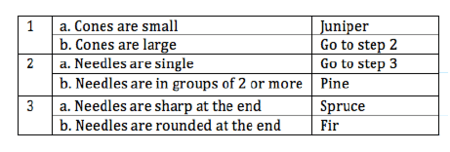
A dichotomous key for trees is provided. Hikers found a tree that has large brown cones and single sharp needles. What species of tree have the hikers found?

1

Juniper

2

Pine

3

Spruce

4

Fir

10

Multiple Choice

Question image

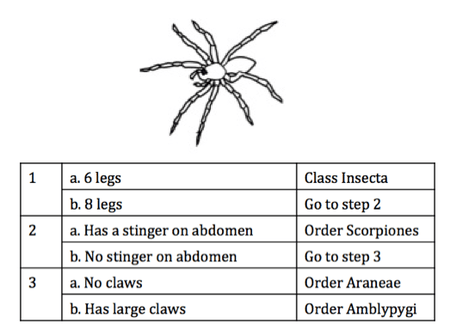
An illustration and a dichotomous key are given. What is the correct classification for this organism?

1

Class Insecta

2

Order Amblygygi

3

Order Araneae

4

Order Scorpiones

11

media

12

media

13

media

14

media

15

​Invasive Species

​Animals that have been

  1. introduced to a new niche,

  2. compete with the native species for resources

  3. ​Win the competition against native species

  4. Finally, take over the niche are an....​ INVASIVE SPECIES

​ex. Pythons in the Everglades.

media

16

Multiple Choice

The ecological role an organism performs in their specific environment is considered the organism's...

1

Habitat

2

Population

3

Biome

4

Niche

17

Multiple Choice

Question image

When taken to a new habitat, non-native plants often threaten native plants of the new habitat.  Why do they do this?

1

Non-native plants are able to mutate rapidly

2

Non-native  plants cause native animals to relocate

3

Non-native plants are able to be used for medicine

4

Non-native plants compete with native plants for resources

18

media

19

media

20

Multiple Choice

One organism hunts and eats another organism.

1

predation

2

mutualism

3

carnivore

4

parasitism

21

media

22

media

23

Multiple Choice

Honeybees feed on and pollinate clover and flowering plants native to the prairie grassland biomes of Texas. Which tropic level do they occupy?

1

Producer

2

Primary Consumer

3

Secondary Consumer

4

Tertiary Consumer

24

Multiple Choice

The efficiency of energy transfer from a lower trophic level to the next highest level is roughly

1

1%

2

10%

3

100%

4

1000%

25

media

26

media

27

Multiple Choice

An animal that only feeds on plants is called

1

Vegetarian

2

Herbivore

3

Carnivore

4

Vegan

28

Multiple Choice

A primary consumer

1

makes its own food

2

eats other animals

3

is a carnivore

4

consumes the producer

29

media

30

media

31

media

32

Multiple Choice

A symbiotic relationship where both organisms benefit.

1

mutualism

2

commensalism

3

parasitism

4

predation

33

Multiple Choice

A symbiotic relationship where one organism benefits and the other is harmed.

1

parasitism

2

mutualism

3

commensalism

4

predation

34

media

35

media

Biotic Factors in Terrestrial Ecology

by Sharronda Smith

Show answer

Auto Play

Slide 1 / 35

SLIDE