Chemistry review for AP Bio
Presentation
•
Biology, Chemistry
•
9th - 12th Grade
•
Easy
+1
Standards-aligned
Hannah Hathaway
Used 16+ times
FREE Resource
3 Slides • 24 Questions
1
Multiple Choice
The smallest particle of a substance is......
atom
element
molecule
compound
2
Multiple Choice
3
Multiple Choice
4
Multiple Choice
5
Multiple Choice
6
Multiple Choice
What type of charge does a neutron have?
negative
positive
no charge/neutral
7
Watch this video to review the different types of chemical bonds.
You can click on the title in top left of the video to open it larger in another tab.
8
Multiple Choice
Bond where electrons are shared
Ionic Bonds
Covalent Bonds
Both bonds
Neither bond
9
Multiple Choice
10
Multiple Choice
11
Multiple Choice
12
Multiple Choice
The most common atoms in biology are carbon, hydrogen, oxygen and nitrogen.
These atoms are....
metals
non-metals
13
Multiple Choice
What kind of atoms are in this molecule of water?
metals only
non-metals only
both metals and non-metals
14
Multiple Choice
What kind of intramolecular bonds are in this molecule of water?
(intramolecular bonds are the bonds that hold together atoms within a single molecule)
ionic bonds only
covalent bonds only
both ionic and covalent bonds
15
Multiple Choice
What kind of intramolecular bonds are in this molecule of glucose?
ionic bonds only
covalent bonds only
both ionic and covalent bonds
16
Multiple Choice
What kind of intramolecular bonds are in this molecule of sodium chloride (NaCl)?
ionic bonds only
covalent bonds only
both ionic and covalent bonds
17
Watch this video to review polarity.
You can click on the title in top left of the video to open it larger in another tab.
18
Fill in the Blanks
Type answer...
19
Multiple Choice
The attraction that an atom has for shared electrons in bonds is
electron affinity.
electronegativity.
electropositivity.
electromagnetism.
20
Multiple Choice
In a polar covalent bond, electrons are shared:
equally
unequally
between two metals
between a metal and a non-metal
21
Multiple Choice
Polar molecules have...
no charges.
partial positive and negative charges on opposite ends of the molecules.
only partial positive charges.
either partial positive or negative charges, but not both.
22
Multiple Choice
Electronegativity is a measurement of the ability of an atom to:
attract electrons
repel electrons
attract protons
attract other atoms
23
Multiple Choice
In order to determine if a molecule is polar, you must consider the
polarity of bonds and symmetry of the molecule.
number of electrons and number of bonds.
polarity of bonds only.
total charge of each ion and number of multiple bonds.
24
Multiple Choice
Is this molecule of NH3 polar or nonpolar?
polar
nonpolar
25
Multiple Choice
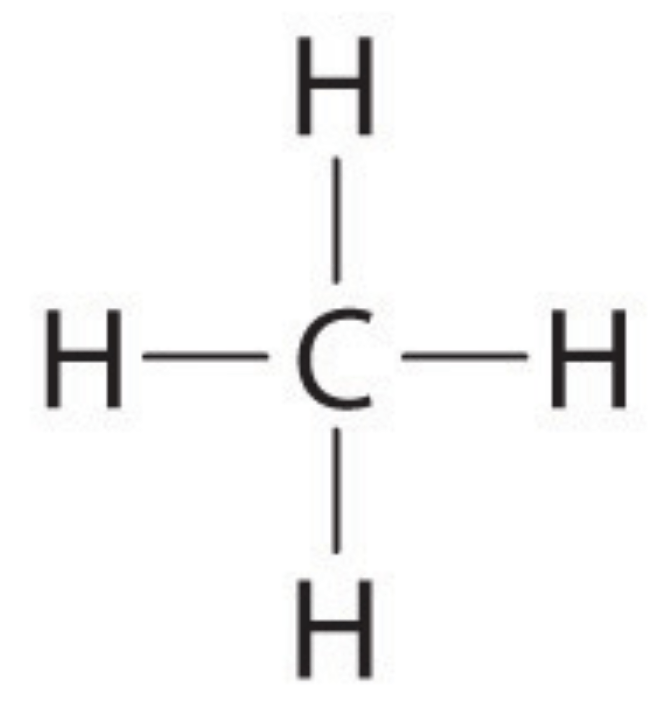
Is this molecule of CH4 polar or nonpolar?
polar
nonpolar
26
Multiple Choice
Is the long hydrophobic chain (highlighted in purple in the picture) of a fatty acid polar or nonpolar?
polar
nonpolar
27
Nice work!!
You made it through the chem review lesson, good job!!
If you feel like you need more practice here is a youtube playlists of helpful videos to review essentials from chemistry:
https://bit.ly/chem-review
The smallest particle of a substance is......
atom
element
molecule
compound
Show answer
Auto Play
Slide 1 / 27
MULTIPLE CHOICE

Similar Resources on Wayground
23 questions
Periodic Table
Presentation
•
9th - 12th Grade
21 questions
Cells
Presentation
•
9th - 12th Grade
24 questions
Ecosystem Relationships
Presentation
•
9th - 12th Grade
20 questions
Ionic Vs Covalent Lesson
Presentation
•
9th - 12th Grade
23 questions
Intro to Ecology
Presentation
•
9th - 12th Grade
21 questions
Reaction Rates
Presentation
•
9th - 12th Grade
22 questions
Trophic Levels, Food Chains, and Food Webs Review
Presentation
•
9th - 12th Grade
19 questions
Chemical Bonding
Presentation
•
9th - 12th Grade
Popular Resources on Wayground
10 questions
HCS SCI 03 Summer School Review 4
Quiz
•
3rd Grade
11 questions
HSMS - Standard Response Protocol
Quiz
•
6th - 8th Grade
16 questions
1.1-1.2 Quiz Review
Quiz
•
9th - 12th Grade
12 questions
Exponent Expressions
Quiz
•
6th Grade
20 questions
Adding and Subtracting Integers
Quiz
•
6th - 7th Grade
11 questions
Northeast States
Quiz
•
3rd - 4th Grade
10 questions
Characterization
Quiz
•
3rd - 7th Grade
10 questions
Common Denominators
Quiz
•
5th Grade