Cell Processes Review
Presentation
•
Biology, Science
•
9th - 12th Grade
•
Hard
+2
Standards-aligned
Elizabeth Wait
Used 15+ times
FREE Resource
9 Slides • 18 Questions
1
Cell Processes Review
2
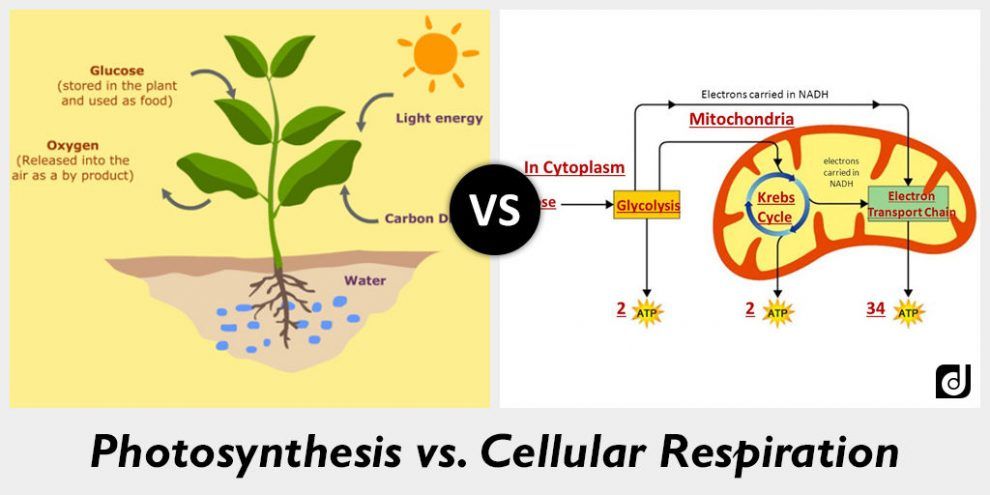
Photosynthesis
Using sunlight energy to make glucose (sugar) for food
Used by autotrophs (producers), such as plants and some protists and bacteria
Occurs in the chloroplast using chlorophyll to capture sunlight
CO2 + H2O ---> C6H12O6 + O2
3
Multiple Choice
What is the correct equation for photosynthesis?
C6H12O6 + 6O2 --> 6CO2 + 6H2O
6CO2 + 6O2 --> C6H12O6 + 6H2O
6CO2 + 6O2 --> 6H2O + C6H12O6
6CO2 + 6H2O --> 6O2 + C6H12O6
4
Multiple Choice
Which organelle is responsible making food (Glucose) using sunlight?
Cell Membrane
Nucleus
Chloroplast
Mitochondria
5
Cellular Respiration
Breaking down food to release ATP (energy)
Used by ALL LIVING THINGS
Occurs in the mitochondria
C6H12O6 + O2 ----> CO2 + H2O + ATP
Forms a CYCLE with photosynthesis - the PRODUCTS of one become the REACTANTS of the other!
6
Multiple Choice
To convert the energy of glucose into the usable form of ATP is a function of _________.
Cell Wall
Cytoplasm
Nucleus
Mitochondria
7
Multiple Choice
In which way are photosynthesis and cellular respiration different?
Cellular respiration stores ATP, while photosynthesis releases ATP.
Cellular respiration produces oxygen, while photosynthesis uses oxygen.
Photosynthesis releases energy, while cellular respiration stores energy.
Photosynthesis uses carbon dioxide, while cellular respiration produces carbon dioxide.
8
Multiple Choice
Cellular respiration and photosynthesis are related because...
They both make glucose
They both require oxygen
The products of one reaction are the reactants of the other reaction
They both make carbon dioxide
9
Homeostasis
Homeostasis is how cells and organisms maintain a stable internal environment
The cell membrane maintains homeostasis by controlling what enters and leaves the cell
Homeostasis is needed to keep your temperature, blood sugar, fluid levels, oxygen levels, pH, and more balanced
10
Multiple Choice
What is mean by homeostasis?
Controls and coordinates body activities through chemical
controls and coordinates body activities through electrical impulses
For maintenance of a steady state in the internal environment
remove metabolic waste products from the cel
11
Multiple Choice
Which of the following is not regulated by homeostasis?
Body Temperature
Blood Sugar
Blood pH
Body Movements
12
Passive vs. Active Transport
Ways that molecules travel across the cell membrane
Passive Transport - requires NO energy, high to low concentration
Diffusion is an example of passive transport
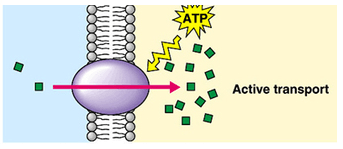
Active Transport - requires ATP, low to high concentration
13
Multiple Choice
What is the difference between active and passive transport?
Active does not need energy and passive uses ATP (energy)
Active uses ATP (energy) and passive does not need energy
Active stores transport proteins and passive releases
Active uses hormones and passive does not
14
Multiple Choice
The molecules in the image are moving from ___ concentration to _____ concentration. This is an example of ____ transport.
high / low / active
high / low/ passive
low/ high / passive
low / high / active
15
Osmosis
Type of passive transport
Movement of WATER
Water moves from where there is more water to where there is less
16
Multiple Choice
Osmosis is the diffusion of _____ across a selectively permeable membrane.
food
air
water
oxygen
17
Multiple Choice
When the number of water molecules outside of the cell is greater than inside the cell, which will most likely occur?
Molecules of water will NOT MOVE either way.
Molecules of water will move OUT of the cell.
Molecules of water will move INTO the cell.
Molecules of water will EVAPORATE.
18
Protein Synthesis
Proteins are built according to the instructions in DNA
TransCription: DNA --> mRNA
TransLation: mRNA --> amino acids
Amino acids are assembled into proteins by ribosomes
19
Multiple Choice
Translation is the process where
mRNA is created in the Nucleus
mRNA is decoded to form a protein
glucose molecules are made
is where lipids are synthesized
20
Multiple Choice
Which organelle is the location where protein is made?
Ribosome
Nucleus
Cytoplasm
Nucleotide
21
Cell Cycle and Mitosis
The cell cycle is the life cycle of the cell
Interphase - cells grow and replicate (copy) their DNA
Mitosis and Cytokinesis - cells divide into two identical cells for growth and repair
22
Multiple Choice
During interphase
DNA lines up in the middle of the cell and DNA attaches to spindle fibers
2 new nuclei form
2 new identical cells are created
DNA gets copied
23
Multiple Choice
Cell division is represented by what letter?
A
B
C
D
24
Multiple Choice
What is the purpose of mitosis?
To increase the surface area of a cell
To allow cells to divide for growth, repair, and renewal
For increasing genetic variation within a species
To allow for DNA replication and protein synthesis
25
Cell Specialization
All organisms start as a single cell
Multicellular organisms have different types of cells with the same DNA
Cell specialization - cells differentiate (become different) based on which genes they turn on or off
Ex: Your eye and skin cells have the same DNA but use different genes
26
Multiple Choice
What is the definition of cell specialization?
an organism that contains cells
a special type of mutation in bacteria cells
the differentiation of cells as they develop
the replication of DNA
27
Multiple Choice
In what way is the DNA of a nerve cell different from the DNA of a muscle cell?
The DNA is the same but each cell contains different genes
The DNA is the same but different genes are turned on and turned off in each cell
The DNA is different, but the same genes are turned on and off in each cell
The DNA is different, but each cell contains the same genes
Cell Processes Review
Show answer
Auto Play
Slide 1 / 27
SLIDE

Similar Resources on Wayground
21 questions
Cells Introduction
Presentation
•
9th - 12th Grade
21 questions
4 Lipids
Presentation
•
9th - 12th Grade
21 questions
Unit 7: Energy Transformations
Presentation
•
9th - 12th Grade
22 questions
Protein Synthesis
Presentation
•
9th - 12th Grade
22 questions
Ecological Succession EOC Review
Presentation
•
9th - 12th Grade
19 questions
Marine and brackish biomes
Presentation
•
9th - 12th Grade
23 questions
Virus Intro + Structure
Presentation
•
9th - 12th Grade
20 questions
Cell Differentiation and Specialized Cells
Presentation
•
9th - 12th Grade
Popular Resources on Wayground
24 questions
PBIS-HGMS Day 10
Quiz
•
6th - 8th Grade
10 questions
HCS SCI 03 Summer School Review 3
Quiz
•
3rd Grade
11 questions
Home Scope
Quiz
•
7th - 8th Grade
15 questions
HCS SCI 05 Summer School Assessment 3 Review
Quiz
•
5th Grade
35 questions
Lufkin Road Middle School Student Handbook & Policies Assessment
Quiz
•
7th Grade
18 questions
Geo 11.3 Area of Circles and Sectors
Quiz
•
9th - 11th Grade