
Proportion/Scale
Presentation
•
Arts
•
6th - 12th Grade
•
Practice Problem
•
Medium
Joanna Figueroa
Used 40+ times
FREE Resource
18 Slides • 5 Questions
1
Proportion/Scale
2
Proportion
Principle of Design
Def: Size relationship between various parts of a whole.
Think, Individual MEASUREMENTS that make up the object.
3
Standard/Correct Proportion
When an object is in standard/correct proportion that means all the parts that make that object up are the correct size and fit properly and naturally.
Standard Proportions = normal/natural/accurate.
4
Peeters, Still life with nuts and fruit, 1620.
5
Exaggerated/Unnatural Proportions
Proportions are not natural.
This can be done intentionally by an artist in order to emphasize, make something stand out
Proportions can also be exaggerated as a stylistic choice.
6
7
Multiple Select
Proportion/Scale is an Element of Art.
True
False
8
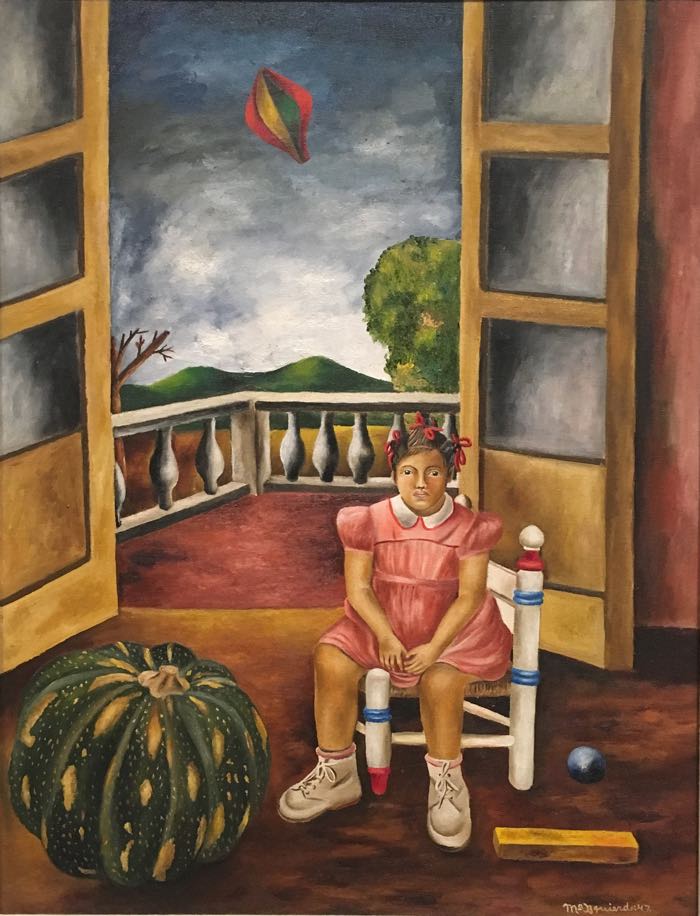
Proportion in Art
Can create depth, realism, disorientation and drama.
9
Maria izquierdo, The Indifferent Child, 1947
10
Multiple Choice
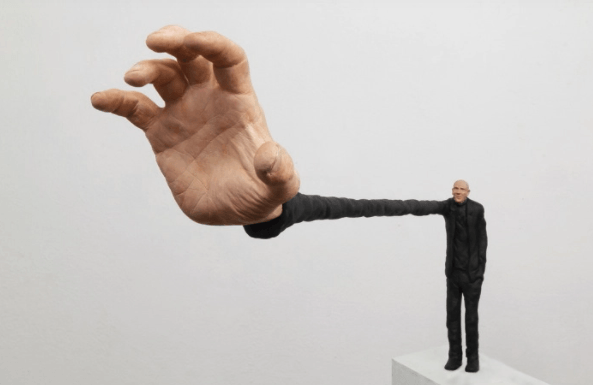
What is out of proportion in this sculpture?
The Head
The Feet
The Hand & Arm
The Legs
11
Scale- Part 1
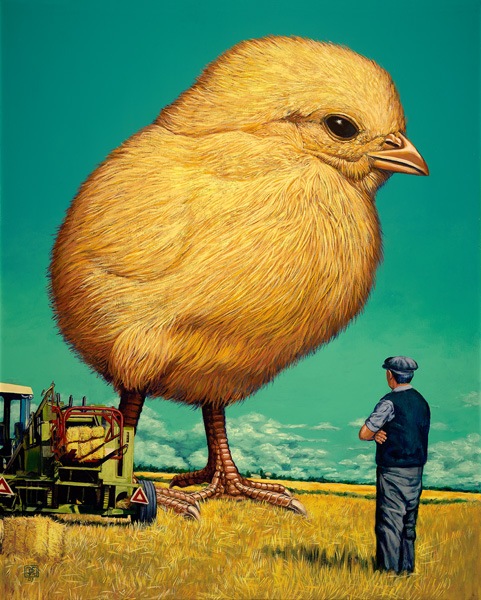
Def.: the size relationship of one object in relation to another.
Think, overall SIZE of one thing in relationship to the overall size of another.
12
Multiple Select
What is out of scale in this artwork?
The man
The tractor
The bird
The wheat
13
Scale in Art
Artworks that look realistic are scaled similarly to real world objects.
Artists can use scale to play with the illusion of depth or to emphasize certain areas/objects in an artwork.
14
René Magritte, les valeurs personnelles (personal values), 1952
15
Scale- Part 2
Scale in art can also refer to the size of an artwork.
For example, it can be a large scale artwork, small scale, miniature scale, monumental scale etc.
16
Chuck Close, Mark, 1978-79
17
Diem Chau, Mahjongg
18
Multiple Choice
What is the scale of this artwork?
Large Scale
Small Scale
Miniature Scale
Monumental Scale
19
Hierarchical Scale- Part 3
When an artist depicts objects in an unnatural scale to show importance or lack of importance.
20
Hierarchical Scale
This type of size manipulation is almost exclusively used to show importance or lack of importance.
Ancient Egyptian Artists are well-known for their use of hierarchical scale
21
Michelangelo, Pieta
22
Egyptian, Nebamun hunting, Late 18th Dynasty, around 1350 B
23
Multiple Choice
This Ancient Egyptian Artist used hierarchical scale to show the importance of which figure?
The Queen
The servant
The animals
The King
Proportion/Scale
Show answer
Auto Play
Slide 1 / 23
SLIDE

Similar Resources on Wayground
16 questions
Gustar
Presentation
•
6th - 12th Grade
20 questions
fast food
Presentation
•
KG
20 questions
Adjective/Noun Agreement
Presentation
•
6th - 12th Grade
14 questions
Key Signatures
Presentation
•
6th - 12th Grade
18 questions
Fractions Intro
Presentation
•
KG - 12th Grade
18 questions
Fraction Operations
Presentation
•
6th - 12th Grade
13 questions
Note & Rest Values - Music
Presentation
•
6th - 12th Grade
20 questions
Metric System
Presentation
•
6th - 12th Grade
Popular Resources on Wayground
10 questions
HCS SCI 03 Summer School Review 4
Quiz
•
3rd Grade
11 questions
HSMS - Standard Response Protocol
Quiz
•
6th - 8th Grade
16 questions
1.1-1.2 Quiz Review
Quiz
•
9th - 12th Grade
12 questions
Exponent Expressions
Quiz
•
6th Grade
20 questions
Adding and Subtracting Integers
Quiz
•
6th - 7th Grade
11 questions
Northeast States
Quiz
•
3rd - 4th Grade
10 questions
Characterization
Quiz
•
3rd - 7th Grade
10 questions
Common Denominators
Quiz
•
5th Grade
Discover more resources for Arts
11 questions
HSMS - Standard Response Protocol
Quiz
•
6th - 8th Grade
16 questions
1.1-1.2 Quiz Review
Quiz
•
9th - 12th Grade
12 questions
Exponent Expressions
Quiz
•
6th Grade
20 questions
Adding and Subtracting Integers
Quiz
•
6th - 7th Grade
10 questions
Characterization
Quiz
•
3rd - 7th Grade
11 questions
Negative Exponents
Quiz
•
7th - 8th Grade
14 questions
Exponents
Quiz
•
6th Grade
15 questions
Ace the Interview! Quiz
Quiz
•
10th Grade